Institut de Recherche Biomédicale des Armées, Unité de Physiologie des Exercices et Activités en Conditions Extrêmes, Département Environnements Opérationnels, Bretigny-Sur-Orge, France.
Université Clermont Auvergne, AME2P, Clermont-Ferrand, France.
PLoS One. 2022 Jul 14;17(7):e0271233. doi: 10.1371/journal.pone.0271233. eCollection 2022.
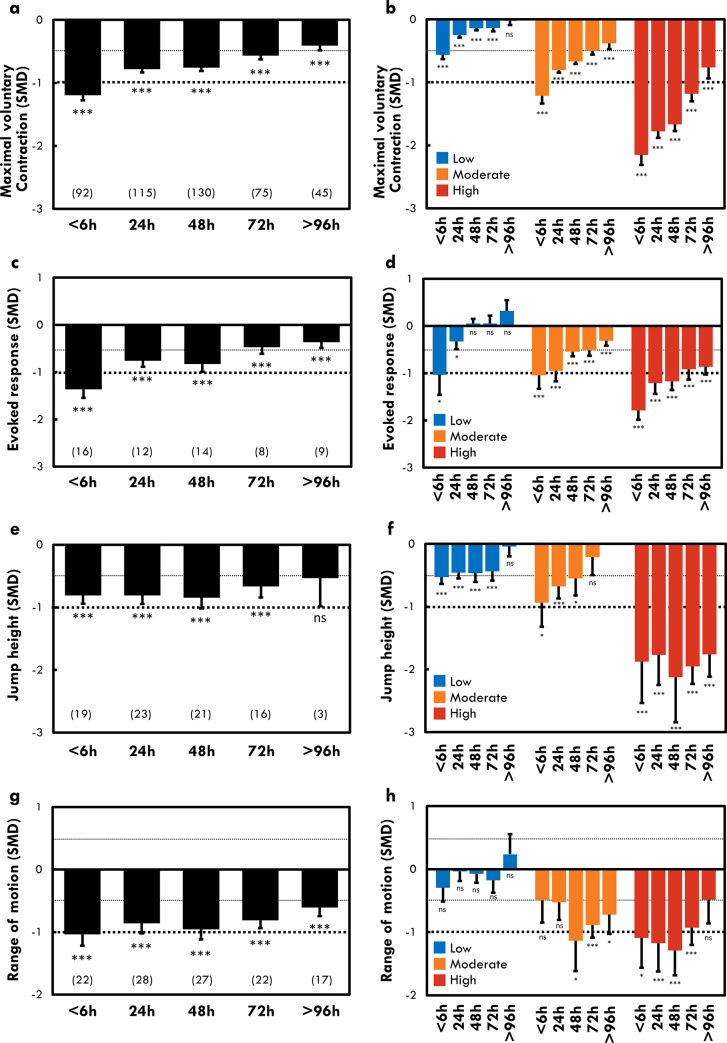
The aim of this review was to (1) characterize the time-course of markers of exercise-induced muscle damage (EIMD) based on the level of maximal voluntary contraction torque loss at 24-48h post-exercise (MVCloss24-48h), (2) identify factors (e.g., exercise and population characteristics) affecting the level of MVCloss24-48h, and (3) evaluate the appropriateness of EIMD markers as indicators of MVCloss24-48h.
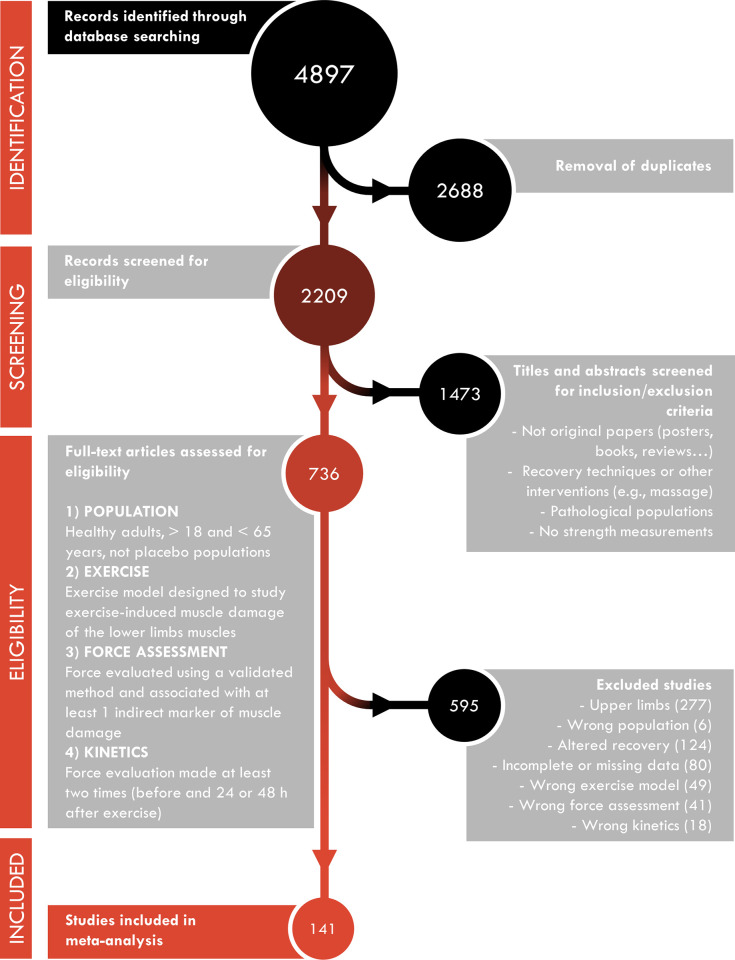
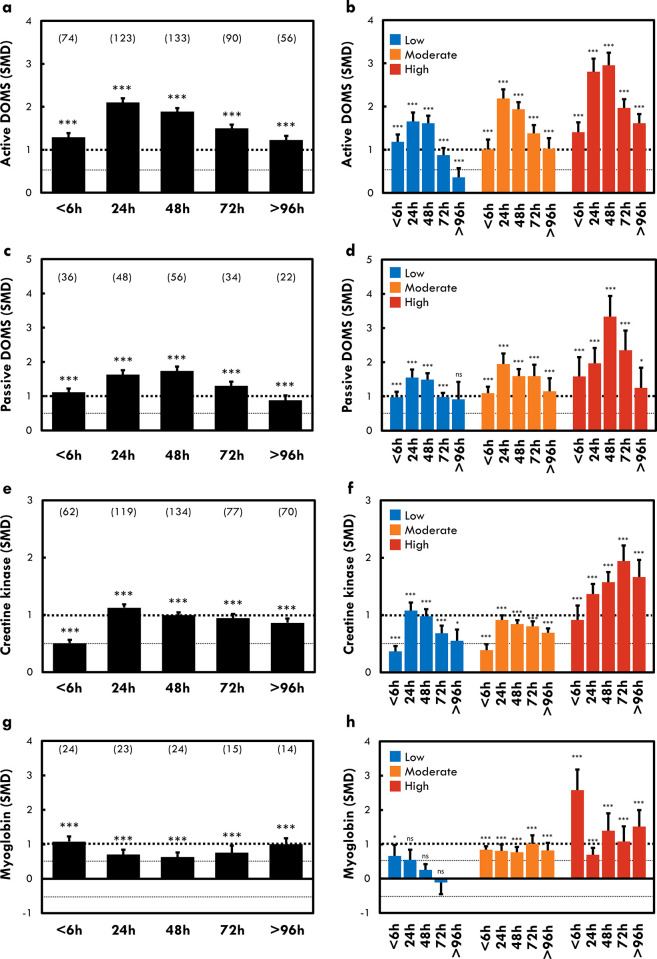
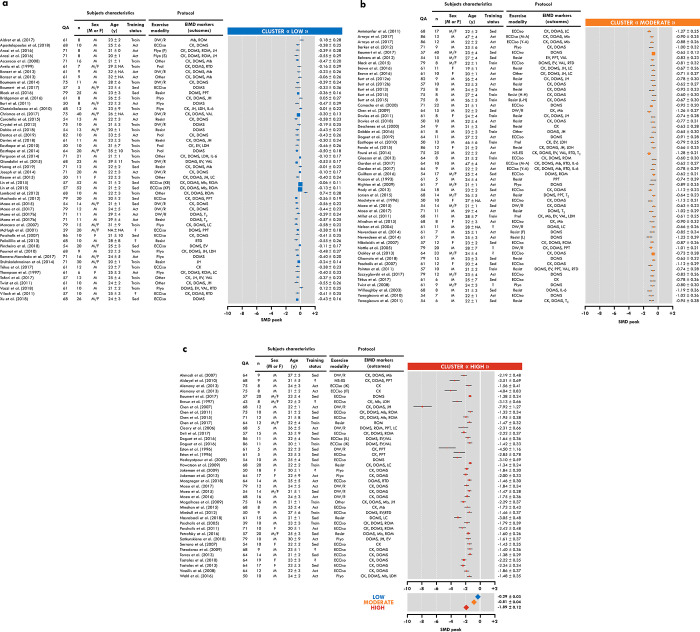
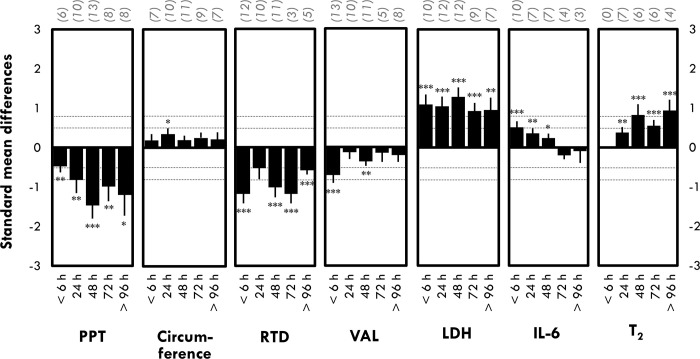
Magnitude of change of each EIMD markers was normalized using the standardized mean differences method to compare the results from different studies. Time-course of EIMD markers were characterized according to three levels of MVCloss24-48h based on a clustering analysis of the 141 studies included. Association between MVCloss24-48h levels and participant´s characteristics or exercise type/modalities were assessed. Meta-regressions were performed to investigate the associations between MVCloss24-48h and EIMD markers changes at <6h, 24h, 48h, 72h and >96h after exercise.
Time-course of EIMD markers recovery differs between levels of MVCloss24-48h. Training status and exercise type/modality were associated with MVCloss24-48h level (p<0.05). MVCloss24-48h was correlated to changes in myoglobin concentration (<6h), jump height (24h) and range of motion (48h) (p<0.001).
As the exercise could differently affect markers as function of the EIMD severity (i.e., MVCloss24-48h levels), different markers should be used as function of the timing of measurement. Mb concentration should be used during the first hours after the exercise (<6h), whereas jump height (24h) and range of motion (48h) could be used as surrogate for maximal voluntary contraction later. Moreover, training status and exercise type/modality could influence the magnitude of MVCloss24-48h.
本综述的目的是:(1)根据运动后 24-48 小时最大自主收缩扭矩损失(MVCloss24-48h)的水平,描述运动诱导的肌肉损伤(EIMD)标志物的时程;(2)确定影响 MVCloss24-48h 水平的因素(例如运动和人群特征);(3)评估 EIMD 标志物作为 MVCloss24-48h 指标的适宜性。
采用标准化均数差法对每个 EIMD 标志物的变化幅度进行归一化,以比较不同研究的结果。根据聚类分析,将 141 项研究的 MVCloss24-48h 水平分为三个等级,以描述 EIMD 标志物的时程。评估 MVCloss24-48h 水平与参与者特征或运动类型/模式之间的关系。进行元回归分析,以探讨运动后<6h、24h、48h、72h 和>96h 时 MVCloss24-48h 与 EIMD 标志物变化之间的相关性。
EIMD 标志物恢复的时程因 MVCloss24-48h 水平而异。训练状态和运动类型/模式与 MVCloss24-48h 水平相关(p<0.05)。MVCloss24-48h 与肌红蛋白浓度变化(<6h)、跳跃高度(24h)和运动范围(48h)相关(p<0.001)。
由于运动对标志物的影响程度可能因 EIMD 严重程度(即 MVCloss24-48h 水平)而异,因此应根据测量时间选择不同的标志物。运动后<6h 时应使用肌红蛋白浓度,而 24h 时可使用跳跃高度,48h 时可使用运动范围来替代最大自主收缩。此外,训练状态和运动类型/模式可能会影响 MVCloss24-48h 的幅度。