de Morais Ana Carolina Lamberty, Machado Álvaro Sosa, Pereira Maria Eduarda Ferreira, da Silva Willian, Priego-Quesada Jose Ignacio, Carpes Felipe P
Applied Neuromechanics Research Group, Laboratory of Neuromechanics, Federal University of Pampa, Po Box 118, Uruguaiana, RS, 97500-970, Brazil.
Escuela de Kinesiología, Facultad de Ciencias, Pontificia Universidad Católica de Valparaíso, Valparaíso, Chile.
Sci Rep. 2024 Dec 5;14(1):30282. doi: 10.1038/s41598-024-79785-2.
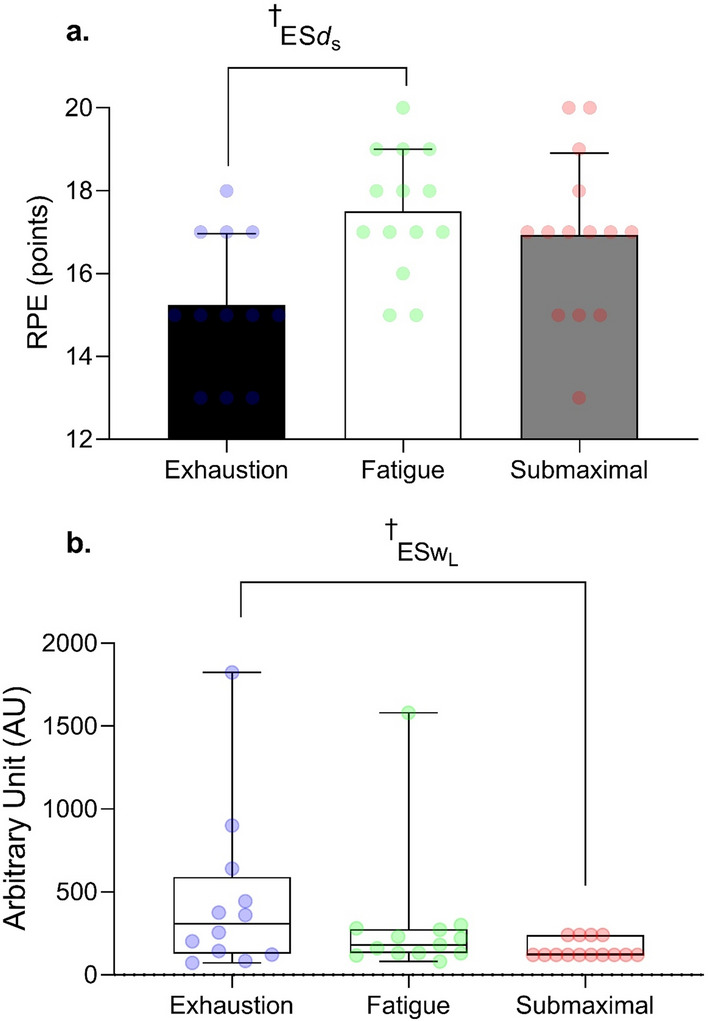
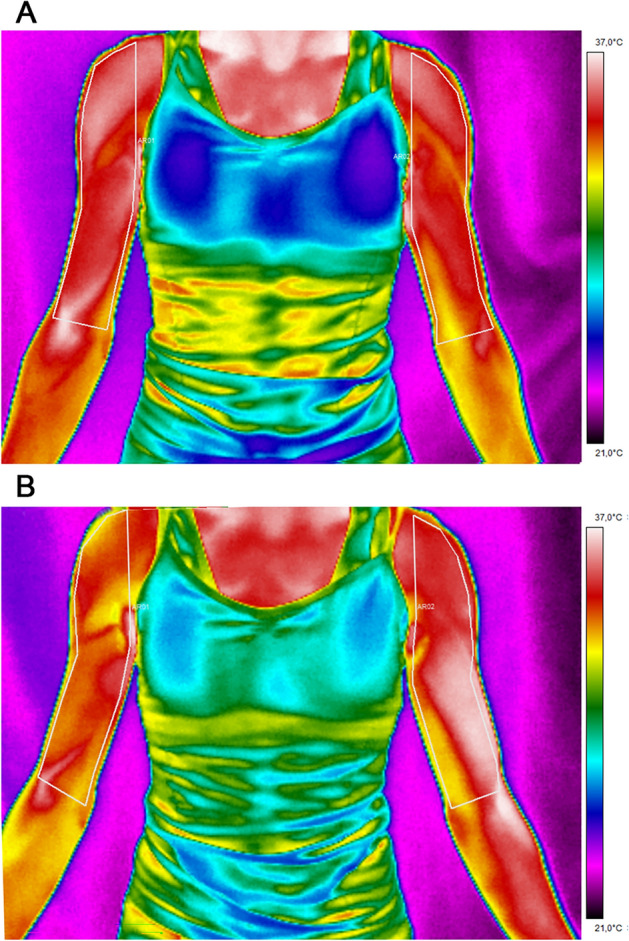
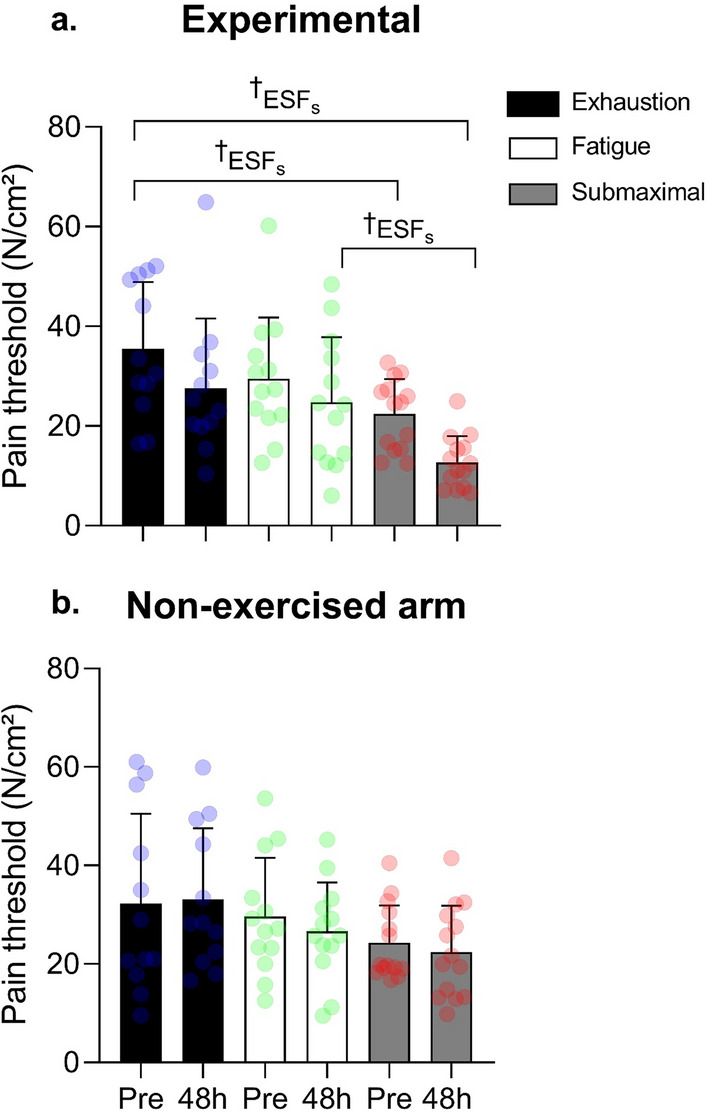
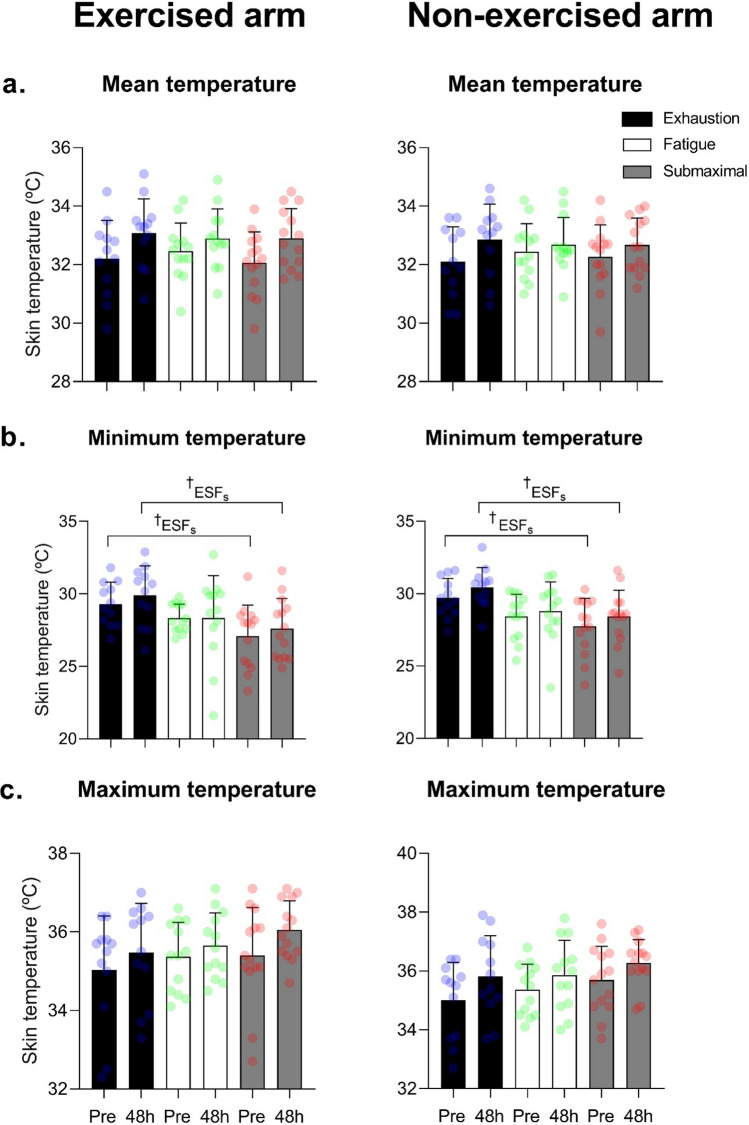
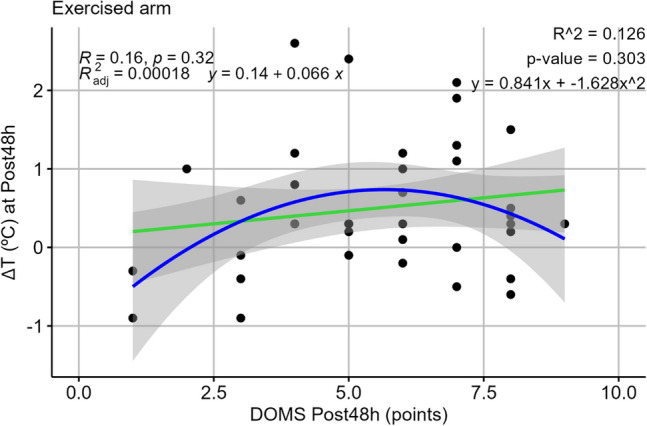
It remains unclear whether exercises leading to different outcomes of delayed onset muscle soreness (DOMS) may also elicit different skin temperature responses. The aim of this study was to determine whether different intensities and volumes of a single-joint exercise influence the DOMS and skin temperature measurements differently in healthy adults. Thirty-nine men and women were randomly assigned to three groups performing different exercise of different intensities and volumes (Exhaustion, Fatigue, Submaximal) to induce DOMS in the biceps brachii. DOMS (numeric pain rate scale, NPRS), pressure pain threshold (PPT) and skin temperature (infrared thermography, IRT) were measured on exercise day and 48 h later. The different exercises resulted in lower PPT responses 48 h after exercise and different DOMS reported across the different groups. Skin temperature outcomes did not differ following the different protocols. We found an increased minimum skin temperature 48 h after exercise in groups performing more intense exercises, but such differences were found in both exercised and non-exercised arms. Differently of PPT outcomes, pain reported depended on exercise intensity, and skin temperature 48 h after exercise could not show acute exercise adaptations. Skin temperature responses are contingent upon the characteristics of the participants rather than exercise intensity.
导致延迟性肌肉酸痛(DOMS)出现不同结果的运动是否也会引发不同的皮肤温度反应,目前尚不清楚。本研究的目的是确定单关节运动的不同强度和运动量对健康成年人的DOMS和皮肤温度测量结果的影响是否不同。39名男性和女性被随机分为三组,进行不同强度和运动量的不同运动(力竭组、疲劳组、次最大负荷组),以诱导肱二头肌出现DOMS。在运动当天和48小时后测量DOMS(数字疼痛评分量表,NPRS)、压力痛阈(PPT)和皮肤温度(红外热成像,IRT)。不同的运动在运动后48小时导致较低的PPT反应,并且不同组报告的DOMS也不同。不同方案后的皮肤温度结果没有差异。我们发现,进行更剧烈运动的组在运动后48小时最低皮肤温度升高,但在运动和未运动的手臂上均发现了这种差异。与PPT结果不同,报告的疼痛取决于运动强度,运动后48小时的皮肤温度无法显示急性运动适应性。皮肤温度反应取决于参与者的特征而非运动强度。