DNA-Protein Interactions Unit, School of Biochemistry, Faculty of Life Sciences, University of Bristol, Bristol, UK.
Nat Chem Biol. 2022 Sep;18(9):1014-1022. doi: 10.1038/s41589-022-01082-8. Epub 2022 Jul 14.
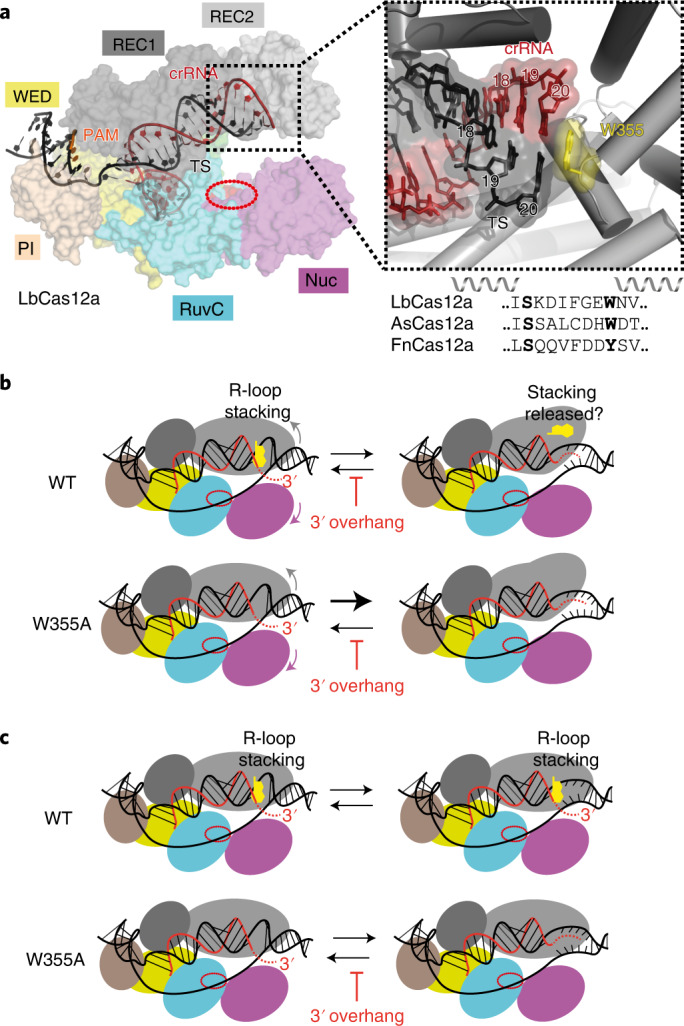
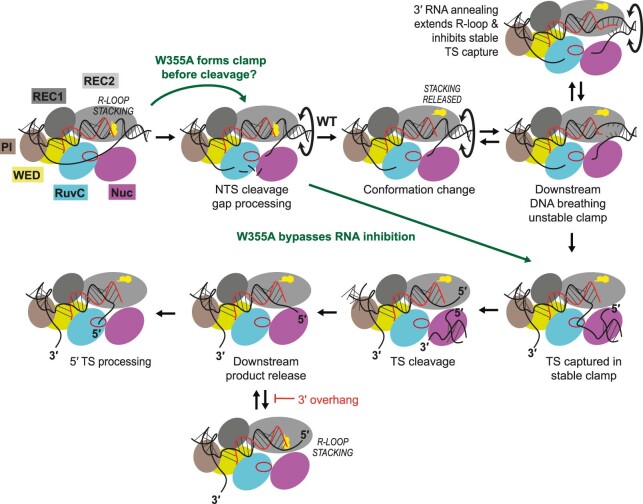
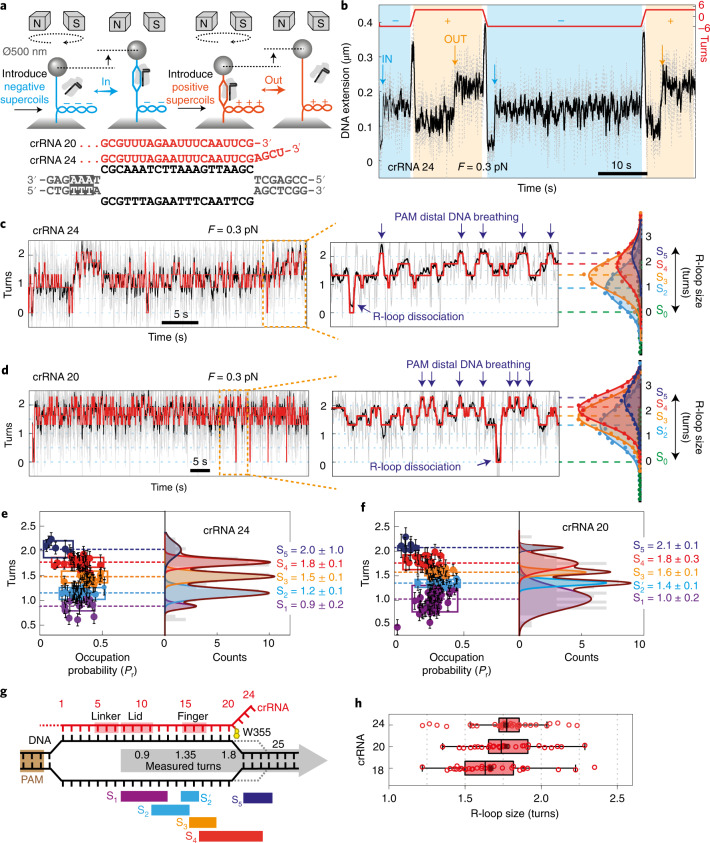
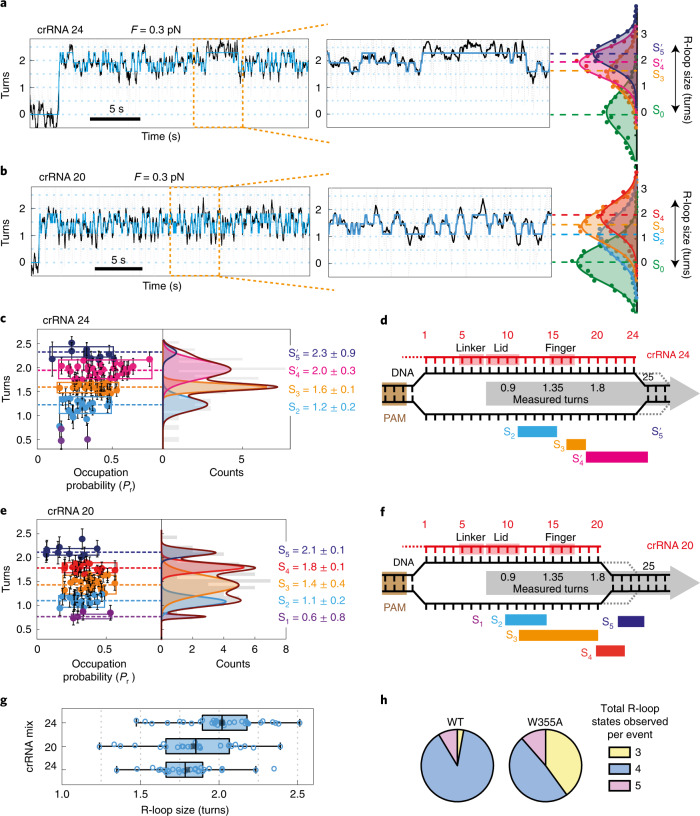
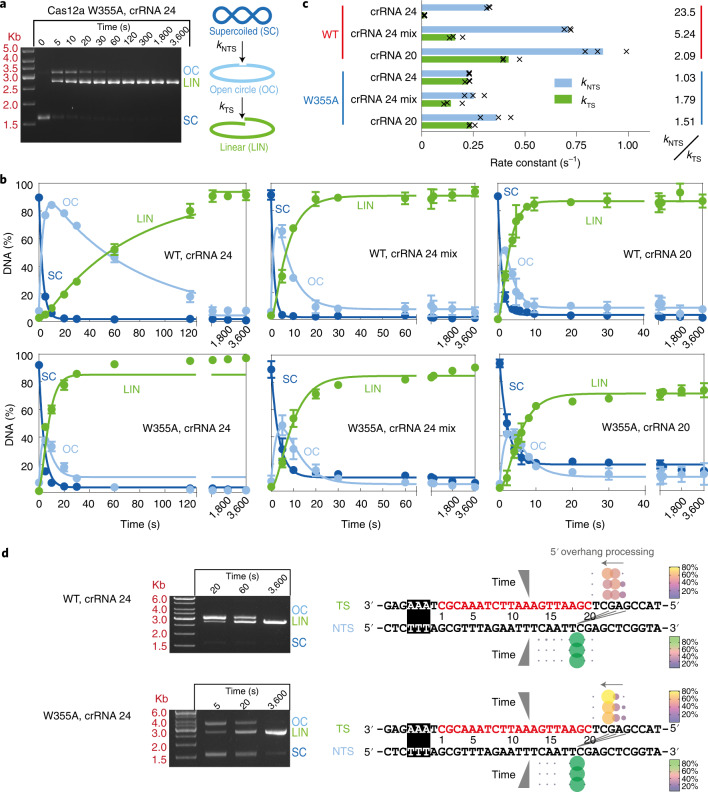
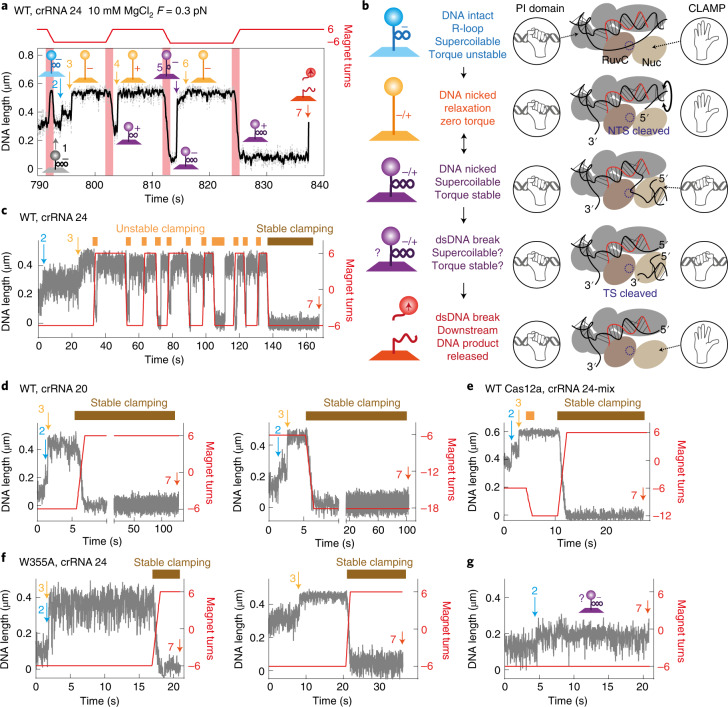
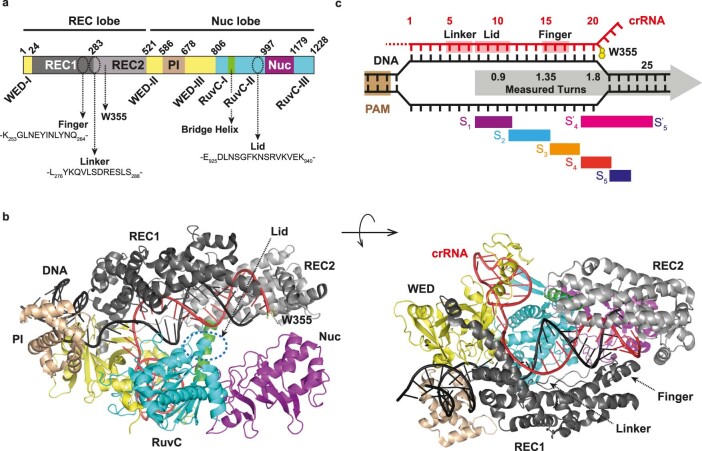
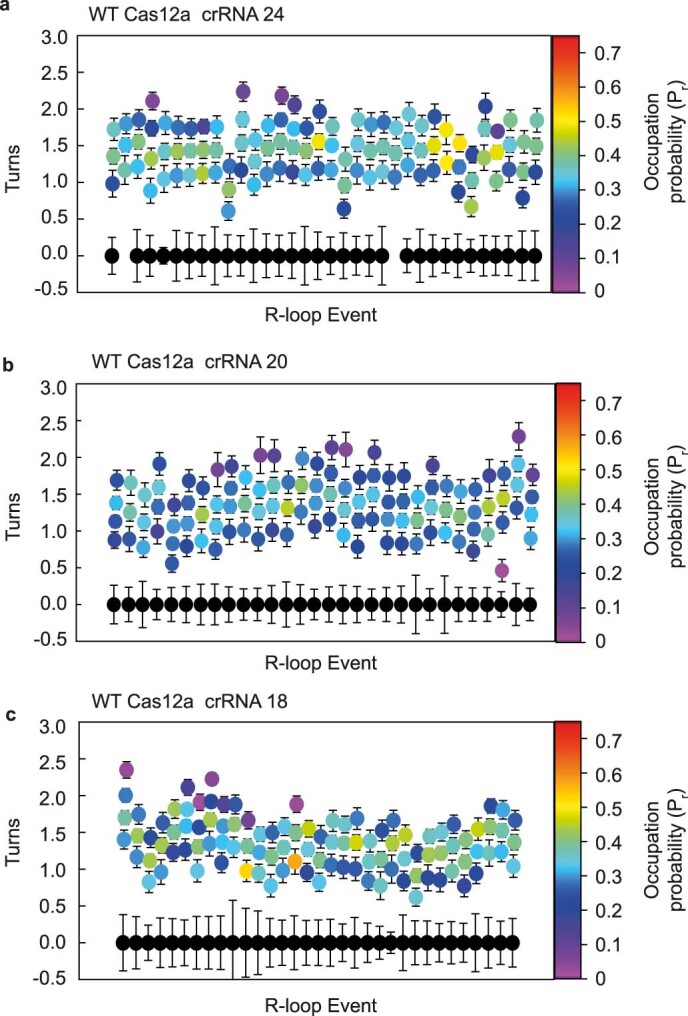
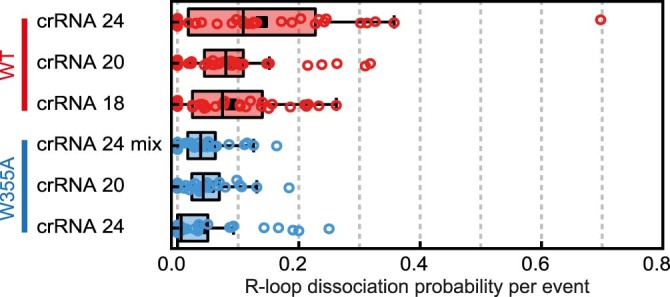
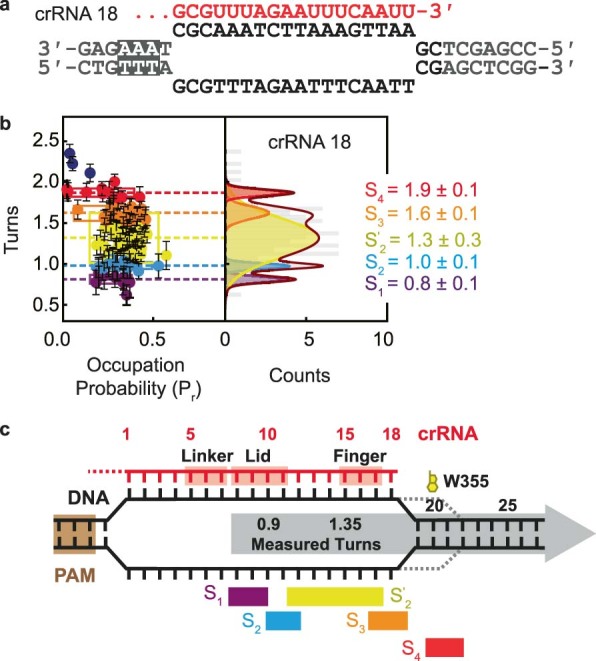
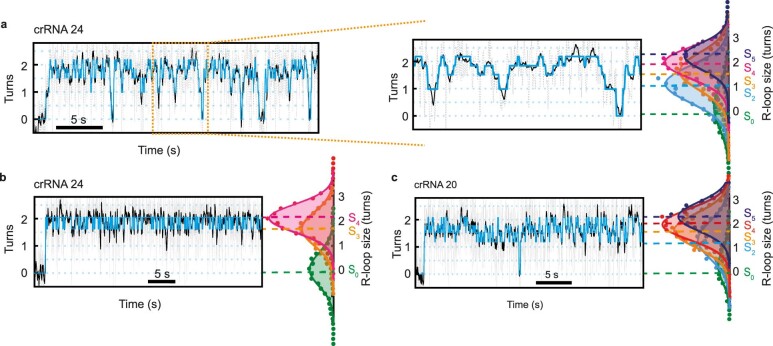
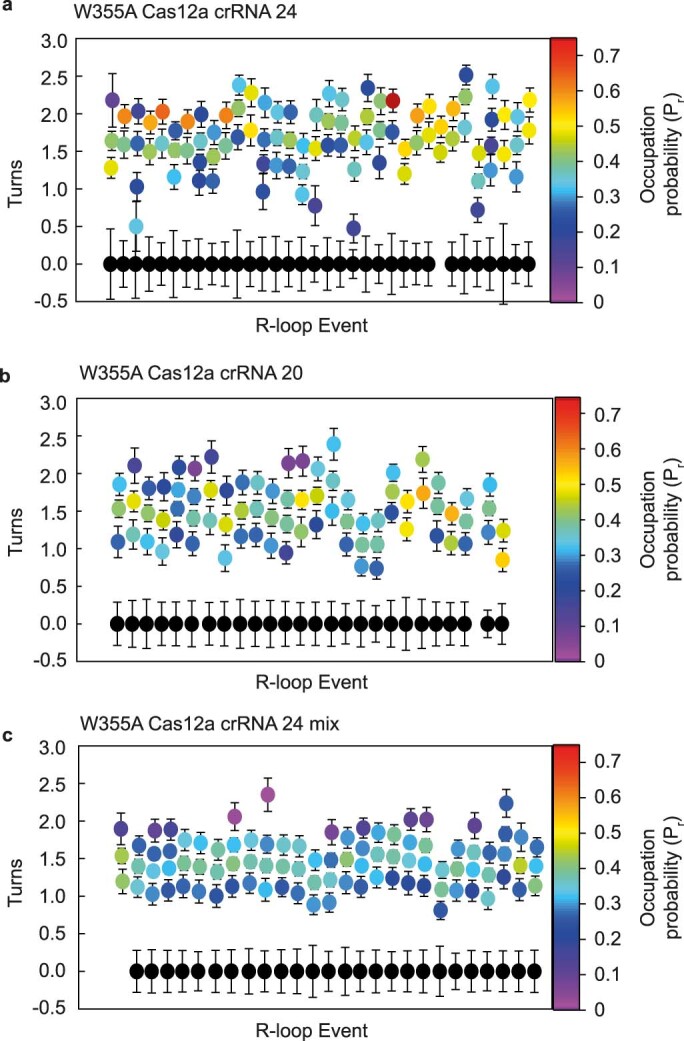
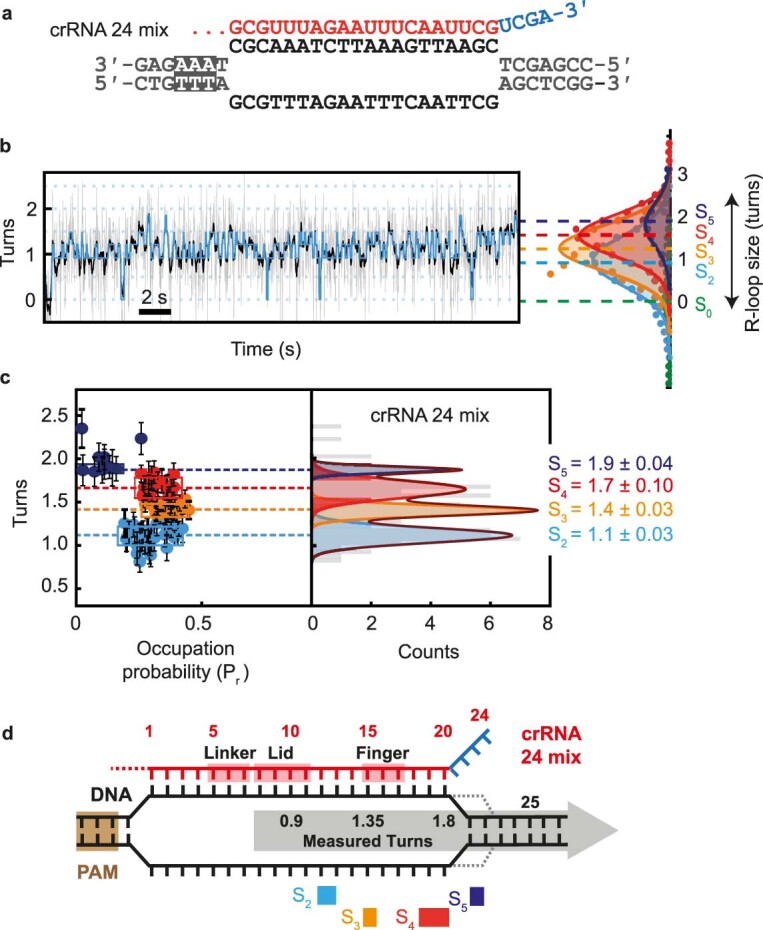
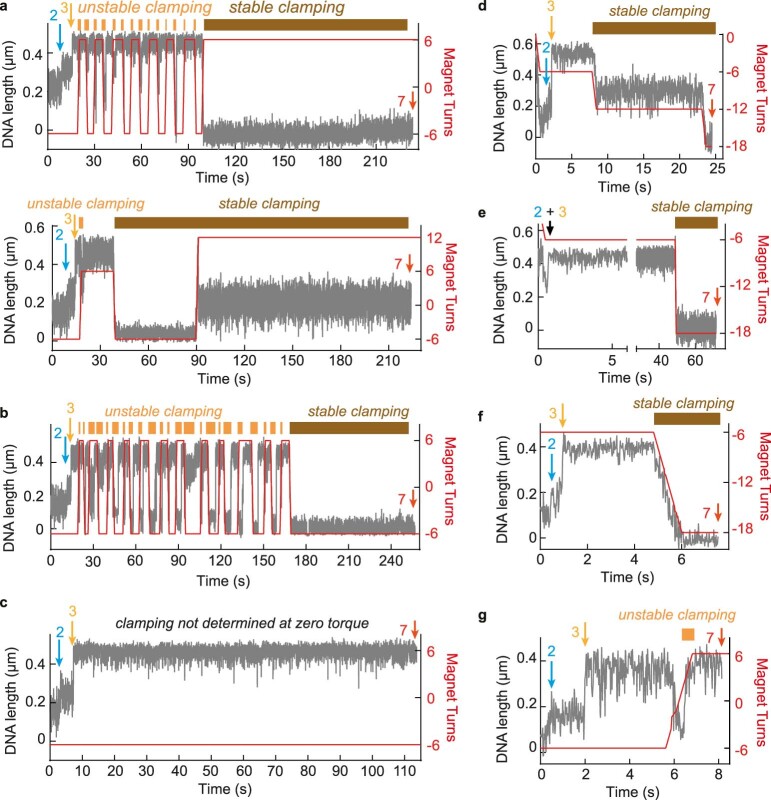
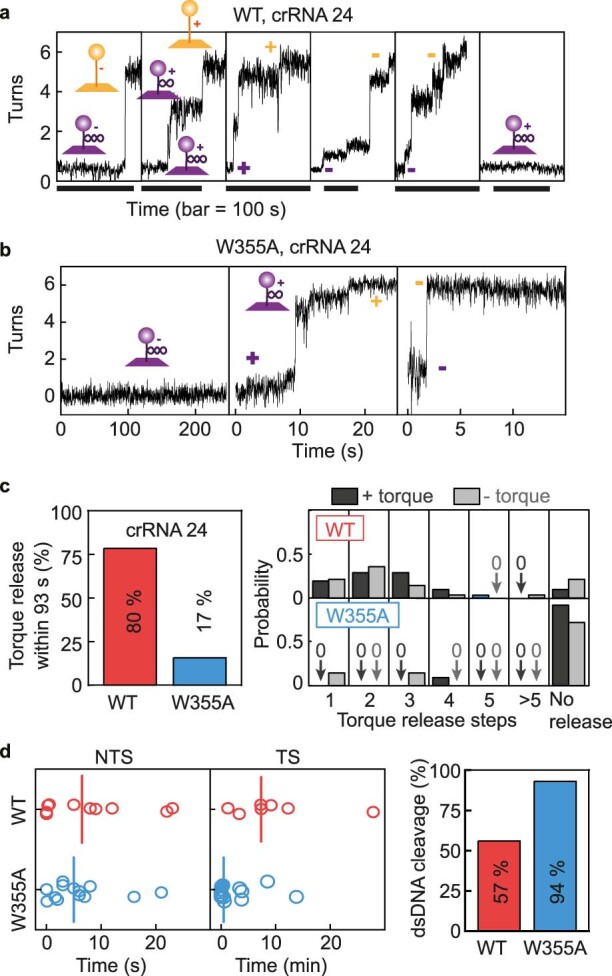
Clustered regularly interspaced short palindromic repeats (CRISPR)-Cas12a is widely used for genome editing and diagnostics, so it is important to understand how RNA-guided DNA recognition activates the cleavage of the target strand (TS) following non-target-strand (NTS) cleavage. Here we used single-molecule magnetic tweezers, gel-based assays and nanopore sequencing to explore DNA unwinding and cleavage. In addition to dynamic and heterogenous R-loop formation, we also directly observed transient double-stranded DNA unwinding downstream of the 20-bp heteroduplex and, following NTS cleavage, formation of a hyperstable 'clamped' Cas12a-DNA intermediate necessary for TS cleavage. Annealing of a 4-nucleotide 3' CRISPR RNA overhang to the unwound TS downstream of the heteroduplex inhibited clamping and slowed TS cleavage by ~16-fold. Alanine substitution of a conserved aromatic amino acid in the REC2 subdomain that normally caps the R-loop relieved this inhibition but favoured stabilisation of unwound states, suggesting that the REC2 subdomain regulates access of the 3' CRISPR RNA to downstream DNA.
成簇规律间隔短回文重复序列 (CRISPR)-Cas12a 广泛应用于基因组编辑和诊断,因此了解 RNA 引导的 DNA 识别如何在非靶链 (NTS) 切割后激活靶链 (TS) 的切割是很重要的。在这里,我们使用单分子磁镊、基于凝胶的测定法和纳米孔测序来探索 DNA 解旋和切割。除了动态和异质的 R 环形成,我们还直接观察到在 20 个碱基对异源双链体下游的瞬时双链 DNA 解旋,并且在 NTS 切割后,形成超稳定的'夹'Cas12a-DNA 中间体,这是 TS 切割所必需的。与异源双链体下游解旋的 TS 退火的 4 个核苷酸 3' CRISPR RNA 突出端抑制了夹合并将 TS 切割速度减慢了约 16 倍。在 REC2 亚结构域中保守的芳香族氨基酸的丙氨酸取代通常会阻止 R 环形成,从而缓解了这种抑制作用,但有利于解开状态的稳定,这表明 REC2 亚结构域调节了 3' CRISPR RNA 对下游 DNA 的访问。