Zhao Weicheng, Green Mark P, Marth Christina D, Liu Fan, Le Hieu H, Lynch Gordon S, Bell Alan W, Leury Brian J, Dunshea Frank R, Cottrell Jeremy J
School of Agriculture and Food, Faculty of Veterinary and Agricultural Sciences, The University of Melbourne, Parkville, VIC, 3010, Australia.
School of BioSciences, Faculty of Science, The University of Melbourne, Parkville, VIC, 3010, Australia.
J Anim Sci Biotechnol. 2022 Jul 15;13(1):76. doi: 10.1186/s40104-022-00730-2.
There is evidence that sow heat stress (HS) during gestation affects fetal development with implications for impaired muscle growth. We have previously demonstrated that maternal HS during early to mid-gestation compromised muscle fibre hyperplasia in developing fetal pigs. Thus, we hypothesised these phenotypic changes are associated with a change in expression of genes regulating fetal skeletal muscle development and metabolism. To test this, at d 60 of gestation, RNA sequencing and immunohistochemistry were performed on fetal longissimus dorsi (LD) muscle biopsies collected from pregnant gilts that had experienced either thermoneutral control (CON, 20 °C, n = 7 gilts, 18 LD samples) or controlled HS (cyclic 28 to 33 °C, n = 8 gilts, 23 LD samples) conditions for 3 weeks.
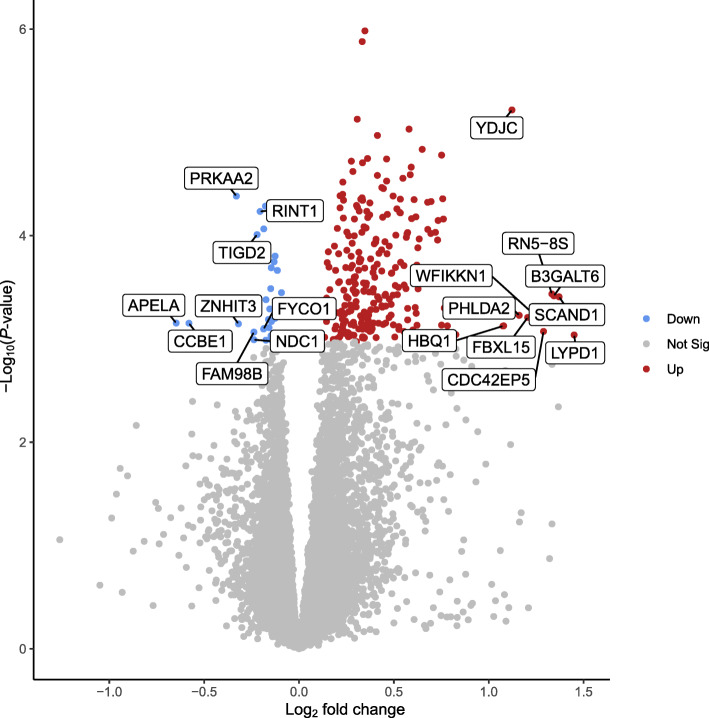
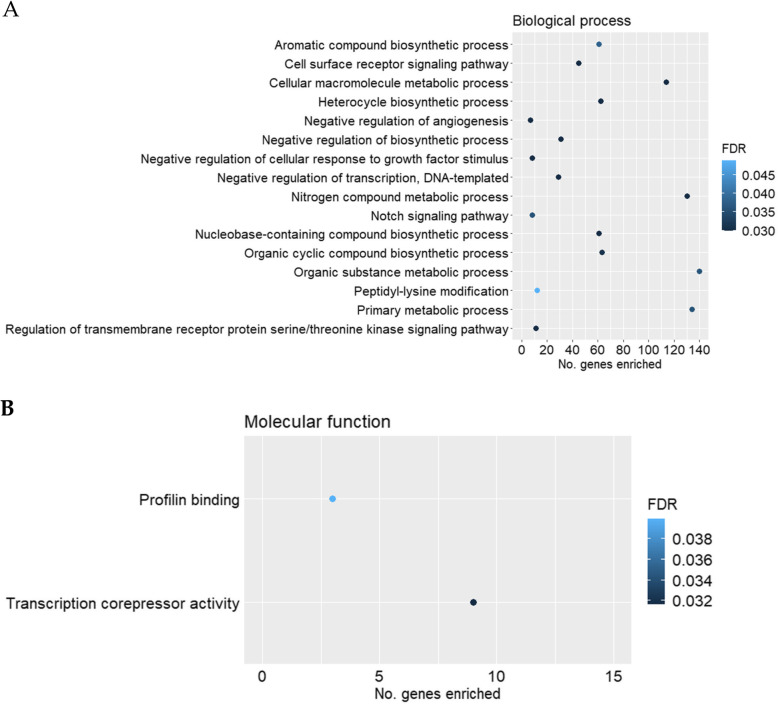
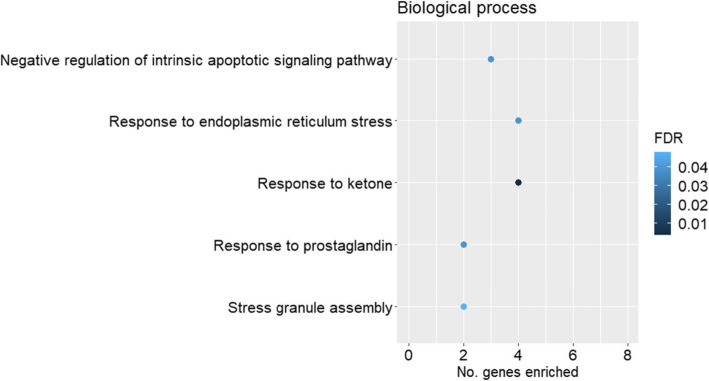
A total of 282 genes were differentially expressed between the HS and CON groups in female LD muscles (false discovery rate (FDR) ≤ 0.05), whereas no differentially expressed genes were detected in male LD muscles between the two groups (FDR > 0.05). Gestational HS increased the expression of genes associated with transcription corepressor activity, adipogenesis cascades, negative regulation of angiogenesis and pro-inflammatory signalling in female LD muscles. Immunohistochemical analyses revealed a decreased muscle vascularity density in fetuses from HS group for both sexes compared to those from the CON group (P = 0.004).
These results reveal gilt HS during early to mid-gestation altered gene expression profiles in fetal LD muscles in a sexually dimorphic manner. The molecular responses, including transcription and angiogenesis repressions and enhanced adipogenesis cascades, were exclusively observed in females. However, the associated reductions in muscle vascularity were observed independently of sexes. Collectively this may indicate female fetal pigs are more adaptive to gestational HS in terms of gene expression changes, and/or there may be sexually dimorphic differences with respect to the timing of muscle molecular responses to gestational HS.
有证据表明,妊娠期间母猪热应激(HS)会影响胎儿发育,对肌肉生长受损有影响。我们之前已经证明,妊娠早期至中期的母体热应激会损害发育中胎儿猪的肌纤维增生。因此,我们假设这些表型变化与调节胎儿骨骼肌发育和代谢的基因表达变化有关。为了验证这一点,在妊娠第60天,对从经历了热中性对照(CON,20°C,n = 7头母猪,18个背最长肌(LD)样本)或受控热应激(循环28至33°C,n = 8头母猪,23个LD样本)条件3周的妊娠后备母猪收集的胎儿背最长肌活检组织进行了RNA测序和免疫组织化学分析。
在雌性LD肌肉中,HS组和CON组之间共有282个基因差异表达(错误发现率(FDR)≤0.05),而在两组雄性LD肌肉中未检测到差异表达基因(FDR>0.05)。妊娠热应激增加了雌性LD肌肉中与转录共抑制活性、脂肪生成级联反应、血管生成负调节和促炎信号相关的基因表达。免疫组织化学分析显示,与CON组相比,HS组胎儿的肌肉血管密度降低(P = 0.004)。
这些结果表明,妊娠早期至中期的母猪热应激以性别二态性方式改变了胎儿LD肌肉中的基因表达谱。分子反应,包括转录和血管生成抑制以及脂肪生成级联反应增强,仅在雌性中观察到。然而,肌肉血管的相关减少与性别无关。总体而言,这可能表明雌性胎儿猪在基因表达变化方面对妊娠热应激更具适应性,和/或在肌肉对妊娠热应激的分子反应时间方面可能存在性别二态性差异。