Chindamo Maria Chiara, Paiva Edison Ferreira, do Carmo Plinio Resende, Rocha Ana Thereza Cavalcanti, Marques Marcos Arêas
Universidade Federal do Rio de Janeiro - UFRJ, Rio de Janeiro, RJ, Brasil.
Hospital Barra D'Or, Rede D'Or São Luiz, Rio de Janeiro, RJ, Brasil.
J Vasc Bras. 2022 Jun 27;21:e20210195. doi: 10.1590/1677-5449.202101951. eCollection 2022.
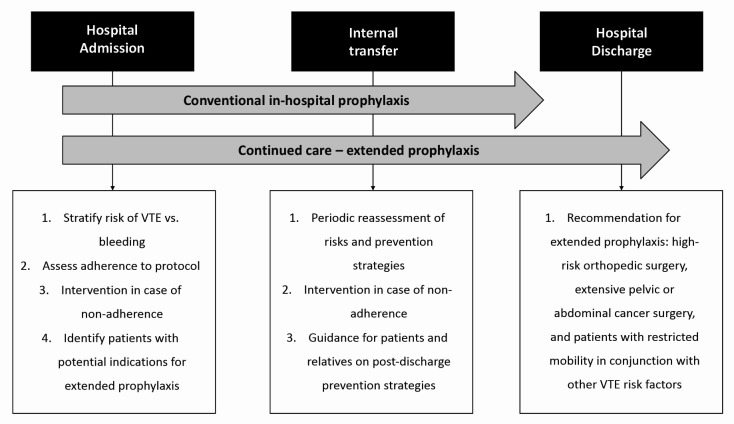
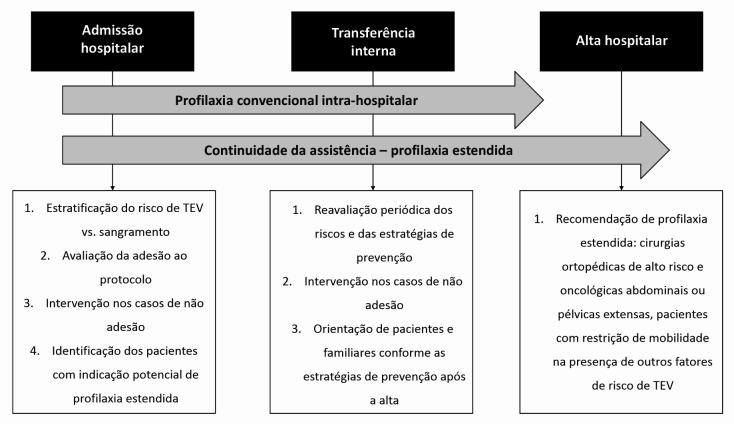
Patients hospitalized for acute medical and surgical illnesses are at risk of developing venous thromboembolism (VTE) during hospitalization and after discharge. Extended pharmacological prophylaxis beyond the hospital stay is recommended for patients undergoing surgeries at high risk for VTE and for selected groups of hospitalized medical patients. This practice involves several challenges, from identification of at-risk populations eligible for extended prophylaxis to choice of the most appropriate anticoagulant and definition of the ideal duration of use. This review will present the main VTE risk assessment models for hospitalized medical and surgical patients, the current recommendations for use of extended prophylaxis, and its limitations and benefits.
因急性内科和外科疾病住院的患者在住院期间及出院后有发生静脉血栓栓塞(VTE)的风险。对于VTE高危手术患者及部分住院内科患者,建议在出院后延长药物预防时间。这种做法面临诸多挑战,从确定适合延长预防的高危人群,到选择最合适的抗凝剂以及确定理想的使用时长。本综述将介绍针对住院内科和外科患者的主要VTE风险评估模型、目前关于延长预防的使用建议及其局限性和益处。