Khamchun Supaporn, Thakaeng Chunyanuch, Na Lampang Rattikan
Department of Medical Technology, School of Allied Health Sciences, University of Phayao, Phayao 56000, Thailand.
Unit of Excellence in Integrative Molecular Biomedicine, School of Allied Health Sciences, University of Phayao, Thailand.
Biomedicine (Taipei). 2022 Jun 1;12(2):19-30. doi: 10.37796/2211-8039.1297. eCollection 2022.
Systemic lupus erythematosus (SLE) is a chronic autoimmune disease that affecting multi-organs injury and failure. The rapid, precision, and specificity prognosis by laboratory investigations could prevent active stage and severity in the disease.
To systematically explore and investigate the candidate serum protein for development into the novel biomarker for severity prognosis of SLE patients.
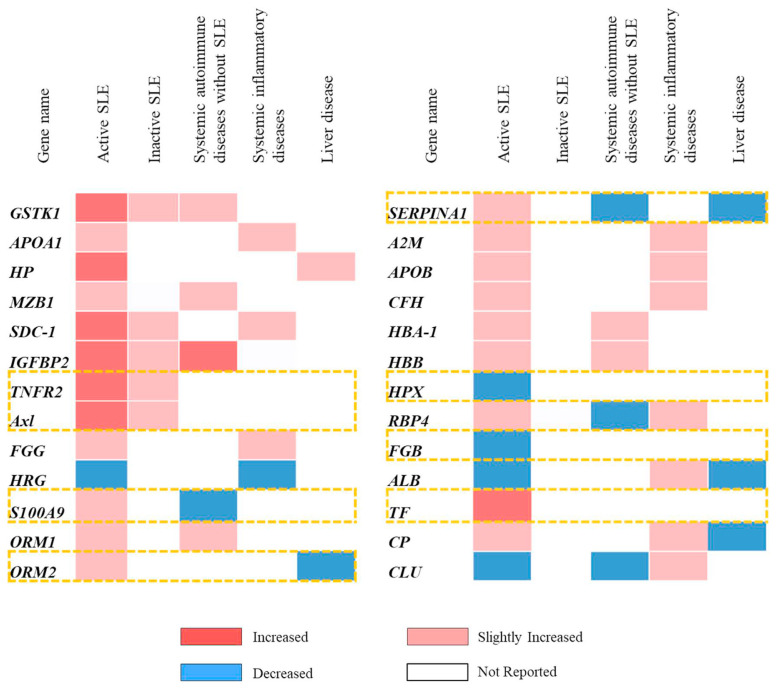
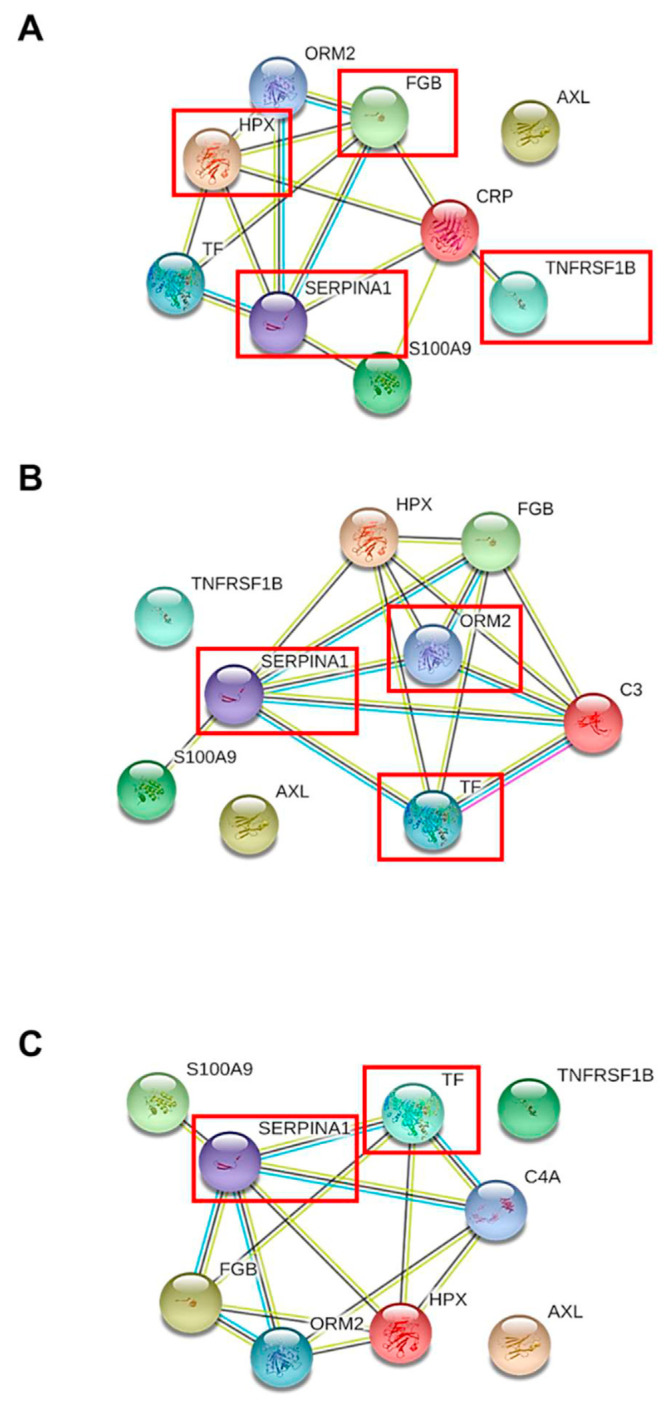
The proteins previously reported in abnormal level in serum/plasma of SLE patients since 2014-2020 were comprehensive collected. Thereafter, these serum proteins that found in other diseases were excluded. The association with molecules related to SLE severity of these candidate proteins were then predicted using bioinformatics STIRNG tool. The level of altered protein, which had the strong interaction to the severity molecules in serumof SLE patients was validated by Western blot, analyzed the correlation with anti-nuclear antigen (ANA) and performance of diagnosis, respectively.
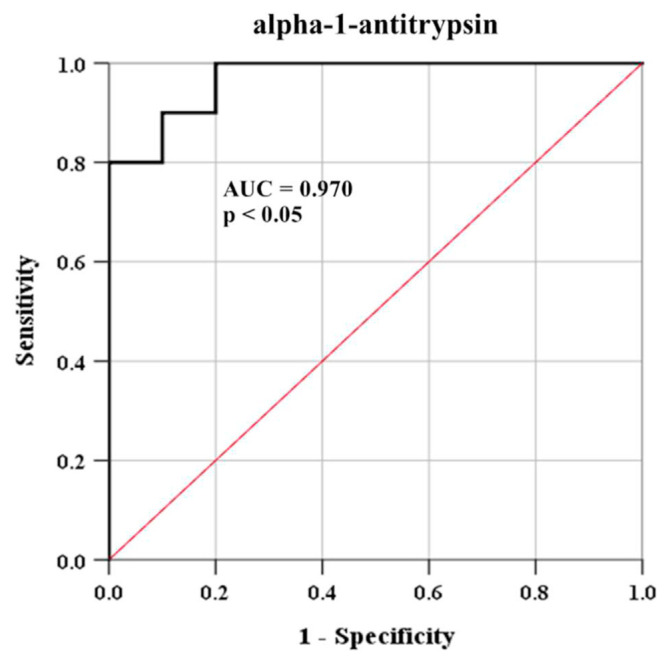
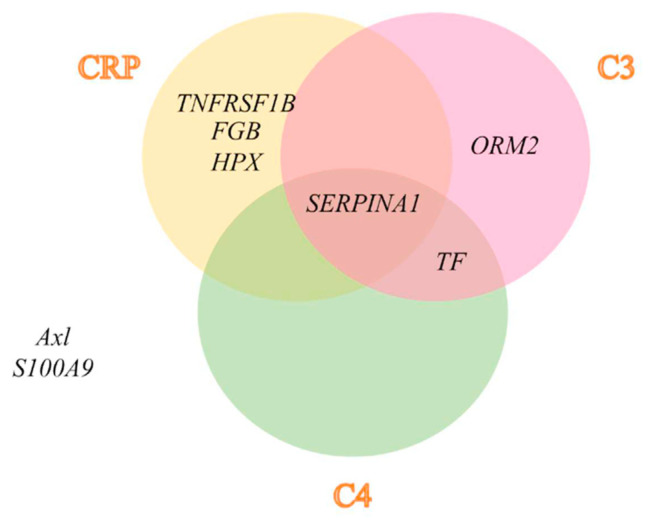
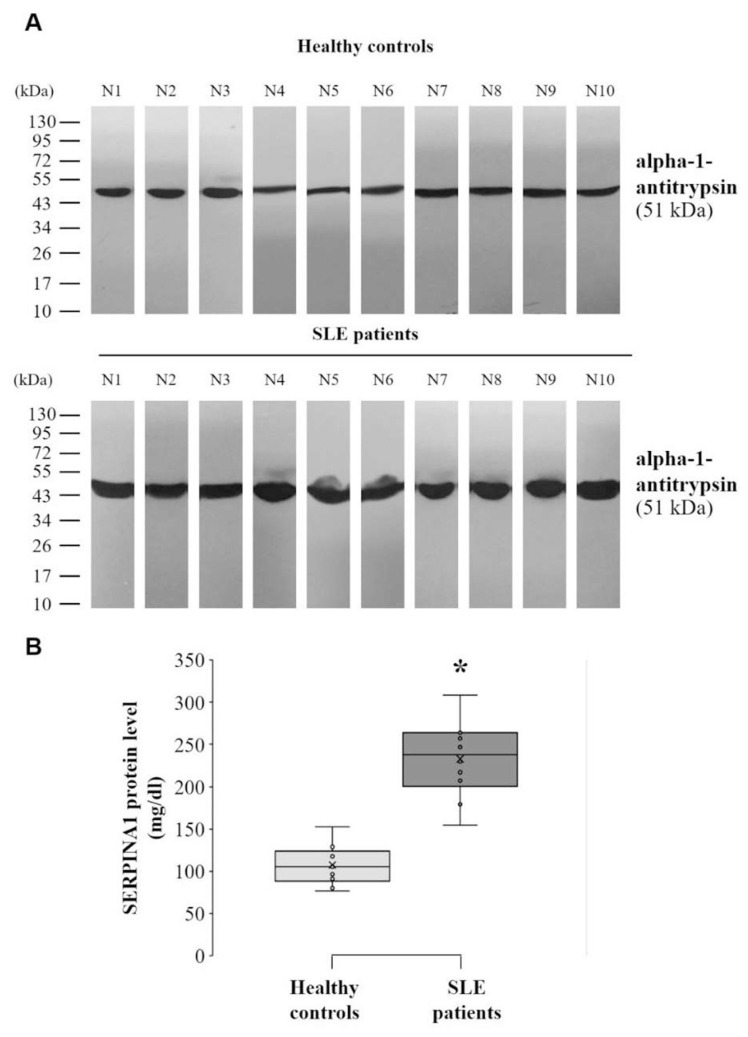
From 26 collected serum/plasma proteins, alpha-1-antitrypsin protein was found the abnormal level in only SLE patients and strongly associated with severity molecules including C-reactive protein (CRP), complement C3, and C4. Additionally, the validation of serum alpha-1-antitrypsin in SLE patients exhibited the higher level than healthy controls and also had the positive correlation with ANA titer (r = 0.710). Furthermore, the area under ROC curve for diagnostic power of alpha-1-antitrypsin was 0.970 with 100% sensitivity and 90% specificity at cut-off 0.131/total serum protein.
The higher level of alpha-1-antitrypsin in serum samples of SLE patients indicated as the novel biomarker for reliable and specific prognosis of disease severity.
系统性红斑狼疮(SLE)是一种慢性自身免疫性疾病,可导致多器官损伤和功能衰竭。通过实验室检查进行快速、精准且特异的预后评估,能够预防该疾病的活动期及严重程度。
系统地探索和研究候选血清蛋白,以开发成为SLE患者疾病严重程度预后的新型生物标志物。
全面收集2014年至2020年期间先前报道的SLE患者血清/血浆中水平异常的蛋白质。此后,排除在其他疾病中发现的这些血清蛋白。然后使用生物信息学STIRNG工具预测这些候选蛋白与SLE严重程度相关分子的关联。通过蛋白质免疫印迹法验证在SLE患者血清中与严重程度分子有强烈相互作用的改变蛋白的水平,分别分析其与抗核抗原(ANA)的相关性及诊断性能。
在收集的26种血清/血浆蛋白中,仅在SLE患者中发现α-1-抗胰蛋白酶蛋白水平异常,且与包括C反应蛋白(CRP)、补体C3和C4在内的严重程度分子密切相关。此外,对SLE患者血清α-1-抗胰蛋白酶的验证显示其水平高于健康对照,并且与ANA滴度呈正相关(r = 0.710)。此外,α-1-抗胰蛋白酶诊断效能的ROC曲线下面积为0.970,在截断值为0.131/总血清蛋白时,灵敏度为100%,特异性为90%。
SLE患者血清样本中较高水平的α-1-抗胰蛋白酶表明其可作为疾病严重程度可靠且特异预后的新型生物标志物。