Department of Epidemiology, School of Public Health, Nantong University, Nantong, China.
Department of Pediatrics, No. 8 People's Hospital of Wuxi, Wuxi, China.
Front Public Health. 2022 Jun 28;10:899045. doi: 10.3389/fpubh.2022.899045. eCollection 2022.
The functional causal single-nucleotide polymorphisms (SNPs) associated with susceptibility to Pneumonia (MPP) have scarcely been identified. In this study, we aimed to analyze the association between the functional expression quantitative trait locus (eQTL)-SNPs and the risk of MPP.
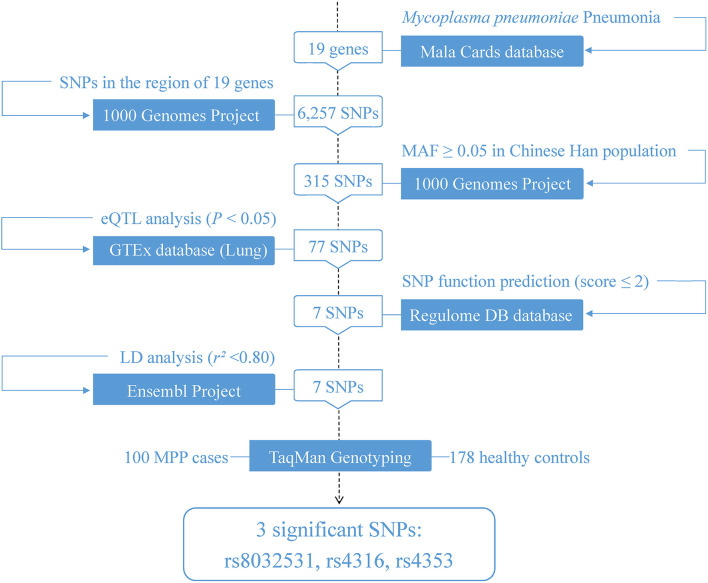
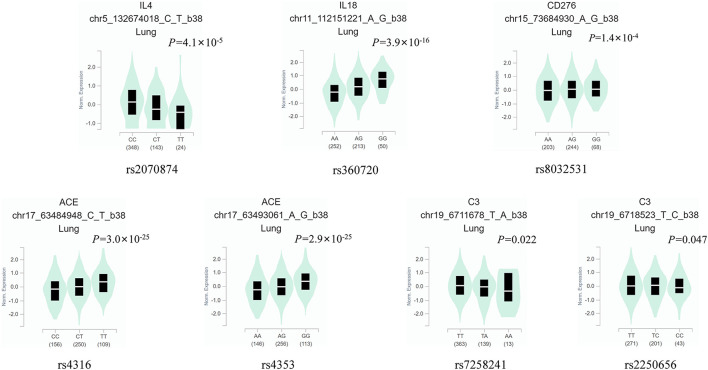
First, we identified reported genes associated with MPP from the human disease database, MalaCards. After investigating multiple databases, we systematically selected seven functional eQTL-SNPs (rs2070874, rs360720, rs8032531, rs4316, rs4353, rs7258241, and rs2250656). Finally, the selected eQTL-SNPs were genotyped using the TaqMan genotyping technology, and compared between 100 children with MPP and 178 healthy controls.
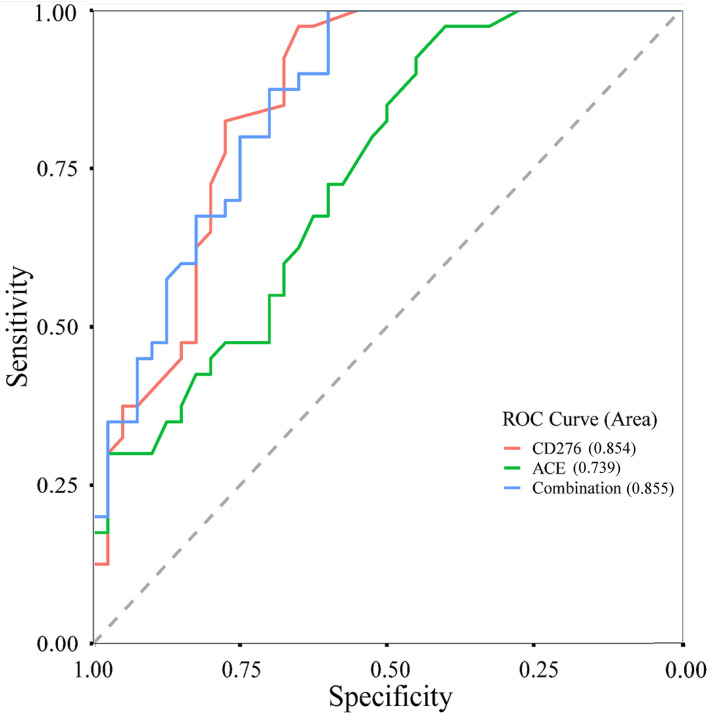
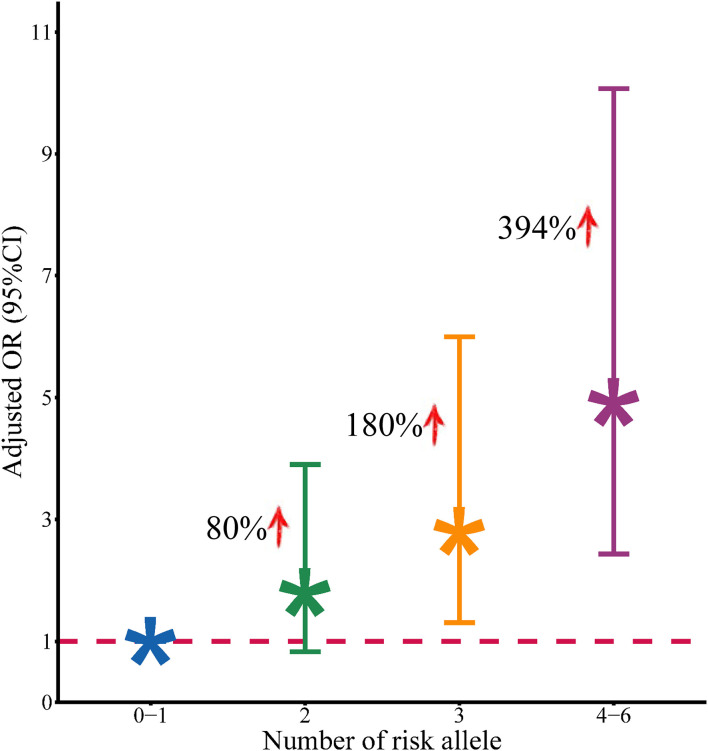
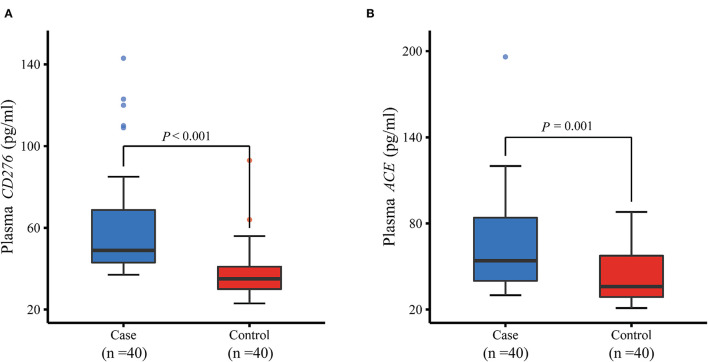
We found that three eQTL-SNPs (rs8032531 in and rs4316 and rs4353 in ) were significantly associated with susceptibility to MPP. Joint analysis of the three eQTL-SNPs revealed that the risk of MPP increased with an increase in the number of risk alleles present. Plasma protein expression levels of CD276 and ACE were distinctively higher in children with MPP than in healthy children (CD276: < 0.001; ACE: = 0.001).
Functional eQTL-SNPs in and may affect the susceptibility to MPP. The risk of developing MPP is higher in patients harboring a greater number of unfavorable alleles of the aforementioned SNPs.
与肺炎易感性相关的功能性因果单核苷酸多态性(SNP)尚未被确定。本研究旨在分析功能表达数量性状基因座(eQTL)-SNP 与肺炎易感性之间的关联。
首先,我们从人类疾病数据库 MalaCards 中鉴定出与肺炎相关的报告基因。在调查了多个数据库后,我们系统地选择了七个功能 eQTL-SNP(rs2070874、rs360720、rs8032531、rs4316、rs4353、rs7258241 和 rs2250656)。最后,使用 TaqMan 基因分型技术对选定的 eQTL-SNP 进行基因分型,并在 100 名肺炎患儿和 178 名健康对照者之间进行比较。
我们发现三个 eQTL-SNP(位于 的 rs8032531、位于 和 的 rs4316 和 rs4353)与肺炎易感性显著相关。三个 eQTL-SNP 的联合分析表明,随着风险等位基因数的增加,肺炎的发病风险增加。与健康儿童相比,肺炎患儿的 CD276 和 ACE 血浆蛋白表达水平明显升高(CD276:<0.001;ACE:=0.001)。
位于 和 中的功能性 eQTL-SNP 可能影响肺炎的易感性。携带上述 SNP 不利等位基因数量较多的患者发生肺炎的风险更高。