Department of Dermatology, Teikyo University School of Medicine, Tokyo, Japan.
Front Immunol. 2022 Jun 28;13:941071. doi: 10.3389/fimmu.2022.941071. eCollection 2022.
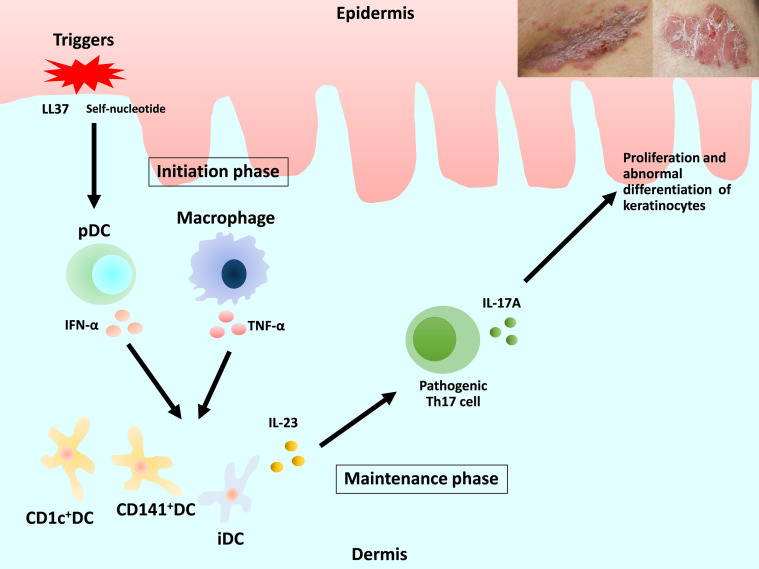
Psoriasis is a chronic inflammatory skin disease characterized by scaly indurated erythema. This disease impairs patients' quality of life enormously. Pathological findings demonstrate proliferation and abnormal differentiation of keratinocytes and massive infiltration of inflammatory immune cells. The pathogenesis of psoriasis is complicated. Among immune cells, dendritic cells play a pivotal role in the development of psoriasis in both the initiation and the maintenance phases. In addition, it has been indicated that macrophages contribute to the pathogenesis of psoriasis especially in the initiation phase, although studies on macrophages are limited. In this article, we review the roles of dendritic cells and macrophages in the pathogenesis of psoriasis.
银屑病是一种慢性炎症性皮肤病,其特征为鳞屑性、硬化性红斑。该病极大地损害了患者的生活质量。病理发现表明角质形成细胞的增殖和异常分化以及炎症免疫细胞的大量浸润。银屑病的发病机制很复杂。在免疫细胞中,树突状细胞在银屑病的发生和维持阶段的发展中起着关键作用。此外,已经表明巨噬细胞有助于银屑病的发病机制,特别是在起始阶段,尽管对巨噬细胞的研究有限。本文综述了树突状细胞和巨噬细胞在银屑病发病机制中的作用。