Department of Urology, Beijing Chaoyang Hospital, Capital Medical University, No. 8 Gongti South Road, Chaoyang District, Beijing, 100020, China.
Stem Cell Res Ther. 2022 Jul 15;13(1):297. doi: 10.1186/s13287-022-02986-x.
Human urine-derived stem cells (USCs)-derived exosomes (USC-Exo) could improve kidney ischemia/reperfusion injury (IRI), while the underlying mechanisms of this protective effect remain unclear.
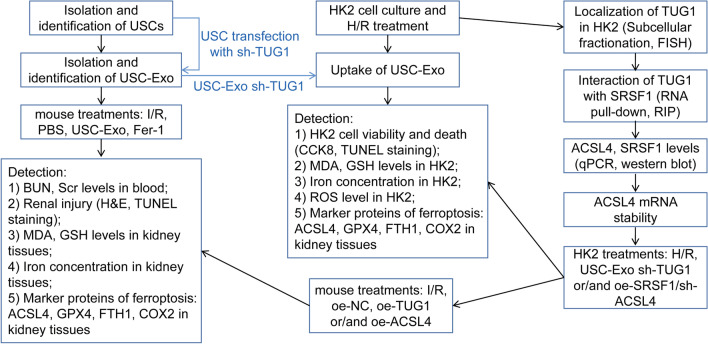
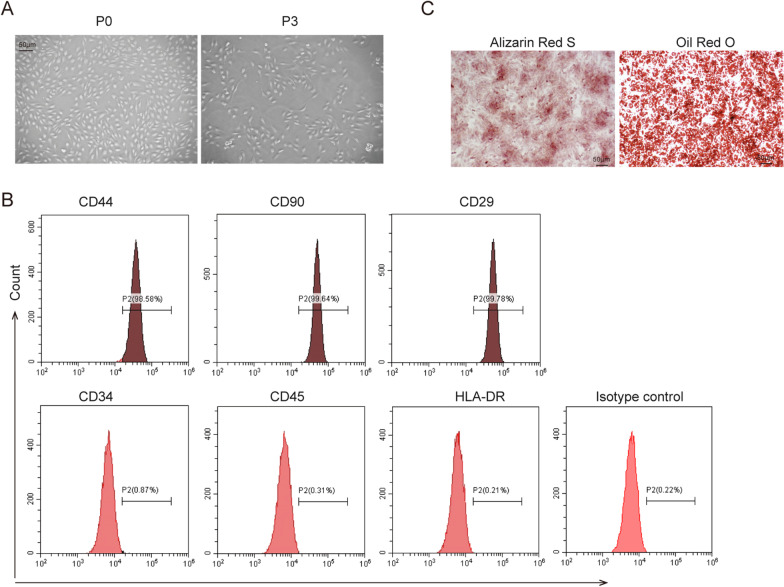
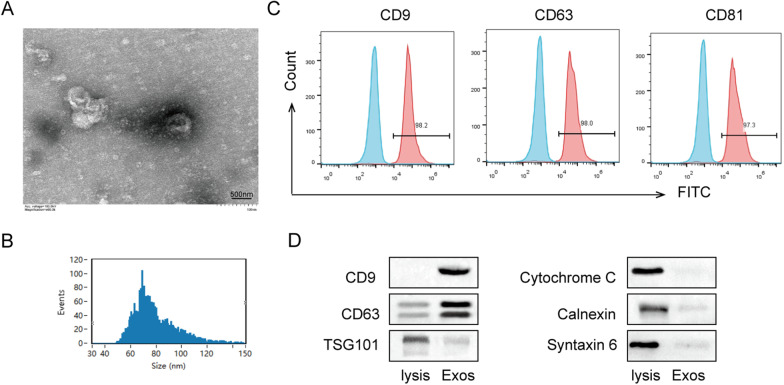
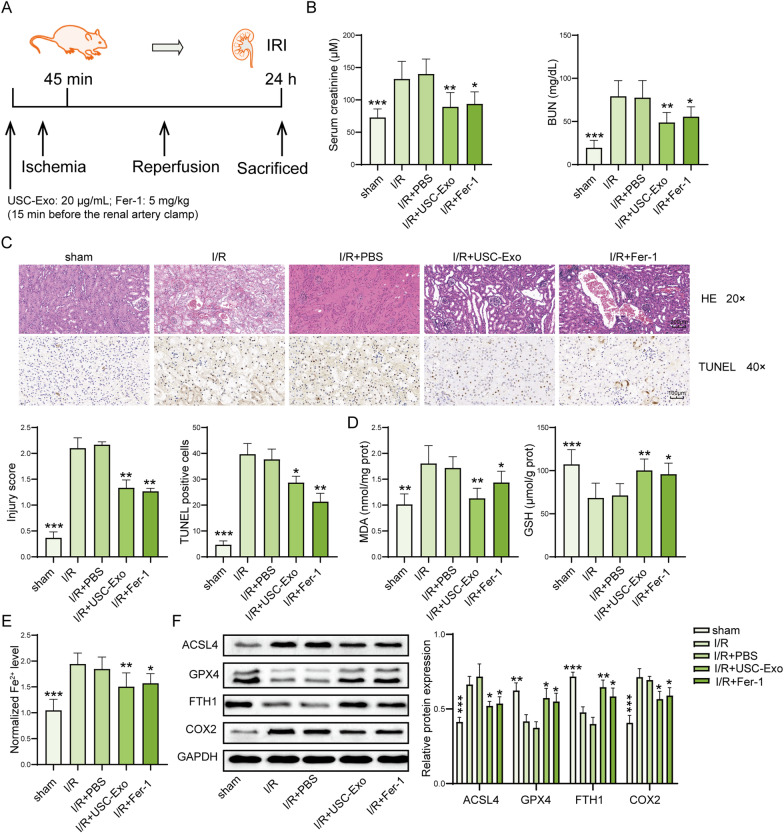
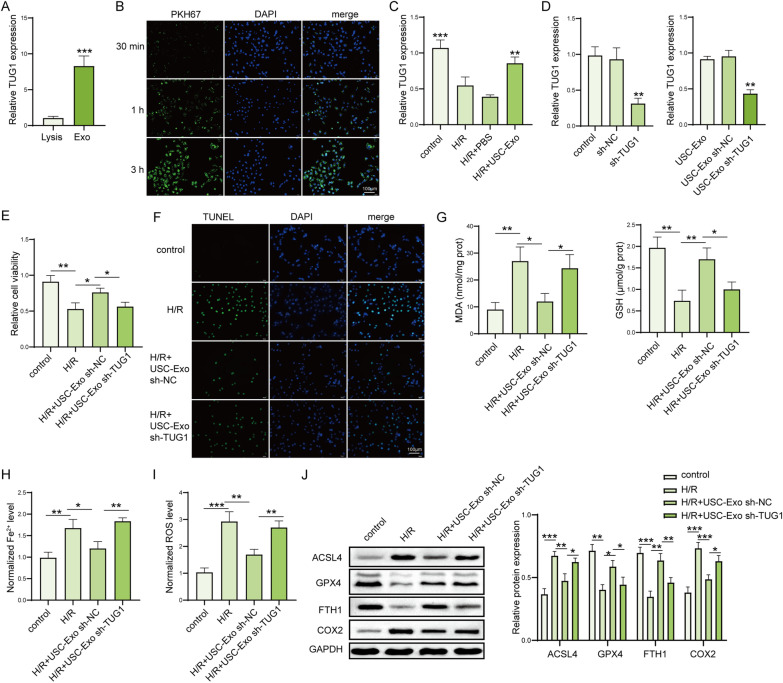
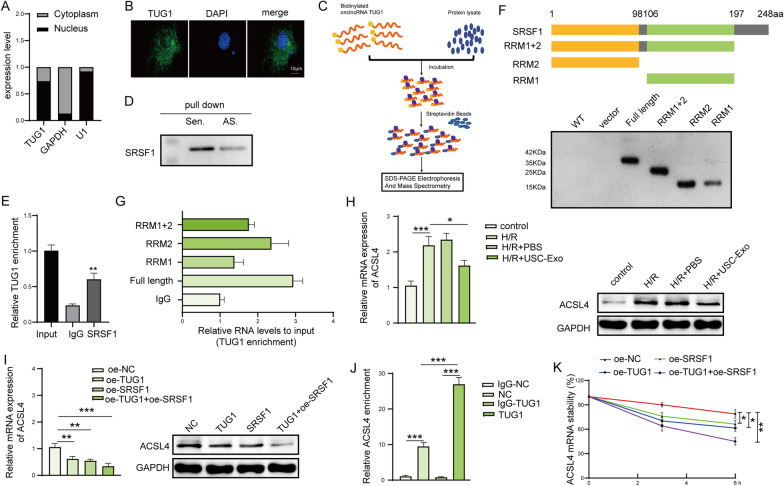
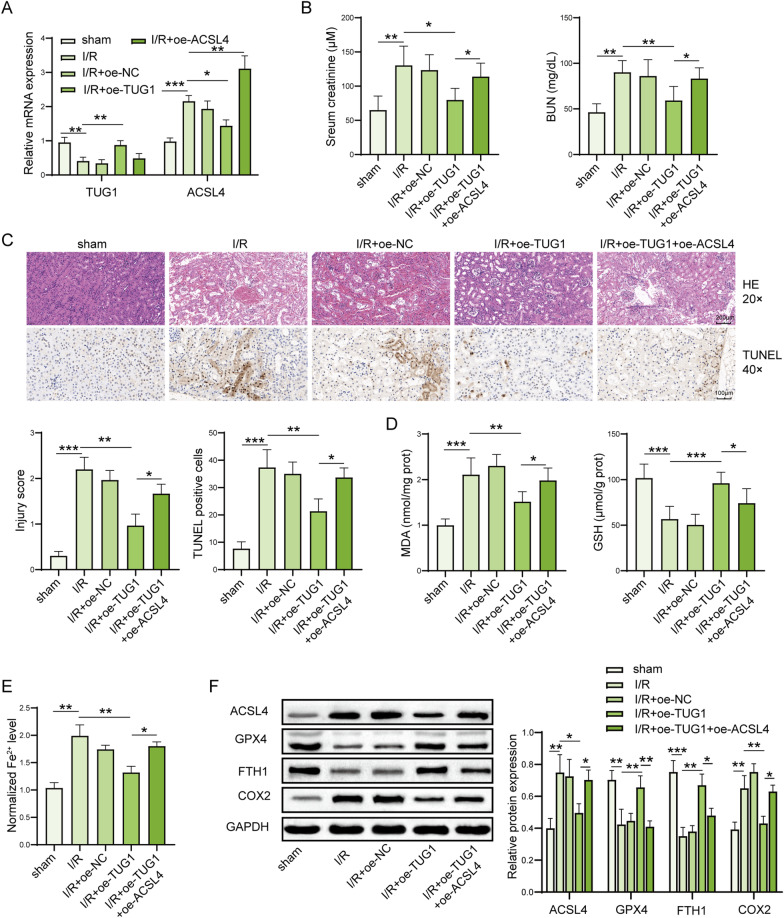
Human USCs and USC-Exo were isolated and verified by morphology and specific biomarkers. The effects of USC-Exo on ferroptosis and kidney injury were detected in the IRI-induced acute kidney injury (AKI) model in C57BL/6 mice. The effects of USC-Exo on ferroptosis and lncRNA taurine-upregulated gene 1 (TUG1) were detected in hypoxia/reoxygenation (H/R)-treated human proximal tubular epithelial cells (HK-2). The interaction of SRSF1 and TUG1, ACSL4 was checked via RNA pull-down/RIP and RNA stability assays. The effects of LncRNA TUG1 on SRSF1/ACSL4-mediated ferroptosis were verified in H/R-treated HK-2 cells and the IRI-induced AKI mouse models.
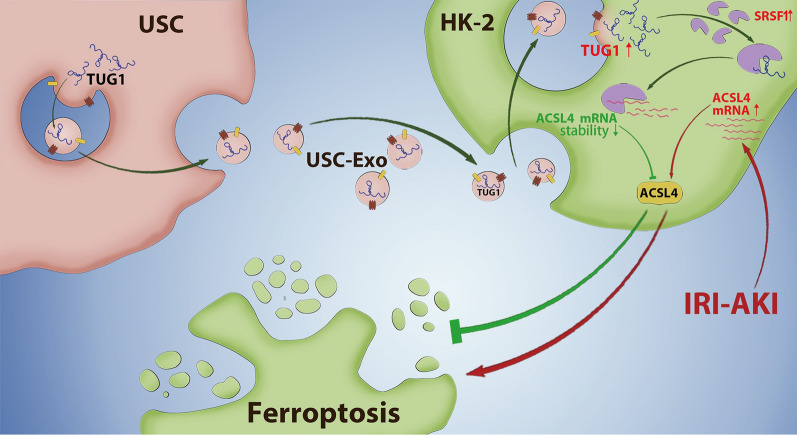
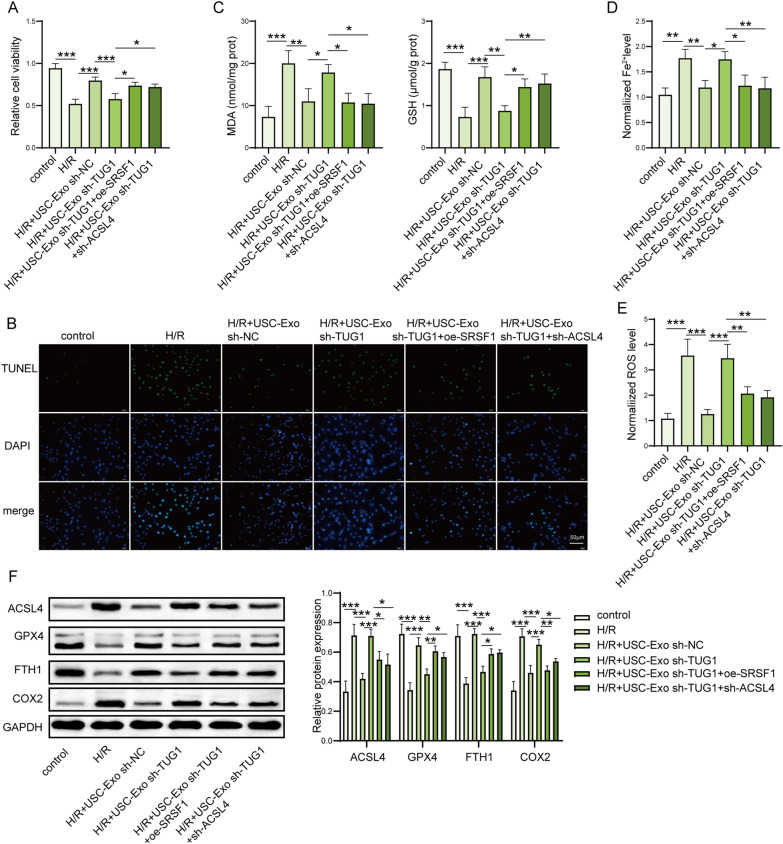
USC-Exo treatment improved kidney injury and ameliorated ferroptosis in IRI-induced AKI mouse models. USC-Exo were rich in lncRNA TUG1, which suppressed ferroptosis in HK-2 cells exposed to H/R. Mechanistically, lncRNA TUG1 regulates the stability of ACSL4 mRNA by interacting with RNA-binding protein SRSF1. In addition, SRSF1 upregulation or ACSL4 downregulation partially reversed the protective effect of lncRNA TUG1 on ferroptosis in H/R-treated HK-2 cells. Further, ACSL4 upregulation partially reversed TUG1's repression on kidney injury and ferroptosis in IRI-induced AKI mice.
Collectively, lncRNA TUG1 carried by USC-Exo regulated ASCL4-mediated ferroptosis by interacting with SRSF1 and then protected IRI-induced AKI. Potentially, USC-Exo rich in lncRNA TUG1 can serve as a promising therapeutic method for IRI-AKI.
人尿源干细胞(USCs)衍生的外泌体(USC-Exo)可改善肾缺血/再灌注损伤(IRI),但其保护作用的潜在机制尚不清楚。
通过形态学和特异性标志物分离和验证人 USCs 和 USC-Exo。在 C57BL/6 小鼠的 IRI 诱导的急性肾损伤(AKI)模型中检测 USC-Exo 对铁死亡和肾损伤的影响。在缺氧/复氧(H/R)处理的人近端肾小管上皮细胞(HK-2)中检测 USC-Exo 对铁死亡和长链非编码 RNA 牛磺酸上调基因 1(TUG1)的影响。通过 RNA 下拉/RIP 和 RNA 稳定性测定检查 SRSF1 和 TUG1、ACSL4 之间的相互作用。在 H/R 处理的 HK-2 细胞和 IRI 诱导的 AKI 小鼠模型中验证长链非编码 RNA TUG1 对 SRSF1/ACSL4 介导的铁死亡的影响。
USC-Exo 治疗可改善 IRI 诱导的 AKI 小鼠模型中的肾损伤并改善铁死亡。USC-Exo 富含长链非编码 RNA TUG1,可抑制 H/R 暴露的 HK-2 细胞中的铁死亡。在机制上,lncRNA TUG1 通过与 RNA 结合蛋白 SRSF1 相互作用调节 ACSL4 mRNA 的稳定性。此外,lncRNA TUG1 的上调或 ACSL4 的下调部分逆转了 lncRNA TUG1 对 H/R 处理的 HK-2 细胞中铁死亡的保护作用。此外,ACSL4 的上调部分逆转了 TUG1 对 IRI 诱导的 AKI 小鼠肾损伤和铁死亡的抑制作用。
总之,USC-Exo 携带的 lncRNA TUG1 通过与 SRSF1 相互作用调节 ASCL4 介导的铁死亡,从而保护 IRI 诱导的 AKI。潜在地,富含 lncRNA TUG1 的 USC-Exo 可以作为治疗 IRI-AKI 的有前途的方法。