Department of Infectious Diseases, Sir Run Run Shaw Hospital, Zhejiang University School of Medicine, Hangzhou, China.
Regional Medical Center for National Institute of Respiratory Diseases, Sir Run Run Shaw Hospital, Zhejiang University School of Medicine, Hangzhou, China.
Front Immunol. 2022 Jun 30;13:927955. doi: 10.3389/fimmu.2022.927955. eCollection 2022.
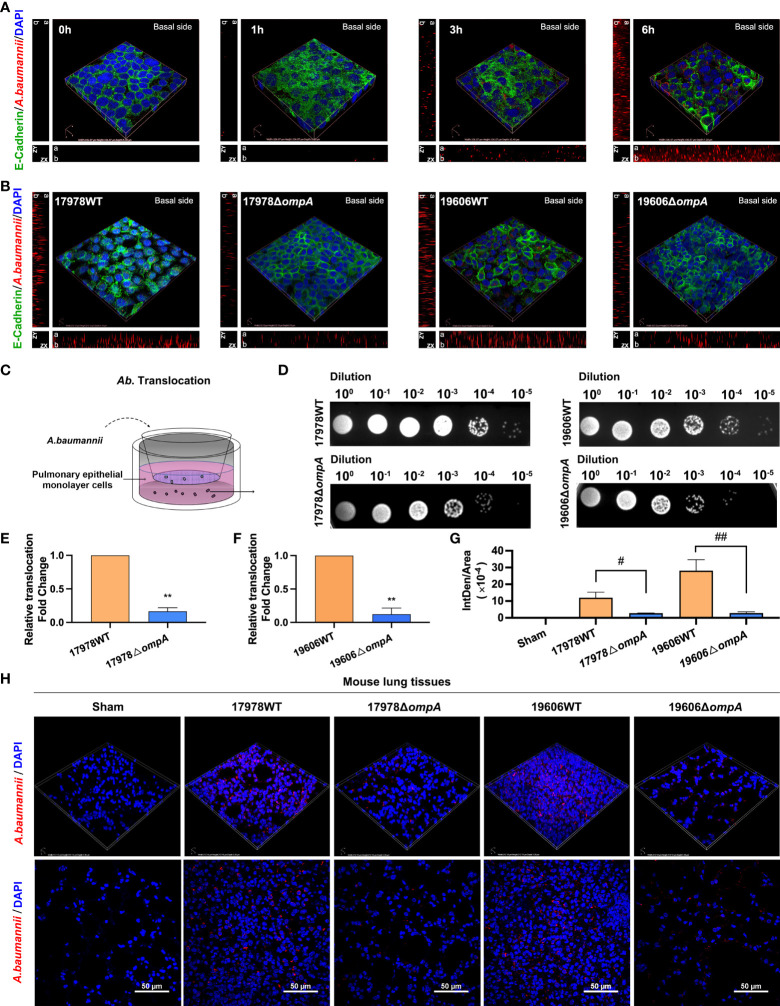
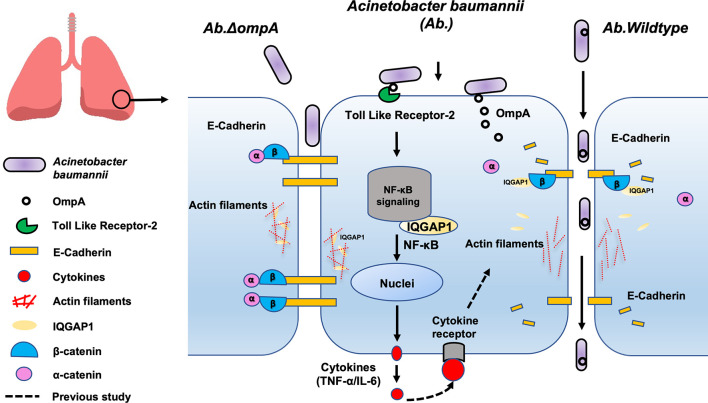
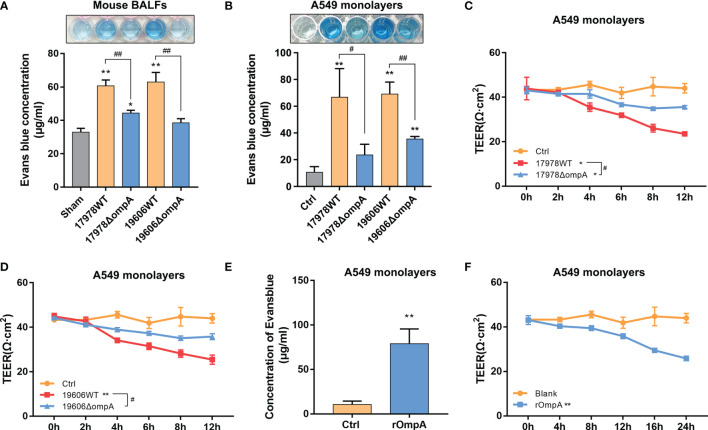
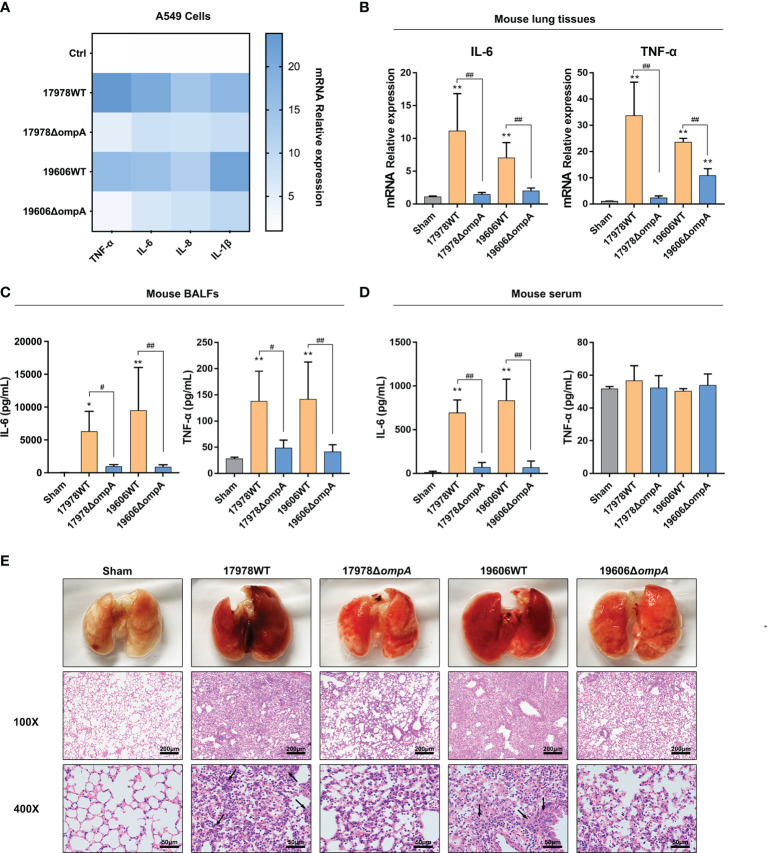
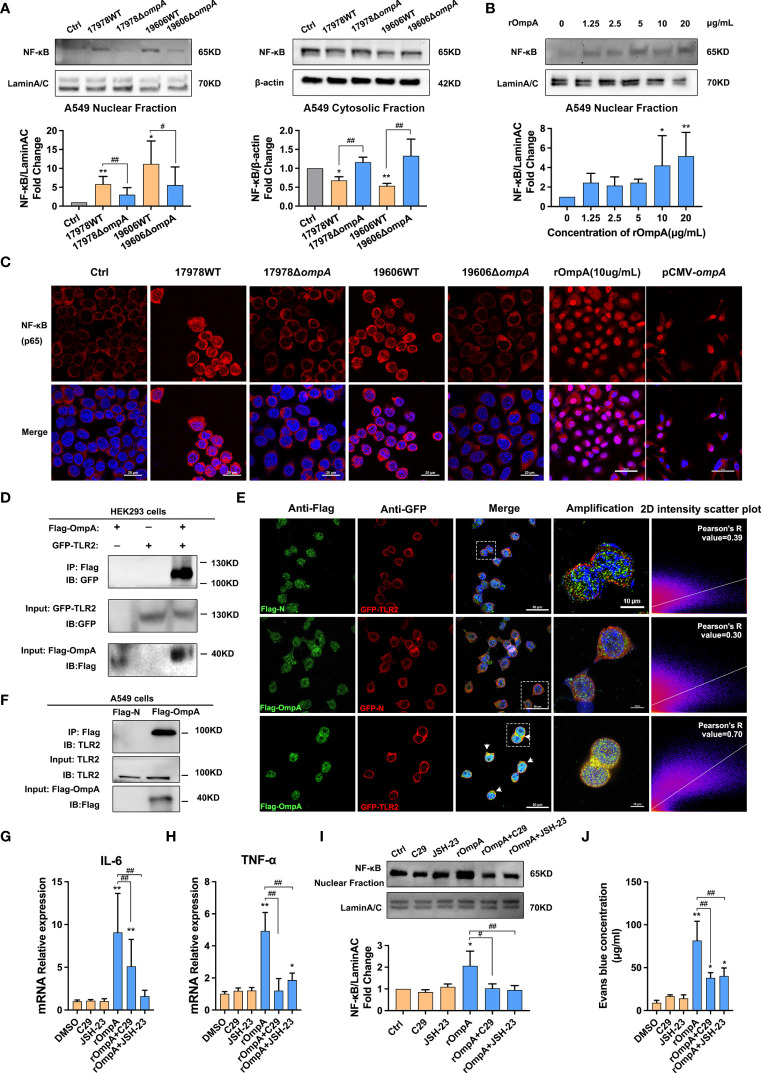
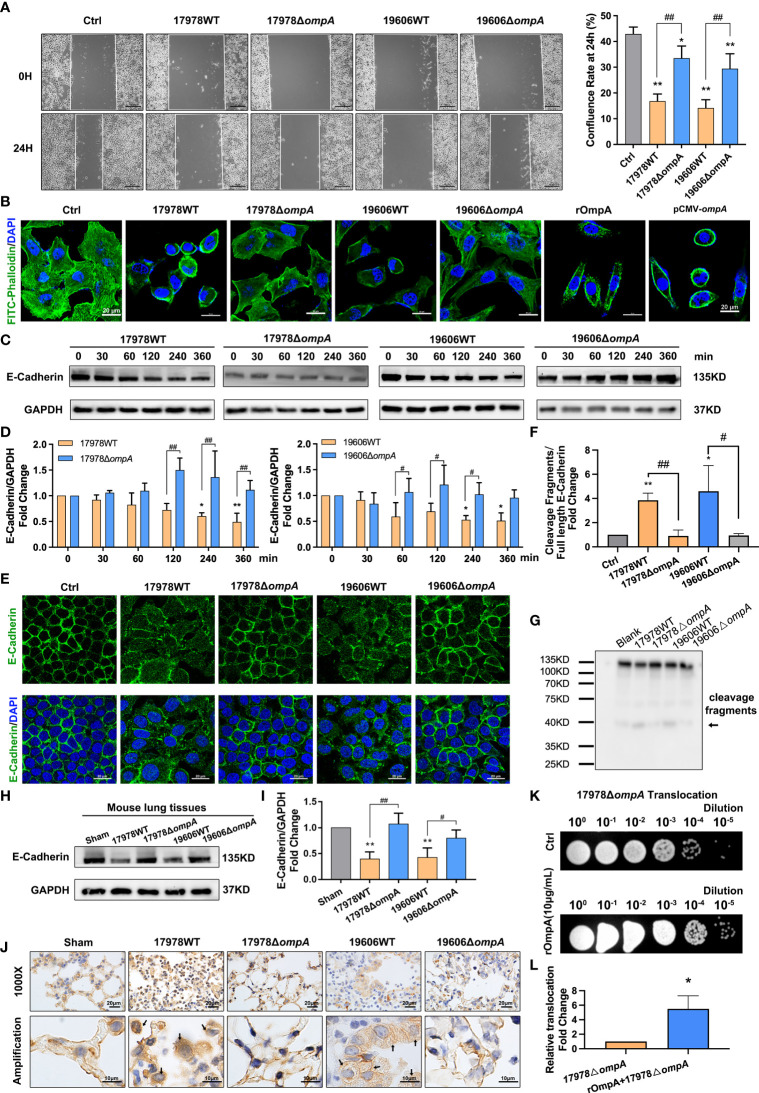
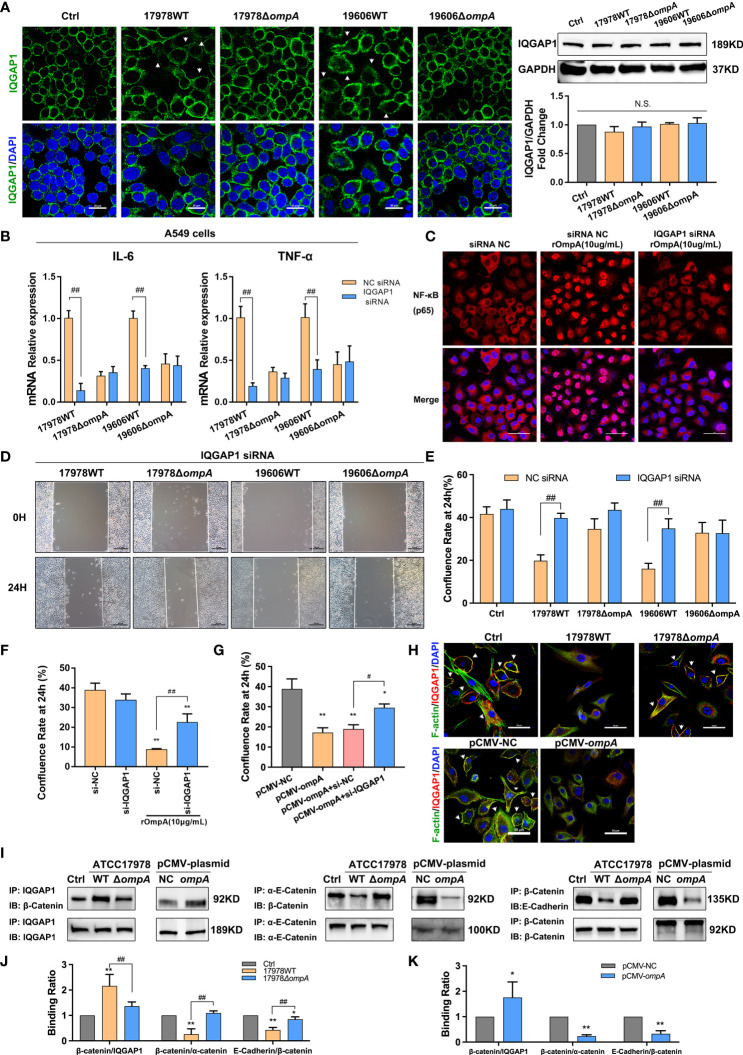
Pulmonary epithelial barrier dysfunction is a critical pathophysiological process in pneumonia and associated invasive infections, such as those caused by . However, the mechanisms underlying -induced pulmonary epithelial barrier dysfunction and bacterial translocation remain unclear. In this study, lungs of mice and A549 human epithelial cell monolayers were challenged with the wild-type strain and an outer membrane protein A () deletion strain. In addition, epithelial cells in culture were treated with purified OmpA protein or transfected with a eukaryotic expression vector encoding (pCMV-). Bacterial translocation across cell monolayers and intrapulmonary burden were measured, barrier function was evaluated and ; cell migration ability was determined. The specific inhibitors C29 and JSH-23 were used to suppress the activity of Toll-like receptor 2 (TLR2) and of NF-κB, respectively. IQ-GTPase-activating protein 1 (IQGAP1) small interfering RNA was used to knock down endogenous IQGAP1 expression. In this work, we show that OmpA from increased the production of pro-inflammatory cytokines, remodeled the cytoskeleton, and internalized intercellular adherens junctions (AJs); these changes eventually induced pulmonary epithelial barrier dysfunction to promote bacterial translocation. IQGAP1-targeting small interfering RNA and chemical inhibition of TLR2 or NF-κB prevented high permeability of the pulmonary epithelial barrier. TLR2/NF-κB signaling was involved in OmpA-induced inflammation, IQGAP1-mediated OmpA-induced opening of the pulmonary epithelial barrier cytoskeleton dynamic remodeling, and cellular redistribution of the major AJ protein, E-cadherin. These observations indicate that uses OmpA to overcome epithelial defences and cross the pulmonary epithelial barrier.
肺上皮屏障功能障碍是肺炎和相关侵袭性感染的关键病理生理过程,例如由 引起的感染。然而, - 诱导的肺上皮屏障功能障碍和细菌易位的机制尚不清楚。在这项研究中,用野生型菌株和外膜蛋白 A (OmpA) 缺失菌株挑战了小鼠肺和 A549 人上皮细胞单层,此外,还在培养的上皮细胞中用纯化的 OmpA 蛋白或真核表达载体转染编码 OmpA 的质粒 (pCMV-) 进行处理。测量了跨细胞单层的细菌易位和肺内负荷,评估了屏障功能,并测定了细胞迁移能力。使用特异性抑制剂 C29 和 JSH-23 分别抑制 Toll 样受体 2 (TLR2) 和 NF-κB 的活性。使用 IQ-GTPase-activating protein 1 (IQGAP1) 小干扰 RNA 敲低内源性 IQGAP1 表达。在这项工作中,我们表明 中的 OmpA 增加了促炎细胞因子的产生,重塑了细胞骨架,并内化了细胞间黏附连接(AJ);这些变化最终导致肺上皮屏障功能障碍,促进细菌易位。IQGAP1 靶向小干扰 RNA 和 TLR2 或 NF-κB 的化学抑制阻止了肺上皮屏障的高通透性。TLR2/NF-κB 信号通路参与了 OmpA 诱导的炎症、IQGAP1 介导的 OmpA 诱导的肺上皮屏障通透性增加、细胞骨架动态重塑以及主要 AJ 蛋白 E-钙黏蛋白的细胞重新分布。这些观察结果表明, 利用 OmpA 克服上皮防御并穿过肺上皮屏障。