Tianjin Neurological Institute, Key Laboratory of Post-Neuroinjury Neuro-repair and Regeneration in Central Nervous System, Ministry of Education and Tianjin City, Tianjin Medical University General Hospital, Tianjin, 300052, P.R. China.
Int J Biol Sci. 2022 Jun 13;18(10):4006-4025. doi: 10.7150/ijbs.73479. eCollection 2022.
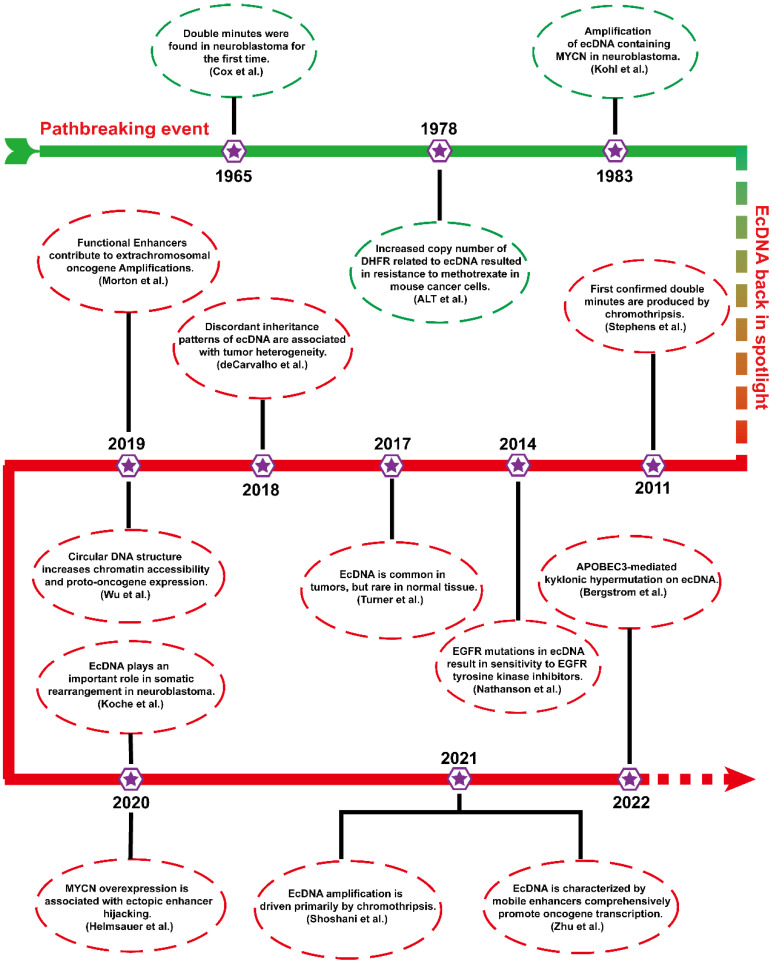
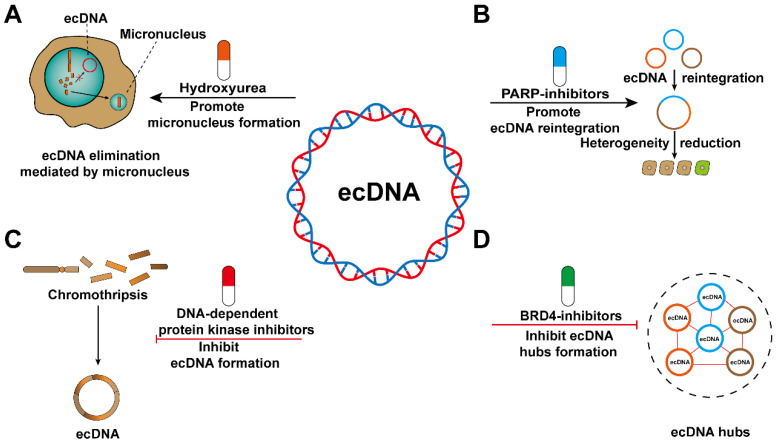
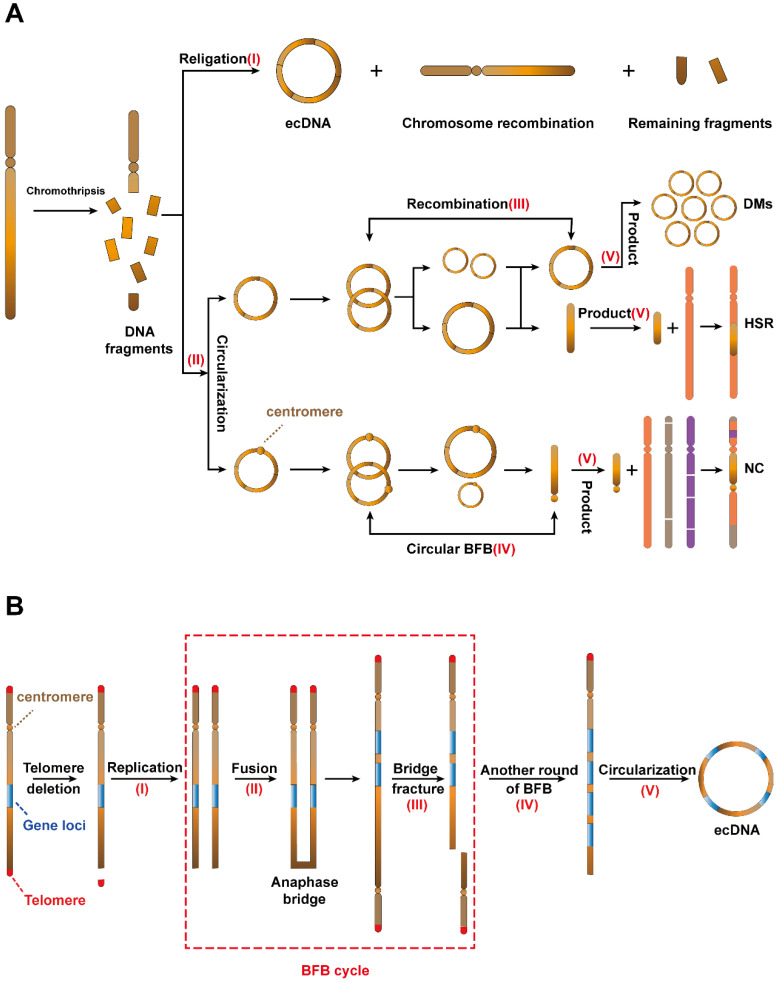
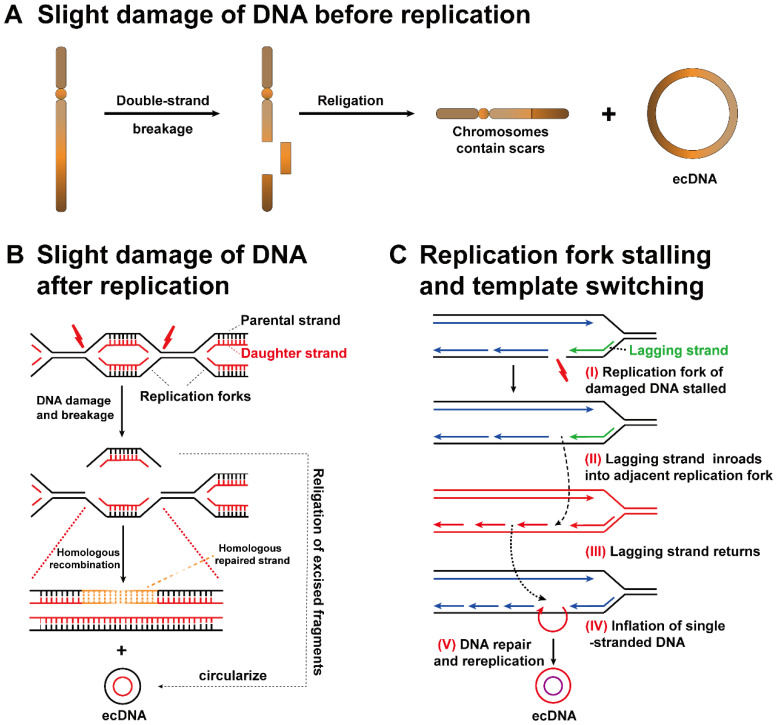
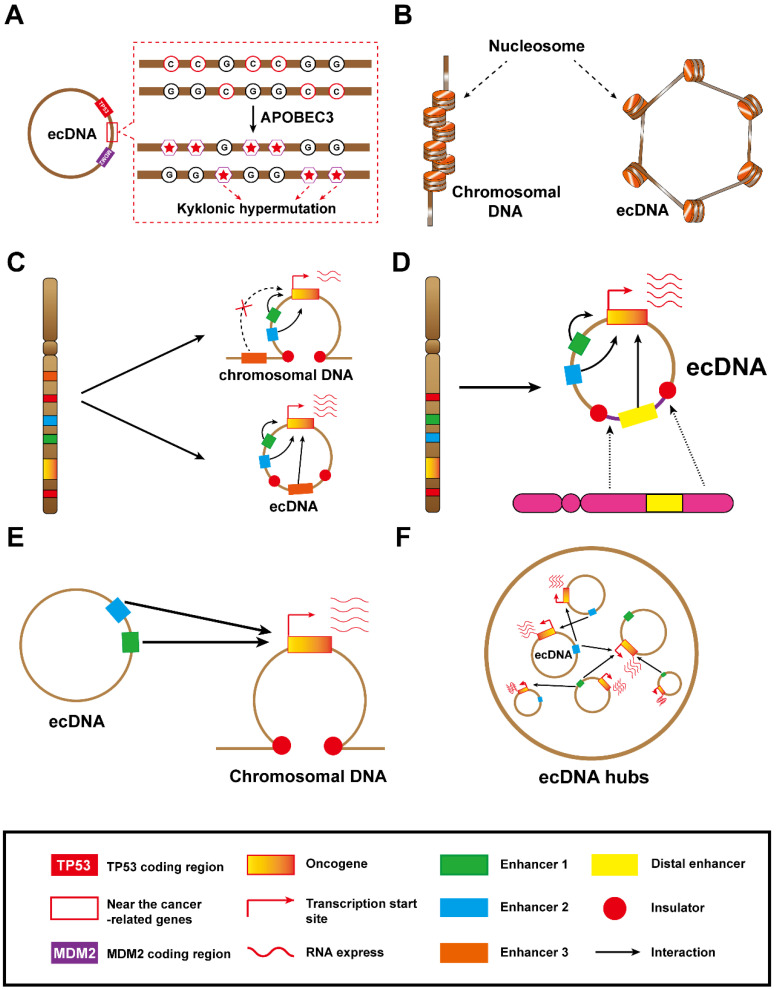
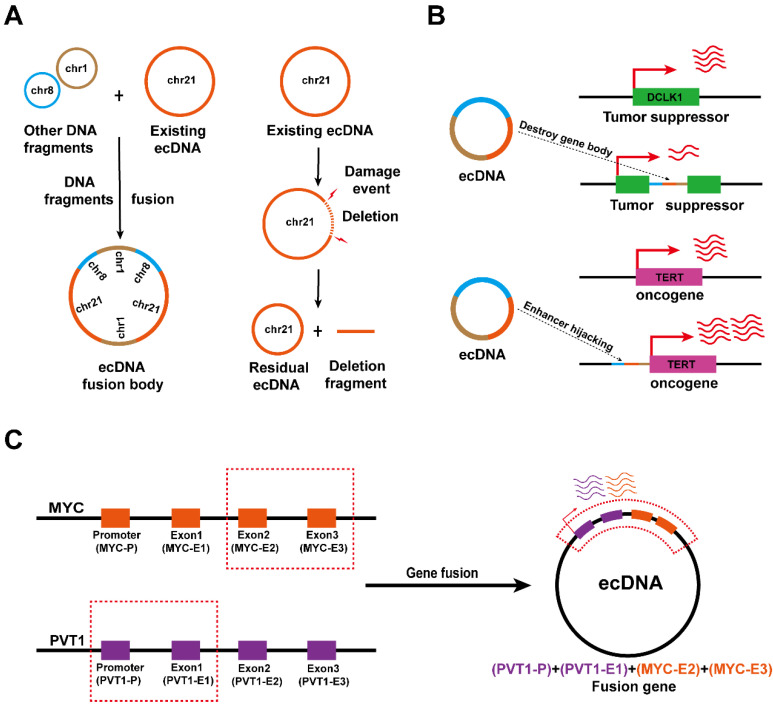
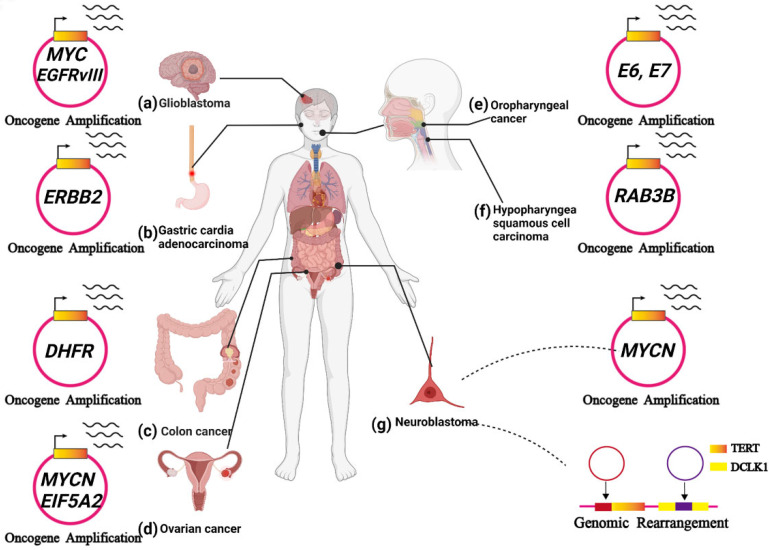
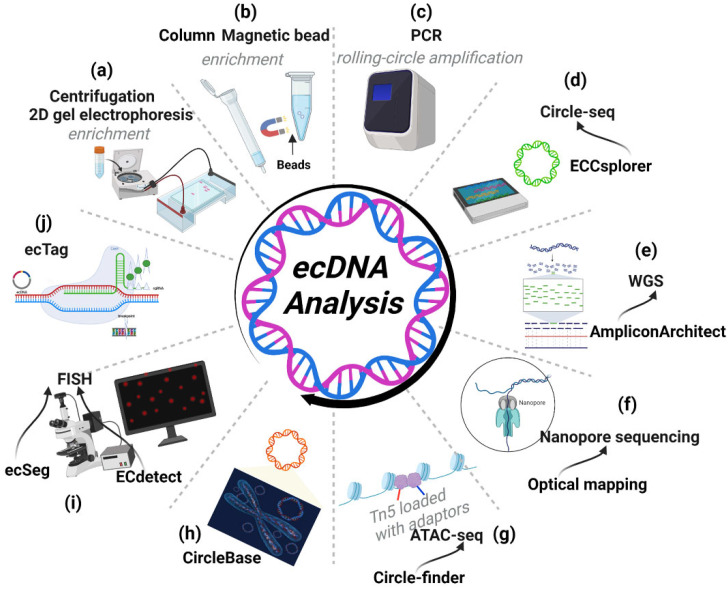
Extrachromosomal DNA (ecDNA) is a cancer-specific circular DNA molecule that is derived from chromosomes. In contrast with linear chromosomes, ecDNA exhibits a unique structure that can be representative of high chromosome accessibility, contributing to hyperactivated proto-oncogenes and malignant behaviours. Meanwhile, nonchromosomal inheritance and recurrent mutations of ecDNA fuel tumour heterogeneity and evolution. Recent studies have demonstrated that ecDNA drives tumorigenesis and progression and is related to poor clinical outcomes and drug resistance across widespread cancers. Although ecDNA was first observed in 1965, with technological advancements, its critical functions in tumorigenesis are currently coming forth. In this review, we summarize the current understanding of the origin, biogenesis process, discovery history, molecular mechanisms, and physiological functions of ecDNAs in cancer. Additionally, we highlight the effective research methods to study ecDNA and offer novel insights for ecDNA-directed therapies.
染色体外 DNA(ecDNA)是一种源自染色体的癌症特异性环状 DNA 分子。与线性染色体不同,ecDNA 表现出独特的结构,可以代表高染色体可及性,促进原癌基因的过度激活和恶性行为。同时,ecDNA 的非染色体遗传和反复突变为肿瘤异质性和进化提供动力。最近的研究表明,ecDNA 驱动肿瘤发生和进展,并与广泛癌症中的不良临床结局和耐药性相关。尽管 ecDNA 于 1965 年首次被观察到,但随着技术的进步,其在肿瘤发生中的关键作用目前正在显现。在这篇综述中,我们总结了目前对 ecDNA 在癌症中的起源、生物发生过程、发现历史、分子机制和生理功能的理解。此外,我们强调了研究 ecDNA 的有效方法,并为 ecDNA 导向的治疗提供了新的见解。