Shimoji Hiroyuki, Suwabe Mayuko, Kikuchi Tomonori, Ohnishi Hitoshi, Tanaka Hirotaka, Kawara Kengo, Hidaka Yusuke, Enoki Tsutomu, Tsuji Kazuki
School of Biological and Environmental Sciences Kwansei Gakuin University Hyogo Japan.
Okinawa Environmental Research Support Section Okinawa Institute of Science and Technology Graduate University Okinawa Japan.
Ecol Evol. 2022 Jul 11;12(7):e9073. doi: 10.1002/ece3.9073. eCollection 2022 Jul.
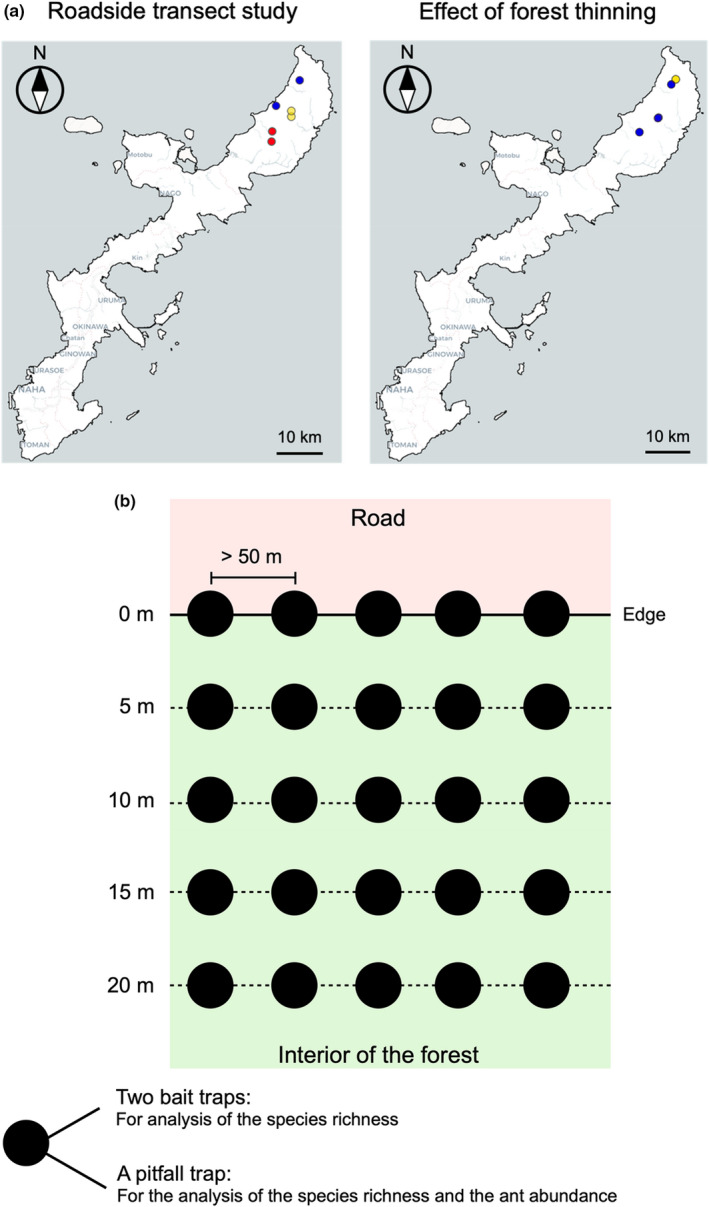
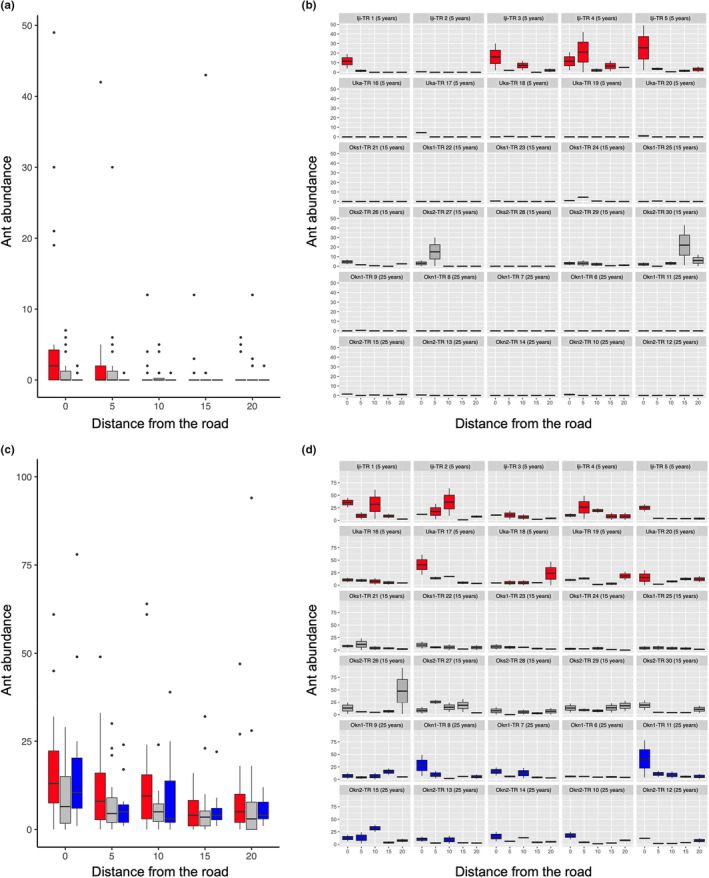
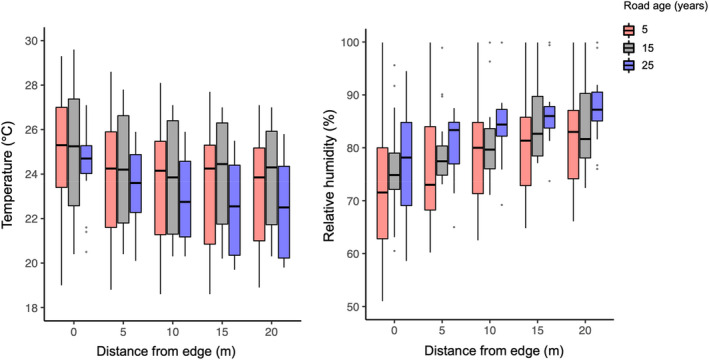
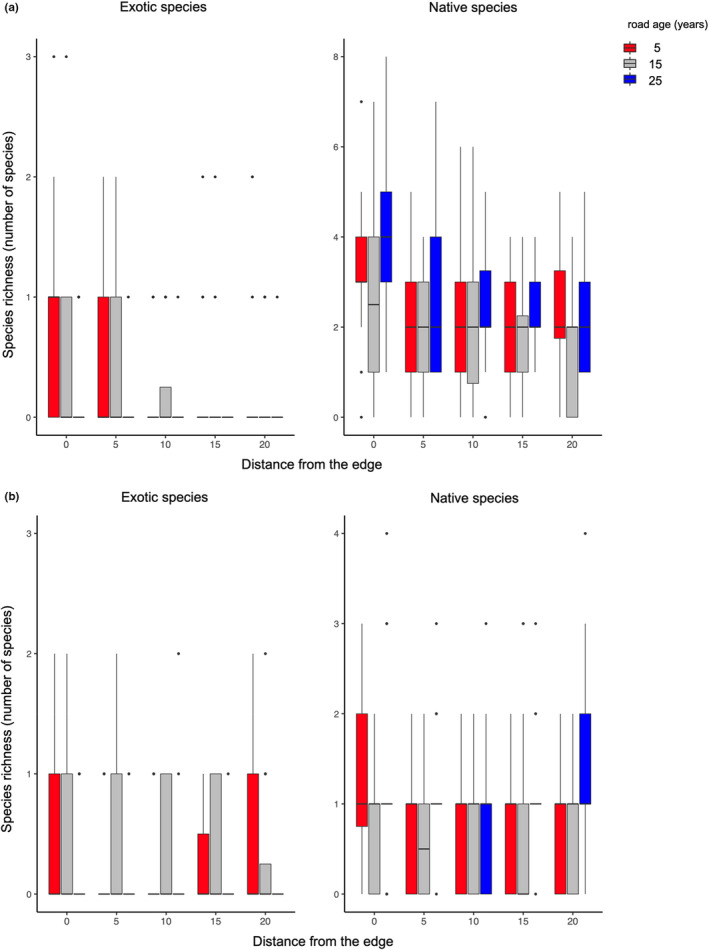
The positive association between disturbances and biological invasions is a widely observed ecological pattern in the Anthropocene. Such patterns have been hypothesized to be driven by the superior competitive ability of invaders or by modified environments, as well as by the interaction of these factors. An experimental study that tests these hypotheses is usually less feasible, especially in protected nature areas. An alternative approach is to focus on community resilience over time after the anthropogenic disturbance of habitats. Here, we focused on ant communities within a forest to examine their responses after disturbance over time. We selected the Yanbaru region of northern Okinawa Island, which is a biodiversity hotspot in East Asia. We compared ant communities among roadside environments in forests where the road age differed from 5 to 25 years. We also monitored the ant communities before and after disturbance from forest thinning. We found that the species richness and abundance of exotic ants were higher in recently disturbed environments (roadsides of 5-15 years old roads), where the physical environment was warmer and drier. In contrast, the roadsides of 25-year-old roads indicated the potential recovery of the physical environment with cooler and moister conditions, likely owing to regrowth of roadside vegetation. At these sites, there were few exotic ants, except for those immediately adjacent to the road. The population density of the invasive species substantially increased 1-2 years after forest thinning. There was no evidence of the exclusion of native ants by exotic ants that were recorded after disturbance. Our results suggest that local ant communities in the Yanbaru forests have some resilience to disturbance. We suggest that restoration of environmental components is a better strategy for maintaining native ant communities, rather than removing exotic ants after anthropogenic disturbance.
干扰与生物入侵之间的正相关关系是人类世中广泛观察到的一种生态模式。这种模式被认为是由入侵者较强的竞争能力、环境变化或这些因素的相互作用所驱动的。通常,通过实验研究来验证这些假设不太可行,尤其是在自然保护区。另一种方法是关注栖息地受到人为干扰后随时间推移的群落恢复力。在此,我们聚焦于森林中的蚂蚁群落,以研究它们在干扰后的长期反应。我们选择了冲绳岛北部的八重岳地区,该地区是东亚的一个生物多样性热点地区。我们比较了道路使用年限从5年到25年不等的森林路边环境中的蚂蚁群落。我们还监测了森林间伐干扰前后的蚂蚁群落。我们发现,在最近受到干扰的环境(5至15年道路的路边)中,外来蚂蚁的物种丰富度和数量更高,这些地方的物理环境更温暖、干燥。相比之下,25年道路的路边显示出物理环境有恢复的迹象,条件更凉爽、湿润,这可能是由于路边植被的重新生长。在这些地点,除了紧邻道路的区域外,外来蚂蚁很少。森林间伐1至2年后,入侵物种的种群密度大幅增加。没有证据表明干扰后记录到的外来蚂蚁排斥本地蚂蚁。我们的研究结果表明,八重岳森林中的本地蚂蚁群落对干扰具有一定的恢复力。我们建议,恢复环境要素是维持本地蚂蚁群落的更好策略,而不是在人为干扰后清除外来蚂蚁。