Sudarsanam Harish, Buhmann Raymund, Henschler Reinhard
Institute of Transfusion Medicine, University Hospital Leipzig, Leipzig, Germany.
Front Bioeng Biotechnol. 2022 Jun 29;10:886637. doi: 10.3389/fbioe.2022.886637. eCollection 2022.
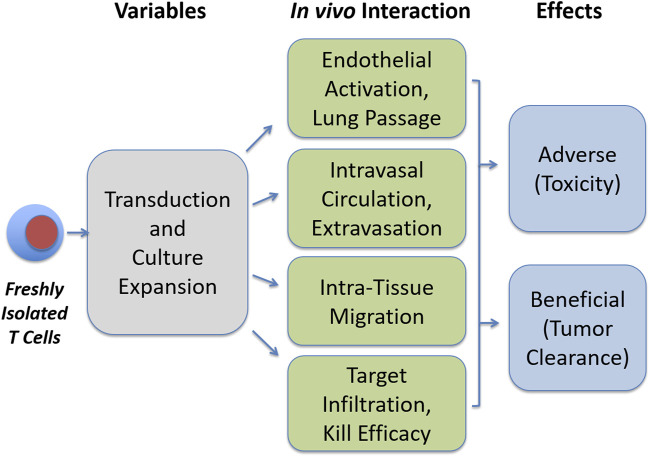
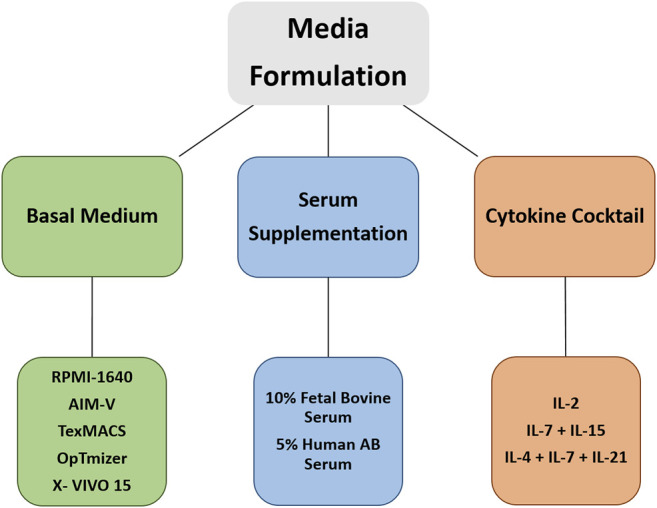
expansion of T lymphocytes is a central process in the generation of cellular therapies targeted at tumors and other disease-relevant structures, which currently cannot be reached by established pharmaceuticals. The influence of culture conditions on T cell functions is, however, incompletely understood. In clinical applications of expanded T cells, so far, a relatively classical standard cell culture methodology has been established. The expanded cells have been characterized in both preclinical models and clinical studies mainly using a therapeutic endpoint, for example antitumor response and cytotoxic function against cellular targets, whereas the influence of manipulations of T cells including transduction and culture expansion has been studied to a much lesser detail, or in many contexts remains unknown. This includes the circulation behavior of expanded T cells after intravenous application, their intracellular metabolism and signal transduction, and their cytoskeletal (re)organization or their adhesion, migration, and subsequent intra-tissue differentiation. This review aims to provide an overview of established T cell expansion methodologies and address unanswered questions relating interaction of expanded T cells for cellular therapy.
T淋巴细胞的扩增是针对肿瘤和其他与疾病相关结构的细胞疗法生成过程中的核心环节,而目前已有的药物无法作用于这些结构。然而,培养条件对T细胞功能的影响尚未完全明确。在扩增T细胞的临床应用中,到目前为止,已经建立了一种相对经典的标准细胞培养方法。在临床前模型和临床研究中,主要使用治疗终点(例如抗肿瘤反应和对细胞靶点的细胞毒性功能)对扩增后的细胞进行表征,而对于包括转导和培养扩增在内的T细胞操作的影响,研究得还非常少,或者在很多情况下仍然未知。这包括静脉注射后扩增T细胞的循环行为、它们的细胞内代谢和信号转导、它们的细胞骨架(重新)组织或它们的黏附、迁移以及随后的组织内分化。这篇综述旨在概述已有的T细胞扩增方法,并解决与细胞治疗中扩增T细胞相互作用相关的未解答问题。