Liu Xi, Chen Peipei, Ding Xuemeng, Liu Anning, Li Peng, Sun Cheng, Guan Huaijin
Eye Institute, Affiliated Hospital of Nantong University, Nantong, China.
Medical School of Nantong University, Nantong, China.
Ann Transl Med. 2022 Jun;10(12):716. doi: 10.21037/atm-22-2858.
We sought to review the latest developments in cortical visual prosthesis (CVP) systems and the significance of nanotechnology for the future. Over the past century, CVP systems have been researched and developed, resulting in various unique surgical and mechanical techniques. Research findings indicate that partial vision recovery is possible, with improvements in coarse target functions and performance in routine activities.
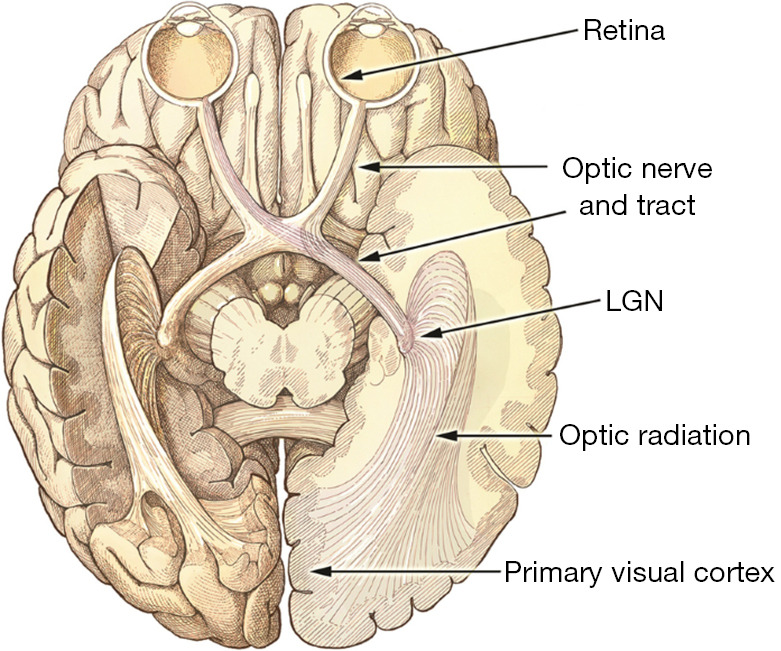
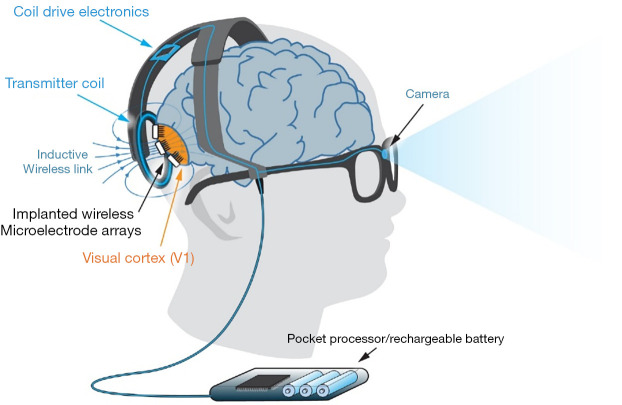
This review discusses the architecture and physiology of the visual cortex, the neuroplasticity of the blind brain, and the history of CVP development, and also provides an update on the CVP systems currently being examined in research and clinical trials. Due to advances in nanotechnology, it is possible to make CVPs that are smaller, more efficient, and more biocompatible than ever before.
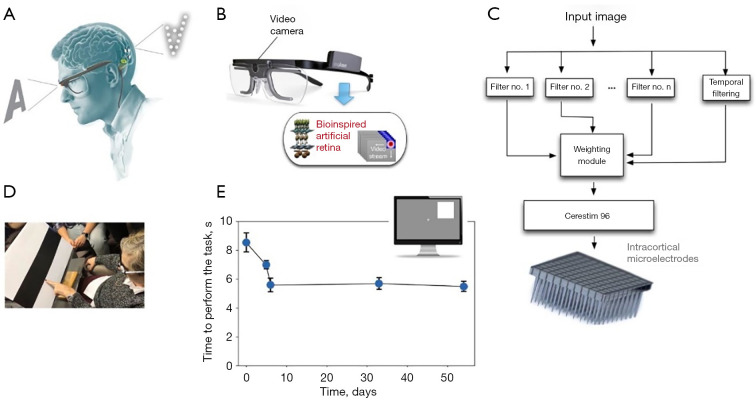
Currently, 3 CVPs have entered clinical trials, and several additional systems are undergoing preclinical reviews to determine the safety of the devices for chronic implantation. This development provides the first indication that the area of cortical vision restoration medication may be able to meaningfully benefit blind people. However, several significant technical and biological challenges need to be solved before the gap between artificial and natural eyesight can be reconciled. Rapid breakthroughs in nanotechnology have considerably increased its use in biological domains.
This paper summarizes the recent progress of CVP in recent years and its future development direction. It is forecasted that nanotechnology can provide better technical support for the development of CVP.
我们旨在回顾皮质视觉假体(CVP)系统的最新进展以及纳米技术对未来的重要意义。在过去的一个世纪里,人们对CVP系统进行了研究和开发,产生了各种独特的手术和机械技术。研究结果表明,部分视力恢复是可能的,在粗略目标功能和日常活动表现方面有所改善。
本综述讨论了视觉皮层的结构和生理学、盲脑的神经可塑性以及CVP的发展历程,并提供了目前正在研究和临床试验中进行检测的CVP系统的最新情况。由于纳米技术的进步,现在有可能制造出比以往更小、更高效且生物相容性更好的CVP。
目前,有3种CVP已进入临床试验,还有几个其他系统正在进行临床前评估,以确定这些设备长期植入的安全性。这一进展首次表明,皮质视觉恢复药物领域可能能够切实造福盲人。然而,在弥合人工视力与自然视力之间的差距之前,还需要解决几个重大的技术和生物学挑战。纳米技术的迅速突破极大地增加了其在生物领域的应用。
本文总结了近年来CVP的最新进展及其未来发展方向。预计纳米技术可为CVP的发展提供更好的技术支持。