Department of Radiation Effects Research, National Institute of Radiological Sciences, Quantum Life and Medical Science Directorate, National Institutes for Quantum Science and Technology, Chiba, Japan.
Department of Radiological Sciences, Graduate School of Human Health Sciences, Tokyo Metropolitan University, Tokyo, Japan.
Cancer Sci. 2022 Oct;113(10):3362-3375. doi: 10.1111/cas.15485. Epub 2022 Aug 21.
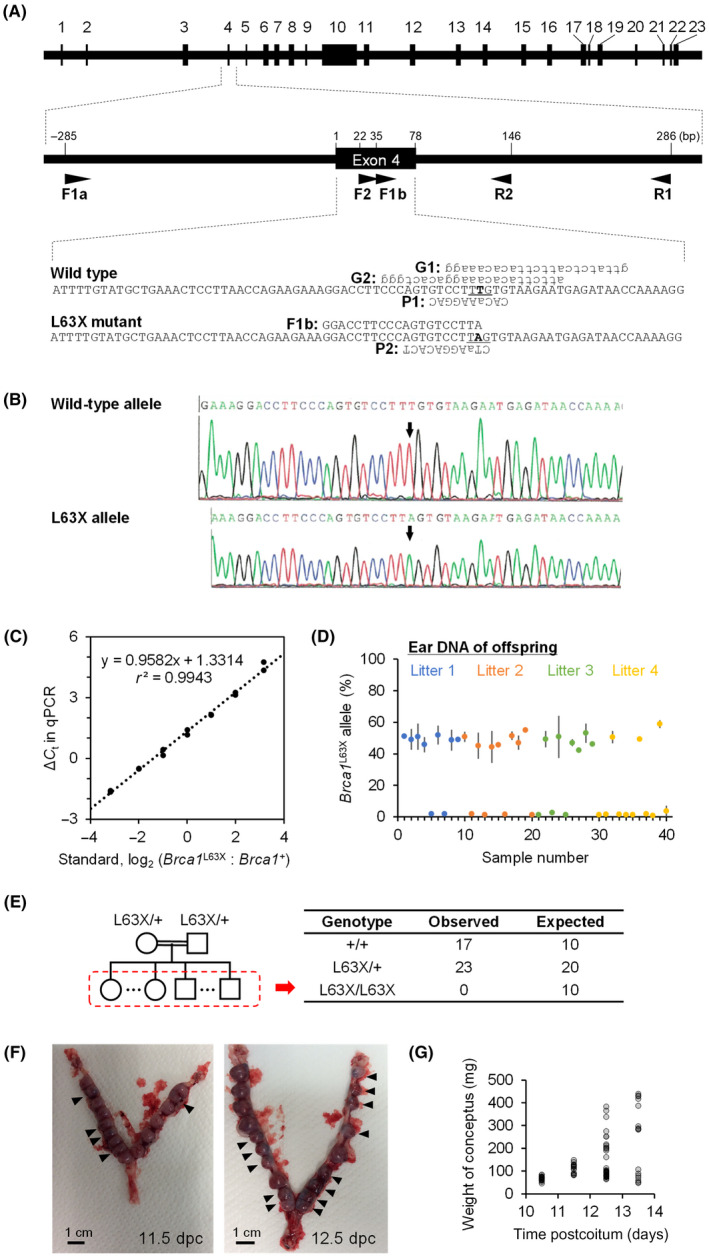
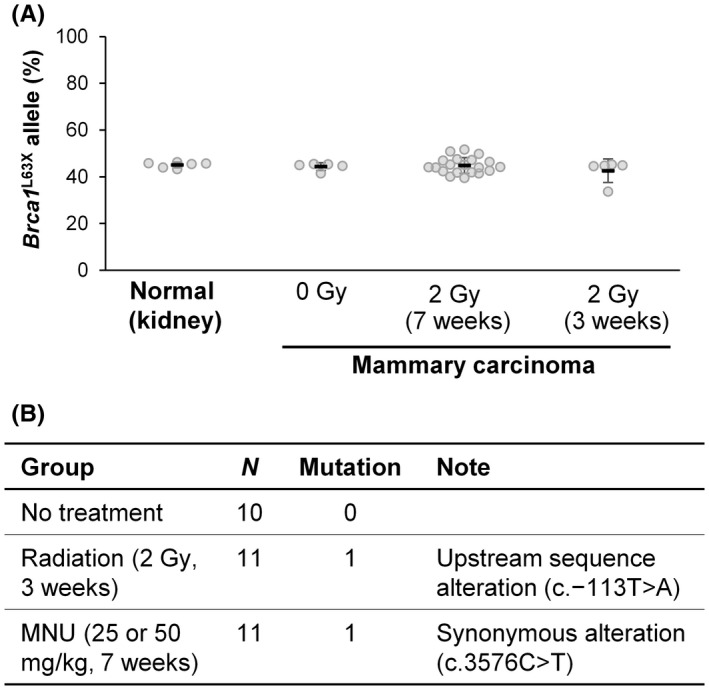
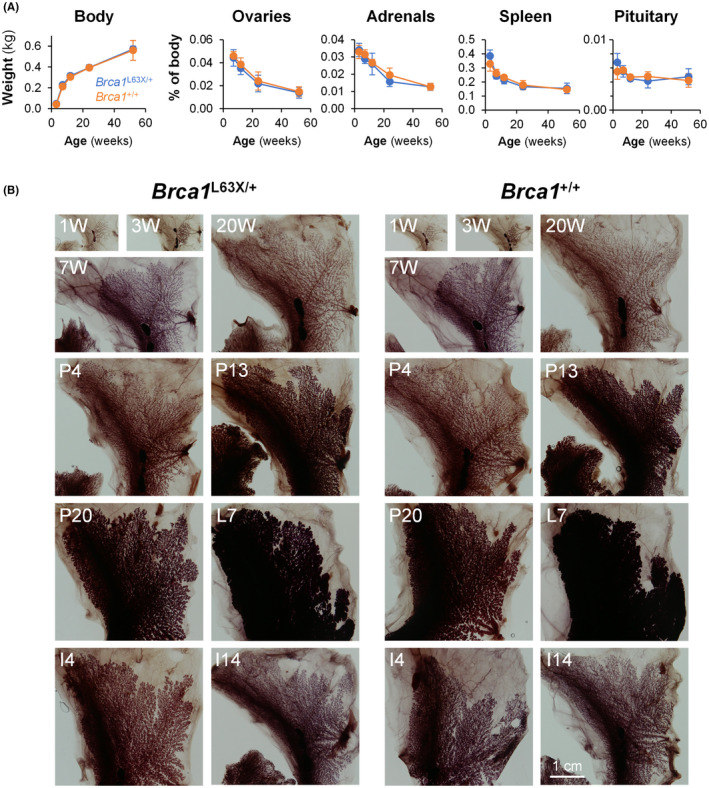
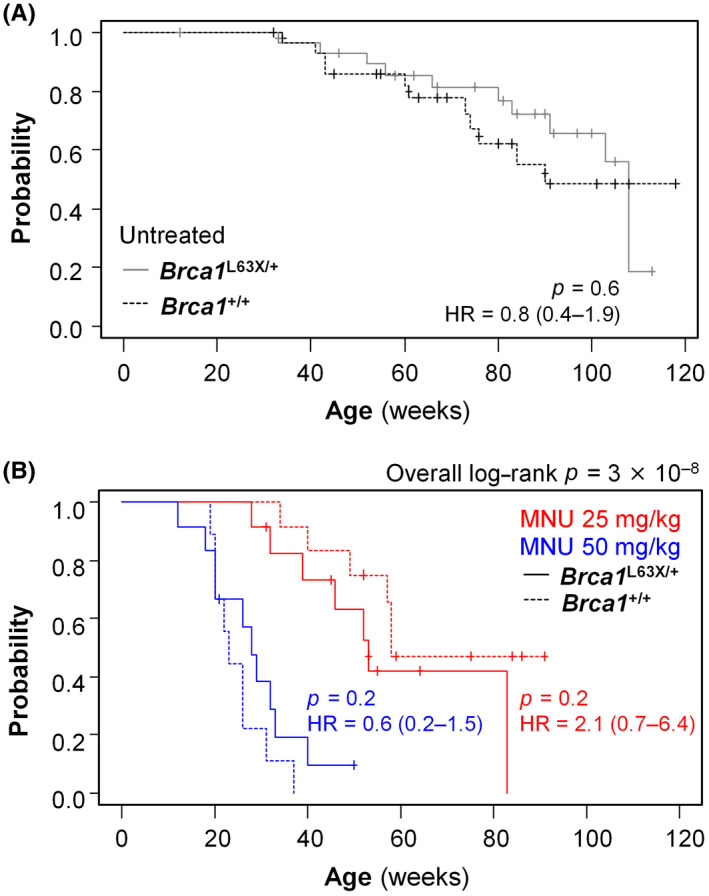
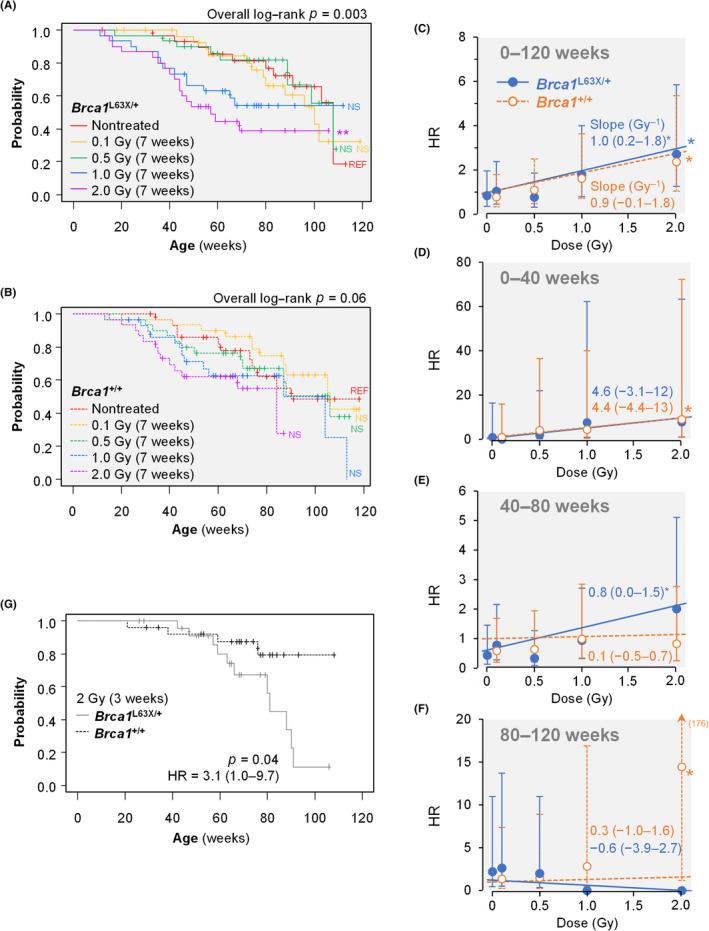
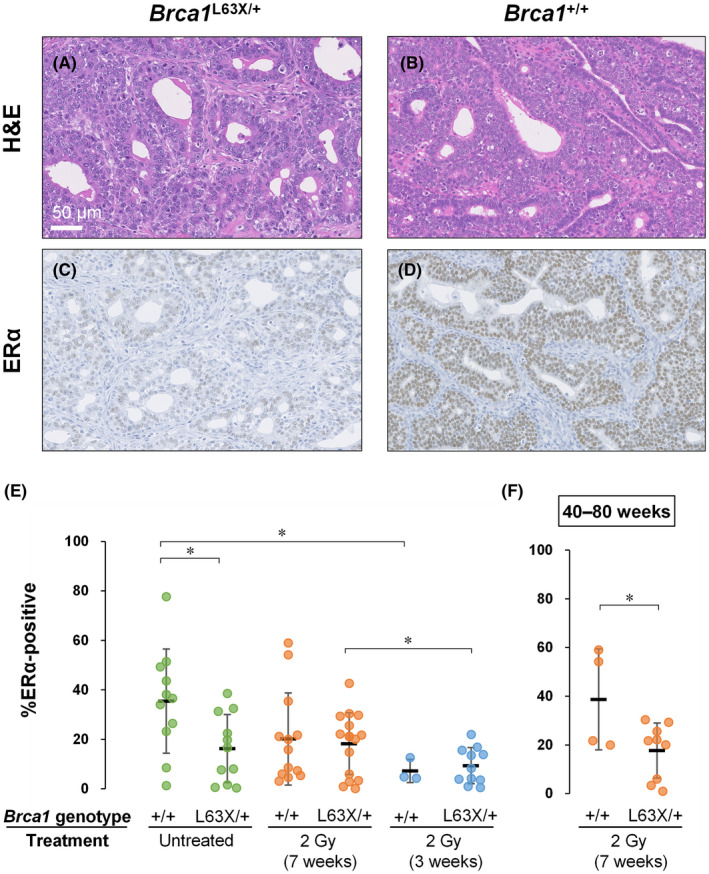
Women who are heterozygous for deleterious BRCA1 germline mutations harbor a high risk of hereditary breast cancer. Previous Brca1-heterozygous animal models do not recapitulate the breast cancer phenotype, and thus all currently used knockout models adopt conditional, mammary-specific homozygous Brca1 loss or addition of Trp53 deficiency. Herein, we report the creation and characterization of a novel Brca1 mutant rat model harboring the germline L63X mutation, which mimics a founder mutation in Japan, through CRISPR-Cas9-based genome editing. Homozygotes (Brca1 ) were embryonic lethal, whereas heterozygotes (Brca1 ) showed apparently normal development. Without carcinogen exposure, heterozygotes developed mammary carcinoma at a comparable incidence rate with their wild-type (WT) littermates during their lifetime. Intraperitoneal injection of 1-methyl-1-nitrosourea (25 or 50 mg/kg) at 7 weeks of age induced mammary carcinogenesis at comparable levels among the heterozygotes and their littermates. After exposure to ionizing radiation (0.1-2 Gy) at 7 weeks of age, the heterozygotes, but not WT littermates, displayed dose-dependent mammary carcinogenesis with 0.8 Gy excess in hazard ratio during their middle age; the relative susceptibility of the heterozygotes was more prominent when rats were irradiated at 3 weeks of age. The heterozygotes had tumors with a lower estrogen receptor α immunopositivity and no evidence of somatic mutations of the WT allele. The Brca1 rats thus offer the first single-mutation, heterozygous model of BRCA1-associated breast cancer, especially with exposure to a DNA break-inducing carcinogen. This implies that such carcinogens are causative and a key to breast cancer prevention in individuals who carry high-risk BRCA1 mutations.
携带有害 BRCA1 种系突变的杂合子女性具有罹患遗传性乳腺癌的高风险。先前的 Brca1 杂合子动物模型无法重现乳腺癌表型,因此目前所有使用的敲除模型均采用条件性、乳腺特异性纯合 Brca1 缺失或添加 Trp53 缺陷。在此,我们通过基于 CRISPR-Cas9 的基因组编辑报告了一种新型 Brca1 突变大鼠模型的创建和特征,该模型携带有源自日本的种系 L63X 突变。纯合子(Brca1 )胚胎致死,而杂合子(Brca1 )表现出明显正常的发育。在没有致癌物暴露的情况下,杂合子在其一生中发展为乳腺癌的发病率与野生型(WT)同窝仔相似。7 周龄时腹腔注射 1-甲基-1-亚硝脲(25 或 50mg/kg),在杂合子及其同窝仔中诱导乳腺癌的发生水平相当。7 周龄时接受电离辐射(0.1-2Gy)后,杂合子而非 WT 同窝仔显示出剂量依赖性的乳腺癌发生,在中年时危险比增加 0.8Gy;当大鼠在 3 周龄时受到照射时,杂合子的相对易感性更加突出。杂合子的肿瘤雌激素受体 α 免疫阳性较低,且 WT 等位基因没有体细胞突变的证据。因此,Brca1 大鼠提供了首个与 BRCA1 相关的乳腺癌的单突变、杂合子模型,特别是在暴露于诱导 DNA 断裂的致癌物时。这意味着此类致癌物是致癌的,是携带高风险 BRCA1 突变个体预防乳腺癌的关键。