National Food Institute, Technical University of Denmark, Kgs. Lyngby, Denmark.
National Research Centre for the Working Environment, Copenhagen, Denmark.
PLoS One. 2022 Jul 19;17(7):e0271614. doi: 10.1371/journal.pone.0271614. eCollection 2022.
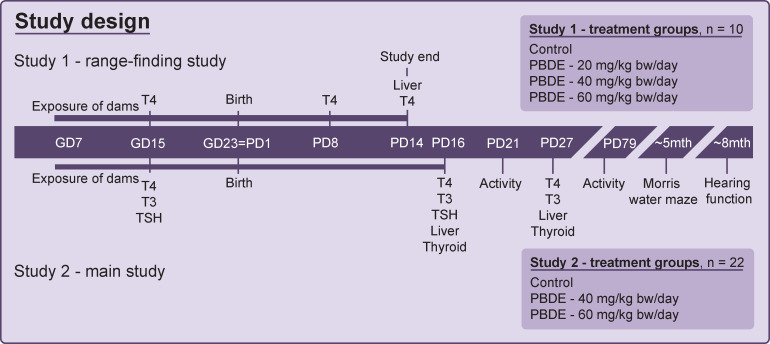
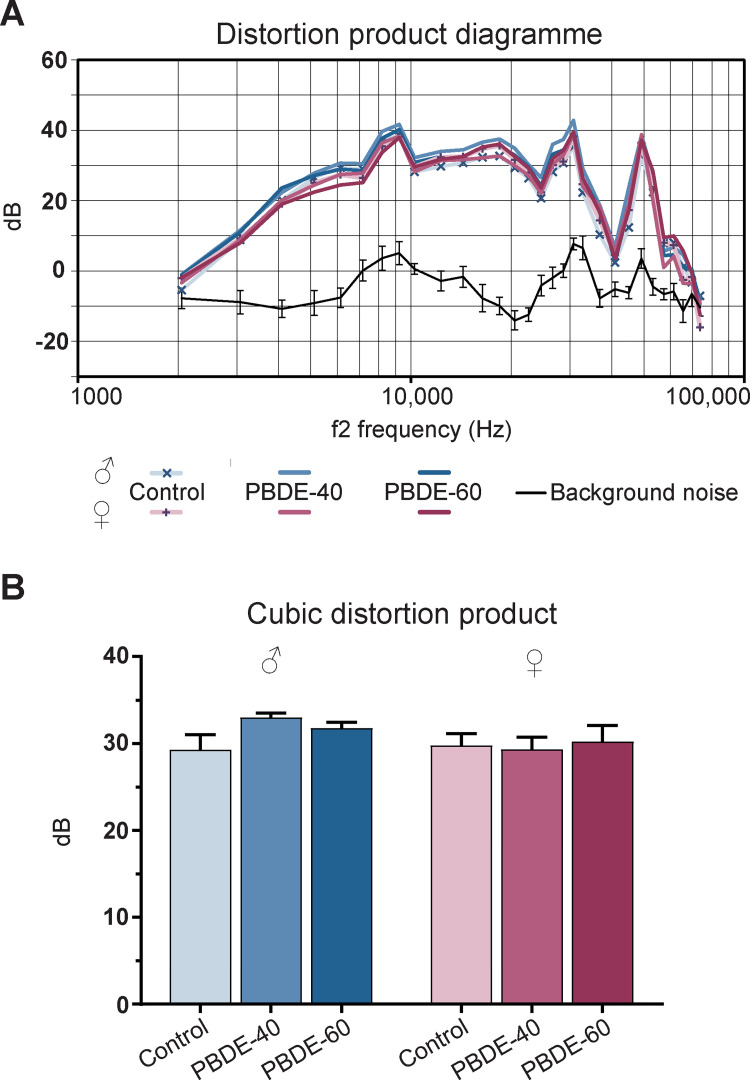
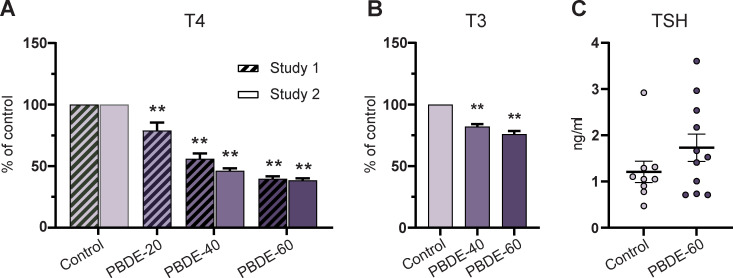
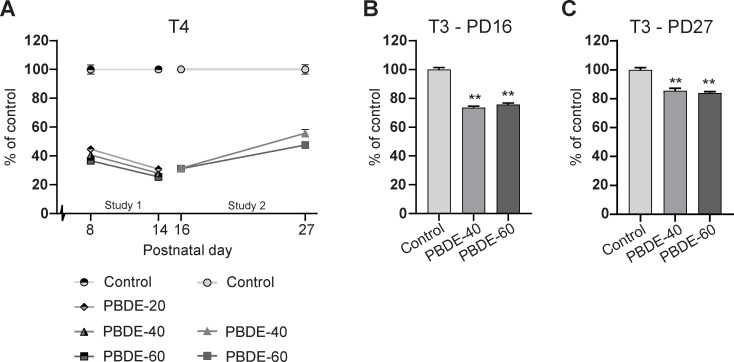
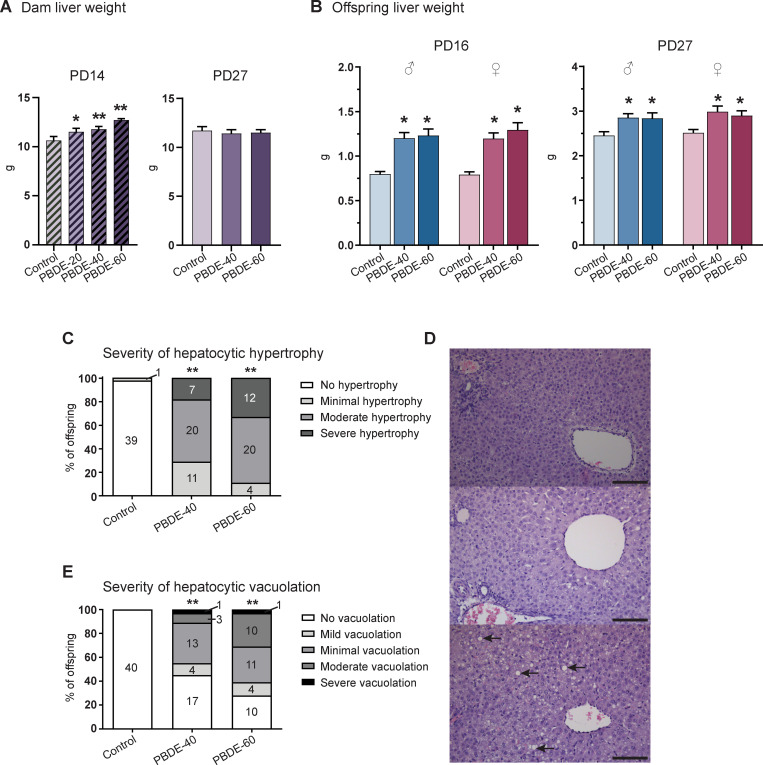
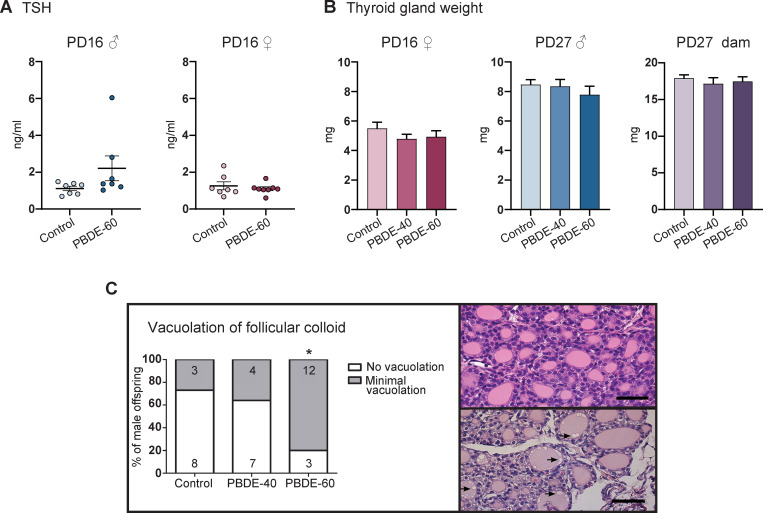
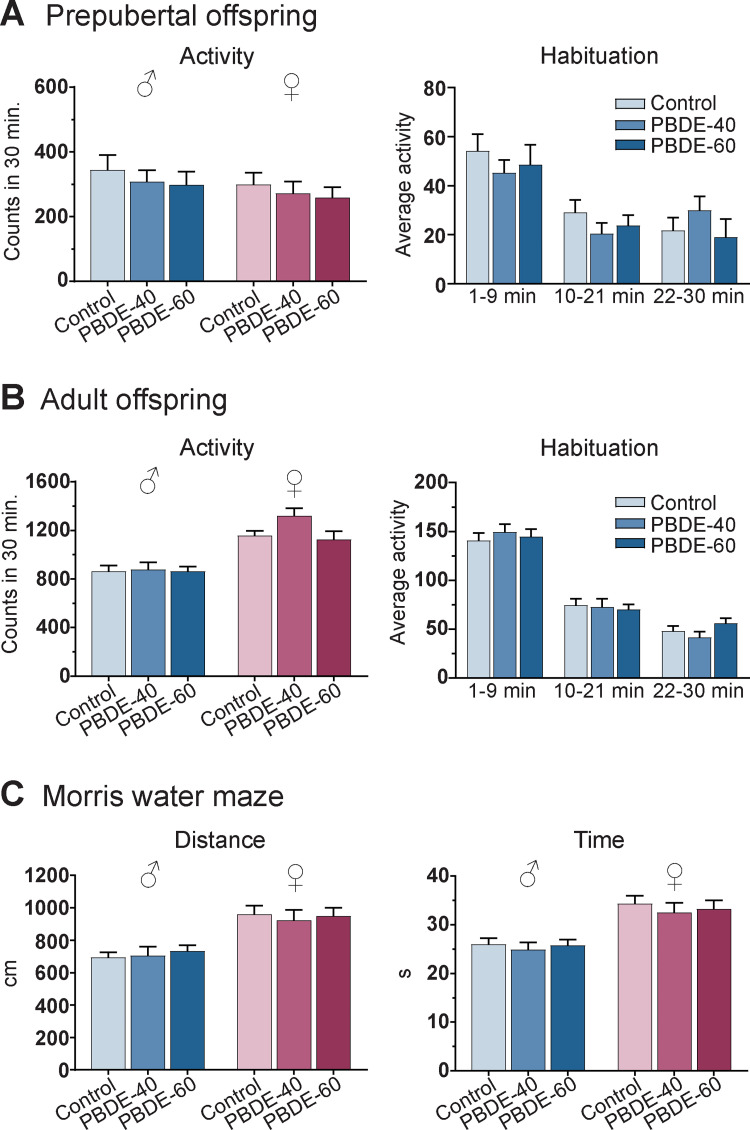
Polybrominated diphenyl ethers (PBDEs) are legacy flame retardants for which human exposure remains ubiquitous. This is of concern since these chemicals can perturb development and cause adverse health effects. For instance, DE-71, a technical mixture of PBDEs, can induce liver toxicity as well as reproductive and developmental toxicity. DE-71 can also disrupt the thyroid hormone (TH) system which may induce developmental neurotoxicity indirectly. However, in developmental toxicity studies, it remains unclear how DE-71 exposure affects the offspring's thyroid hormone system and if this dose-dependently relates to neurodevelopmental effects. To address this, we performed a rat toxicity study by exposing pregnant dams to DE-71 at 0, 40 or 60 mg/kg/day during perinatal development from gestational day 7 to postnatal day 16. We assessed the TH system in both dams and their offspring, as well as potential hearing and neurodevelopmental effects in prepubertal and adult offspring. DE-71 significantly reduced serum T4 and T3 levels in both dams and offspring without a concomitant upregulation of TSH, thus inducing a hypothyroxinemia-like effect. No discernible effects were observed on the offspring's brain function when assessed in motor activity boxes and in the Morris water maze, or on offspring hearing function. Our results, together with a thorough review of the literature, suggest that DE-71 does not elicit a clear dose-dependent relationship between low serum thyroxine (T4) and effects on the rat brain in standard behavioral assays. However, low serum TH levels are in themselves believed to be detrimental to human brain development, thus we propose that we lack assays to identify developmental neurotoxicity caused by chemicals disrupting the TH system through various mechanisms.
多溴二苯醚(PBDEs)是一种传统的阻燃剂,人类仍普遍接触这些化学物质。这是一个值得关注的问题,因为这些化学物质会干扰发育并导致不良健康影响。例如,DE-71 是 PBDE 的一种技术混合物,可引起肝毒性以及生殖和发育毒性。DE-71 还可以破坏甲状腺激素(TH)系统,这可能会间接导致发育神经毒性。然而,在发育毒性研究中,尚不清楚 DE-71 暴露如何影响后代的甲状腺激素系统,以及这种影响是否与神经发育效应有关。为了解决这个问题,我们进行了一项大鼠毒性研究,在围产期(从妊娠第 7 天到出生后第 16 天)期间,将怀孕的母鼠暴露于 0、40 或 60mg/kg/天的 DE-71 中。我们评估了母鼠及其后代的 TH 系统,以及未成年和成年后代的潜在听力和神经发育效应。DE-71 显著降低了母鼠和后代血清中的 T4 和 T3 水平,而促甲状腺激素(TSH)没有相应增加,从而诱导了类似甲状腺功能减退症的作用。在运动活动箱和 Morris 水迷宫中评估后代的大脑功能,或评估后代的听力功能时,未观察到对后代的明显影响。我们的结果,以及对文献的全面回顾,表明 DE-71 没有在标准行为测定中在低血清甲状腺素(T4)和对大鼠大脑的影响之间引起明显的剂量依赖性关系。然而,低血清 TH 水平本身被认为对人类大脑发育有害,因此我们提出我们缺乏通过各种机制干扰 TH 系统的化学物质引起的发育神经毒性的测定方法。