Department of Pharmacology and Therapeutics, McGill University, Montreal, Quebec, Canada H3G 1Y6.
Toxicol Sci. 2012 Jun;127(2):496-507. doi: 10.1093/toxsci/kfs098. Epub 2012 Mar 2.
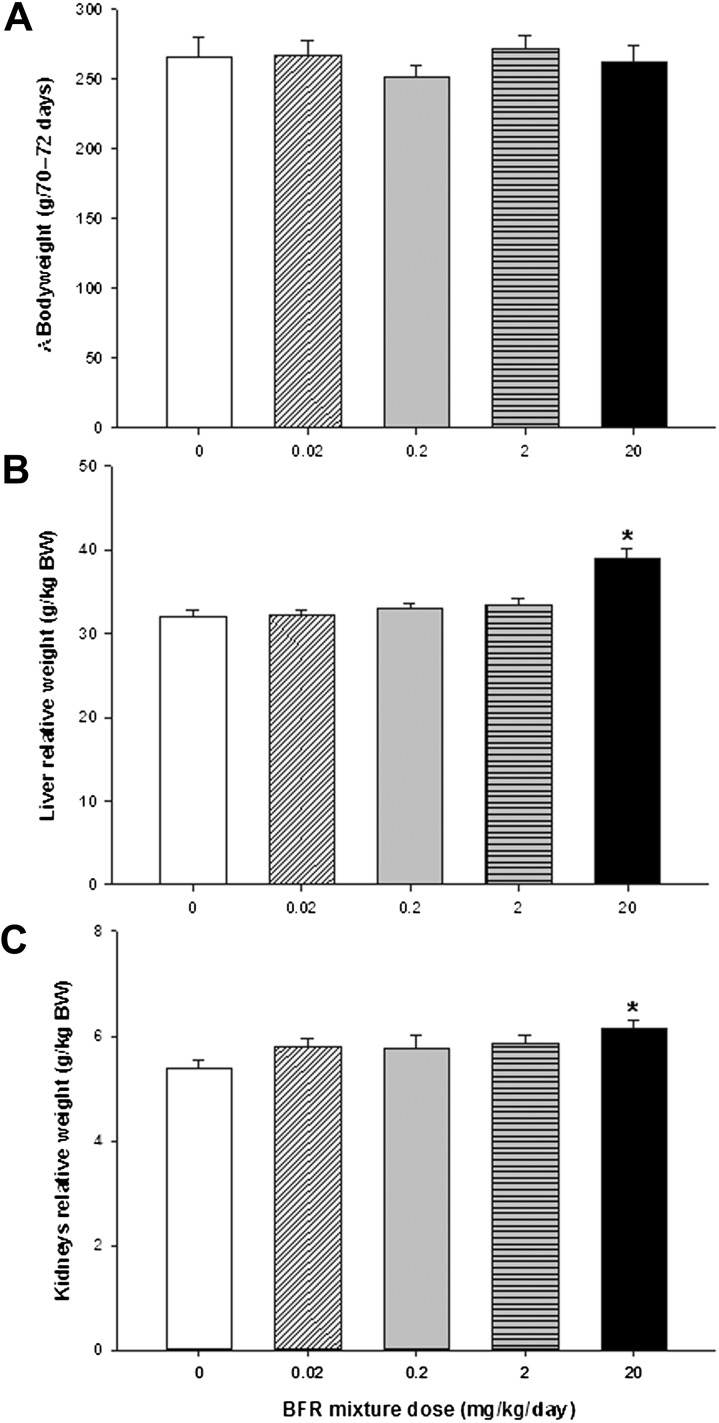
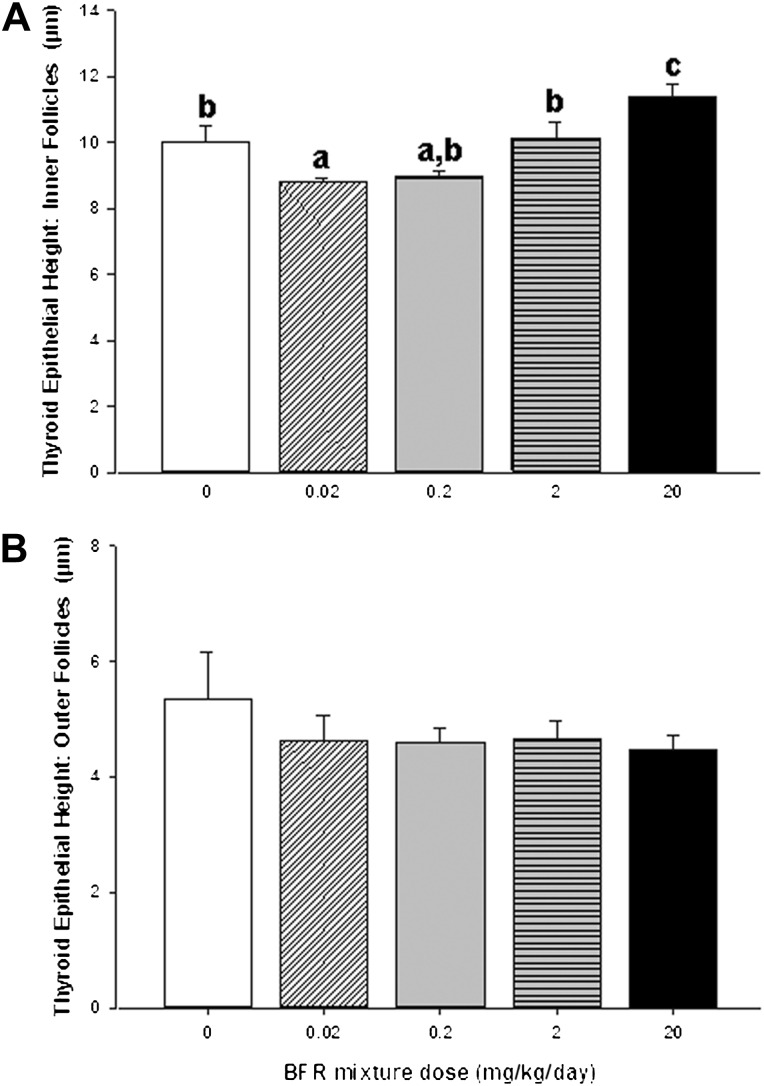
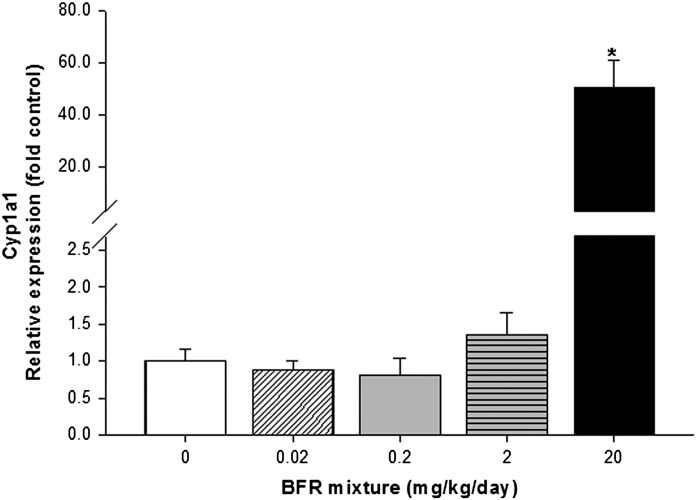
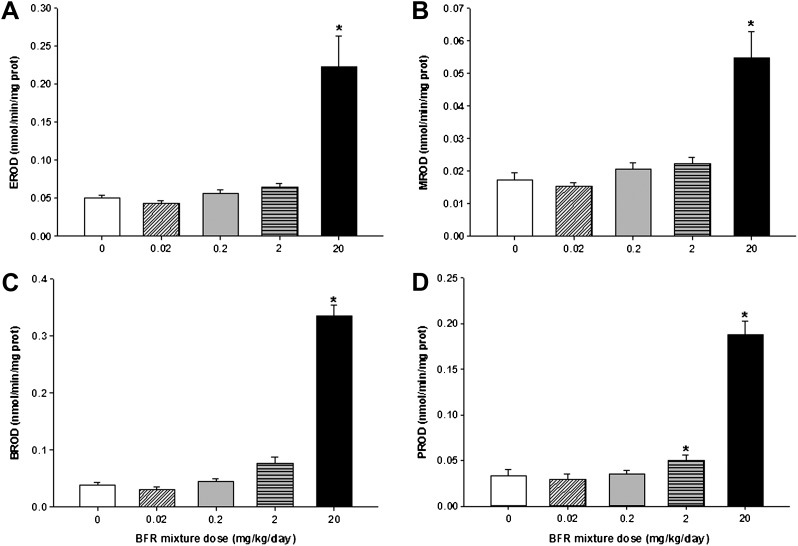
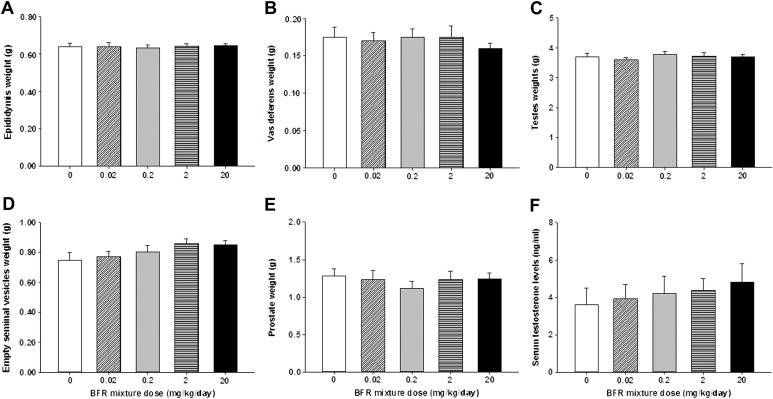
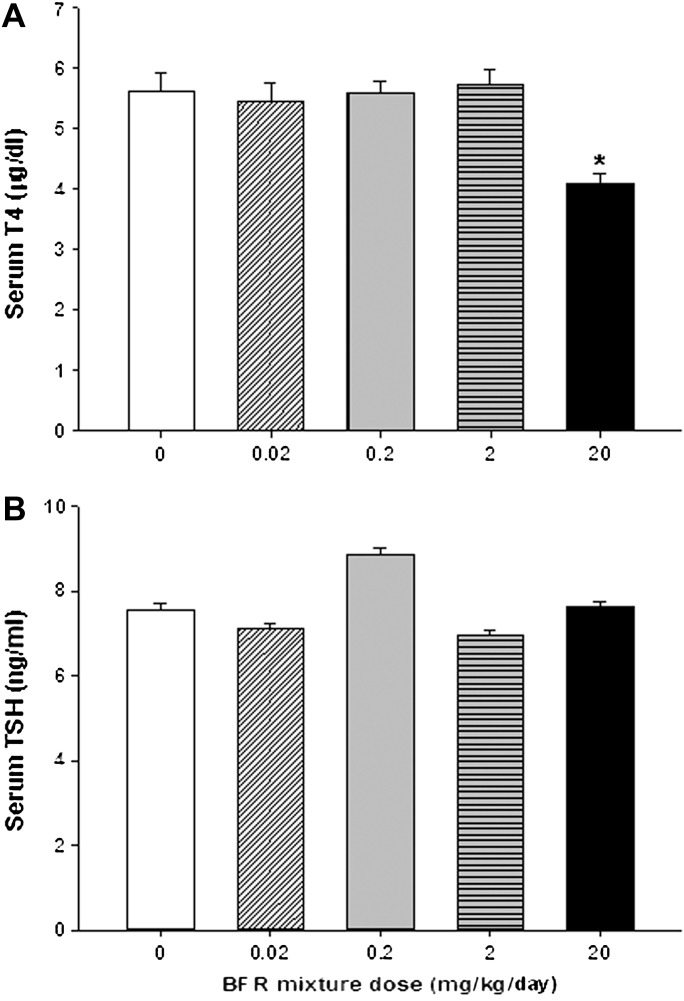
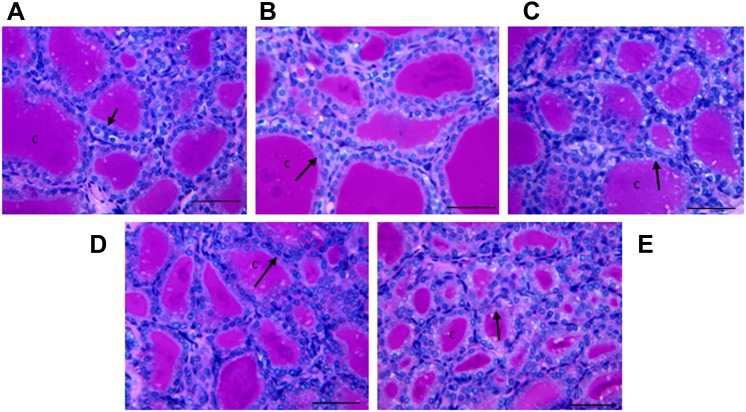
Brominated flame retardants (BFRs) are incorporated into a wide variety of consumer products, are readily released into home and work environments, and are present in house dust. Studies using animal models have revealed that exposure to polybrominated diphenyl ethers (PBDEs) may impair adult male reproductive function and thyroid hormone physiology. Such studies have generally characterized the outcome of acute or chronic exposure to a single BFR technical mixture or congener but not the impact of environmentally relevant BFR mixtures. We tested whether exposure to the BFRs found in house dust would have an adverse impact on the adult male rat reproductive system and thyroid function. Adult male Sprague Dawley rats were exposed to a complex BFR mixture composed of three commercial brominated diphenyl ethers (52.1% DE-71, 0.4% DE-79, and 44.2% decaBDE-209) and hexabromocyclododecane (3.3%), formulated to mimic the relative congener levels in house dust. BFRs were delivered in the diet at target doses of 0, 0.02, 0.2, 2, or 20 mg/kg/day for 70 days. Compared with controls, males exposed to the highest dose of BFRs displayed a significant increase in the weights of the kidneys and liver, which was accompanied by induction of CYP1A and CYP2B P450 hepatic drug-metabolizing enzymes. BFR exposure did not affect reproductive organ weights, serum testosterone levels, testicular function, or sperm DNA integrity. The highest dose caused thyroid toxicity as indicated by decreased serum thyroxine (T4) and hypertrophy of the thyroid gland epithelium. At lower doses, the thickness of the thyroid gland epithelium was reduced, but no changes in hormone levels (T4 and thyroid-stimulating hormone) were observed. Thus, exposure to BFRs affected liver and thyroid physiology but not male reproductive parameters.
溴化阻燃剂(BFRs)广泛应用于各种消费品中,容易释放到家庭和工作环境中,并存在于室内灰尘中。使用动物模型的研究表明,多溴联苯醚(PBDEs)的暴露可能会损害成年雄性生殖功能和甲状腺激素生理功能。这些研究通常描述了急性或慢性暴露于单一 BFR 技术混合物或同系物的结果,但没有描述环境相关 BFR 混合物的影响。我们测试了暴露于室内灰尘中的 BFR 是否会对成年雄性大鼠的生殖系统和甲状腺功能产生不良影响。成年雄性 Sprague Dawley 大鼠暴露于一种由三种商用溴化二苯醚(52.1% DE-71、0.4% DE-79 和 44.2% 十溴联苯醚-209)和六溴环十二烷(3.3%)组成的复杂 BFR 混合物中,该混合物是为了模拟室内灰尘中相对同系物的水平而配制的。BFR 以 0、0.02、0.2、2 或 20mg/kg/天的目标剂量添加到饮食中,持续 70 天。与对照组相比,暴露于最高剂量 BFR 的雄性大鼠的肾脏和肝脏重量显著增加,这伴随着 CYP1A 和 CYP2B P450 肝药物代谢酶的诱导。BFR 暴露不会影响生殖器官重量、血清睾酮水平、睾丸功能或精子 DNA 完整性。最高剂量导致甲状腺毒性,表现为血清甲状腺素(T4)水平降低和甲状腺上皮肥大。在较低剂量下,甲状腺上皮的厚度减小,但激素水平(T4 和促甲状腺激素)没有变化。因此,暴露于 BFR 会影响肝脏和甲状腺生理功能,但不会影响雄性生殖参数。