Alonso-Sánchez Maria Francisca, Ford Sabrina D, MacKinley Michael, Silva Angélica, Limongi Roberto, Palaniyappan Lena
CIDCL, Fonoaudiología, Facultad de Medicina, Universidad de Valparaíso, Valparaíso, Chile.
Robarts Research Institute, Western University, London, ON, Canada.
Schizophrenia (Heidelb). 2022 Apr 12;8(1):36. doi: 10.1038/s41537-022-00246-8.
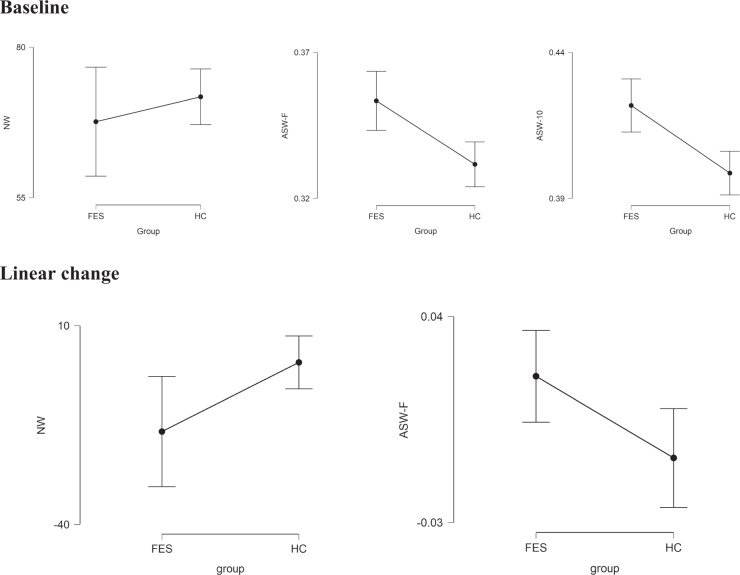
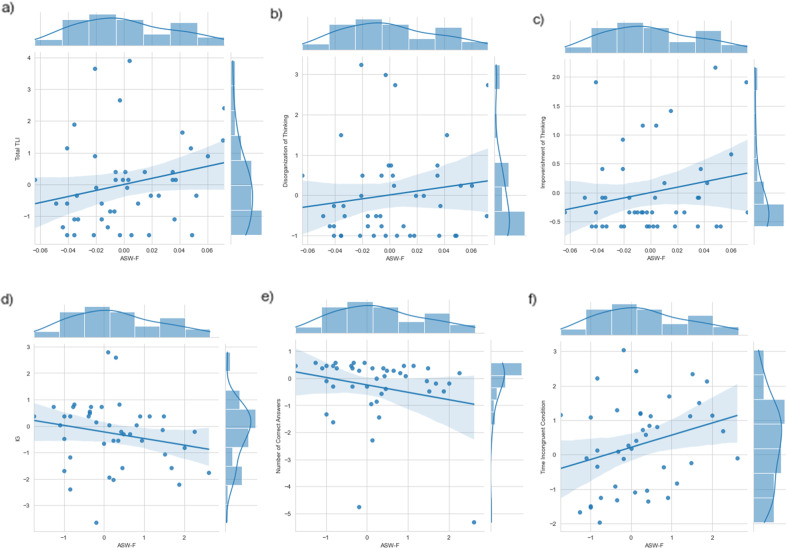
Computational semantics, a branch of computational linguistics, involves automated meaning analysis that relies on how words occur together in natural language. This offers a promising tool to study schizophrenia. At present, we do not know if these word-level choices in speech are sensitive to the illness stage (i.e., acute untreated vs. stable established state), track cognitive deficits in major domains (e.g., cognitive control, processing speed) or relate to established dimensions of formal thought disorder. In this study, we collected samples of descriptive discourse in patients experiencing an untreated first episode of schizophrenia and healthy control subjects (246 samples of 1-minute speech; n = 82, FES = 46, HC = 36) and used a co-occurrence based vector embedding of words to quantify semantic similarity in speech. We obtained six-month follow-up data in a subsample (99 speech samples, n = 33, FES = 20, HC = 13). At baseline, semantic similarity was evidently higher in patients compared to healthy individuals, especially when social functioning was impaired; but this was not related to the severity of clinically ascertained thought disorder in patients. Across the study sample, higher semantic similarity at baseline was related to poorer Stroop performance and processing speed. Over time, while semantic similarity was stable in healthy subjects, it increased in patients, especially when they had an increasing burden of negative symptoms. Disruptions in word-level choices made by patients with schizophrenia during short 1-min descriptions are sensitive to interindividual differences in cognitive and social functioning at first presentation and persist over the early course of the illness.
计算语义学是计算语言学的一个分支,涉及基于自然语言中词汇共同出现方式的自动语义分析。这为研究精神分裂症提供了一个有前景的工具。目前,我们尚不清楚言语中的这些词汇层面的选择是否对疾病阶段敏感(即急性未治疗状态与稳定的已确诊状态),是否能追踪主要领域的认知缺陷(如认知控制、处理速度),或者是否与形式思维障碍的既定维度相关。在本研究中,我们收集了首次发作未经治疗的精神分裂症患者和健康对照者的描述性话语样本(246个1分钟言语样本;n = 82,精神分裂症首次发作患者 = 46,健康对照者 = 36),并使用基于词汇共现的向量嵌入来量化言语中的语义相似性。我们在一个子样本中获得了六个月的随访数据(99个言语样本,n = 33,精神分裂症首次发作患者 = 20,健康对照者 = 13)。在基线时,与健康个体相比,患者的语义相似性明显更高,尤其是在社会功能受损时;但这与患者临床确诊的思维障碍严重程度无关。在整个研究样本中,基线时较高的语义相似性与较差的斯特鲁普任务表现和处理速度相关。随着时间推移,健康受试者的语义相似性保持稳定,而患者的语义相似性增加,尤其是当他们的阴性症状负担加重时。精神分裂症患者在简短的1分钟描述过程中词汇层面选择的中断对首次就诊时认知和社会功能的个体差异敏感,并在疾病早期过程中持续存在。