Department of Neurosurgery, The Affiliated Wuxi No. 2 Hospital of Nanjing Medical University, Wuxi, 214002 Jiangsu, China.
Department of Neurosurgery, Jinling Hospital, Nanjing Medical University, Nanjing, 210002 Jiangsu, China.
Oxid Med Cell Longev. 2022 Jul 9;2022:9069825. doi: 10.1155/2022/9069825. eCollection 2022.
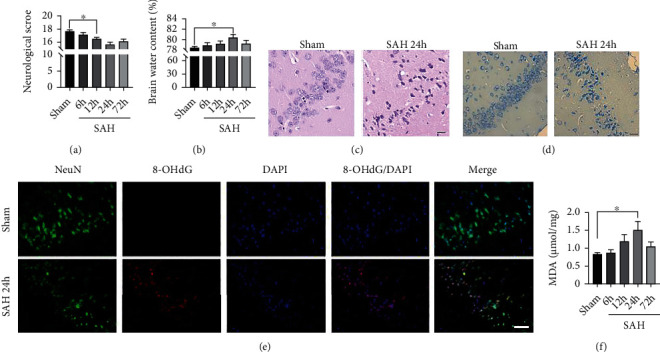
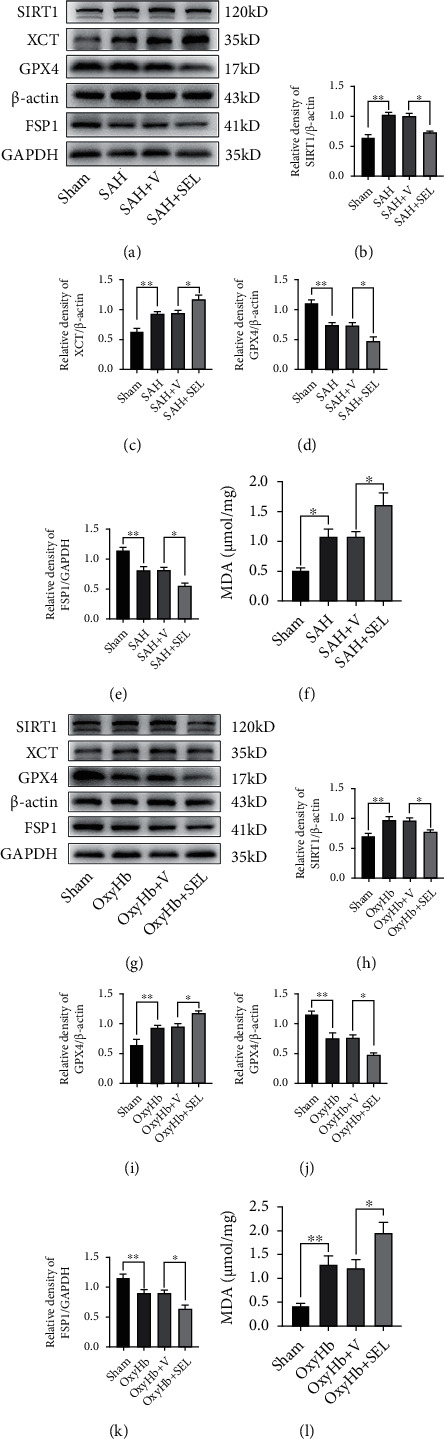
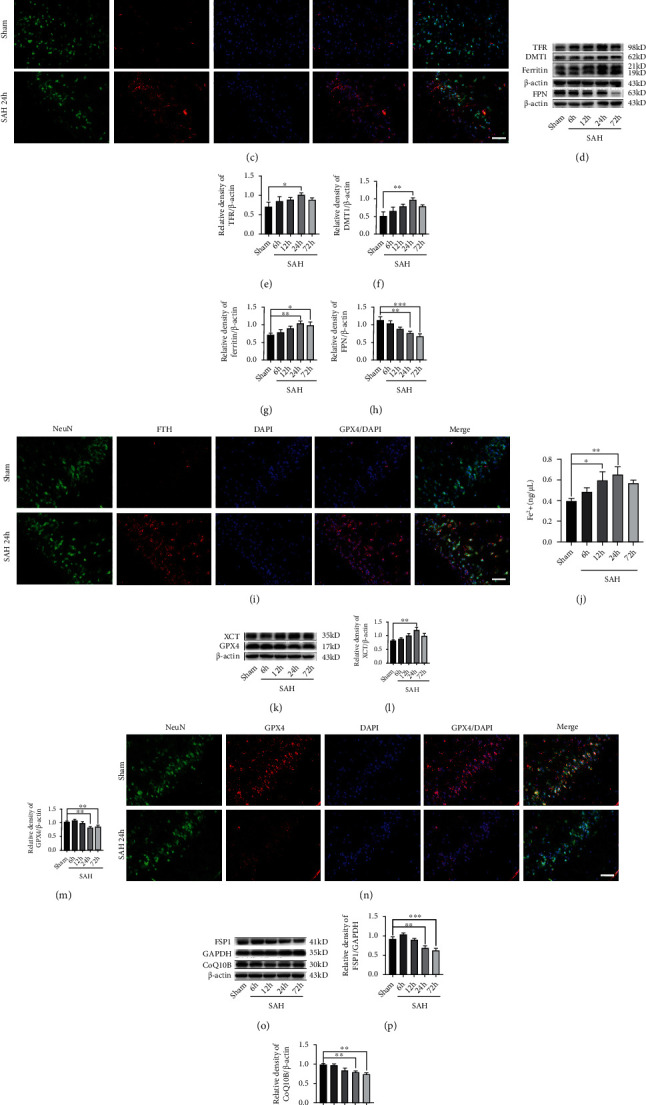
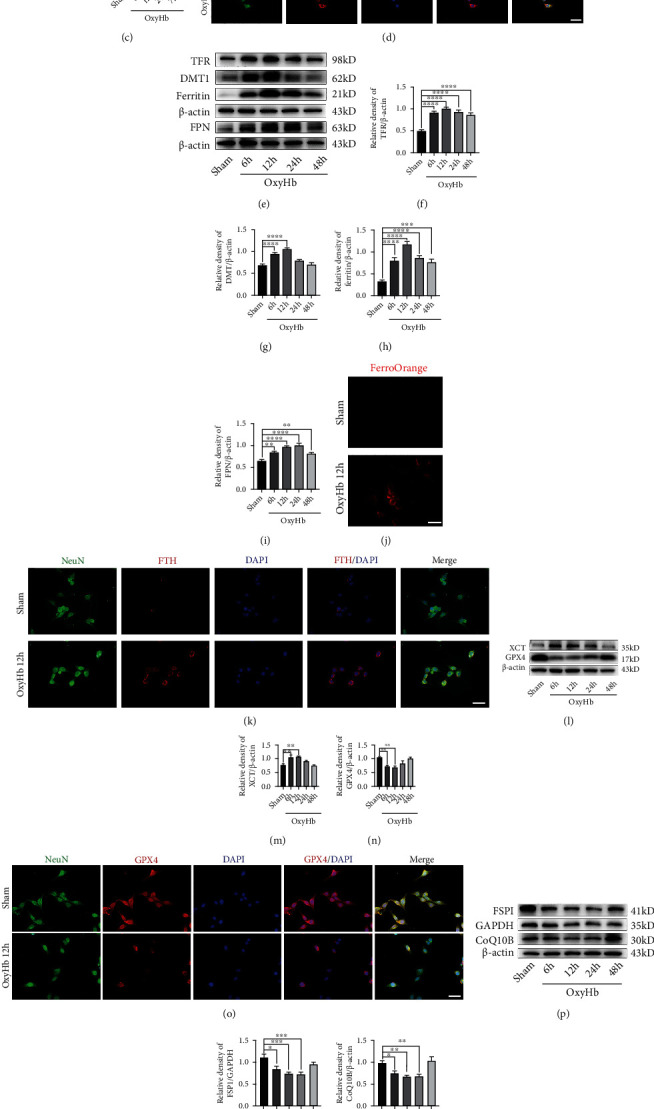
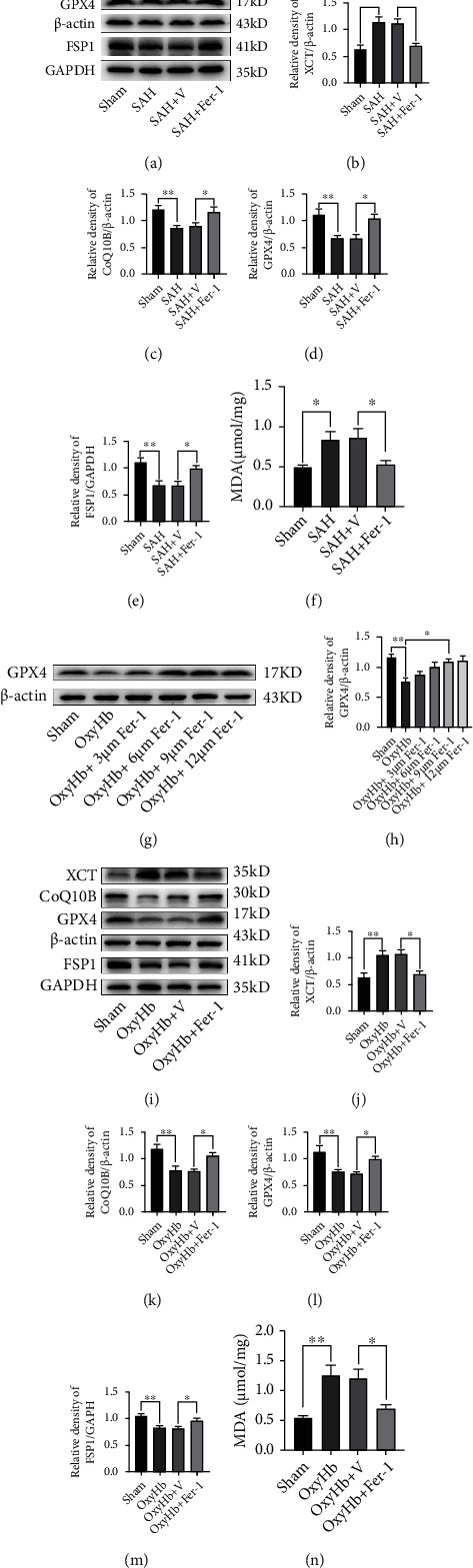
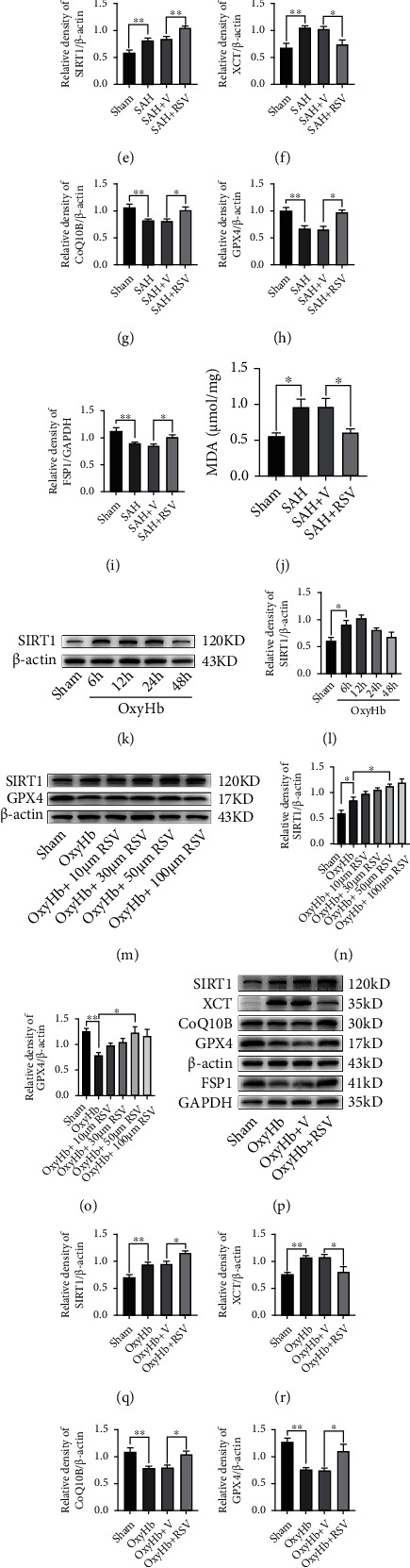
Ferroptosis is a regulated cell death that characterizes the lethal lipid peroxidation and iron overload, which may contribute to early brain injury (EBI) pathogenesis after subarachnoid hemorrhage (SAH). Although Sirtuin 1 (SIRT1), a class III histone deacetylase, has been proved to have endogenous neuroprotective effects on the EBI following SAH, the role of SIRT1 in ferroptosis has not been studied. Hence, we designed the current study to determine the role of ferroptosis in the EBI and explore the correlation between SIRT1 and ferroptosis after SAH. The pathways of ferroptosis were examined after experimental SAH (prechiasmatic cistern injection mouse model) and in HT-22 cells stimulated by oxyhemoglobin (oxyHb) . Then, ferrostatin-1 (Fer-1) was used further to determine the role of ferroptosis in EBI. Finally, we explored the correlation between SIRT1 and ferroptosis via regulating the expression of SIRT1 by resveratrol (RSV) and selisistat (SEL). Our results showed that ferroptosis was involved in the pathogenesis of EBI after SAH through multiple pathways, including acyl-CoA synthetase long-chain family member 4 (ACSL4) activation, iron metabolism disturbance, and the downregulation of glutathione peroxidase 4 (GPX4) and ferroptosis suppressor protein 1 (FSP1). Inhibition of ferroptosis by Fer-1 significantly alleviated oxidative stress-mediated brain injury. SIRT1 activation could suppress SAH-induced ferroptosis by upregulating the expression of GPX4 and FSP1. Therefore, ferroptosis could be a potential therapeutic target for SAH, and SIRT1 activation is a promising method to inhibit ferroptosis.
铁死亡是一种受调控的细胞死亡形式,其特征为致命性的脂质过氧化和铁过载,这可能导致蛛网膜下腔出血 (SAH) 后的早期脑损伤 (EBI) 发病机制。虽然 Sirtuin 1(SIRT1),一种 III 类组蛋白去乙酰化酶,已被证明对 SAH 后的 EBI 具有内源性神经保护作用,但 SIRT1 在铁死亡中的作用尚未被研究。因此,我们设计了本研究以确定铁死亡在 EBI 中的作用,并探索 SAH 后 SIRT1 与铁死亡之间的相关性。在实验性 SAH 后(前联合池内注射小鼠模型)和氧合血红蛋白 (oxyHb) 刺激的 HT-22 细胞中检查铁死亡途径。然后,使用 Ferrostatin-1 (Fer-1) 进一步确定铁死亡在 EBI 中的作用。最后,我们通过用白藜芦醇 (RSV) 和塞来昔布 (SEL) 调节 SIRT1 的表达来探索 SIRT1 与铁死亡之间的相关性。我们的结果表明,铁死亡通过多种途径参与了 SAH 后的 EBI 发病机制,包括酰基辅酶 A 合成酶长链家族成员 4 (ACSL4) 激活、铁代谢紊乱以及谷胱甘肽过氧化物酶 4 (GPX4) 和铁死亡抑制蛋白 1 (FSP1) 的下调。Fer-1 抑制铁死亡可显著减轻氧化应激介导的脑损伤。SIRT1 的激活可通过上调 GPX4 和 FSP1 的表达来抑制 SAH 诱导的铁死亡。因此,铁死亡可能是 SAH 的一个潜在治疗靶点,SIRT1 的激活是抑制铁死亡的一种有前途的方法。