Wang Hanwen, Zhao Chen, Santa-Maria Cesar A, Emens Leisha A, Popel Aleksander S
Department of Biomedical Engineering, Johns Hopkins University School of Medicine, Baltimore, MD 21205, USA.
School of Pharmacy, Nanjing Medical University, Nanjing, Jiangsu211166, China.
iScience. 2022 Jun 30;25(8):104702. doi: 10.1016/j.isci.2022.104702. eCollection 2022 Aug 19.
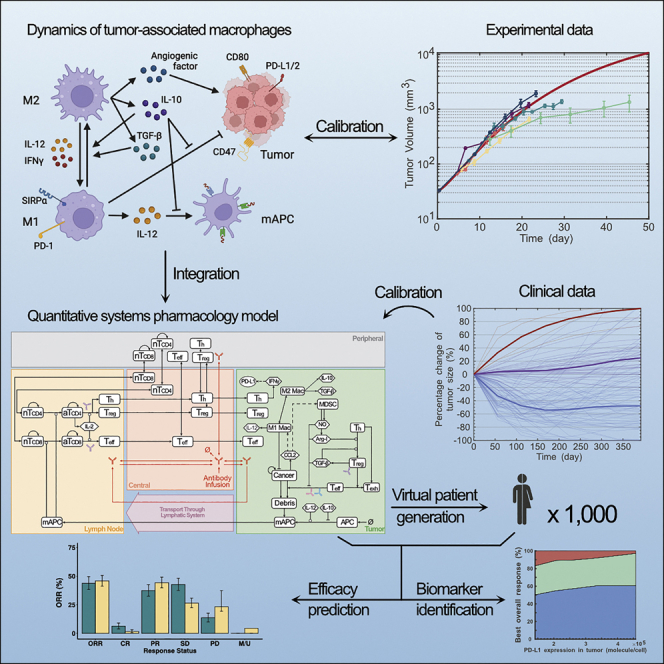
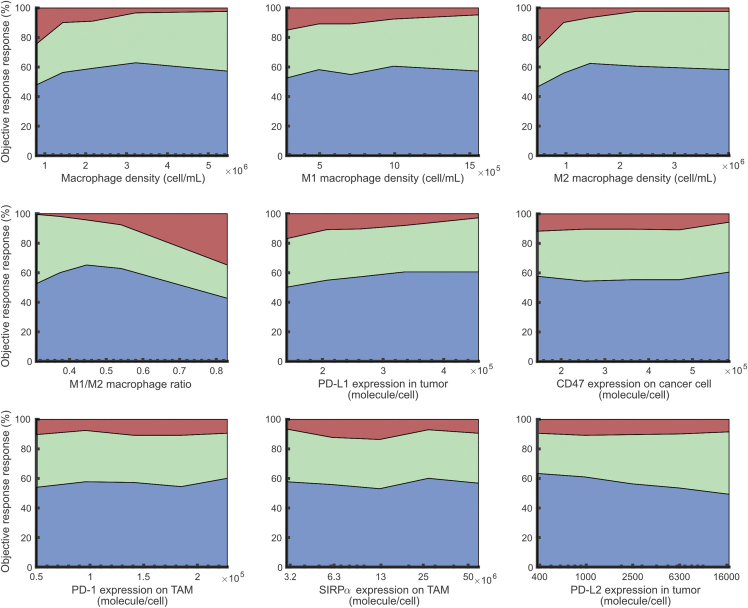
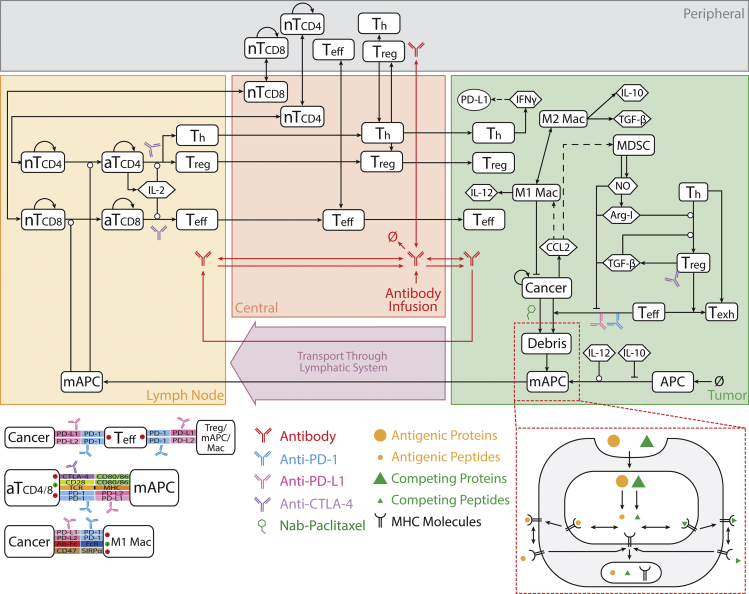
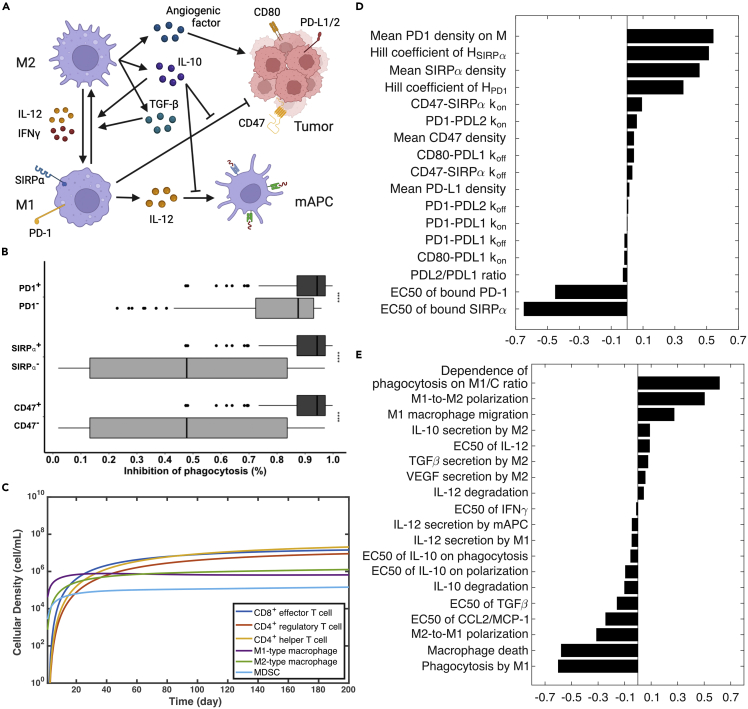
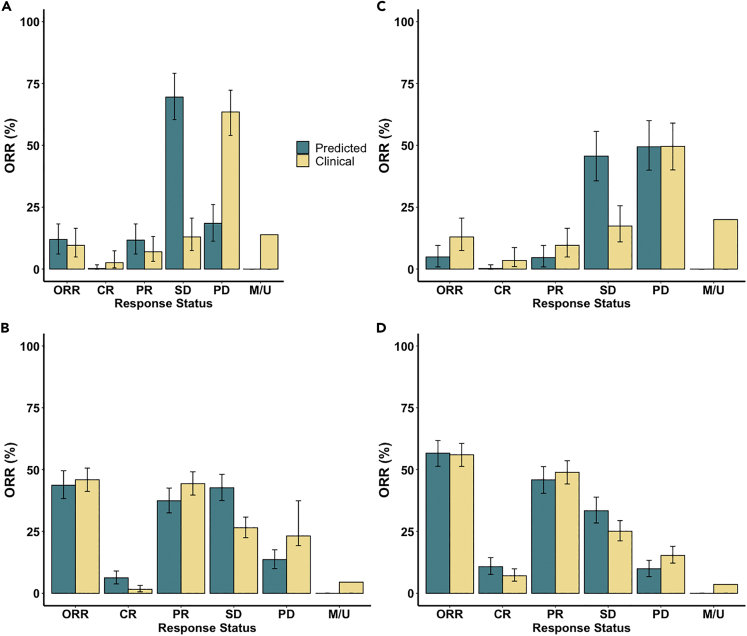
Quantitative systems pharmacology (QSP) modeling is an emerging mechanistic computational approach that couples drug pharmacokinetics/pharmacodynamics and the course of disease progression. It has begun to play important roles in drug development for complex diseases such as cancer, including triple-negative breast cancer (TNBC). The combination of the anti-PD-L1 antibody atezolizumab and nab-paclitaxel has shown clinical activity in advanced TNBC with PD-L1-positive tumor-infiltrating immune cells. As tumor-associated macrophages (TAMs) serve as major contributors to the immuno-suppressive tumor microenvironment, we incorporated the dynamics of TAMs into our previously published QSP model to investigate their impact on cancer treatment. We show that through proper calibration, the model captures the macrophage heterogeneity in the tumor microenvironment while maintaining its predictive power of the trial results at the population level. Despite its high mechanistic complexity, the modularized QSP platform can be readily reproduced, expanded for new species of interest, and applied in clinical trial simulation.
定量系统药理学(QSP)建模是一种新兴的机制性计算方法,它将药物药代动力学/药效学与疾病进展过程相结合。它已开始在癌症等复杂疾病的药物开发中发挥重要作用,包括三阴性乳腺癌(TNBC)。抗PD-L1抗体阿特珠单抗和纳米白蛋白结合型紫杉醇的联合使用已在具有PD-L1阳性肿瘤浸润免疫细胞的晚期TNBC中显示出临床活性。由于肿瘤相关巨噬细胞(TAM)是免疫抑制性肿瘤微环境的主要贡献者,我们将TAM的动力学纳入我们之前发表的QSP模型中,以研究它们对癌症治疗的影响。我们表明,通过适当校准,该模型能够捕捉肿瘤微环境中的巨噬细胞异质性,同时在群体水平上保持其对试验结果的预测能力。尽管其机制高度复杂,但模块化的QSP平台易于重现、扩展以适用于新的感兴趣物种,并应用于临床试验模拟。