Department of Microbiology and Immunology, University of Michigan, Ann Arbor, Michigan, USA.
Unit for Laboratory Animal Medicine, University of Michigan, Ann Arbor, Michigan, USA.
mBio. 2022 Aug 30;13(4):e0118322. doi: 10.1128/mbio.01183-22. Epub 2022 Jul 20.
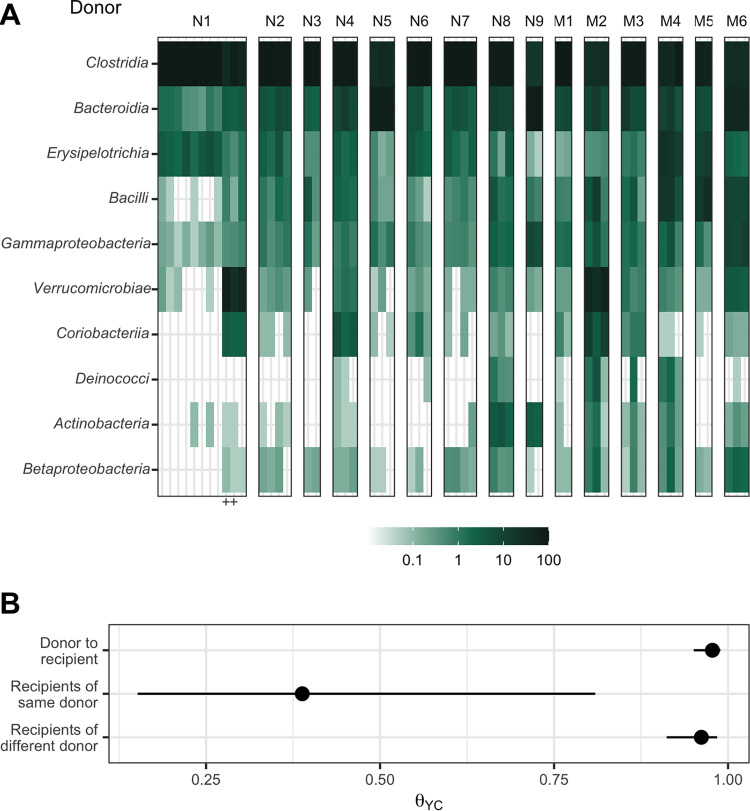
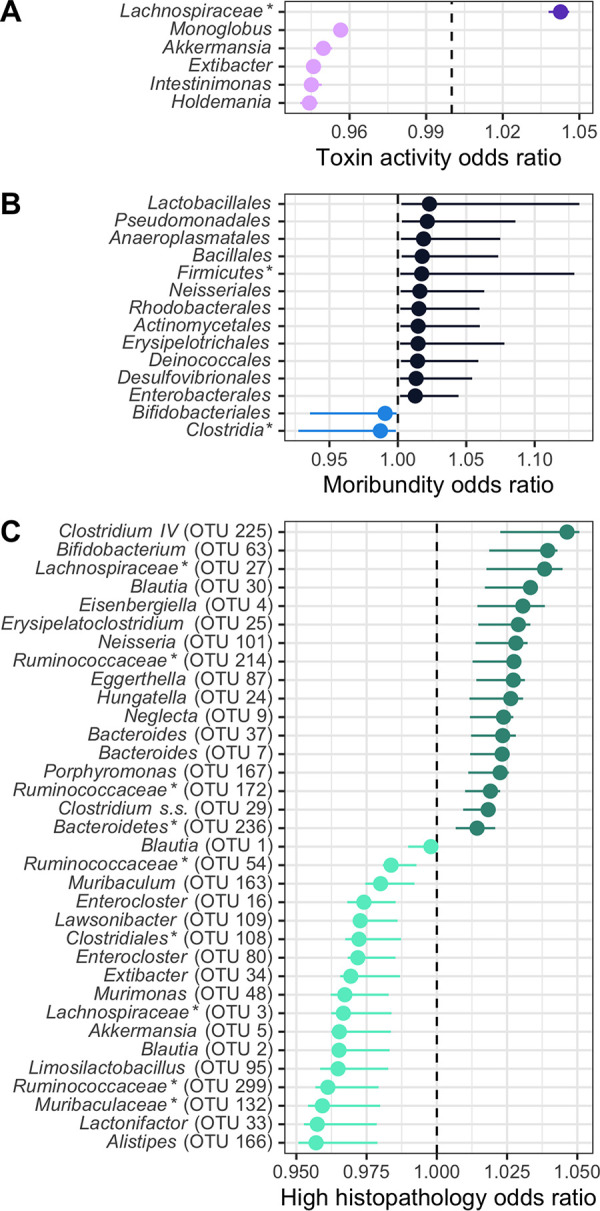
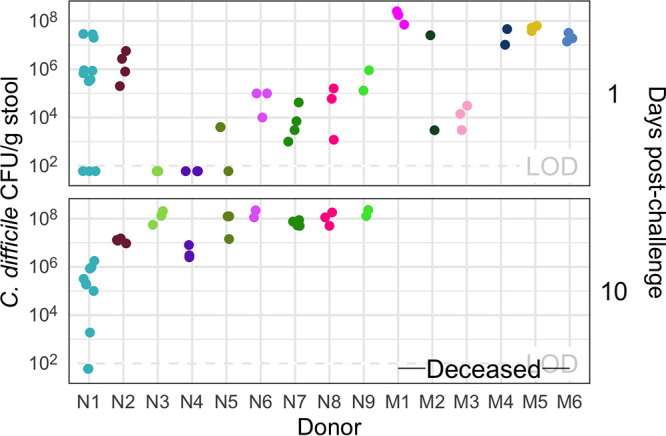
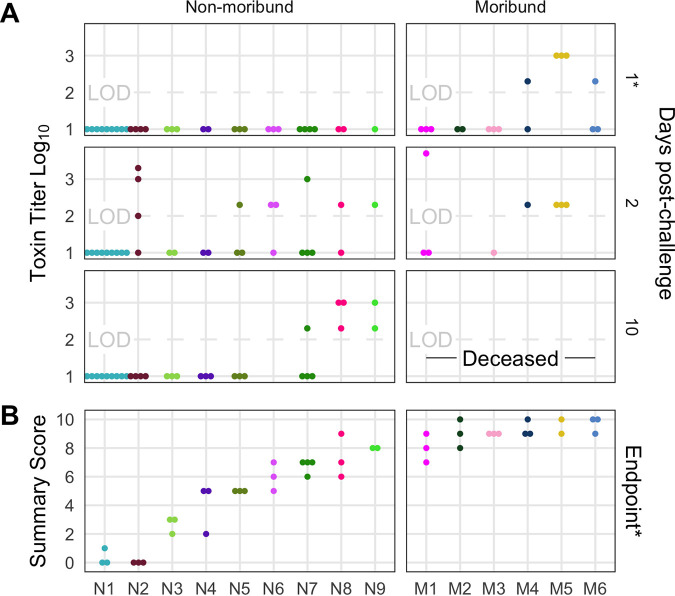
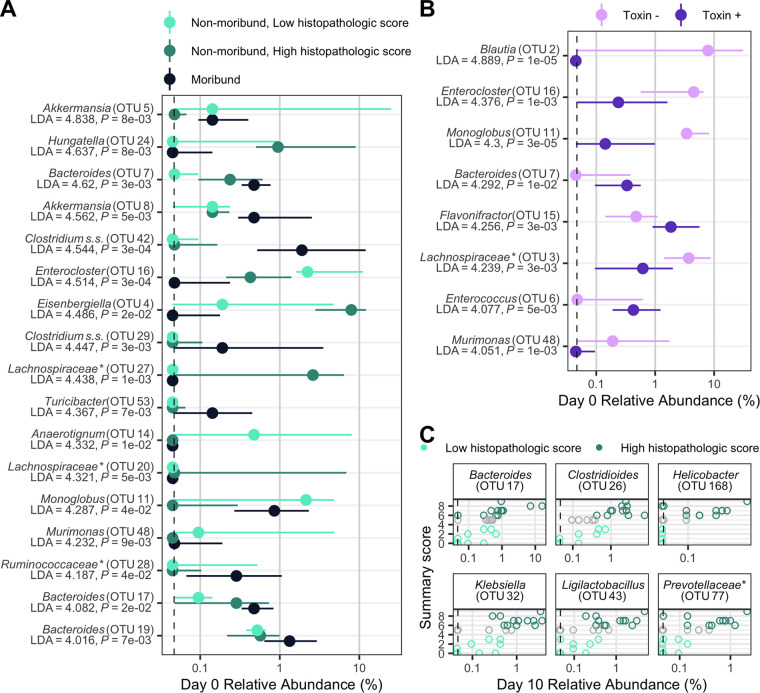
The severity of Clostridioides difficile infections (CDI) has increased over the last few decades. Patient age, white blood cell count, and creatinine levels as well as C. difficile ribotype and toxin genes have been associated with disease severity. However, it is unclear whether specific members of the gut microbiota are associated with variations in disease severity. The gut microbiota is known to interact with C. difficile during infection. Perturbations to the gut microbiota are necessary for C. difficile to colonize the gut. The gut microbiota can inhibit C. difficile colonization through bile acid metabolism, nutrient consumption, and bacteriocin production. Here, we sought to demonstrate that members of the gut bacterial communities can also contribute to disease severity. We derived diverse gut communities by colonizing germfree mice with different human fecal communities. The mice were then infected with a single C. difficile ribotype 027 clinical isolate, which resulted in moribundity and histopathologic differences. The variation in severity was associated with the human fecal community that the mice received. Generally, bacterial populations with pathogenic potential, such as , , and Klebsiella, were associated with more-severe outcomes. Bacterial groups associated with fiber degradation and bile acid metabolism, such as , , , and , were associated with less-severe outcomes. These data indicate that, in addition to the host and C. difficile subtype, populations of gut bacteria can influence CDI disease severity. Clostridioides difficile colonization can be asymptomatic or develop into an infection ranging in severity from mild diarrhea to toxic megacolon, sepsis, and death. Models that predict severity and guide treatment decisions are based on clinical factors and C. difficile characteristics. Although the gut microbiome plays a role in protecting against CDI, its effect on CDI disease severity is unclear and has not been incorporated into disease severity models. We demonstrated that variation in the microbiome of mice colonized with human feces yielded a range of disease outcomes. These results revealed groups of bacteria associated with both severe and mild C. difficile infection outcomes. Gut bacterial community data from patients with CDI could improve our ability to identify patients at risk of developing more severe disease and improve interventions that target C. difficile and the gut bacteria to reduce host damage.
艰难梭菌感染 (CDI) 的严重程度在过去几十年中有所增加。患者年龄、白细胞计数和肌酐水平以及艰难梭菌的核糖型和毒素基因与疾病严重程度相关。然而,目前尚不清楚肠道微生物群的特定成员是否与疾病严重程度的变化有关。众所周知,肠道微生物群在感染过程中与艰难梭菌相互作用。为了使艰难梭菌定植肠道,必须扰乱肠道微生物群。肠道微生物群可以通过胆汁酸代谢、营养消耗和细菌素产生来抑制艰难梭菌的定植。在这里,我们试图证明肠道细菌群落的成员也可以导致疾病的严重程度。我们通过用不同的人类粪便群落定植无菌小鼠来获得不同的肠道群落。然后,这些小鼠感染了单一的艰难梭菌 027 核糖型临床分离株,导致濒死和组织病理学差异。严重程度的变化与小鼠接受的人类粪便群落有关。通常,具有潜在致病性的细菌种群,如 、 和 ,与更严重的结果相关。与纤维降解和胆汁酸代谢相关的细菌群,如 、 、 、和 ,与较轻的结果相关。这些数据表明,除了宿主和艰难梭菌亚型外,肠道细菌种群也可以影响 CDI 的疾病严重程度。艰难梭菌定植可以无症状或发展为感染,从轻度腹泻到中毒性巨结肠、败血症和死亡。预测严重程度并指导治疗决策的模型基于临床因素和艰难梭菌的特征。尽管肠道微生物群在预防 CDI 方面发挥作用,但它对 CDI 疾病严重程度的影响尚不清楚,也未纳入疾病严重程度模型。我们证明,用人类粪便定植的小鼠的微生物组的变化产生了一系列疾病结果。这些结果揭示了与严重和轻度艰难梭菌感染结果相关的细菌群。CDI 患者的肠道细菌群落数据可以提高我们识别发生更严重疾病风险的患者的能力,并改善针对艰难梭菌和肠道细菌的干预措施,以减少宿主损伤。