Department of Internal Medicine, School of Medicine, Federal University of Goias, Goiânia, Goiás, Brazil.
Division of Health Care, Goias State Health Department, Goiânia, Goiás, Brazil.
PLoS One. 2022 Jul 20;17(7):e0271639. doi: 10.1371/journal.pone.0271639. eCollection 2022.
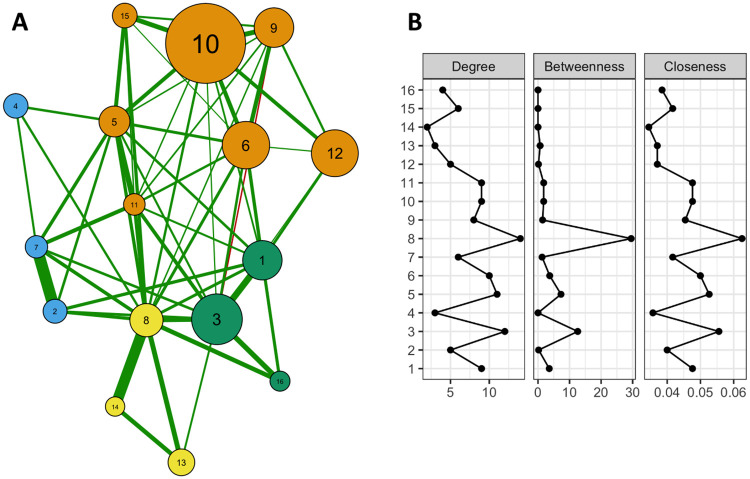
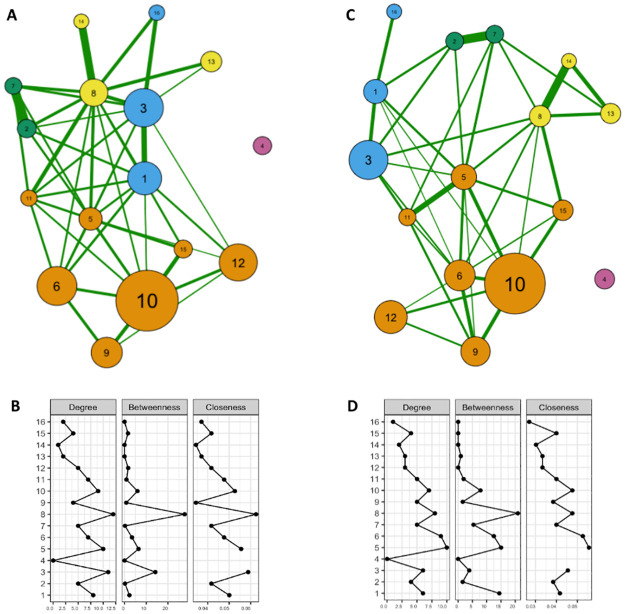
In aging populations, multimorbidity (MM) is a significant challenge for health systems, however there are scarce evidence available in Low- and Middle-Income Countries, particularly in Brazil. A national cross-sectional study was conducted with 11,177 Brazilian older adults to evaluate the occurrence of MM and related clusters in Brazilians aged ≥ 60 years old. MM was assessed by a list of 16 physical and mental morbidities and it was defined considering ≥ 2 morbidities. The frequencies of MM and its associated factors were analyzed. After this initial approach, a network analysis was performed to verify the occurrence of clusters of MM and the network of interactions between coexisting morbidities. The occurrence of MM was 58.6% (95% confidence interval [CI]: 57.0-60.2). Hypertension (50.6%) was the most frequent morbidity and it was present all combinations of morbidities. Network analysis has demonstrated 4 MM clusters: 1) cardiometabolic; 2) respiratory + cancer; 3) musculoskeletal; and 4) a mixed mental illness + other diseases. Depression was the most central morbidity in the model according to nodes' centrality measures (strength, closeness, and betweenness) followed by heart disease, and low back pain. Similarity in male and female networks was observed with a conformation of four clusters of MM and cancer as an isolated morbidity. The prevalence of MM in the older Brazilians was high, especially in female sex and persons living in the South region of Brazil. Use of network analysis could be an important tool for identifying MM clusters and address the appropriate health care, research, and medical education for older adults in Brazil.
在老龄化人口中,多种疾病(MM)对卫生系统构成了重大挑战,但在低收入和中等收入国家,特别是在巴西,相关证据稀缺。本项全国性横断面研究纳入了 11177 名巴西老年人,旨在评估≥60 岁巴西老年人中 MM 的发生情况及其相关聚类。通过一份包含 16 种身心疾病的清单评估 MM,并定义≥2 种疾病为 MM。分析 MM 的发生频率及其相关因素。在初始方法之后,进行网络分析以验证 MM 聚类的发生情况以及共存疾病之间的相互作用网络。MM 的发生情况为 58.6%(95%置信区间[CI]:57.0-60.2)。高血压(50.6%)是最常见的疾病,存在于所有疾病组合中。网络分析显示有 4 个 MM 聚类:1)心脏代谢;2)呼吸+癌症;3)肌肉骨骼;和 4)精神疾病混合+其他疾病。根据节点的中心度(强度、接近度和中间度)测量,抑郁是该模型中最中心的疾病,其次是心脏病和腰痛。在男性和女性网络中观察到相似性,存在 4 个 MM 聚类和癌症这一孤立疾病。巴西老年人群中 MM 的患病率较高,尤其是女性和居住在巴西南部地区的人群。网络分析的应用可能是识别 MM 聚类的重要工具,并为巴西老年人提供适当的医疗保健、研究和医学教育。