Key Laboratory of Animal Genetics, Breeding and Reproduction of the Ministry of Agriculture and Rural Affairs; National Engineering Laboratory for Animal Breeding; College of Animal Science and Technology, China Agricultural University, Beijing 100193, P. R. China.
Proc Natl Acad Sci U S A. 2022 Jul 26;119(30):e2201168119. doi: 10.1073/pnas.2201168119. Epub 2022 Jul 18.
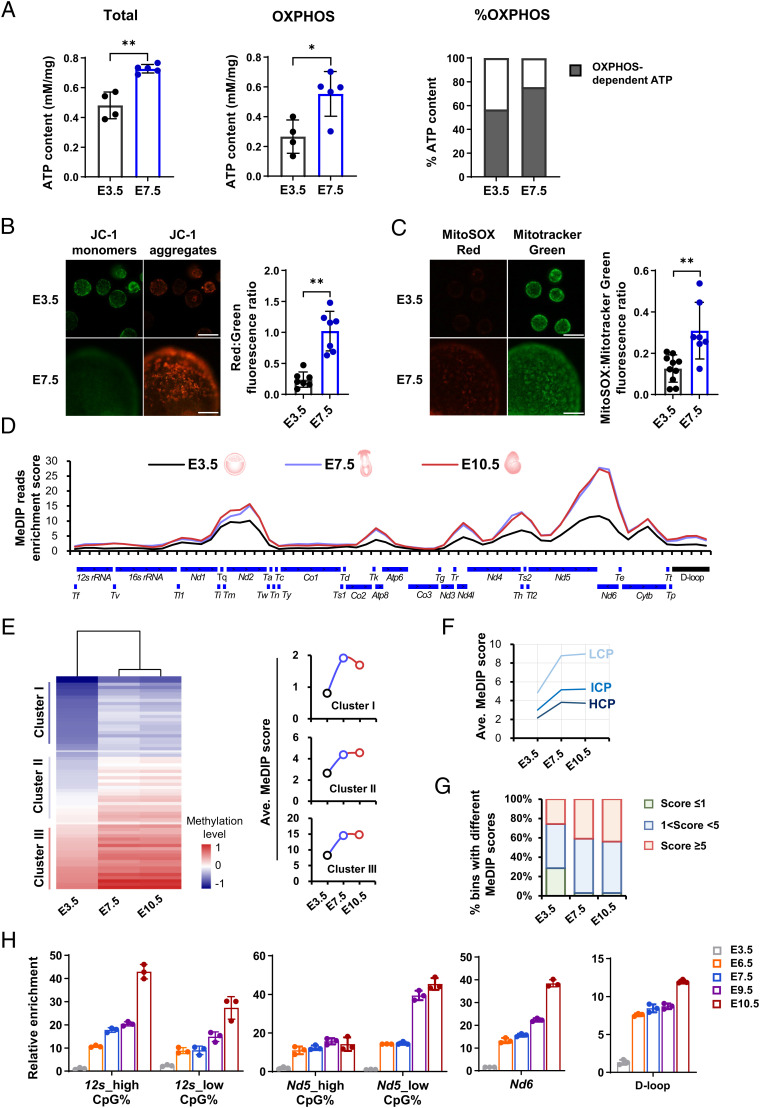
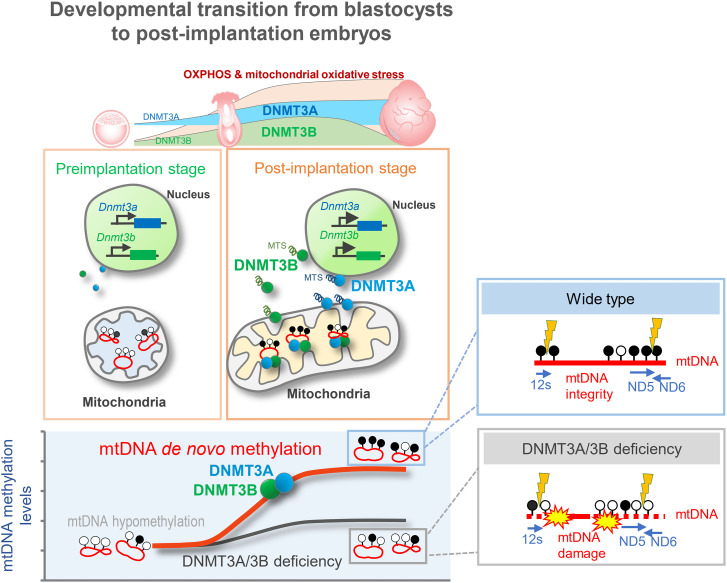
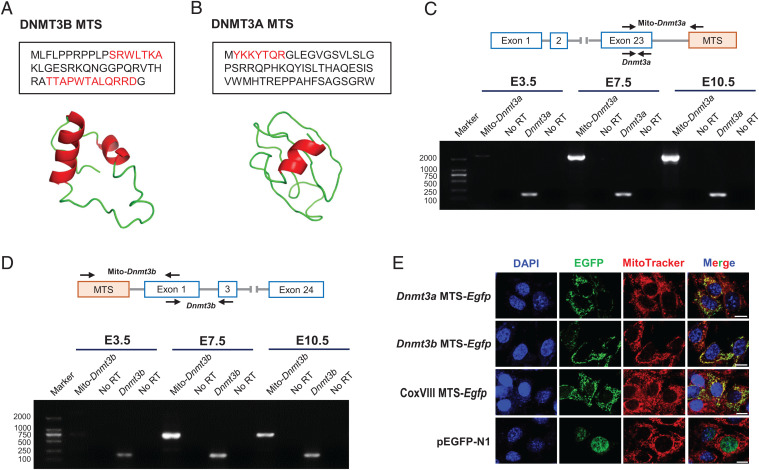
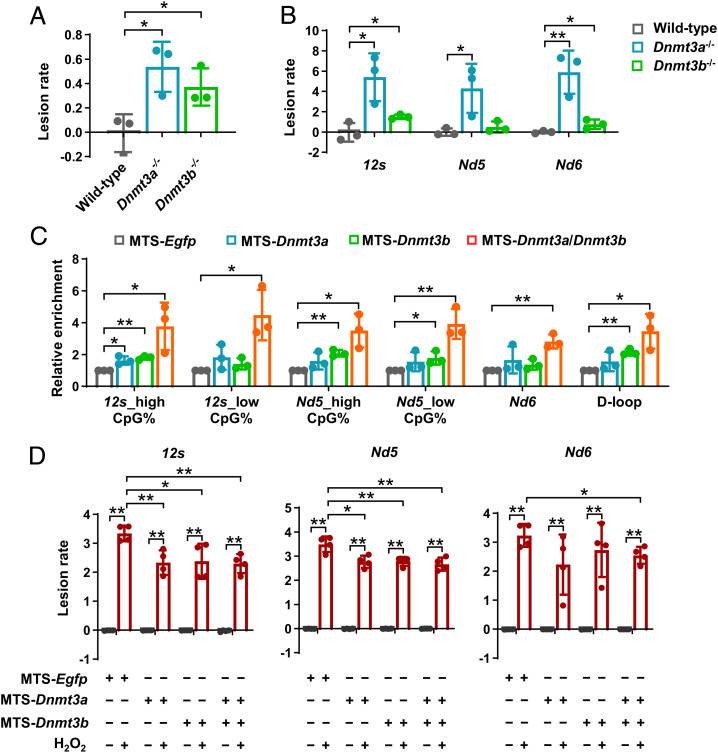
Mitochondrial remodeling during the peri-implantation stage is the hallmark event essential for normal embryogenesis. Among the changes, enhanced oxidative phosphorylation is critical for supporting high energy demands of postimplantation embryos, but increases mitochondrial oxidative stress, which in turn threatens mitochondrial DNA (mtDNA) stability. However, how mitochondria protect their own histone-lacking mtDNA, during this stage remains unclear. Concurrently, the mitochondrial genome gain DNA methylation by this stage. Its spatiotemporal coincidence with enhanced mitochondrial stress led us to ask if mtDNA methylation has a role in maintaining mitochondrial genome stability. Herein, we report that mitochondrial genome undergoes de novo mtDNA methylation that can protect mtDNA against enhanced oxidative damage during the peri-implantation window. Mitochondrial genome gains extensive mtDNA methylation during transition from blastocysts to postimplantation embryos, thus establishing relatively hypermethylated mtDNA from hypomethylated state in blastocysts. Mechanistic study revealed that DNA methyltransferase 3A (DNMT3A) and DNMT3B enter mitochondria during this process and bind to mtDNA, via their unique mitochondrial targeting sequences. Importantly, loss- and gain-of-function analyses indicated that DNMT3A and DNMT3B are responsible for catalyzing de novo mtDNA methylation, in a synergistic manner. Finally, we proved, in vivo and in vitro, that increased mtDNA methylation functions to protect mitochondrial genome against mtDNA damage induced by increased mitochondrial oxidative stress. Together, we reveal mtDNA methylation dynamics and its underlying mechanism during the critical developmental window. We also provide the functional link between mitochondrial epigenetic remodeling and metabolic changes, which reveals a role for nuclear-mitochondrial crosstalk in establishing mitoepigenetics and maintaining mitochondrial homeostasis.
在胚胎植入阶段,线粒体的重塑是正常胚胎发生所必需的标志性事件。在这些变化中,增强的氧化磷酸化对于支持植入后胚胎的高能量需求至关重要,但会增加线粒体氧化应激,从而威胁到线粒体 DNA(mtDNA)的稳定性。然而,在这个阶段,线粒体如何保护自身缺乏组蛋白的 mtDNA 尚不清楚。同时,线粒体基因组在这个阶段获得 DNA 甲基化。其与增强的线粒体应激的时空巧合使我们不禁要问 mtDNA 甲基化是否在维持线粒体基因组稳定性方面发挥作用。在此,我们报告线粒体基因组经历从头 DNA 甲基化,可在胚胎植入窗口期保护 mtDNA 免受增强的氧化损伤。线粒体基因组在从囊胚到植入后胚胎的过渡过程中获得广泛的 mtDNA 甲基化,从而使相对超甲基化的 mtDNA 从囊胚中的低甲基化状态建立起来。机制研究表明,在这个过程中,DNA 甲基转移酶 3A(DNMT3A)和 DNMT3B 通过其独特的线粒体靶向序列进入线粒体并与 mtDNA 结合。重要的是,缺失和获得功能分析表明,DNMT3A 和 DNMT3B 协同负责催化从头 DNA 甲基化。最后,我们在体内和体外证明,增加的 mtDNA 甲基化可保护线粒体基因组免受增加的线粒体氧化应激引起的 mtDNA 损伤。总之,我们揭示了在关键发育窗口期间 mtDNA 甲基化的动态及其潜在机制。我们还提供了线粒体表观遗传重塑和代谢变化之间的功能联系,这揭示了核-线粒体串扰在建立线粒体表观遗传学和维持线粒体动态平衡方面的作用。