Department of TIP OIO, EMD Serono Research and Development Institute, Billerica, Massachusetts, USA
Department of TIP OIO, EMD Serono Research and Development Institute, Billerica, Massachusetts, USA.
J Immunother Cancer. 2022 Jul;10(7). doi: 10.1136/jitc-2021-004122.
Bintrafusp alfa (BA) is a bifunctional fusion protein designed for colocalized, simultaneous inhibition of two immunosuppressive pathways, transforming growth factor-β (TGF-β) and programmed death-ligand 1 (PD-L1), within the tumor microenvironment (TME). We hypothesized that targeting PD-L1 to the tumor by BA colocalizes the TGF-β trap (TGF-βRII) to the TME, enabling it to sequester TGF-β in the tumor more effectively than systemic TGF-β blockade, thereby enhancing antitumor activity.
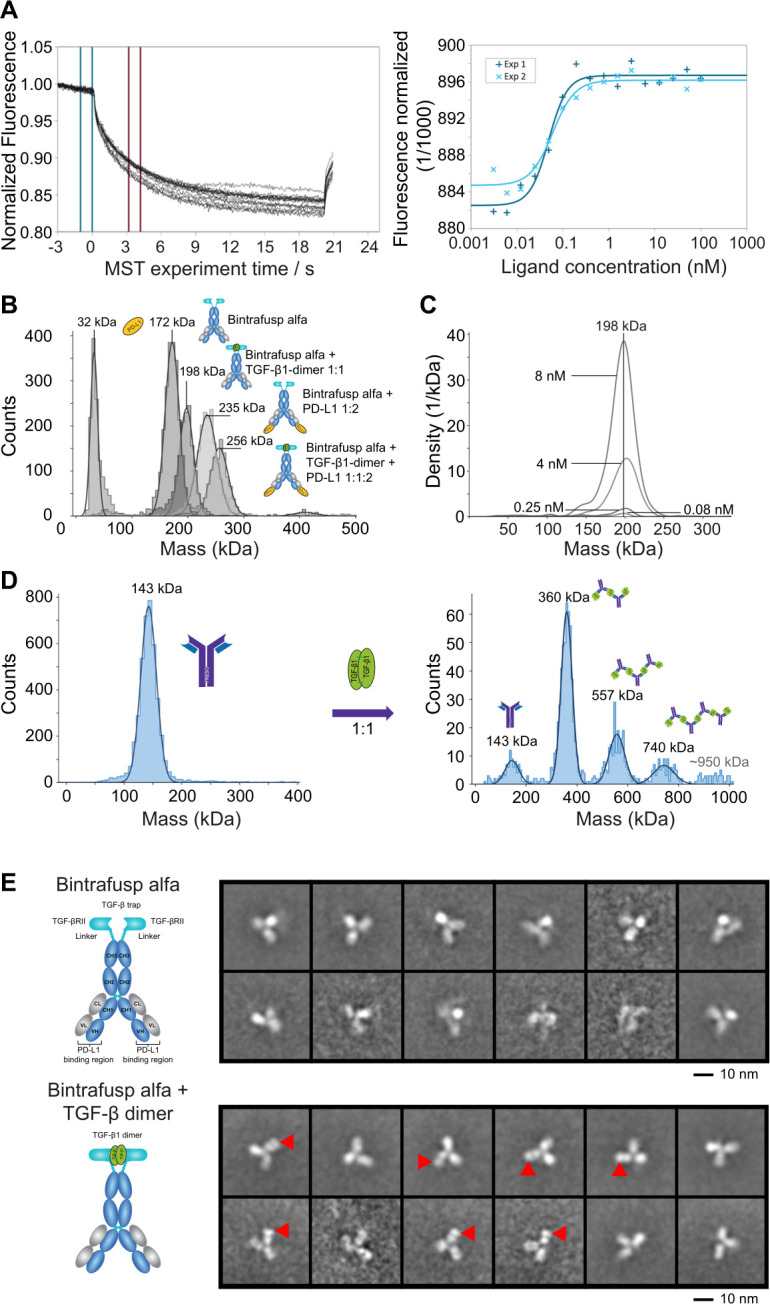
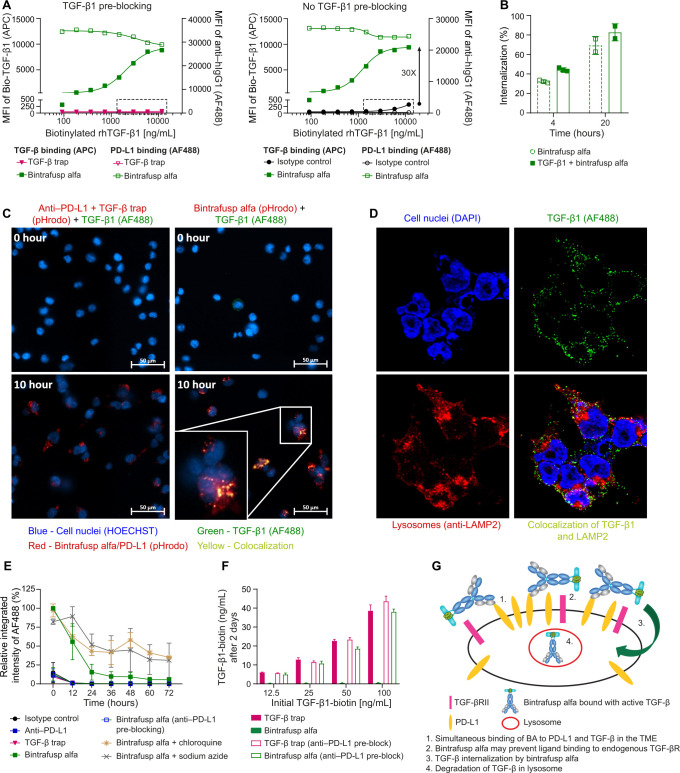
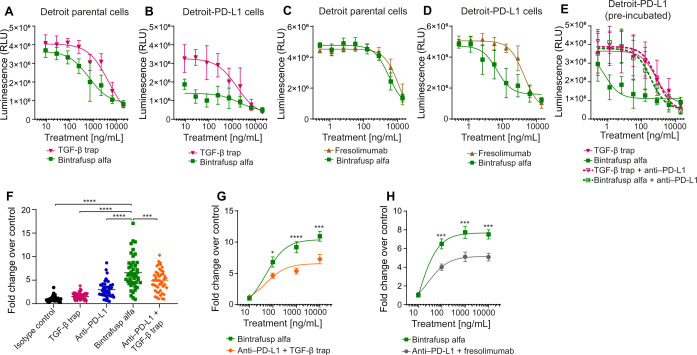
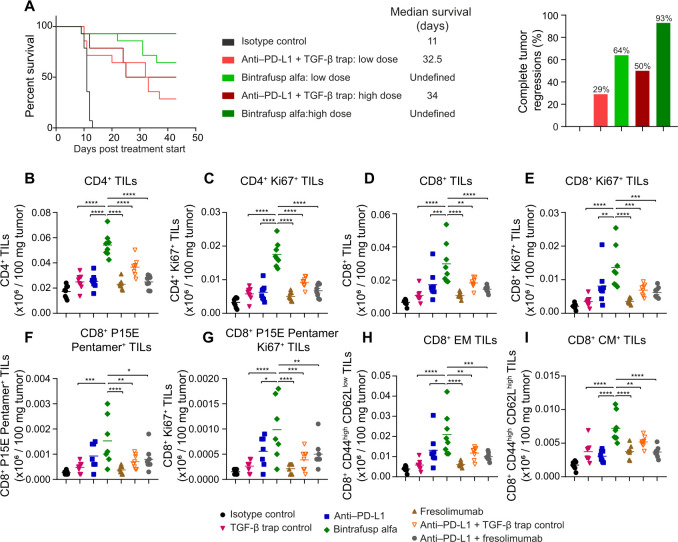
Multiple technologies were used to characterize the TGF-β trap binding avidity. BA versus combinations of anti-PD-L1 and TGF-β trap or the pan-TGF-β antibody fresolimumab were compared in proliferation and two-way mixed lymphocyte reaction assays. Immunophenotyping of tumor-infiltrating lymphocytes (TILs) and RNA sequencing (RNAseq) analysis assessing stromal and immune landscape following BA or the combination therapy were performed in MC38 tumors. TGF-β and PD-L1 co-expression and their associated gene signatures in MC38 tumors and human lung carcinoma tissue were studied with single-cell RNAseq (scRNAseq) and immunostaining. BA-induced internalization, degradation, and depletion of TGF-β were investigated in vitro.
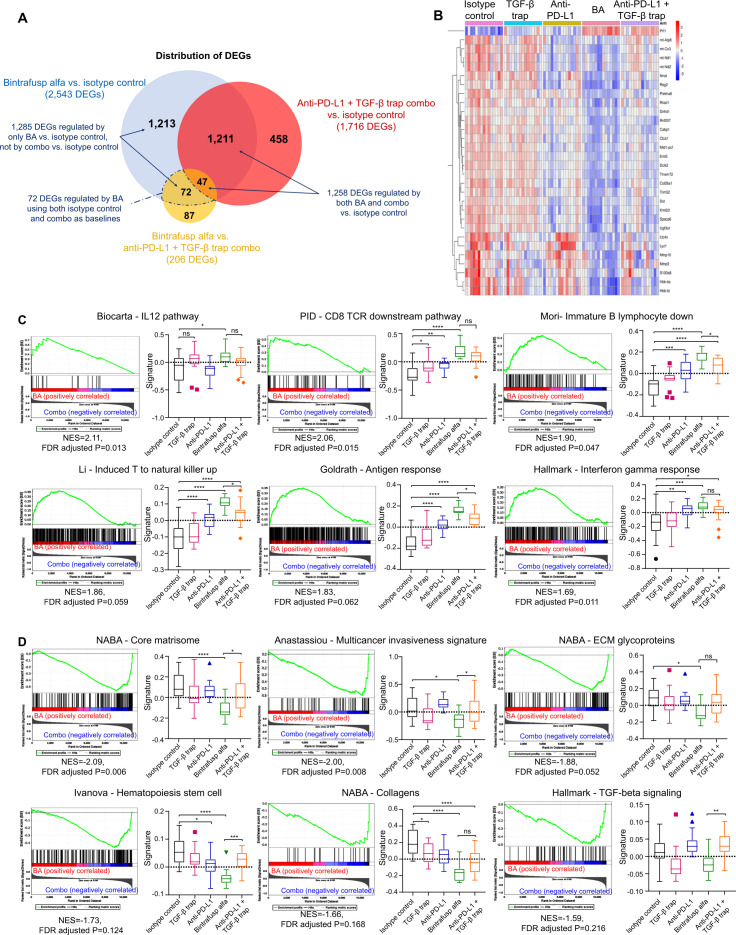
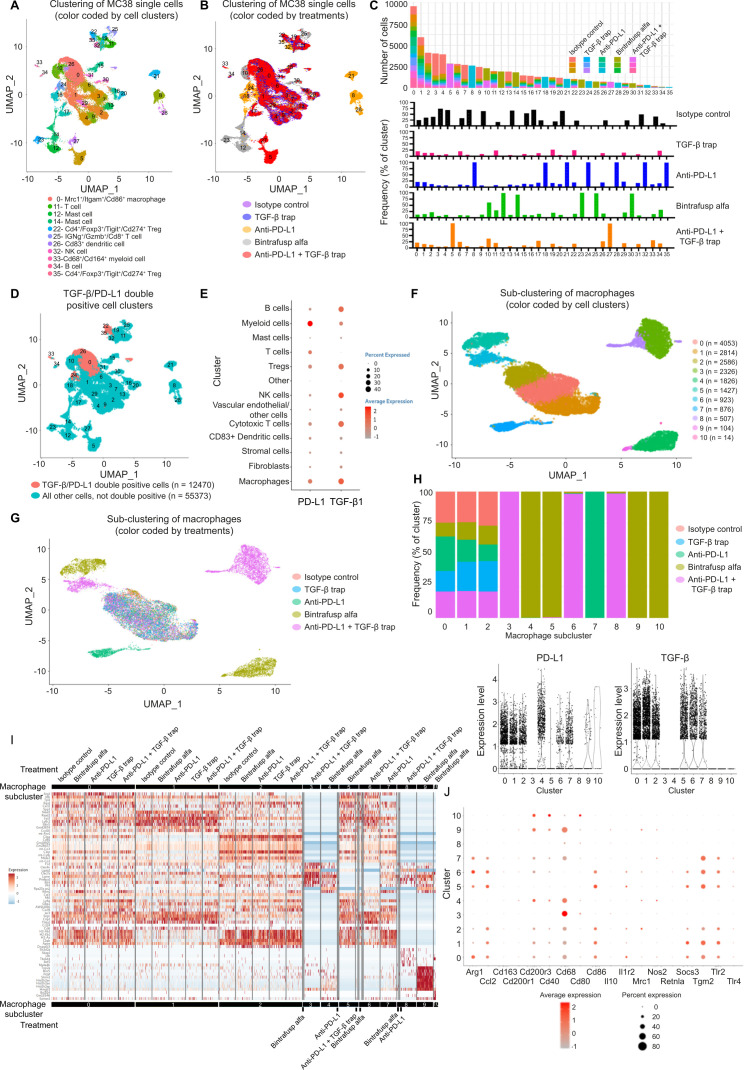
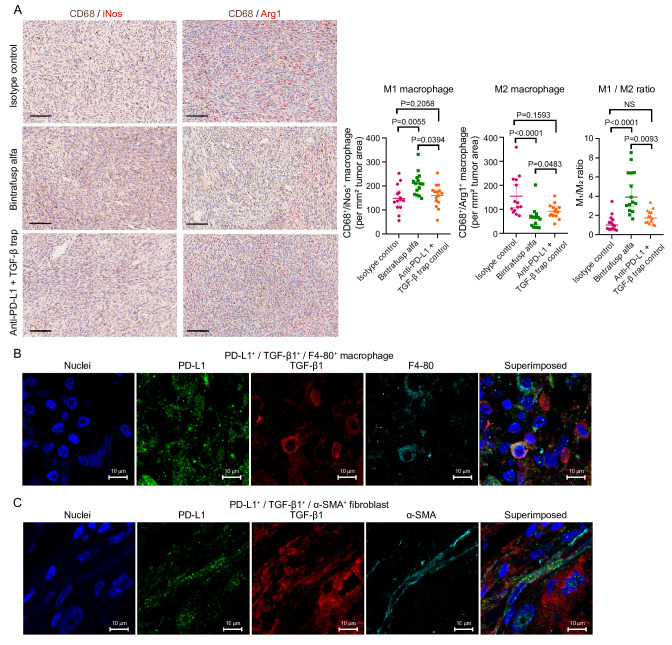
BA and fresolimumab had comparable intrinsic binding to TGF-β1, but there was an ~80× avidity-based increase in binding affinity with BA. BA inhibited cell proliferation in TGF-β-dependent and PD-L1-expressing cells more potently than TGF-β trap or fresolimumab. Compared with the combination of anti-PD-L1 and TGF-β trap or fresolimumab, BA enhanced T cell activation in vitro and increased TILs in MC38 tumors, which correlated with efficacy. BA induced distinct gene expression in the TME compared with the combination therapy, including upregulation of immune-related gene signatures and reduced activities in TGF-β-regulated pathways, such as epithelial-mesenchymal transition, extracellular matrix deposition, and fibrosis. Regulatory T cells, macrophages, immune cells of myeloid lineage, and fibroblasts were key PD-L1/TGF-β1 co-expressing cells in the TME. scRNAseq analysis suggested BA modulation of the macrophage phenotype, which was confirmed by histological assessment. PD-L1/TGF-β1 co-expression was also seen in human tumors. Finally, BA induced TGF-β1 internalization and degradation in the lysosomes.
BA more effectively blocks TGF-β by targeting TGF-β trap to the tumor via PD-L1 binding. Such colocalized targeting elicits distinct and superior antitumor responses relative to single agent combination therapy.
Bintrafusp alfa(BA)是一种双功能融合蛋白,旨在在肿瘤微环境(TME)中使两种免疫抑制途径——转化生长因子-β(TGF-β)和程序性死亡配体 1(PD-L1)——同时发生共定位,从而进行抑制。我们假设 BA 将 PD-L1 靶向肿瘤,使 TGF-β 陷阱(TGF-βRII)共定位到 TME,从而能够比全身 TGF-β 阻断更有效地将 TGF-β 隔离在肿瘤中,从而增强抗肿瘤活性。
使用多种技术来表征 TGF-β 陷阱的结合亲和力。比较 BA 与抗 PD-L1 和 TGF-β 陷阱或泛 TGF-β 抗体 fresolimumab 的组合在增殖和双向混合淋巴细胞反应测定中的作用。在 MC38 肿瘤中进行肿瘤浸润淋巴细胞(TIL)的免疫表型分析和 RNA 测序(RNAseq)分析,以评估基质和免疫景观;研究 MC38 肿瘤和人类肺癌组织中 TGF-β 和 PD-L1 的共表达及其相关基因特征,使用单细胞 RNAseq(scRNAseq)和免疫染色。研究 BA 在体外诱导 TGF-β 的内化、降解和耗竭。
BA 和 fresolimumab 与 TGF-β1 具有相当的内在结合能力,但 BA 的结合亲和力基于 80 倍的亲和力增加。BA 比 TGF-β 陷阱或 fresolimumab 更有效地抑制 TGF-β 依赖性和 PD-L1 表达细胞的增殖。与抗 PD-L1 和 TGF-β 陷阱或 fresolimumab 的组合相比,BA 增强了 MC38 肿瘤中的体外 T 细胞激活,并增加了 TIL,这与疗效相关。BA 在 TME 中诱导的基因表达与联合治疗不同,包括上调免疫相关基因特征,并降低 TGF-β 调节的途径的活性,如上皮-间充质转化、细胞外基质沉积和纤维化。调节性 T 细胞、巨噬细胞、髓样免疫细胞和成纤维细胞是 TME 中 PD-L1/TGF-β1 共表达的关键细胞。scRNAseq 分析表明 BA 调节了巨噬细胞表型,组织学评估证实了这一点。人类肿瘤中也观察到 PD-L1/TGF-β1 共表达。最后,BA 在溶酶体中诱导 TGF-β1 的内化和降解。
BA 通过 PD-L1 结合将 TGF-β 陷阱靶向肿瘤,更有效地阻断 TGF-β。这种共定位靶向比单一药物组合疗法产生更独特和优越的抗肿瘤反应。