State Key Laboratory of Oral Diseases & National Clinical Research Center for Oral Diseases & Engineering Research Center of Oral Translational Medicine, Ministry of Education & National Engineering Laboratory for Oral Regenerative Medicine, West China Hospital of Stomatology, Sichuan University, Chengdu, China.
Int J Oral Sci. 2022 Jul 20;14(1):38. doi: 10.1038/s41368-022-00188-y.
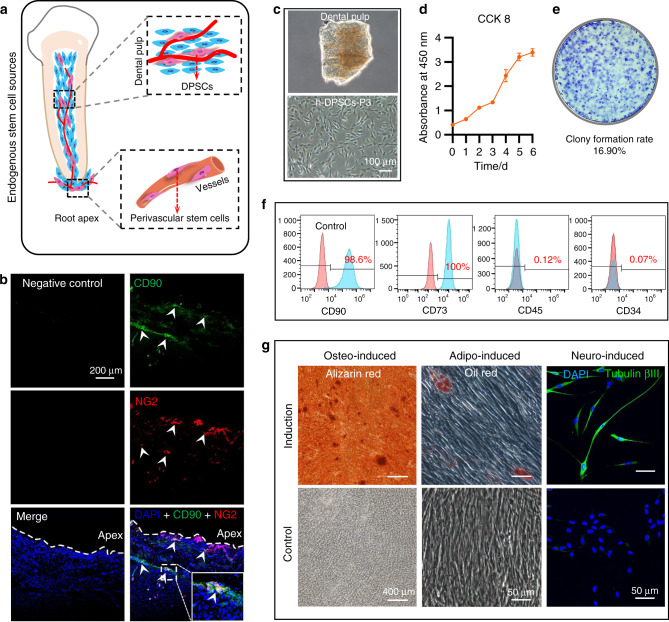
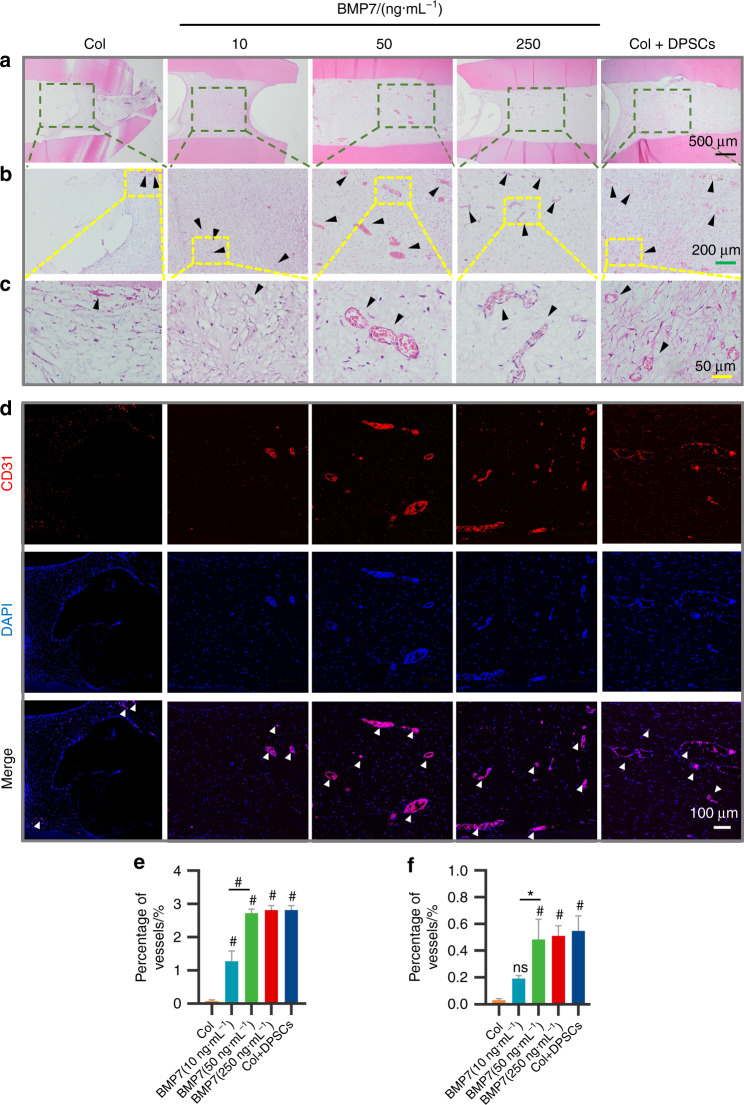
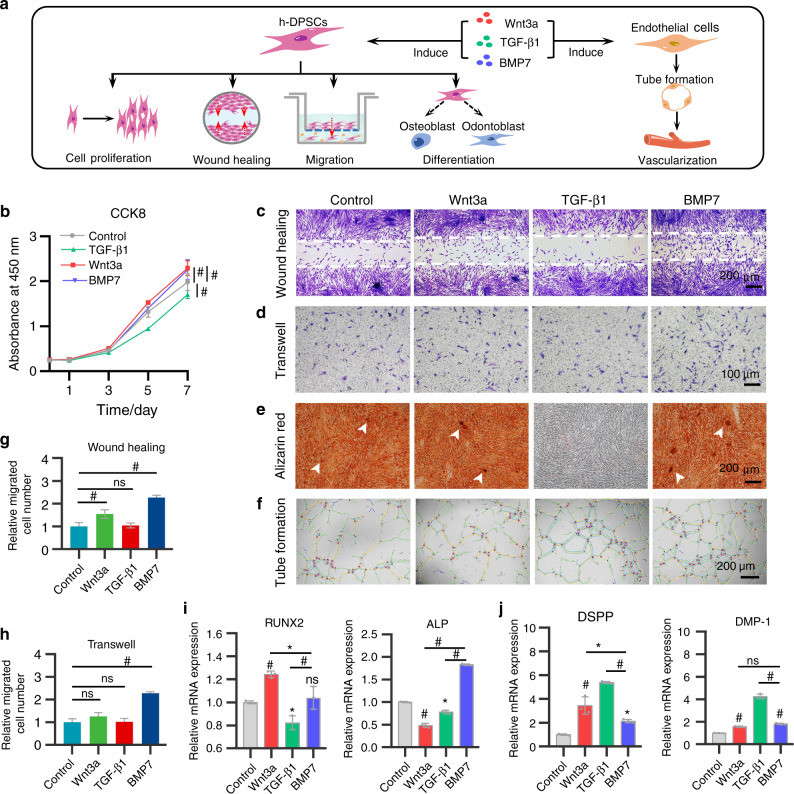
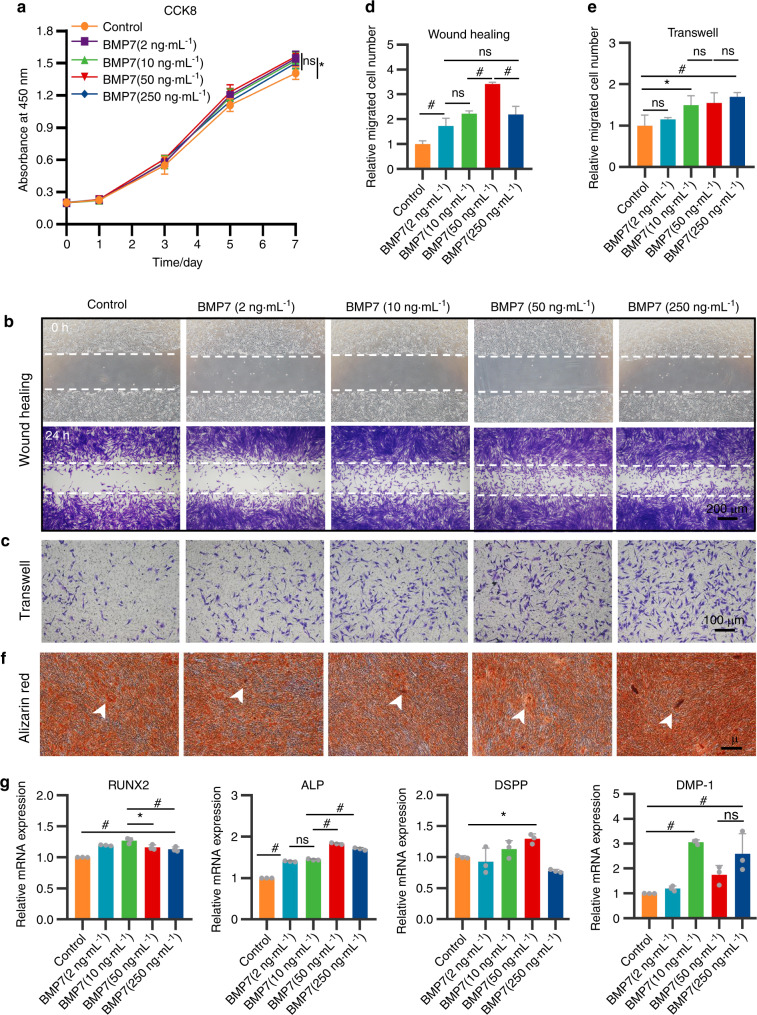
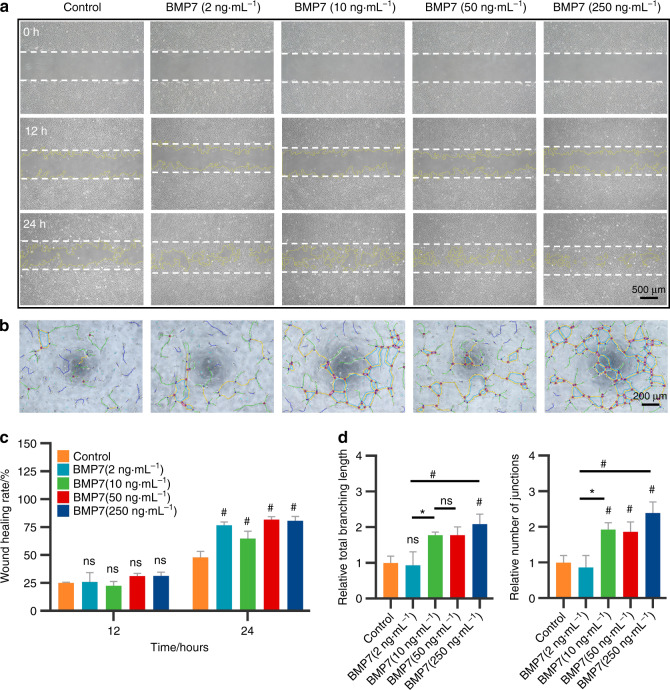
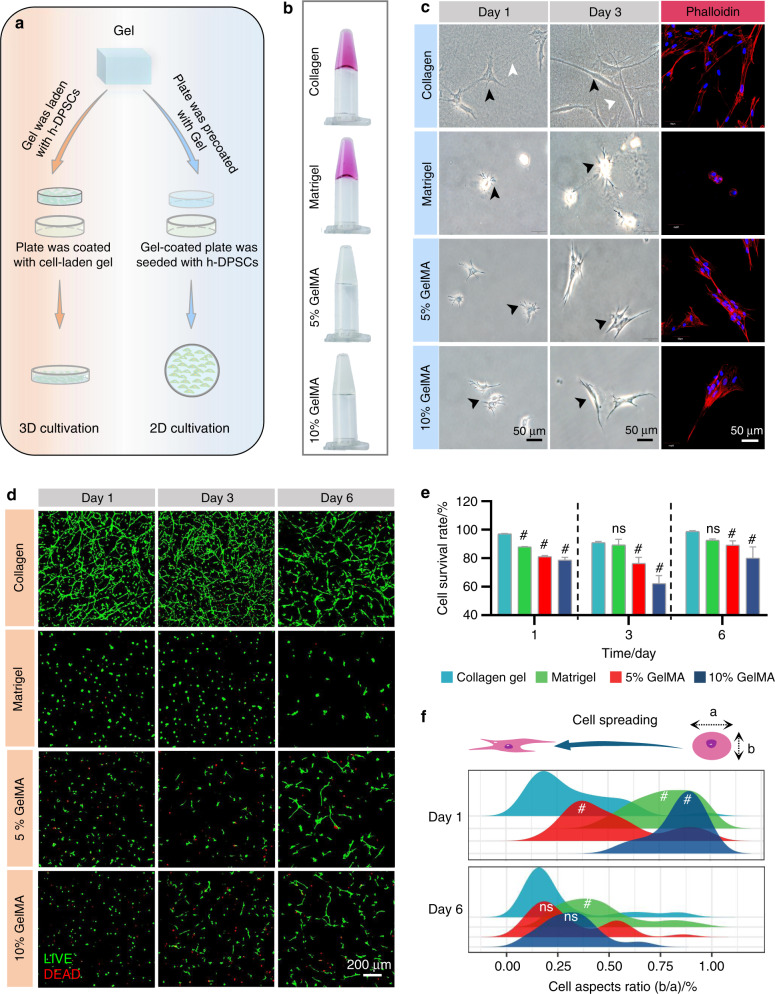
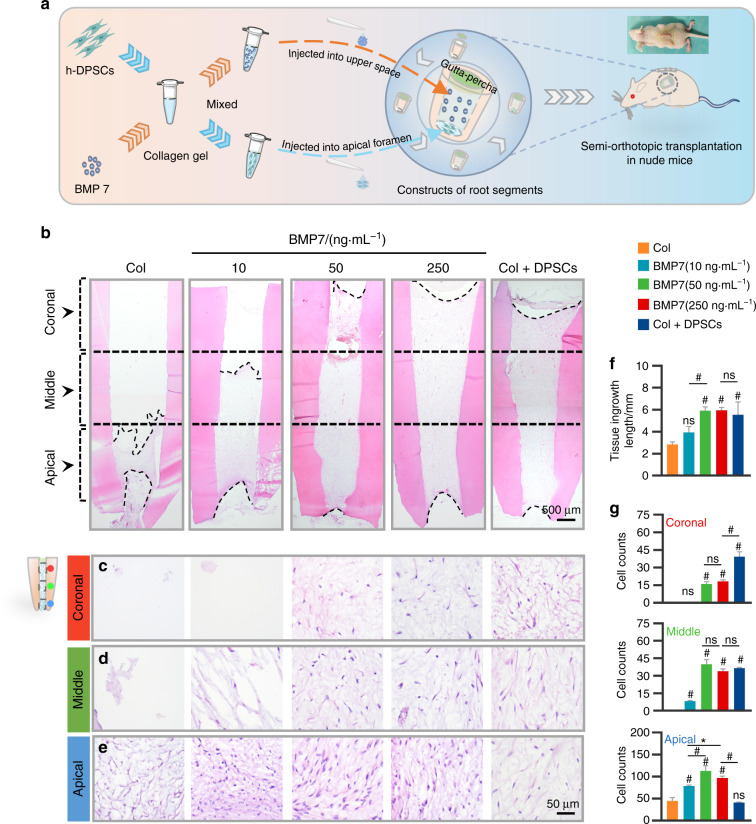
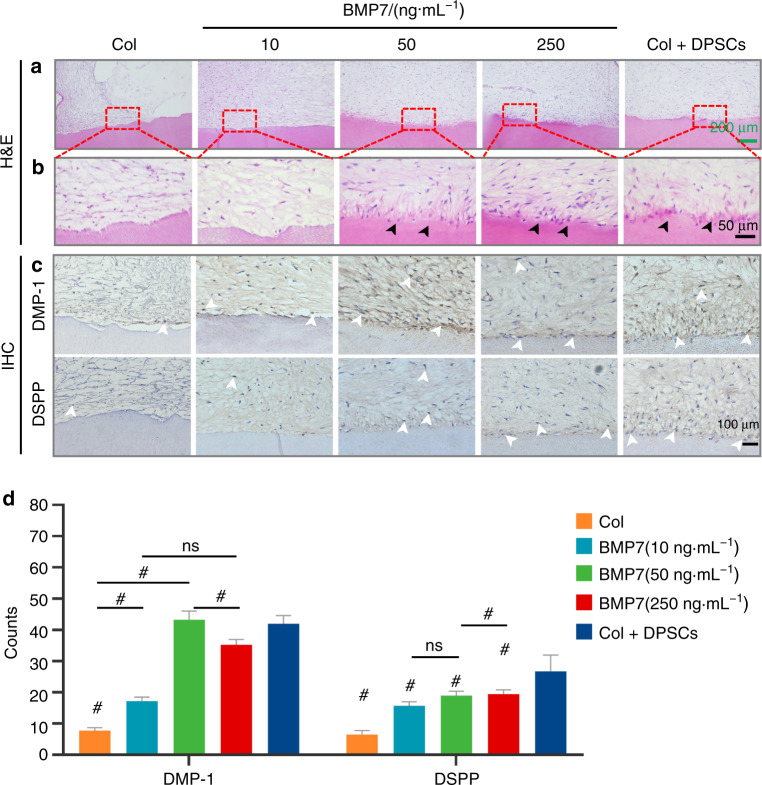
Pulp loss is accompanied by the functional impairment of defense, sensory, and nutrition supply. The approach based on endogenous stem cells is a potential strategy for pulp regeneration. However, endogenous stem cell sources, exogenous regenerative signals, and neovascularization are major difficulties for pulp regeneration based on endogenous stem cells. Therefore, the purpose of our research is to seek an effective cytokines delivery strategy and bioactive materials to reestablish an ideal regenerative microenvironment for pulp regeneration. In in vitro study, we investigated the effects of Wnt3a, transforming growth factor-beta 1, and bone morphogenetic protein 7 (BMP7) on human dental pulp stem cells (h-DPSCs) and human umbilical vein endothelial cells. 2D and 3D culture systems based on collagen gel, matrigel, and gelatin methacryloyl were fabricated to evaluate the morphology and viability of h-DPSCs. In in vivo study, an ectopic nude mouse model and an in situ beagle dog model were established to investigate the possibility of pulp regeneration by implanting collagen gel loading BMP7. We concluded that BMP7 promoted the migration and odontogenic differentiation of h-DPSCs and vessel formation. Collagen gel maintained the cell adhesion, cell spreading, and cell viability of h-DPSCs in 2D or 3D culture. The transplantation of collagen gel loading BMP7 induced vascularized pulp-like tissue regeneration in vivo. The injectable approach based on collagen gel loading BMP7 might exert promising therapeutic application in endogenous pulp regeneration.
牙髓丧失伴随着防御功能、感觉和营养供应的损伤。基于内源性干细胞的方法是牙髓再生的一种潜在策略。然而,内源性干细胞来源、外源性再生信号和血管新生是基于内源性干细胞的牙髓再生的主要难点。因此,我们的研究目的是寻求有效的细胞因子传递策略和生物活性材料,以重新建立牙髓再生的理想再生微环境。在体外研究中,我们研究了 Wnt3a、转化生长因子-β1 和骨形态发生蛋白 7(BMP7)对人牙髓干细胞(h-DPSCs)和人脐静脉内皮细胞的影响。基于胶原凝胶、基质胶和明胶甲基丙烯酰的 2D 和 3D 培养系统被构建来评估 h-DPSCs 的形态和活力。在体内研究中,建立了异位裸鼠模型和原位比格犬模型,通过植入负载 BMP7 的胶原凝胶来研究牙髓再生的可能性。我们得出结论,BMP7 促进了 h-DPSCs 的迁移和牙向分化以及血管形成。胶原凝胶在 2D 或 3D 培养中维持 h-DPSCs 的细胞黏附、细胞铺展和细胞活力。负载 BMP7 的胶原凝胶的移植诱导了体内血管化牙髓样组织再生。基于负载 BMP7 的胶原凝胶的可注射方法可能在内源性牙髓再生中具有有前景的治疗应用。