Office of Chief Medical Examiner, New York, NY, 10016, USA.
Sci Rep. 2022 Jul 20;12(1):12369. doi: 10.1038/s41598-022-16192-5.
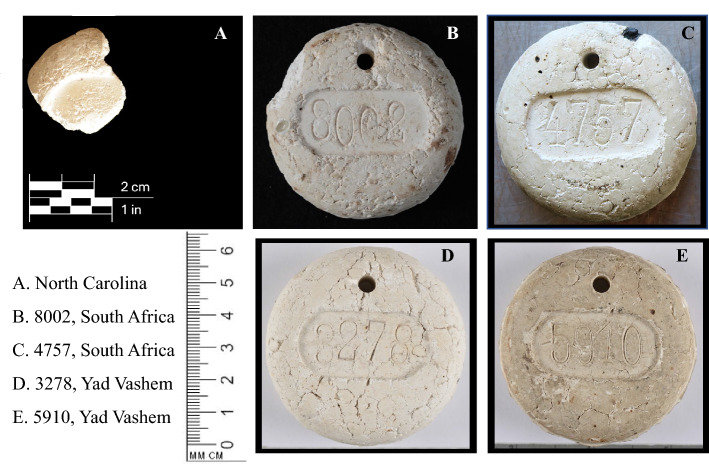
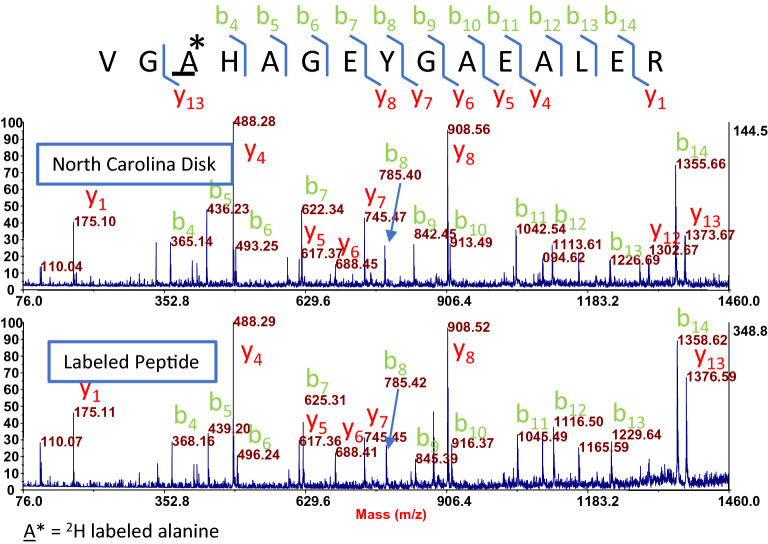
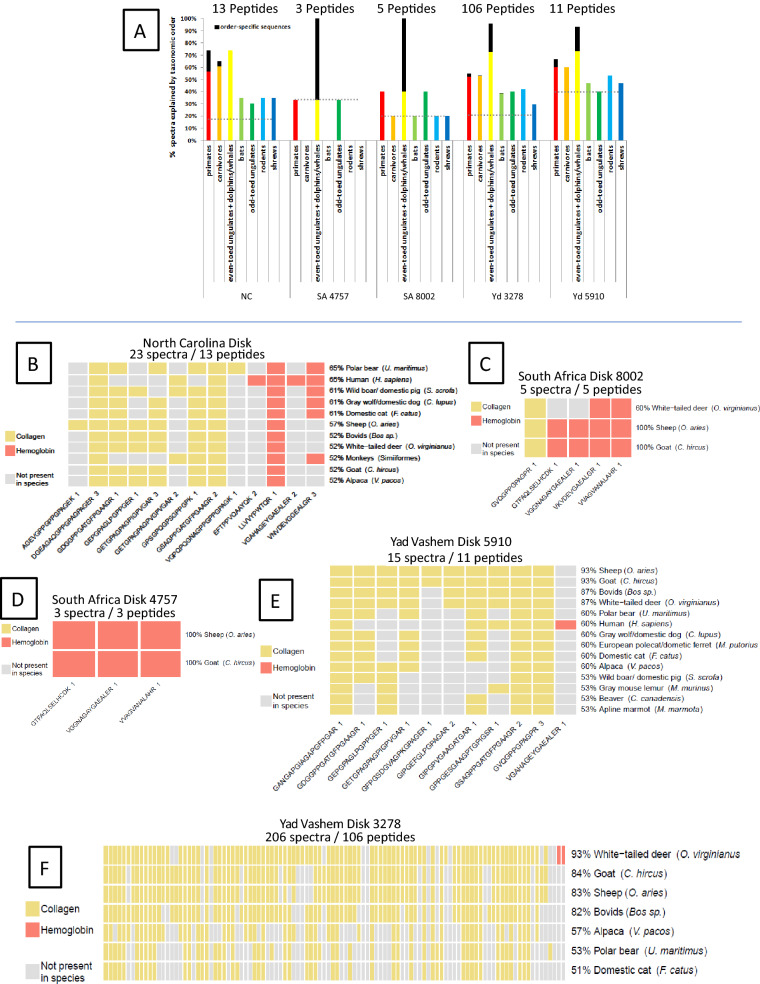
Museums displaying artifacts of the human struggle against oppression are often caught in their own internal struggle between presenting factual and unbiased descriptions of their collections, or relying on testament of survivors. Often this quandary is resolved in favor of what can be verified, not what is remembered. However, with improving instrumentation, methods and informatic approaches, science can help uncover evidence able to reconcile memory and facts. Following World War II, thousands of small, cement-like disks with numbers impressed on one side were found at concentration camps throughout Europe. Survivors claimed these disks were made of human cremains; museums erred on the side of caution-without documentation of the claims, was it justifiable to present them as fact? The ability to detect species relevant biological material in these disks could help resolve this question. Proteomic mass spectrometry of five disks revealed all contained proteins, including collagens and hemoglobins, suggesting they were made, at least in part, of animal remains. A new protein/informatics approach to species identification showed that while human was not always identified as the top contributor, human was the most likely explanation for one disk. To our knowledge, this is the first demonstration of protein recovery from cremains. Data are available via ProteomeXchange with identifier PXD035267.
展示人类反抗压迫的文物的博物馆常常陷入内部困境,既要呈现其藏品的真实、客观描述,又要依赖幸存者的证词。通常情况下,这种困境会倾向于可验证的内容,而不是记忆中的内容。然而,随着仪器、方法和信息学方法的不断改进,科学可以帮助揭示证据,以调和记忆和事实。第二次世界大战后,在欧洲各地的集中营中发现了数千个小的、类似水泥的圆盘,一侧印有数字。幸存者声称这些圆盘是用人的骨灰制成的;博物馆谨慎起见,没有文件证明这些说法,将其作为事实呈现是否合理?检测这些磁盘中与物种相关的生物材料的能力可以帮助解决这个问题。对五个磁盘的蛋白质组质谱分析显示,所有磁盘都含有蛋白质,包括胶原蛋白和血红蛋白,这表明它们至少部分是由动物遗骸制成的。一种新的蛋白质/信息学物种鉴定方法表明,虽然人类并不总是被鉴定为主要来源,但对于一个磁盘来说,人类是最有可能的解释。据我们所知,这是首次从骨灰中提取蛋白质的证明。数据可通过 ProteomeXchange 获取,标识符为 PXD035267。