Shin Hyun Kil, Florean Oana, Hardy Barry, Doktorova Tatyana, Kang Myung-Gyun
Toxicoinformatics Group, Department of Predictive Toxicology, Korea Institute of Toxicology, Daejeon, 34114 Republic of Korea.
Human and Environmental Toxicology, University of Science and Technology, Daejeon, 34113 Republic of Korea.
Toxicol Res. 2022 Mar 3;38(3):393-407. doi: 10.1007/s43188-022-00124-6. eCollection 2022 Jul.
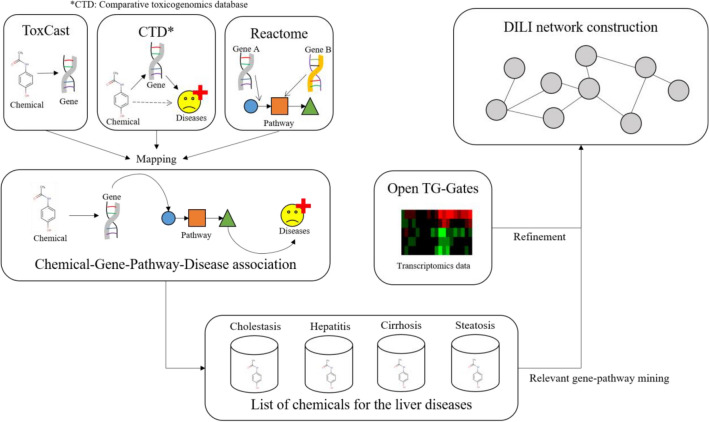
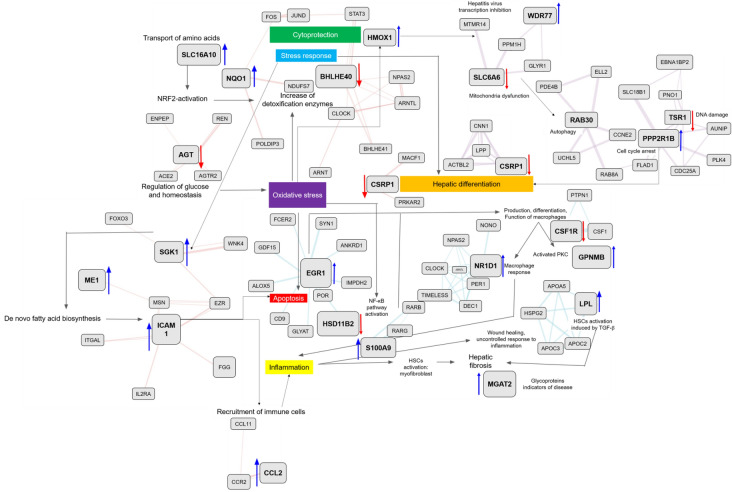
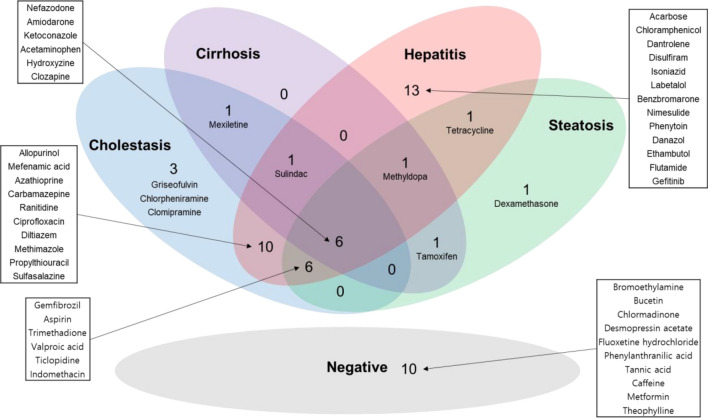
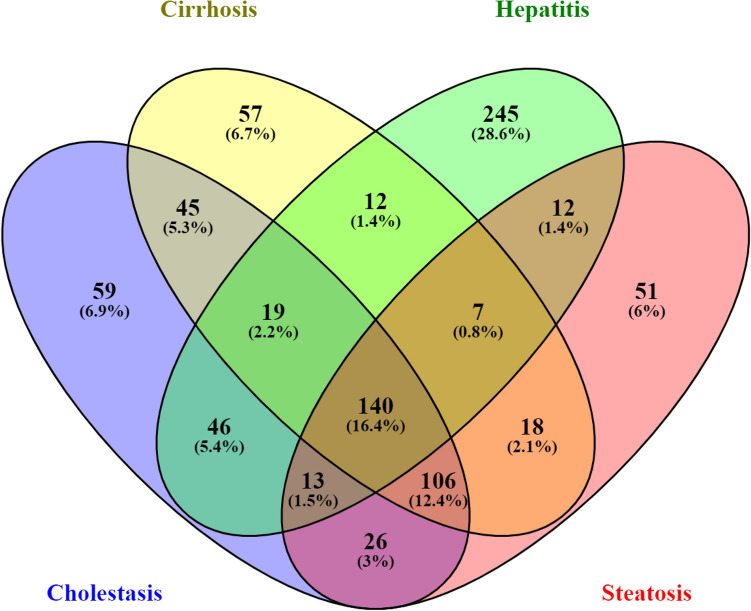
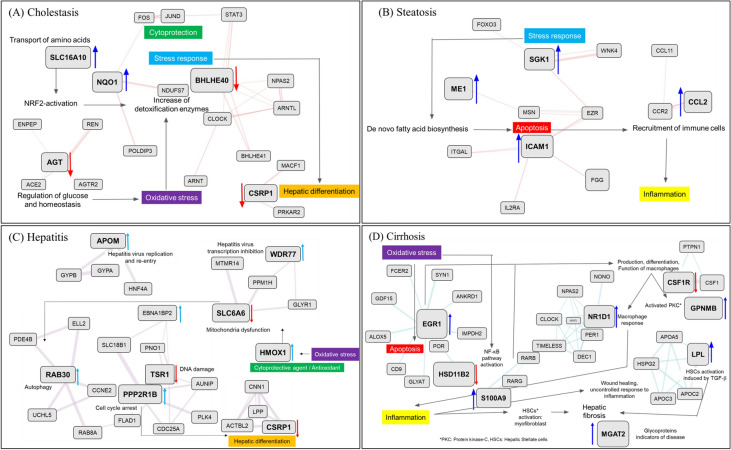
Drug-induced liver injury (DILI) is one of the leading reasons for discontinuation of a new drug development project. Diverse machine learning or deep learning models have been developed to predict DILI. However, these models have not provided an adequate understanding of the mechanisms leading to DILI. The development of safer drugs requires novel computational approaches that enable the prompt understanding of the mechanism of DILI. In this study, the mechanisms leading to the development of cholestasis, steatosis, hepatitis, and cirrhosis were explored using a semi-automated approach for data gathering and associations. Diverse data from ToxCast, Comparative Toxicogenomic Database (CTD), Reactome, and Open TG-GATEs on reference molecules leading to the development of the respective diseases were extracted. The data were used to create biological networks of the four diseases. As expected, the four networks had several common pathways, and a joint DILI network was assembled. Such biological networks could be used in drug discovery to identify possible molecules of concern as they provide a better understanding of the disease-specific key events. The events can be target-tested to provide indications for potential DILI effects.
The online version contains supplementary material available at 10.1007/s43188-022-00124-6.
药物性肝损伤(DILI)是新药研发项目终止的主要原因之一。已经开发了多种机器学习或深度学习模型来预测DILI。然而,这些模型尚未充分理解导致DILI的机制。开发更安全的药物需要新颖的计算方法,以便能够迅速理解DILI的机制。在本研究中,使用半自动数据收集和关联方法探索了导致胆汁淤积、脂肪变性、肝炎和肝硬化的机制。从ToxCast、比较毒理基因组数据库(CTD)、Reactome和Open TG-GATEs中提取了与导致各自疾病发展的参考分子相关的各种数据。这些数据用于创建四种疾病的生物网络。正如预期的那样,这四个网络有几个共同的途径,并组装了一个联合DILI网络。这种生物网络可用于药物发现,以识别可能令人关注的分子,因为它们能更好地理解疾病特异性关键事件。可以对这些事件进行靶点测试,以提供潜在DILI效应的指示。
在线版本包含可在10.1007/s43188-022-00124-6获取的补充材料。