Fan Yuxuan, Quan Xianglan, Liu Shengquan, Yue Le, Jiang Jizong, Fan Zhiqing
Department of Internal Medicine and Rehabilitation Science, Tohoku University, Sendai-shi, Japan.
Daqing Medical College, Daqing, China.
Cardiol Res Pract. 2022 Jul 12;2022:6491129. doi: 10.1155/2022/6491129. eCollection 2022.
In clinical practice, many patients with coronary atherosclerotic heart disease (CAD) have atypical clinical symptoms. It is difficult to accurately identify stable CAD or unstable CAD early through clinical symptoms and coronary angiography. This study aimed to screen the potential metabolite biomarkers in male patients with stable CAD and unstable CAD.
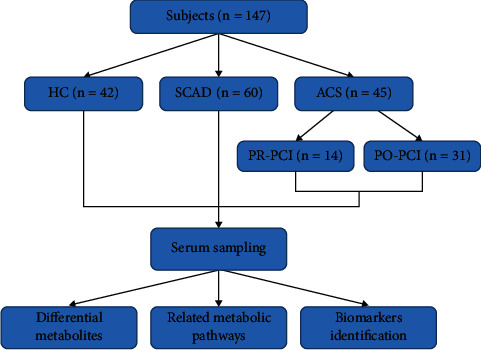
In this work, the metabolomic characterization of the male patients with healthy control ( = 42), stable coronary artery disease ( = 60), non-ST-elevation acute coronary syndrome ( = 45), including prepercutaneous corona intervention ( = 14), and postpercutaneous coronary intervention ( = 31) were performed by using ultra-performance liquid chromatography-mass spectrometry (UPLC-MS). The serum samples of patients were analyzed by multivariate statistics.
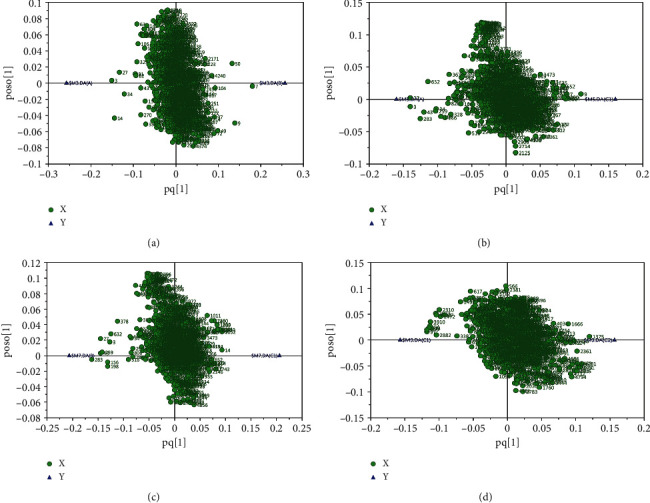
Results showed that 17 altered metabolites were identified to have a clear distinction between the stable CAD group and the healthy subjects. Compared with the stable coronary artery disease group, 15 specific metabolite markers were found in the acute coronary syndrome group. The percutaneous coronary intervention also affected the metabolic behavior of patients with CAD.
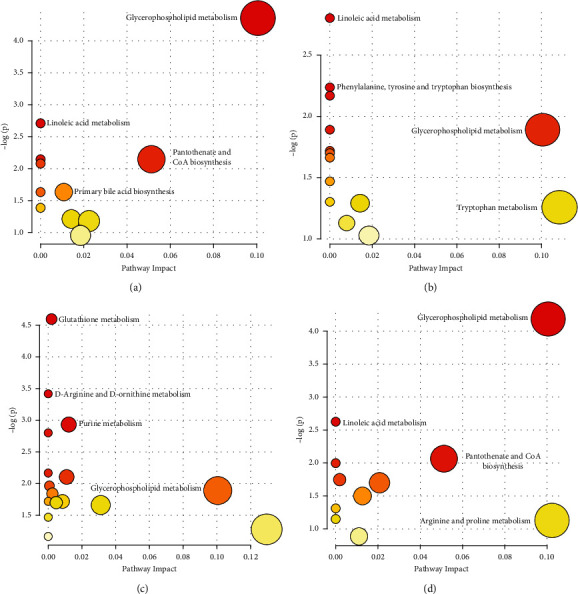
In summary, CAD is closely related to energy metabolism, lipid metabolism, and amino acid metabolism disorders. The different metabolic pattern characteristics of healthy, stable coronary artery disease and acute coronary syndrome are constructed, which brings a novel theoretical basis for the early diagnosis of patients with stable and unstable CAD.
在临床实践中,许多冠状动脉粥样硬化性心脏病(CAD)患者具有非典型临床症状。通过临床症状和冠状动脉造影很难早期准确识别稳定型CAD或不稳定型CAD。本研究旨在筛选稳定型CAD和不稳定型CAD男性患者潜在的代谢物生物标志物。
在本研究中,采用超高效液相色谱 - 质谱联用仪(UPLC - MS)对健康对照男性患者(n = 42)、稳定型冠状动脉疾病患者(n = 60)、非ST段抬高型急性冠状动脉综合征患者(n = 45,包括经皮冠状动脉介入治疗前患者(n = 14)和经皮冠状动脉介入治疗后患者(n = 31))进行代谢组学表征。对患者的血清样本进行多变量统计分析。
结果显示,鉴定出17种改变的代谢物在稳定型CAD组和健康受试者之间有明显差异。与稳定型冠状动脉疾病组相比,急性冠状动脉综合征组发现了15种特异性代谢物标志物。经皮冠状动脉介入治疗也影响了CAD患者的代谢行为。
综上所述,CAD与能量代谢、脂质代谢和氨基酸代谢紊乱密切相关。构建了健康、稳定型冠状动脉疾病和急性冠状动脉综合征不同的代谢模式特征,为稳定型和不稳定型CAD患者的早期诊断提供了新的理论依据。