Dipartimento di Scienze Biomediche, Università di Cagliari, Cagliari, Italy.
Dipartimento di Scienze Cliniche e Molecolari, Clinica Medica, Università Politecnica delle Marche, Ancona, Italy.
Sci Rep. 2018 May 16;8(1):7626. doi: 10.1038/s41598-018-25992-7.
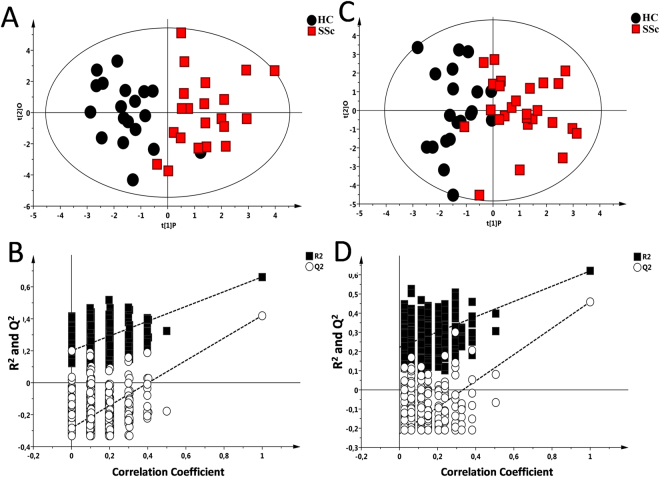
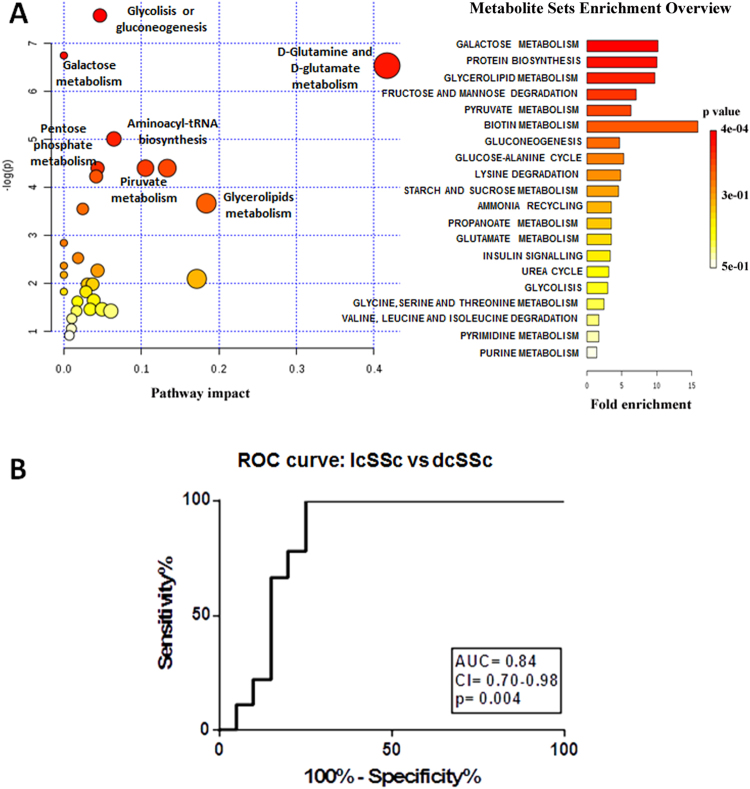
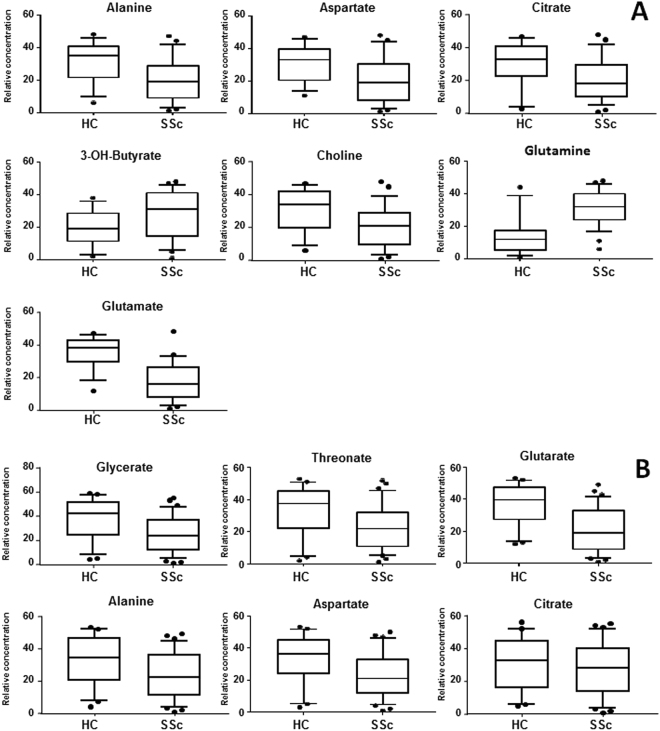
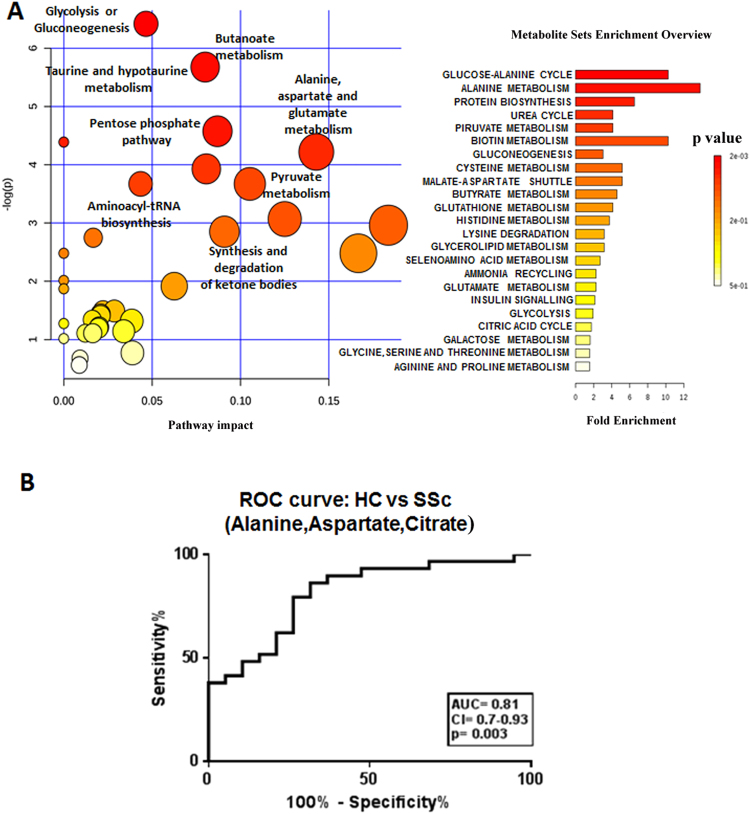
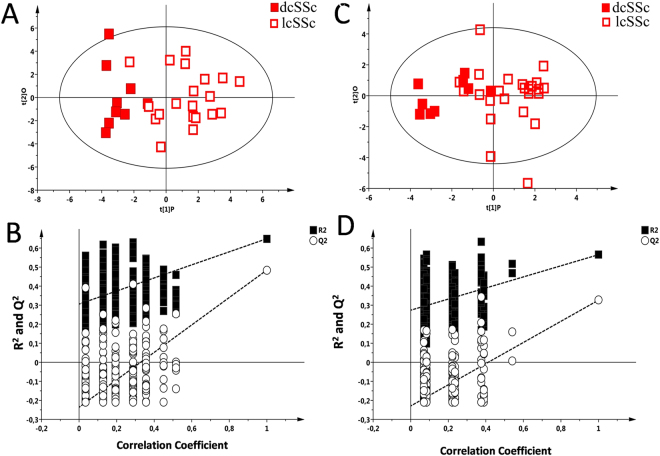
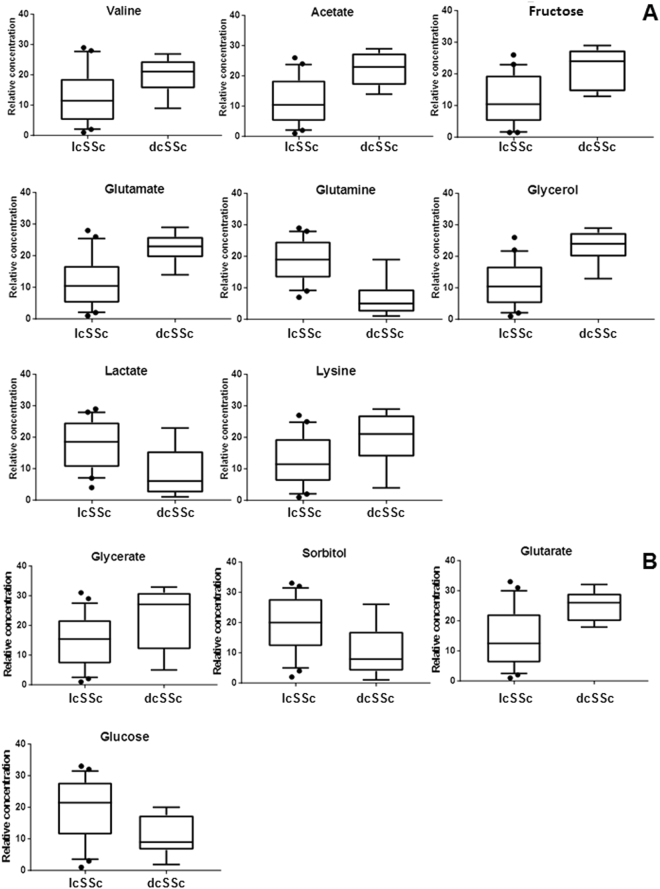
Systemic sclerosis (SSc) is an autoimmune disease of unknown aetiology characterized by vascular lesions, immunological alterations and diffuse fibrosis of the skin and internal organs. Since recent evidence suggests that there is a link between metabolomics and immune mediated disease, serum metabolic profile of SSc patients and healthy controls was investigated by H-NMR and GC-MS techniques. The results indicated a lower level of aspartate, alanine, choline, glutamate, and glutarate in SSc patients compared with healthy controls. Moreover, comparing patients affected by limited SSc (lcSSc) and diffuse SSc (dcSSc), 6 discriminant metabolites were identified. The multivariate analysis performed using all the metabolites significantly different revealed glycolysis, gluconeogenesis, energetic pathways, glutamate metabolism, degradation of ketone bodies and pyruvate metabolism as the most important networks. Aspartate, alanine and citrate yielded a high area under receiver-operating characteristic (ROC) curves (AUC of 0.81; CI 0.726-0.93) for discriminating SSc patients from controls, whereas ROC curve generated with acetate, fructose, glutamate, glutamine, glycerol and glutarate (AUC of 0.84; CI 0.7-0.98) discriminated between lcSSc and dcSSc. These results indicated that serum NMR-based metabolomics profiling method is sensitive and specific enough to distinguish SSc from healthy controls and provided a feasible diagnostic tool for the diagnosis and classification of the disease.
系统性硬化症(SSc)是一种病因不明的自身免疫性疾病,其特征为血管损伤、免疫改变以及皮肤和内脏的弥漫性纤维化。由于最近的证据表明代谢组学与免疫介导的疾病之间存在联系,因此通过 H-NMR 和 GC-MS 技术研究了 SSc 患者和健康对照者的血清代谢谱。结果表明,与健康对照者相比,SSc 患者的天冬氨酸、丙氨酸、胆碱、谷氨酸和戊二酸水平较低。此外,比较局限性 SSc(lcSSc)和弥漫性 SSc(dcSSc)患者,鉴定出 6 种有区别的代谢物。使用所有差异显著的代谢物进行的多元分析表明,糖酵解、糖异生、能量途径、谷氨酸代谢、酮体降解和丙酮酸代谢是最重要的网络。天冬氨酸、丙氨酸和柠檬酸对区分 SSc 患者和对照组具有较高的接收者操作特征(ROC)曲线下面积(AUC 为 0.81;CI 为 0.726-0.93),而使用醋酸盐、果糖、谷氨酸、谷氨酰胺、甘油和戊二酸生成的 ROC 曲线(AUC 为 0.84;CI 为 0.7-0.98)则可以区分 lcSSc 和 dcSSc。这些结果表明,基于血清 NMR 的代谢组学分析方法足够敏感和特异,可以区分 SSc 与健康对照者,并为该疾病的诊断和分类提供了一种可行的诊断工具。