• 文献检索
  • 文档翻译
  • 深度研究
  • 学术资讯
  • Suppr Zotero 插件Zotero 插件
  • 邀请有礼
  • 套餐&价格
  • 历史记录
应用&插件
Suppr Zotero 插件Zotero 插件浏览器插件Mac 客户端Windows 客户端微信小程序
定价
高级版会员购买积分包购买API积分包
服务
文献检索文档翻译深度研究API 文档MCP 服务
关于我们
关于 Suppr公司介绍联系我们用户协议隐私条款
关注我们

Suppr 超能文献

核心技术专利:CN118964589B侵权必究
粤ICP备2023148730 号-1Suppr @ 2026

文献检索

告别复杂PubMed语法,用中文像聊天一样搜索,搜遍4000万医学文献。AI智能推荐,让科研检索更轻松。

立即免费搜索

文件翻译

保留排版,准确专业,支持PDF/Word/PPT等文件格式,支持 12+语言互译。

免费翻译文档

深度研究

AI帮你快速写综述,25分钟生成高质量综述,智能提取关键信息,辅助科研写作。

立即免费体验

前瞻性住院患者队列中艰难梭菌感染患者的肠道微生物组分析。

Analysis of Intestinal Mycobiota of Patients with Clostridioides difficile Infection among a Prospective Inpatient Cohort.

机构信息

College of Animal Science and Technology, Northwest A&F University, Yangling, Shaanxi Province, China.

Division of Gastroenterology, Department of Medicine, Beth Israel Deaconess Medical Centergrid.239395.7, Harvard Medical Schoolgrid.471403.5, Boston, Massachusetts, USA.

出版信息

Microbiol Spectr. 2022 Aug 31;10(4):e0136222. doi: 10.1128/spectrum.01362-22. Epub 2022 Jul 14.

DOI:10.1128/spectrum.01362-22
PMID:35867408
原文链接:https://pmc.ncbi.nlm.nih.gov/articles/PMC9430669/
Abstract

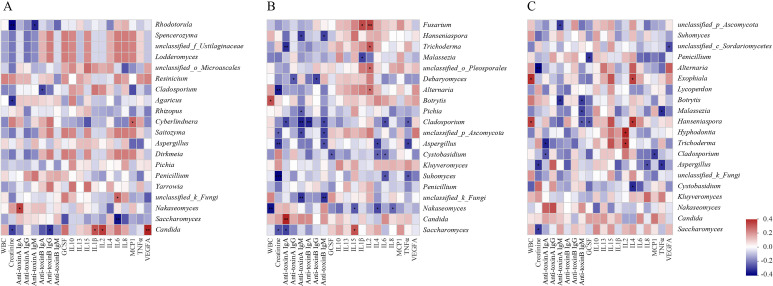
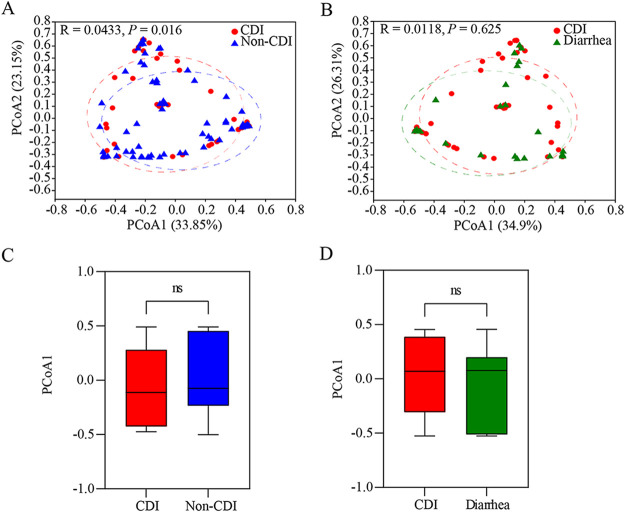
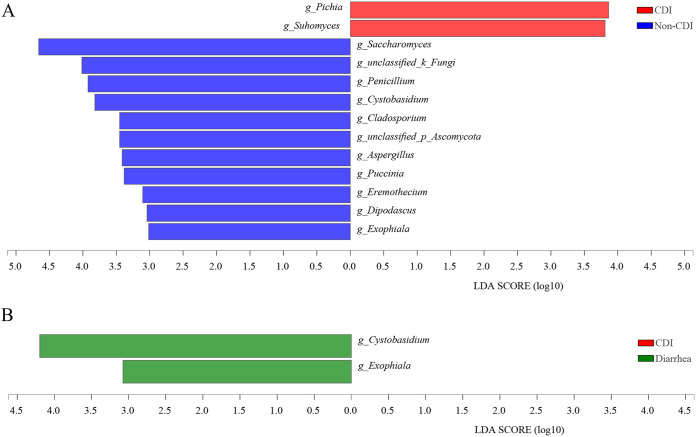
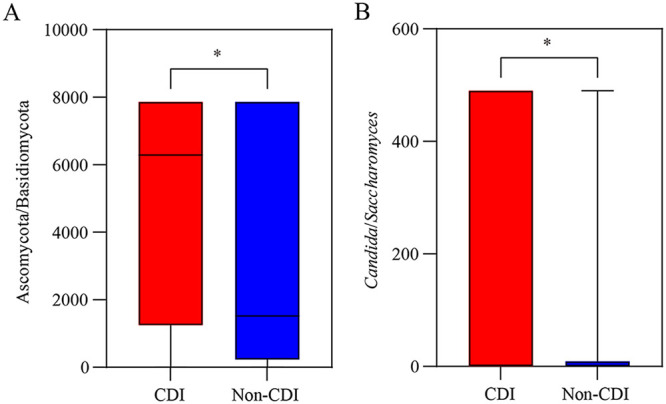
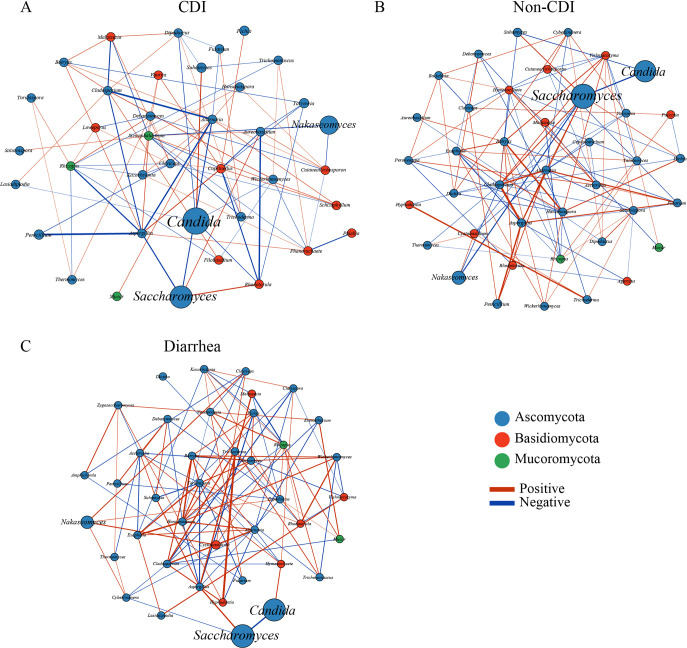
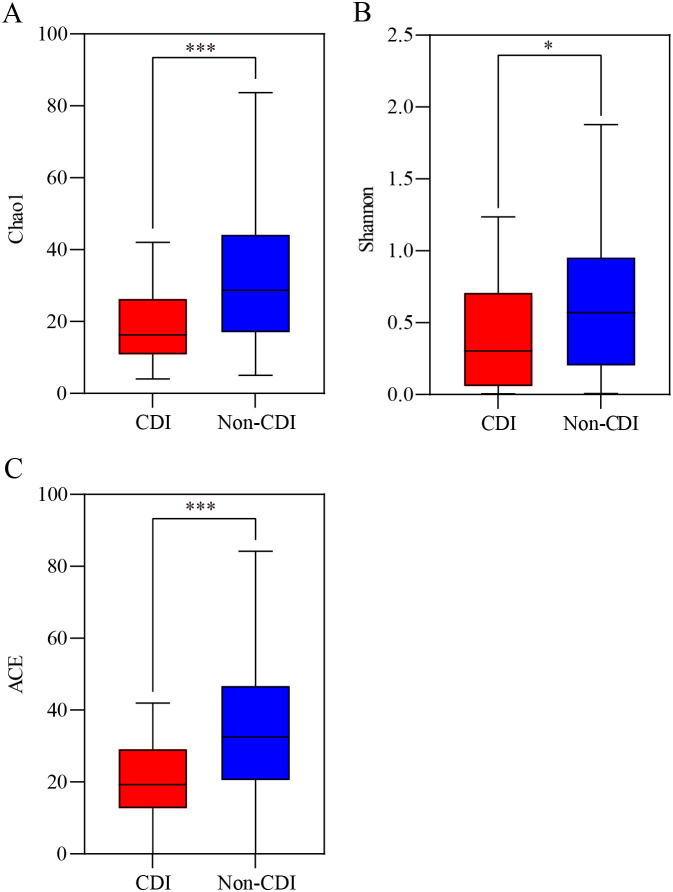
Clostridioides difficile infection (CDI) is a burden to health care systems worldwide. Gut microbiota dysbiosis associated with CDI has been well accepted. However, contribution of fungal mycobiota to CDI has recently gained research interest. Here, we report the gut mycobiota composition of 149 uniquely well characterized participants from a prospective clinical cohort and evaluate the discriminating ability of gut mycobiota to classify CDI and non-CDI patients. Fecal samples were divided into two groups: (i) CDI (inpatients who had clinically significant diarrhea and positive nucleic acid amplification testing [NAAT] and received subsequent CDI therapy,  = 58) and (ii) non-CDI, which can be further divided into three subgroups: (a) carrier (inpatients with positive stool NAAT but without diarrhea;  = 28); (b) diarrhea (inpatients with negative stool NAAT;  = 31); and (c) control (inpatients with negative stool NAAT and without diarrhea;  = 32). Fecal mycobiota composition was analyzed by internal transcribed spacer 2 (ITS2) sequencing. In comparison to non-CDI patients, CDI patients tend to have gut mycobiota with lower biodiversity, weaker fungi correlations, and weaker correlations between fungi and host immune factors. Notably, 11 genera (Saccharomyces, Penicillium, Aspergillus, Cystobasidium, Cladosporium, and so on) were significantly enriched in non-CDI patients, and Pichia and Suhomyces were enriched in patients with CDI, while 1 two genera, Cystobasidium and Exophiala, had higher abundance in patients with diarrhea compared with CDI (linear discriminant analysis [LDA] > 3.0; 0.05). Ascomycota and Basidiomycota (or Candida and Saccharomyces) exhibited a strong negative correlation ( ≤ -0.714 or ≤ -0.387; 0.05), and the ratios of Ascomycota to Basidiomycota or genera Candida to Saccharomyces were dramatically higher in CDI patients than in non-CDI patients (0.05). A disease-specific pattern with much weaker fungal abundance correlations was observed in the CDI group compared to that in the non-CDI and diarrhea groups, suggesting that these correlations may contribute to the development of CDI. Our findings provided specific markers of stool fungi that distinguish CDI from all non-CDI hospitalized patients. This study's potential clinical utility for better CDI diagnosis warrants further investigation. Clostridioides difficile is an opportunistic bacterial pathogen that causes a serious and potentially life-threatening infection of the human gut. It remains an existing challenge to distinguish active infection of CDI from diarrhea with non-CDI causes. A few large prospective studies from recent years suggest that there is no single optimal test for the diagnosis of CDI. Previous research has concentrated on the relationship between bacteria and CDI, while the roles of fungi, as a significant proportion of the gut microbial ecosystem, remain understudied. In this study, we report a series of fungal markers that may add diagnostic values for the development of a more systematic approach to accurate CDI diagnosis. These results help open the door for better understanding of the relationship between host immune factors and the fungal community in the context of CDI pathogenesis.

摘要

艰难梭菌感染(CDI)是全球医疗保健系统的负担。与 CDI 相关的肠道微生物群落失调已得到广泛认可。然而,真菌微生物组对 CDI 的贡献最近引起了研究兴趣。在这里,我们报告了来自前瞻性临床队列的 149 名特征明确的参与者的肠道微生物群落组成,并评估了肠道微生物群落区分 CDI 和非 CDI 患者的能力。粪便样本分为两组:(i)CDI(有临床显著腹泻和核酸扩增检测 [NAAT] 阳性且随后接受 CDI 治疗的住院患者,=58)和(ii)非 CDI,可进一步分为三个亚组:(a)携带(NAAT 阳性但无腹泻的住院患者;=28);(b)腹泻(NAAT 阴性的住院患者;=31);和(c)对照(NAAT 阴性且无腹泻的住院患者;=32)。通过内部转录间隔区 2(ITS2)测序分析粪便微生物群落组成。与非 CDI 患者相比,CDI 患者的肠道微生物群落多样性较低,真菌相关性较弱,真菌与宿主免疫因子之间的相关性较弱。值得注意的是,11 个属(酿酒酵母、青霉、曲霉、Cystobasidium、黑曲霉等)在非 CDI 患者中明显富集,而假丝酵母和苏霍姆斯基酵母在 CDI 患者中富集,而 Cystobasidium 和 Exophiala 两个属在腹泻患者中的丰度高于 CDI 患者(线性判别分析 [LDA] > 3.0;0.05)。子囊菌和担子菌(或假丝酵母和酿酒酵母)呈强烈负相关(≤-0.714 或≤-0.387;0.05),CDI 患者的子囊菌与担子菌或假丝酵母与酿酒酵母的比值明显高于非 CDI 患者(0.05)。与非 CDI 和腹泻组相比,CDI 组的真菌丰度相关性表现出明显较弱的疾病特异性模式,表明这些相关性可能有助于 CDI 的发展。我们的研究结果提供了区分 CDI 与所有非 CDI 住院患者的粪便真菌的具体标志物。本研究对更好地诊断 CDI 的潜在临床应用值得进一步研究。艰难梭菌是一种机会性细菌病原体,可导致人类肠道严重且潜在危及生命的感染。区分 CDI 的活动性感染与非 CDI 引起的腹泻仍然是一个现有挑战。近年来的几项大型前瞻性研究表明,没有一种单一的最佳检测方法可用于 CDI 的诊断。先前的研究集中在细菌与 CDI 之间的关系上,而真菌作为肠道微生物生态系统的重要组成部分,其作用仍有待研究。在这项研究中,我们报告了一系列真菌标志物,这些标志物可能为开发更系统的方法以准确诊断 CDI 提供诊断价值。这些结果有助于更好地理解宿主免疫因子与 CDI 发病机制中真菌群落之间的关系。
https://cdn.ncbi.nlm.nih.gov/pmc/blobs/022b/9430669/ac466b5dd6e0/spectrum.01362-22-f006.jpg
https://cdn.ncbi.nlm.nih.gov/pmc/blobs/022b/9430669/d4d853aadc33/spectrum.01362-22-f001.jpg
https://cdn.ncbi.nlm.nih.gov/pmc/blobs/022b/9430669/0e5d40394ab0/spectrum.01362-22-f002.jpg
https://cdn.ncbi.nlm.nih.gov/pmc/blobs/022b/9430669/43e47b46504a/spectrum.01362-22-f003.jpg
https://cdn.ncbi.nlm.nih.gov/pmc/blobs/022b/9430669/3e74b9dc9cf8/spectrum.01362-22-f004.jpg
https://cdn.ncbi.nlm.nih.gov/pmc/blobs/022b/9430669/e910df3d8fc8/spectrum.01362-22-f005.jpg
https://cdn.ncbi.nlm.nih.gov/pmc/blobs/022b/9430669/ac466b5dd6e0/spectrum.01362-22-f006.jpg
https://cdn.ncbi.nlm.nih.gov/pmc/blobs/022b/9430669/d4d853aadc33/spectrum.01362-22-f001.jpg
https://cdn.ncbi.nlm.nih.gov/pmc/blobs/022b/9430669/0e5d40394ab0/spectrum.01362-22-f002.jpg
https://cdn.ncbi.nlm.nih.gov/pmc/blobs/022b/9430669/43e47b46504a/spectrum.01362-22-f003.jpg
https://cdn.ncbi.nlm.nih.gov/pmc/blobs/022b/9430669/3e74b9dc9cf8/spectrum.01362-22-f004.jpg
https://cdn.ncbi.nlm.nih.gov/pmc/blobs/022b/9430669/e910df3d8fc8/spectrum.01362-22-f005.jpg
https://cdn.ncbi.nlm.nih.gov/pmc/blobs/022b/9430669/ac466b5dd6e0/spectrum.01362-22-f006.jpg

相似文献

1
Analysis of Intestinal Mycobiota of Patients with Clostridioides difficile Infection among a Prospective Inpatient Cohort.前瞻性住院患者队列中艰难梭菌感染患者的肠道微生物组分析。
Microbiol Spectr. 2022 Aug 31;10(4):e0136222. doi: 10.1128/spectrum.01362-22. Epub 2022 Jul 14.
2
Fecal Mycobiota Combined With Host Immune Factors Distinguish Clostridioides difficile Infection From Asymptomatic Carriage.粪便真菌组合宿主免疫因子可区分艰难梭菌感染与无症状定植。
Gastroenterology. 2021 Jun;160(7):2328-2339.e6. doi: 10.1053/j.gastro.2021.02.069. Epub 2021 Mar 5.
3
Host Immune Markers Distinguish Clostridioides difficile Infection From Asymptomatic Carriage and Non-C. difficile Diarrhea.宿主免疫标志物可区分艰难梭菌感染与无症状携带和非艰难梭菌性腹泻。
Clin Infect Dis. 2020 Mar 3;70(6):1083-1093. doi: 10.1093/cid/ciz330.
4
Fungal and bacterial gut microbiota differ between colonization and infection.真菌和细菌肠道微生物群在定植和感染之间存在差异。
Microbiome Res Rep. 2023 Dec 6;3(1):8. doi: 10.20517/mrr.2023.52. eCollection 2024.
5
Integrated Meta-omics Reveals a Fungus-Associated Bacteriome and Distinct Functional Pathways in Clostridioides difficile Infection.整合宏基因组学揭示艰难梭菌感染中的真菌相关细菌组和独特的功能途径。
mSphere. 2019 Aug 28;4(4):e00454-19. doi: 10.1128/mSphere.00454-19.
6
Stool Interleukin-1β Differentiates Clostridioides difficile Infection (CDI) From Asymptomatic Carriage and Non-CDI Diarrhea.粪便白细胞介素-1β可区分艰难梭菌感染(CDI)与无症状携带和非 CDI 腹泻。
Clin Infect Dis. 2023 Feb 8;76(3):e1467-e1475. doi: 10.1093/cid/ciac624.
7
Gut microbiota composition in health-care facility-and community-onset diarrheic patients with Clostridioides difficile infection.健康医护机构相关与社区相关艰难梭菌感染腹泻患者的肠道微生物组成。
Sci Rep. 2021 May 25;11(1):10849. doi: 10.1038/s41598-021-90380-7.
8
Efficacy and Safety of RBX2660 in PUNCH CD3, a Phase III, Randomized, Double-Blind, Placebo-Controlled Trial with a Bayesian Primary Analysis for the Prevention of Recurrent Clostridioides difficile Infection.RBX2660 在 PUNCH CD3 中的疗效和安全性:一项 III 期、随机、双盲、安慰剂对照试验,采用贝叶斯主要分析预防复发性艰难梭菌感染。
Drugs. 2022 Oct;82(15):1527-1538. doi: 10.1007/s40265-022-01797-x. Epub 2022 Oct 26.
9
Comparison of Clostridioides difficile Stool Toxin Concentrations in Adults With Symptomatic Infection and Asymptomatic Carriage Using an Ultrasensitive Quantitative Immunoassay.采用超敏定量免疫法比较有症状感染和无症状携带的成人艰难梭菌粪便毒素浓度。
Clin Infect Dis. 2019 Jan 1;68(1):78-86. doi: 10.1093/cid/ciy415.
10
Predictive factors of Clostridioides difficile infection in hospitalized patients with new diarrhea: A retrospective cohort study.住院新发腹泻患者中艰难梭菌感染的预测因素:一项回顾性队列研究。
PLoS One. 2018 Dec 5;13(12):e0207128. doi: 10.1371/journal.pone.0207128. eCollection 2018.

引用本文的文献

1
Fungal and bacterial gut microbiota differ between colonization and infection.真菌和细菌肠道微生物群在定植和感染之间存在差异。
Microbiome Res Rep. 2023 Dec 6;3(1):8. doi: 10.20517/mrr.2023.52. eCollection 2024.
2
A comprehensive guide to assess gut mycobiome and its role in pathogenesis and treatment of inflammatory bowel disease.评估肠道真菌微生物群及其在炎症性肠病发病机制和治疗中作用的综合指南。
Indian J Gastroenterol. 2024 Feb;43(1):112-128. doi: 10.1007/s12664-023-01510-0. Epub 2024 Feb 27.
3
Gut Microbiota-Gut Metabolites and Infection: Approaching Sustainable Solutions for Therapy.

本文引用的文献

1
Gut Mycobiota Dysbiosis in Pulmonary Tuberculosis Patients Undergoing Anti-Tuberculosis Treatment.肺结核患者抗结核治疗中肠道微生物群落失调。
Microbiol Spectr. 2021 Dec 22;9(3):e0061521. doi: 10.1128/spectrum.00615-21. Epub 2021 Dec 15.
2
Integrating gut microbiome and host immune markers to understand the pathogenesis of infection.整合肠道微生物组和宿主免疫标志物以了解感染的发病机制。
Gut Microbes. 2021 Jan-Dec;13(1):1-18. doi: 10.1080/19490976.2021.1935186.
3
Fecal Mycobiota Combined With Host Immune Factors Distinguish Clostridioides difficile Infection From Asymptomatic Carriage.
肠道微生物群-肠道代谢产物与感染:寻求可持续的治疗解决方案
Metabolites. 2024 Jan 22;14(1):74. doi: 10.3390/metabo14010074.
4
Therapeutic Approach Targeting Gut Microbiome in Gastrointestinal Infectious Diseases.治疗胃肠道感染性疾病的肠道微生物组学靶向方法。
Int J Mol Sci. 2023 Oct 27;24(21):15654. doi: 10.3390/ijms242115654.
5
Alteration in gut mycobiota of patients with polycystic ovary syndrome.多囊卵巢综合征患者肠道真菌群的改变。
Microbiol Spectr. 2023 Sep 13;11(5):e0236023. doi: 10.1128/spectrum.02360-23.
6
Pre-colonization with the fungus exacerbates infection by the bacterial pathogen in a murine model.定植前用真菌处理会加重小鼠模型中细菌病原体的感染。
mSphere. 2023 Aug 24;8(4):e0012223. doi: 10.1128/msphere.00122-23. Epub 2023 Jun 26.
7
Oral Fungal Alterations in Patients with COVID-19 and Recovered Patients.口腔真菌感染在 COVID-19 患者和康复患者中的改变。
Adv Sci (Weinh). 2023 Jul;10(19):e2205058. doi: 10.1002/advs.202205058. Epub 2023 Apr 29.
粪便真菌组合宿主免疫因子可区分艰难梭菌感染与无症状定植。
Gastroenterology. 2021 Jun;160(7):2328-2339.e6. doi: 10.1053/j.gastro.2021.02.069. Epub 2021 Mar 5.
4
Gut Microbiota Composition Associated With -Positive Diarrhea and Type in ICU Patients.与 ICU 患者中艰难梭菌阳性腹泻和艰难梭菌感染相关的肠道微生物组成。
Front Cell Infect Microbiol. 2020 May 11;10:190. doi: 10.3389/fcimb.2020.00190. eCollection 2020.
5
Integrated Meta-omics Reveals a Fungus-Associated Bacteriome and Distinct Functional Pathways in Clostridioides difficile Infection.整合宏基因组学揭示艰难梭菌感染中的真菌相关细菌组和独特的功能途径。
mSphere. 2019 Aug 28;4(4):e00454-19. doi: 10.1128/mSphere.00454-19.
6
Metabolomic networks connect host-microbiome processes to human Clostridioides difficile infections.代谢组学网络将宿主-微生物群过程与人类艰难梭菌感染联系起来。
J Clin Invest. 2019 Aug 12;129(9):3792-3806. doi: 10.1172/JCI126905.
7
Host Immune Markers Distinguish Clostridioides difficile Infection From Asymptomatic Carriage and Non-C. difficile Diarrhea.宿主免疫标志物可区分艰难梭菌感染与无症状携带和非艰难梭菌性腹泻。
Clin Infect Dis. 2020 Mar 3;70(6):1083-1093. doi: 10.1093/cid/ciz330.
8
Diversity of CNCM I-745 mechanisms of action against intestinal infections.CNCM I-745 对肠道感染作用机制的多样性。
World J Gastroenterol. 2019 May 14;25(18):2188-2203. doi: 10.3748/wjg.v25.i18.2188.
9
Oral Candida administration in a Clostridium difficile mouse model worsens disease severity but is attenuated by Bifidobacterium.艰难梭菌小鼠模型中口服念珠菌给药会加重疾病严重程度,但双歧杆菌可减弱其作用。
PLoS One. 2019 Jan 15;14(1):e0210798. doi: 10.1371/journal.pone.0210798. eCollection 2019.
10
Gut fungal dysbiosis correlates with reduced efficacy of fecal microbiota transplantation in Clostridium difficile infection.肠道真菌失调与艰难梭菌感染中粪便微生物群移植疗效降低相关。
Nat Commun. 2018 Sep 10;9(1):3663. doi: 10.1038/s41467-018-06103-6.