Integrative Omics Group, Biological Sciences Division, Pacific Northwest National Laboratory, Richland, WA, USA.
Division of Microbiology and Immunology, Department of Pathology, University of Utah Molecular Medicine Program, Salt Lake City, UT, USA.
Redox Biol. 2022 Sep;55:102405. doi: 10.1016/j.redox.2022.102405. Epub 2022 Jul 19.
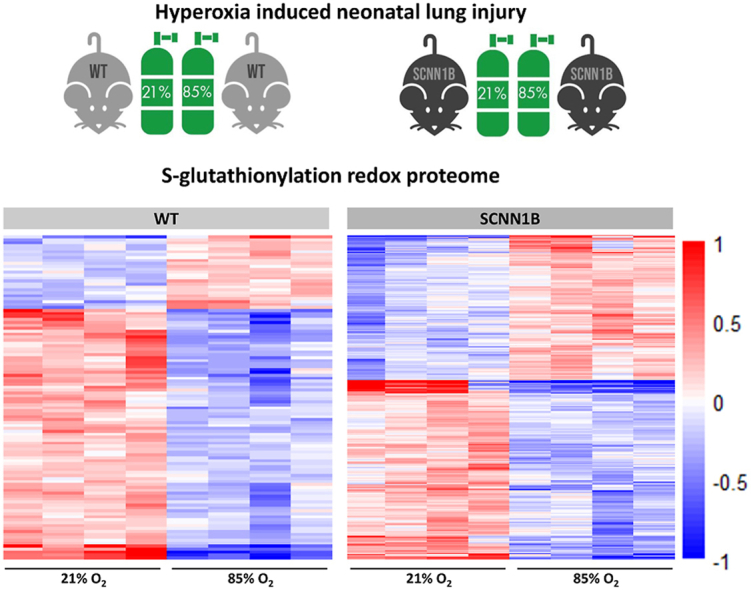
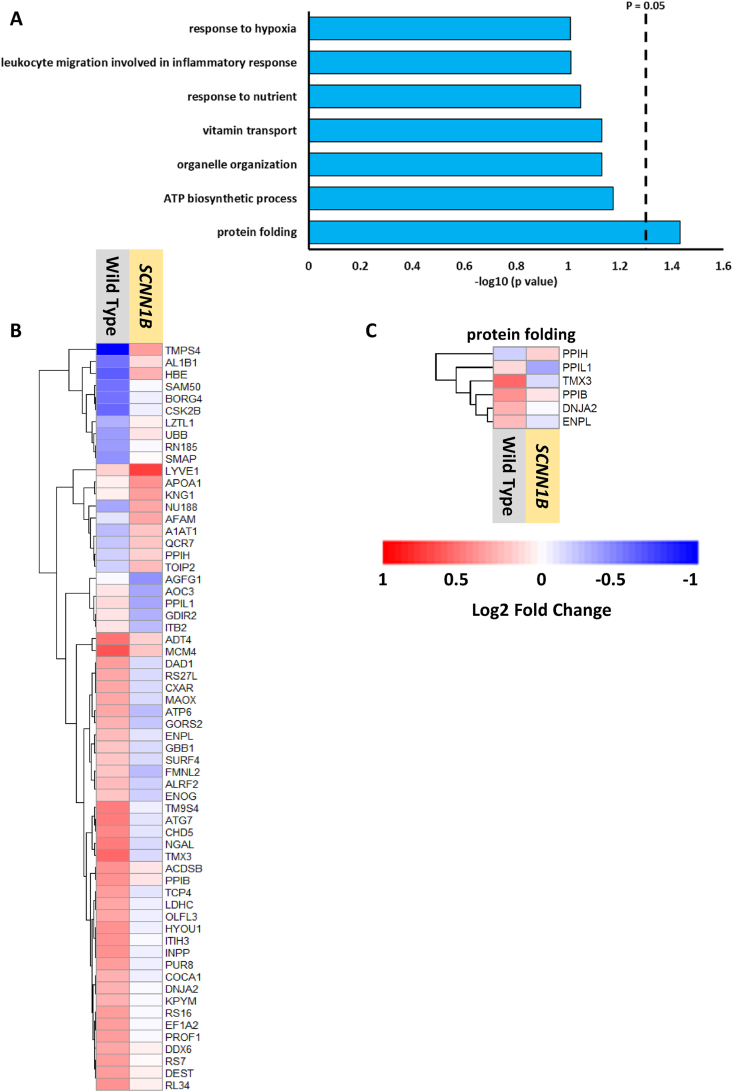
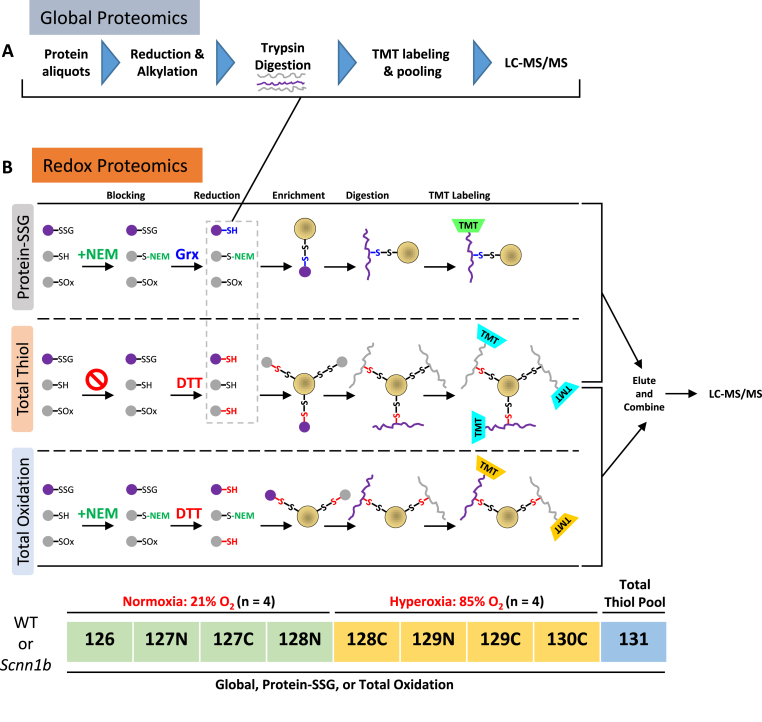
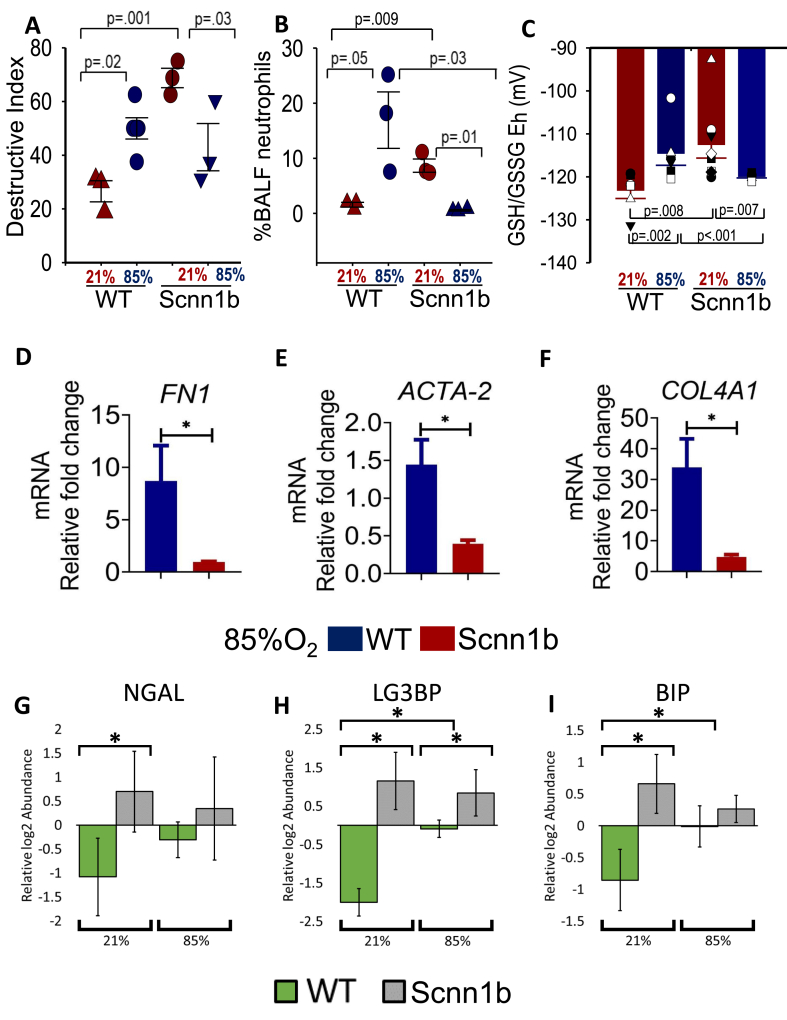
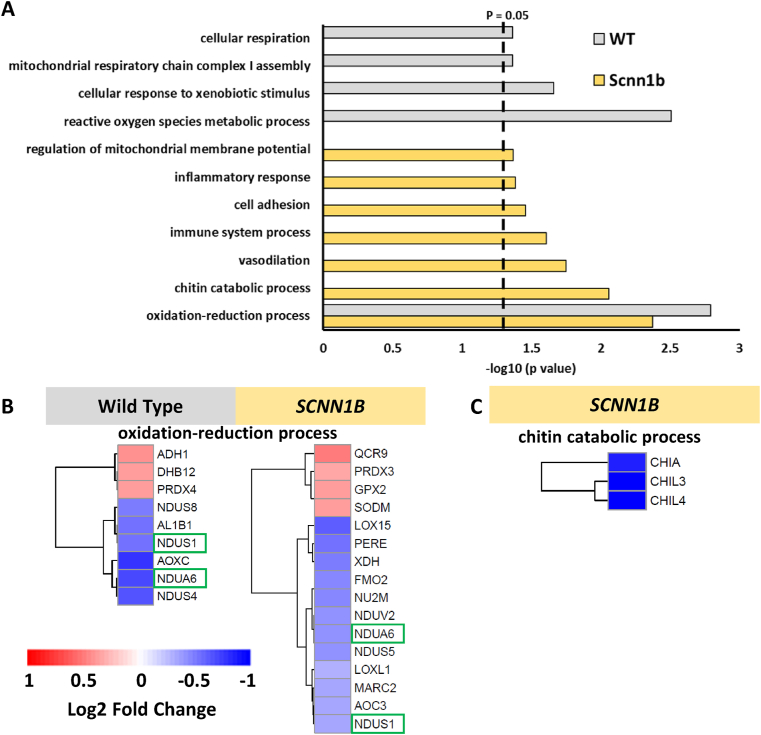
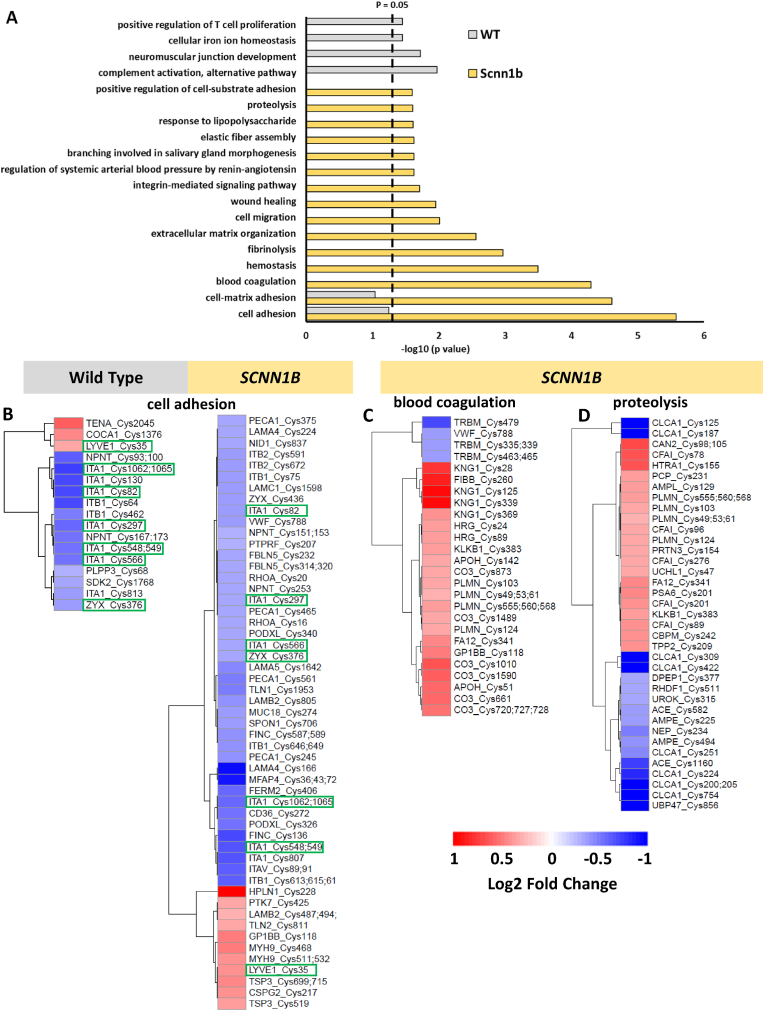
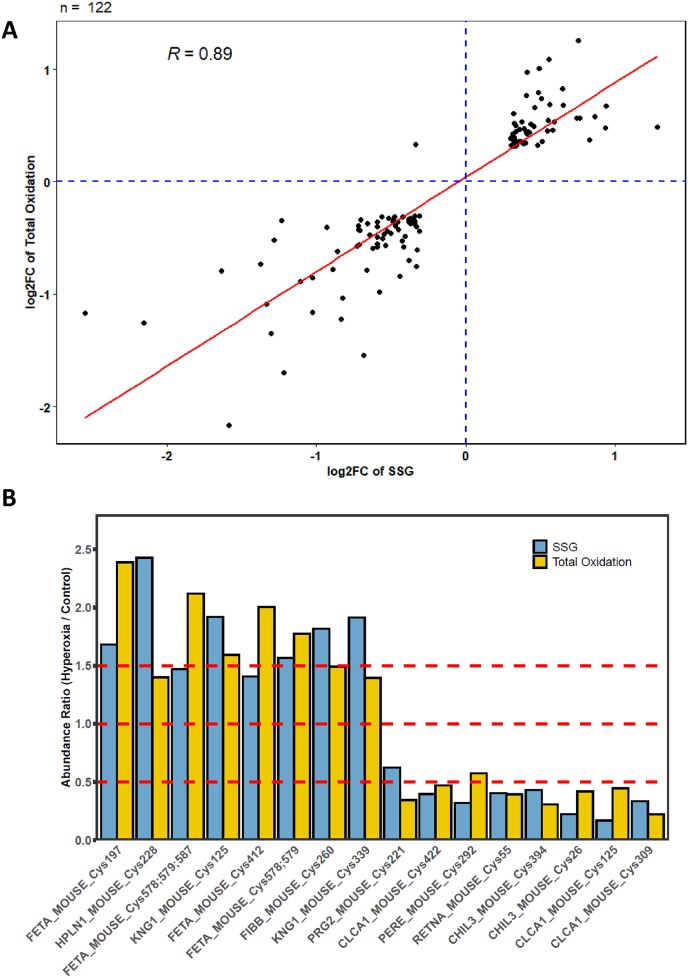
Preterm infants and patients with lung disease often have excess fluid in the lungs and are frequently treated with oxygen, however long-term exposure to hyperoxia results in irreversible lung injury. Although the adverse effects of hyperoxia are mediated by reactive oxygen species, the full extent of the impact of hyperoxia on redox-dependent regulation in the lung is unclear. In this study, neonatal mice overexpressing the beta-subunit of the epithelial sodium channel (β-ENaC) encoded by Scnn1b and their wild type (WT; C57Bl6) littermates were utilized to study the pathogenesis of high fraction inspired oxygen (FiO)-induced lung injury. Results showed that O-induced lung injury in transgenic Scnn1b mice is attenuated following chronic O exposure. To test the hypothesis that reversible cysteine-redox-modifications of proteins play an important role in O-induced lung injury, we performed proteome-wide profiling of protein S-glutathionylation (SSG) in both WT and Scnn1b overexpressing mice maintained at 21% O (normoxia) or FiO 85% (hyperoxia) from birth to 11-15 days postnatal. Over 7700 unique Cys sites with SSG modifications were identified and quantified, covering more than 3000 proteins in the lung. In both mouse models, hyperoxia resulted in a significant alteration of the SSG levels of Cys sites belonging to a diverse range of proteins. In addition, substantial SSG changes were observed in the Scnn1b overexpressing mice exposed to hyperoxia, suggesting that ENaC plays a critically important role in cellular regulation. Hyperoxia-induced SSG changes were further supported by the results observed for thiol total oxidation, the overall level of reversible oxidation on protein cysteine residues. Differential analyses reveal that Scnn1b overexpression may protect against hyperoxia-induced lung injury via modulation of specific processes such as cell adhesion, blood coagulation, and proteolysis. This study provides a landscape view of protein oxidation in the lung and highlights the importance of redox regulation in O-induced lung injury.
早产儿和肺部疾病患者的肺部通常会积聚过多液体,并且经常需要接受氧气治疗,然而,长期暴露于高氧环境中会导致不可逆转的肺部损伤。尽管高氧的不良影响是由活性氧物种介导的,但高氧对肺部氧化还原依赖调节的全面影响尚不清楚。在这项研究中,利用过表达上皮钠离子通道β亚基(Scnn1b 编码)的新生小鼠及其野生型(WT;C57Bl6)同窝仔鼠来研究高分数吸入氧(FiO)诱导的肺损伤的发病机制。结果表明,在慢性高氧暴露后,转基因 Scnn1b 小鼠的 O 诱导的肺损伤得到了减轻。为了验证可还原半胱氨酸氧化还原修饰的蛋白质在 O 诱导的肺损伤中起重要作用的假设,我们对维持在 21% O(常氧)或 FiO 85%(高氧)条件下的 WT 和 Scnn1b 过表达小鼠的蛋白质 S-谷胱甘肽化(SSG)进行了蛋白质组范围的分析,从出生到 11-15 日龄。鉴定和定量了超过 7700 个具有 SSG 修饰的独特半胱氨酸位点,涵盖了肺部 3000 多种蛋白质。在两种小鼠模型中,高氧导致属于多种蛋白质的 Cys 位点的 SSG 水平发生显著变化。此外,在暴露于高氧的 Scnn1b 过表达小鼠中观察到大量的 SSG 变化,这表明 ENaC 在细胞调节中起着至关重要的作用。高氧诱导的 SSG 变化进一步得到了半胱氨酸总氧化(蛋白质半胱氨酸残基上可逆氧化的总水平)结果的支持。差异分析表明,Scnn1b 过表达可能通过调节细胞黏附、血液凝固和蛋白水解等特定过程来防止高氧诱导的肺损伤。这项研究提供了肺部蛋白质氧化的全景图,并强调了氧化还原调节在 O 诱导的肺损伤中的重要性。