Barcelona Institute for Global Health (ISGlobal), Hospital Clínic - Universitat de Barcelona, Barcelona, Spain.
Institut d'Investigació en Ciències de la Salut Germans Trias i Pujol, Badalona, Spain.
Front Cell Infect Microbiol. 2022 Jul 4;12:920204. doi: 10.3389/fcimb.2022.920204. eCollection 2022.
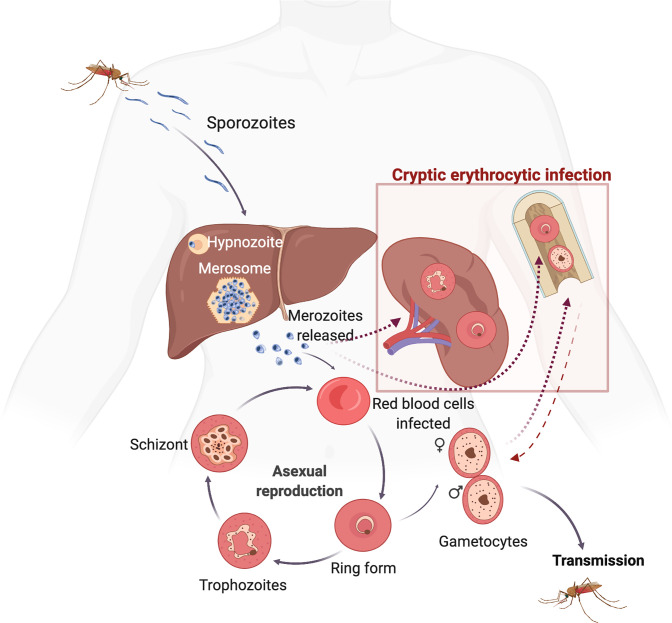
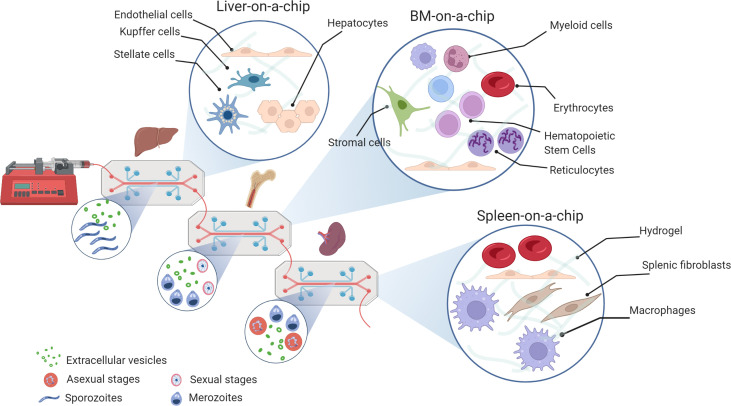
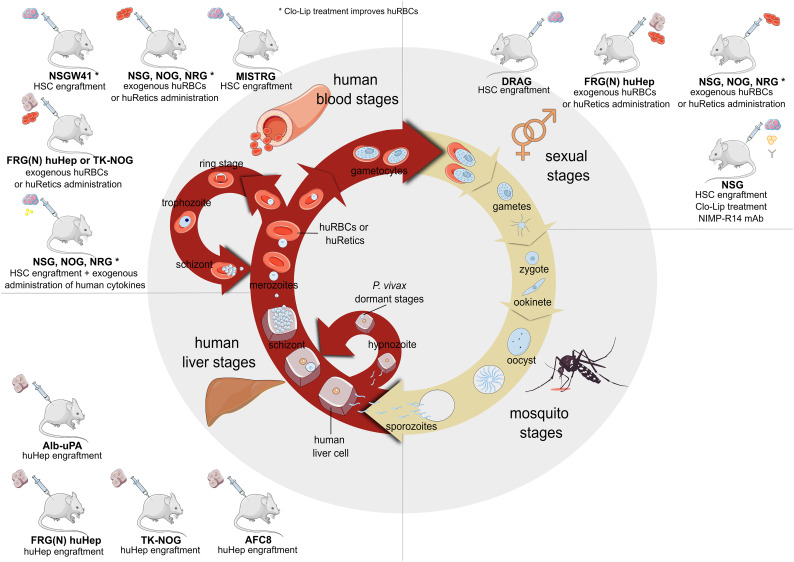
is the most widely distributed human malaria parasite representing 36.3% of disease burden in the South-East Asia region and the most predominant species in the region of the Americas. Recent estimates indicate that 3.3 billion of people are under risk of infection with circa 7 million clinical cases reported each year. This burden is certainly underestimated as the vast majority of chronic infections are asymptomatic. For centuries, it has been widely accepted that the only source of cryptic parasites is the liver dormant stages known as hypnozoites. However, recent evidence indicates that niches outside the liver, in particular in the spleen and the bone marrow, can represent a major source of cryptic chronic erythrocytic infections. The origin of such chronic infections is highly controversial as many key knowledge gaps remain unanswered. Yet, as parasites in these niches seem to be sheltered from immune response and antimalarial drugs, research on this area should be reinforced if elimination of malaria is to be achieved. Due to ethical and technical considerations, working with the liver, bone marrow and spleen from natural infections is very difficult. Recent advances in the development of humanized mouse models and organs-on-a-chip models, offer novel technological frontiers to study human diseases, vaccine validation and drug discovery. Here, we review current data of these frontier technologies in malaria, highlighting major challenges ahead to study cryptic niches, which perpetuate transmission and burden.
是分布最广泛的人类疟疾寄生虫,占东南亚地区 36.3%的疾病负担,也是美洲地区最主要的物种。最近的估计表明,有 33 亿人面临感染风险,每年约有 700 万例临床病例报告。由于绝大多数慢性感染无症状,因此这个负担肯定被低估了。几个世纪以来,人们普遍认为隐匿性寄生虫的唯一来源是肝脏休眠阶段,即休眠期滋养体。然而,最近的证据表明,肝脏以外的小生境,特别是脾脏和骨髓,可以成为隐匿性慢性红细胞感染的主要来源。这种慢性感染的起源存在很大争议,因为许多关键的知识空白仍未得到解答。然而,由于这些小生境中的寄生虫似乎免受免疫反应和抗疟药物的影响,如果要实现消除疟疾,就应该加强对这一领域的研究。由于伦理和技术考虑,从自然感染中研究肝脏、骨髓和脾脏非常困难。人类化小鼠模型和器官芯片模型的最新发展为研究人类疾病、疫苗验证和药物发现提供了新的技术前沿。在这里,我们回顾了这些前沿技术在疟疾中的现有数据,强调了研究隐匿小生境(持续传播和负担的主要挑战)所面临的主要挑战。