• 文献检索
  • 文档翻译
  • 深度研究
  • 学术资讯
  • Suppr Zotero 插件Zotero 插件
  • 邀请有礼
  • 套餐&价格
  • 历史记录
应用&插件
Suppr Zotero 插件Zotero 插件浏览器插件Mac 客户端Windows 客户端微信小程序
定价
高级版会员购买积分包购买API积分包
服务
文献检索文档翻译深度研究API 文档MCP 服务
关于我们
关于 Suppr公司介绍联系我们用户协议隐私条款
关注我们

Suppr 超能文献

核心技术专利:CN118964589B侵权必究
粤ICP备2023148730 号-1Suppr @ 2026

文献检索

告别复杂PubMed语法,用中文像聊天一样搜索,搜遍4000万医学文献。AI智能推荐,让科研检索更轻松。

立即免费搜索

文件翻译

保留排版,准确专业,支持PDF/Word/PPT等文件格式,支持 12+语言互译。

免费翻译文档

深度研究

AI帮你快速写综述,25分钟生成高质量综述,智能提取关键信息,辅助科研写作。

立即免费体验

提高深度学习模型构建中进度指示的准确性。

Improving the Accuracy of Progress Indication for Constructing Deep Learning Models.

作者信息

Dong Qifei, Zhang Xiaoyi, Luo Gang

机构信息

Department of Biomedical Informatics and Medical Education, University of Washington, Seattle, WA 98195, USA.

出版信息

IEEE Access. 2022;10:63754-63781. doi: 10.1109/access.2022.3181493. Epub 2022 Jun 8.

DOI:10.1109/access.2022.3181493
PMID:35873900
原文链接:https://pmc.ncbi.nlm.nih.gov/articles/PMC9302923/
Abstract

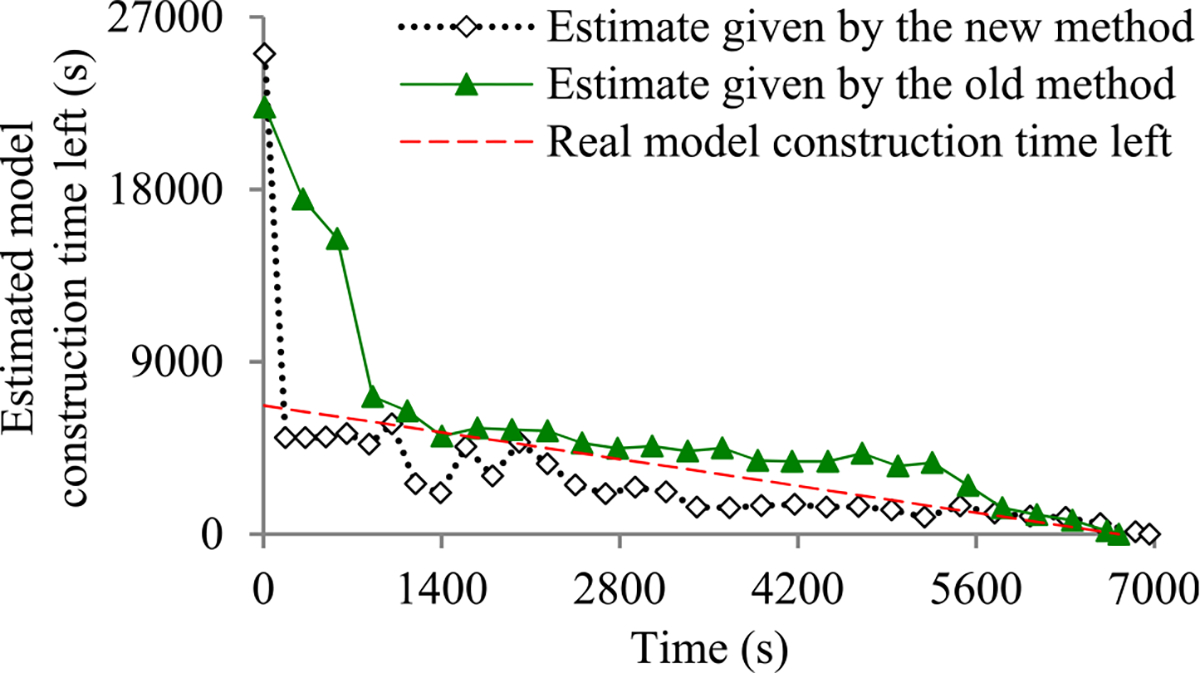
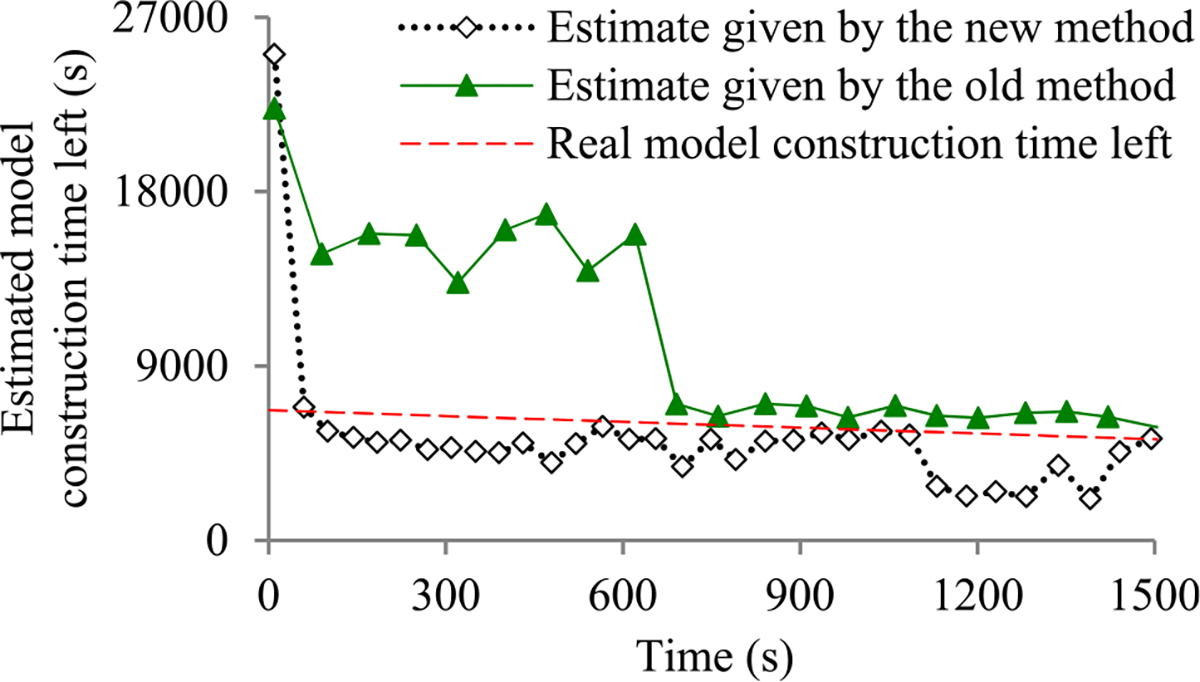
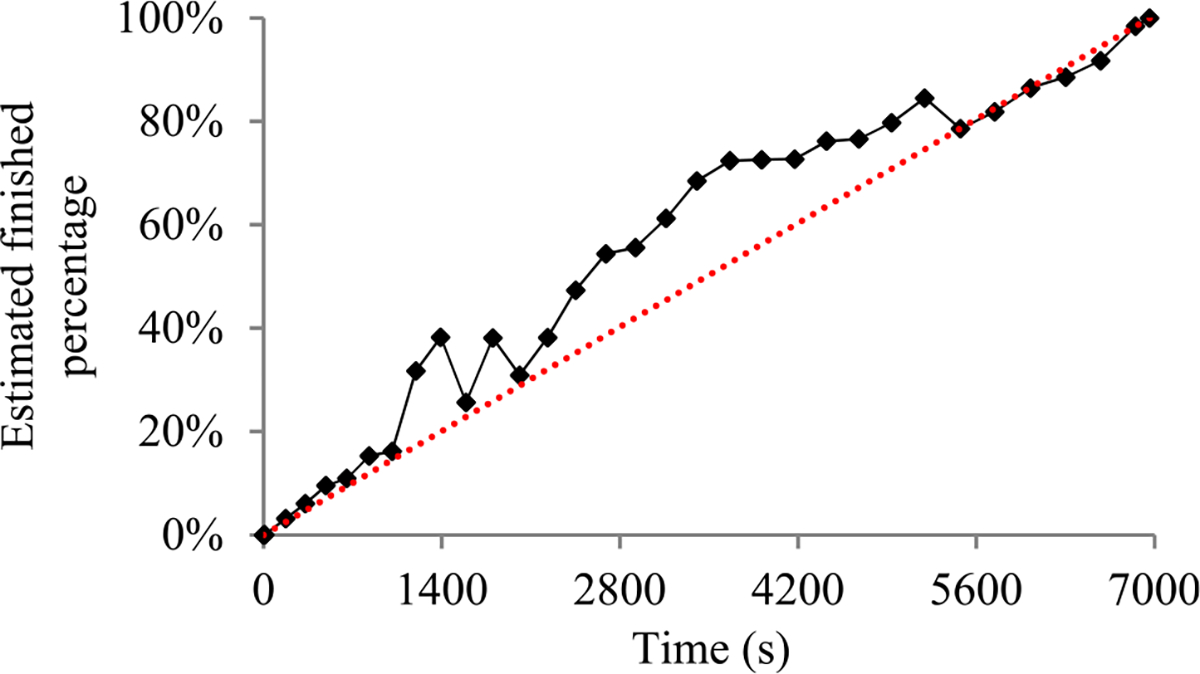
For many machine learning tasks, deep learning greatly outperforms all other existing learning algorithms. However, constructing a deep learning model on a big data set often takes days or months. During this long process, it is preferable to provide a progress indicator that keeps predicting the model construction time left and the percentage of model construction work done. Recently, we developed the first method to do this that permits early stopping. That method revises its predicted model construction cost using information gathered at the validation points, where the model's error rate is computed on the validation set. Due to the sparsity of validation points, the resulting progress indicators often have a long delay in gathering information from enough validation points and obtaining relatively accurate progress estimates. In this paper, we propose a new progress indication method to overcome this shortcoming by judiciously inserting extra validation points between the original validation points. We implemented this new method in TensorFlow. Our experiments show that compared with using our prior method, using this new method reduces the progress indicator's prediction error of the model construction time left by 57.5% on average. Also, with a low overhead, this new method enables us to obtain relatively accurate progress estimates faster.

摘要

对于许多机器学习任务而言,深度学习的表现远远优于所有其他现有的学习算法。然而,在大数据集上构建深度学习模型通常需要数天或数月的时间。在这个漫长的过程中,最好能提供一个进度指示器,持续预测剩余的模型构建时间以及已完成的模型构建工作的百分比。最近,我们开发了第一种能够做到这一点且允许提前停止的方法。该方法利用在验证点收集到的信息来修正其预测的模型构建成本,在验证点会在验证集上计算模型的错误率。由于验证点的稀疏性,由此产生的进度指示器在从足够多的验证点收集信息并获得相对准确的进度估计方面往往存在长时间的延迟。在本文中,我们提出了一种新的进度指示方法,通过在原始验证点之间明智地插入额外的验证点来克服这一缺点。我们在TensorFlow中实现了这种新方法。我们的实验表明,与使用我们之前的方法相比,使用这种新方法平均将剩余模型构建时间的进度指示器预测误差降低了57.5%。此外,这种新方法开销较低,使我们能够更快地获得相对准确的进度估计。
https://cdn.ncbi.nlm.nih.gov/pmc/blobs/ddd6/9302923/1688daeaabba/nihms-1817767-f0015.jpg
https://cdn.ncbi.nlm.nih.gov/pmc/blobs/ddd6/9302923/8c0339f0e548/nihms-1817767-f0001.jpg
https://cdn.ncbi.nlm.nih.gov/pmc/blobs/ddd6/9302923/4ef09c49ef0e/nihms-1817767-f0002.jpg
https://cdn.ncbi.nlm.nih.gov/pmc/blobs/ddd6/9302923/6b3af22d03a2/nihms-1817767-f0003.jpg
https://cdn.ncbi.nlm.nih.gov/pmc/blobs/ddd6/9302923/5db8d710b86c/nihms-1817767-f0004.jpg
https://cdn.ncbi.nlm.nih.gov/pmc/blobs/ddd6/9302923/1b4b23d158dd/nihms-1817767-f0005.jpg
https://cdn.ncbi.nlm.nih.gov/pmc/blobs/ddd6/9302923/defd0989aa35/nihms-1817767-f0006.jpg
https://cdn.ncbi.nlm.nih.gov/pmc/blobs/ddd6/9302923/008d835a16b4/nihms-1817767-f0007.jpg
https://cdn.ncbi.nlm.nih.gov/pmc/blobs/ddd6/9302923/ec5e505de51d/nihms-1817767-f0008.jpg
https://cdn.ncbi.nlm.nih.gov/pmc/blobs/ddd6/9302923/30d7b1a8da59/nihms-1817767-f0009.jpg
https://cdn.ncbi.nlm.nih.gov/pmc/blobs/ddd6/9302923/3966647f4991/nihms-1817767-f0010.jpg
https://cdn.ncbi.nlm.nih.gov/pmc/blobs/ddd6/9302923/31bf984da9b0/nihms-1817767-f0011.jpg
https://cdn.ncbi.nlm.nih.gov/pmc/blobs/ddd6/9302923/a2dfe9e3969d/nihms-1817767-f0012.jpg
https://cdn.ncbi.nlm.nih.gov/pmc/blobs/ddd6/9302923/ff14693df4e7/nihms-1817767-f0013.jpg
https://cdn.ncbi.nlm.nih.gov/pmc/blobs/ddd6/9302923/e8c121018384/nihms-1817767-f0014.jpg
https://cdn.ncbi.nlm.nih.gov/pmc/blobs/ddd6/9302923/1688daeaabba/nihms-1817767-f0015.jpg
https://cdn.ncbi.nlm.nih.gov/pmc/blobs/ddd6/9302923/8c0339f0e548/nihms-1817767-f0001.jpg
https://cdn.ncbi.nlm.nih.gov/pmc/blobs/ddd6/9302923/4ef09c49ef0e/nihms-1817767-f0002.jpg
https://cdn.ncbi.nlm.nih.gov/pmc/blobs/ddd6/9302923/6b3af22d03a2/nihms-1817767-f0003.jpg
https://cdn.ncbi.nlm.nih.gov/pmc/blobs/ddd6/9302923/5db8d710b86c/nihms-1817767-f0004.jpg
https://cdn.ncbi.nlm.nih.gov/pmc/blobs/ddd6/9302923/1b4b23d158dd/nihms-1817767-f0005.jpg
https://cdn.ncbi.nlm.nih.gov/pmc/blobs/ddd6/9302923/defd0989aa35/nihms-1817767-f0006.jpg
https://cdn.ncbi.nlm.nih.gov/pmc/blobs/ddd6/9302923/008d835a16b4/nihms-1817767-f0007.jpg
https://cdn.ncbi.nlm.nih.gov/pmc/blobs/ddd6/9302923/ec5e505de51d/nihms-1817767-f0008.jpg
https://cdn.ncbi.nlm.nih.gov/pmc/blobs/ddd6/9302923/30d7b1a8da59/nihms-1817767-f0009.jpg
https://cdn.ncbi.nlm.nih.gov/pmc/blobs/ddd6/9302923/3966647f4991/nihms-1817767-f0010.jpg
https://cdn.ncbi.nlm.nih.gov/pmc/blobs/ddd6/9302923/31bf984da9b0/nihms-1817767-f0011.jpg
https://cdn.ncbi.nlm.nih.gov/pmc/blobs/ddd6/9302923/a2dfe9e3969d/nihms-1817767-f0012.jpg
https://cdn.ncbi.nlm.nih.gov/pmc/blobs/ddd6/9302923/ff14693df4e7/nihms-1817767-f0013.jpg
https://cdn.ncbi.nlm.nih.gov/pmc/blobs/ddd6/9302923/e8c121018384/nihms-1817767-f0014.jpg
https://cdn.ncbi.nlm.nih.gov/pmc/blobs/ddd6/9302923/1688daeaabba/nihms-1817767-f0015.jpg

相似文献

1
Improving the Accuracy of Progress Indication for Constructing Deep Learning Models.提高深度学习模型构建中进度指示的准确性。
IEEE Access. 2022;10:63754-63781. doi: 10.1109/access.2022.3181493. Epub 2022 Jun 8.
2
Progress Indication for Deep Learning Model Training: A Feasibility Demonstration.深度学习模型训练的进度指示:可行性论证
IEEE Access. 2020;8:79811-79843. doi: 10.1109/ACCESS.2020.2989684. Epub 2020 Apr 22.
3
Accurate De Novo Prediction of Protein Contact Map by Ultra-Deep Learning Model.基于超深度学习模型的蛋白质接触图从头精确预测
PLoS Comput Biol. 2017 Jan 5;13(1):e1005324. doi: 10.1371/journal.pcbi.1005324. eCollection 2017 Jan.
4
Progress Indication for Machine Learning Model Building: A Feasibility Demonstration.机器学习模型构建的进展指示:可行性论证
SIGKDD Explor. 2018 Dec;20(2):1-12. doi: 10.1145/3299986.3299988.
5
An uncertainty approach for Electric Submersible Pump modeling through Deep Neural Network.
Heliyon. 2024 Jan 9;10(2):e24047. doi: 10.1016/j.heliyon.2024.e24047. eCollection 2024 Jan 30.
6
Toward a Progress Indicator for Machine Learning Model Building and Data Mining Algorithm Execution: A Position Paper.迈向机器学习模型构建和数据挖掘算法执行的进度指标:立场文件。
SIGKDD Explor. 2017 Dec;19(2):13-24. doi: 10.1145/3166054.3166057.
7
Iterative Deep Neighborhood: A Deep Learning Model Which Involves Both Input Data Points and Their Neighbors.迭代深邻域:一种涉及输入数据点及其邻居的深度学习模型。
Comput Intell Neurosci. 2020 Jan 2;2020:9868017. doi: 10.1155/2020/9868017. eCollection 2020.
8
A Novel Extra Tree Ensemble Optimized DL Framework (ETEODL) for Early Detection of Diabetes.一种用于糖尿病早期检测的新型 Extra Tree 集成优化深度学习框架(ETEODL)。
Front Public Health. 2022 Feb 15;9:797877. doi: 10.3389/fpubh.2021.797877. eCollection 2021.
9
Accuracy of advanced deep learning with tensorflow and keras for classifying teeth developmental stages in digital panoramic imaging.基于 tensorflow 和 keras 的高级深度学习在数字全景成像中牙齿发育阶段分类的准确性。
BMC Med Imaging. 2022 Apr 8;22(1):66. doi: 10.1186/s12880-022-00794-6.
10
COVID-19 Mortality Prediction From Deep Learning in a Large Multistate Electronic Health Record and Laboratory Information System Data Set: Algorithm Development and Validation.基于大型多状态电子健康记录和实验室信息系统数据集的深度学习预测 COVID-19 死亡率:算法开发与验证。
J Med Internet Res. 2021 Sep 28;23(9):e30157. doi: 10.2196/30157.

引用本文的文献

1
An Adaptive Intrusion Detection System in the Internet of Medical Things Using Fuzzy-Based Learning.基于模糊学习的物联网自适应入侵检测系统。
Sensors (Basel). 2023 Nov 17;23(22):9247. doi: 10.3390/s23229247.

本文引用的文献

1
Progress Indication for Deep Learning Model Training: A Feasibility Demonstration.深度学习模型训练的进度指示:可行性论证
IEEE Access. 2020;8:79811-79843. doi: 10.1109/ACCESS.2020.2989684. Epub 2020 Apr 22.
2
Progress Indication for Machine Learning Model Building: A Feasibility Demonstration.机器学习模型构建的进展指示:可行性论证
SIGKDD Explor. 2018 Dec;20(2):1-12. doi: 10.1145/3299986.3299988.
3
Benchmarking deep learning models on large healthcare datasets.基于大型医疗保健数据集的深度学习模型基准测试。
J Biomed Inform. 2018 Jul;83:112-134. doi: 10.1016/j.jbi.2018.04.007. Epub 2018 Jun 5.
4
Toward a Progress Indicator for Machine Learning Model Building and Data Mining Algorithm Execution: A Position Paper.迈向机器学习模型构建和数据挖掘算法执行的进度指标:立场文件。
SIGKDD Explor. 2017 Dec;19(2):13-24. doi: 10.1145/3166054.3166057.
5
Automating Construction of Machine Learning Models With Clinical Big Data: Proposal Rationale and Methods.利用临床大数据自动构建机器学习模型:方案原理与方法
JMIR Res Protoc. 2017 Aug 29;6(8):e175. doi: 10.2196/resprot.7757.
6
PredicT-ML: a tool for automating machine learning model building with big clinical data.PredicT-ML:一个利用大型临床数据自动化机器学习模型构建的工具。
Health Inf Sci Syst. 2016 Jun 8;4:5. doi: 10.1186/s13755-016-0018-1. eCollection 2016.
7
MIMIC-III, a freely accessible critical care database.MIMIC-III,一个免费获取的重症监护数据库。
Sci Data. 2016 May 24;3:160035. doi: 10.1038/sdata.2016.35.