Joseph Jewel Ann, Akkermans Simen, Van Impe Jan F M
BioTeC+, Chemical and Biochemical Process Technology and Control, Department of Chemical Engineering, Katholieke Universiteit Leuven, Ghent 9000, Belgium.
ACS Omega. 2022 Jul 8;7(28):24121-24133. doi: 10.1021/acsomega.2c00055. eCollection 2022 Jul 19.
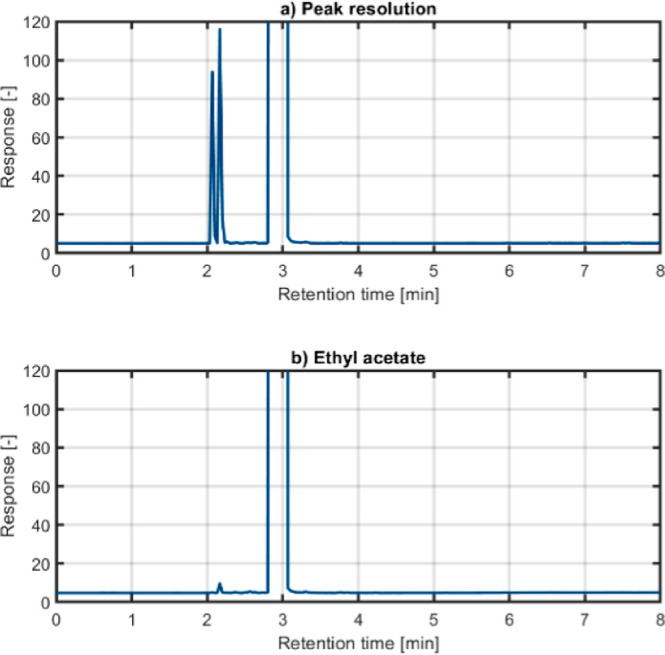
Methanol, a simple polar solvent, has been widely identified as an attractive carbon source to produce chemicals and fuels in bioprocesses. Specifically, to achieve recombinant protein production from methylotrophic yeasts, such as , this organic solvent can be used as a sole carbon source for growth and maintenance as well as an inducer for protein expression. However, if methanol feeding is not controlled well in such a fermentation process, accumulation of the solvent in the growth media will have a detrimental effect on the cells. Hence, monitoring the levels of methanol in these fermentation processes is a crucial step to ensure a healthy culture and maximum protein production. There are various techniques elaborated in the literature for monitoring methanol in cell cultures, but often, they appear to be expensive methods that are less affordable for many laboratories. This is because, in addition to the sophisticated equipment that is required for the analysis, the complexity of the samples retrieved from the bioprocesses necessitates laborious processing steps often involving expensive tools. In this study, a fast, simple, and sensitive method is developed to process biological samples by using the salting-out-assisted liquid-liquid extraction technique to quantify the concentration of methanol and ethanol using gas chromatography. On comparing the combinations of widely available salts and solvents, it was noticed that salting out using potassium carbonate followed by the liquid-liquid extraction of the analyte using ethyl acetate showed the best recovery. Followed by this, a validation test for the developed method was performed, which resulted in good peak resolution, linearity, and limit of detection for the quantitation of methanol and ethanol. By further assessing the tested combination, it was confirmed that its application could be extended to other matrices. Such an approach facilitates the possibility to monitor and control the methanol levels in fermentation and aids in bioprocess optimization.
甲醇是一种简单的极性溶剂,已被广泛认为是生物过程中生产化学品和燃料的一种有吸引力的碳源。具体而言,为了实现从甲基营养型酵母(如 )生产重组蛋白,这种有机溶剂可用作生长和维持的唯一碳源以及蛋白质表达的诱导剂。然而,如果在这样的发酵过程中甲醇进料控制不当,溶剂在生长培养基中的积累将对细胞产生有害影响。因此,监测这些发酵过程中甲醇的水平是确保培养健康且蛋白质产量最大化的关键步骤。文献中阐述了多种用于监测细胞培养物中甲醇的技术,但通常这些方法似乎成本高昂,许多实验室难以承受。这是因为,除了分析所需的精密设备外,从生物过程中获取的样品的复杂性需要繁琐的处理步骤,通常还涉及昂贵的工具。在本研究中,开发了一种快速、简单且灵敏的方法,通过盐析辅助液 - 液萃取技术处理生物样品,使用气相色谱法定量甲醇和乙醇的浓度。在比较广泛可用的盐和溶剂的组合时,发现使用碳酸钾进行盐析,然后用乙酸乙酯对分析物进行液 - 液萃取显示出最佳回收率。在此之后,对所开发的方法进行了验证测试,结果在甲醇和乙醇定量方面具有良好的峰分辨率、线性和检测限。通过进一步评估测试的组合,证实其应用可扩展到其他基质。这种方法有助于监测和控制发酵过程中的甲醇水平,并有助于生物过程优化。