• 文献检索
  • 文档翻译
  • 深度研究
  • 学术资讯
  • Suppr Zotero 插件Zotero 插件
  • 邀请有礼
  • 套餐&价格
  • 历史记录
应用&插件
Suppr Zotero 插件Zotero 插件浏览器插件Mac 客户端Windows 客户端微信小程序
定价
高级版会员购买积分包购买API积分包
服务
文献检索文档翻译深度研究API 文档MCP 服务
关于我们
关于 Suppr公司介绍联系我们用户协议隐私条款
关注我们

Suppr 超能文献

核心技术专利:CN118964589B侵权必究
粤ICP备2023148730 号-1Suppr @ 2026

文献检索

告别复杂PubMed语法,用中文像聊天一样搜索,搜遍4000万医学文献。AI智能推荐,让科研检索更轻松。

立即免费搜索

文件翻译

保留排版,准确专业,支持PDF/Word/PPT等文件格式,支持 12+语言互译。

免费翻译文档

深度研究

AI帮你快速写综述,25分钟生成高质量综述,智能提取关键信息,辅助科研写作。

立即免费体验

粘结剂体系对3D打印氧化锆陶瓷热物理性能的影响。

Effect of binder system on the thermophysical properties of 3D-printed zirconia ceramics.

作者信息

Hofer Anna-Katharina, Rabitsch Julia, Jutrzenka-Trzebiatowska Dagmara, Hofstetter Christoph, Gavalda-Velasco Isabel, Schlacher Josef, Schwentenwein Martin, Bermejo Raul

机构信息

Department of Materials Science Montanuniversität Leoben Leoben Austria.

Lithoz GmbH Wien Austria.

出版信息

Int J Appl Ceram Technol. 2022 Jan-Feb;19(1):174-180. doi: 10.1111/ijac.13806. Epub 2021 Jun 30.

DOI:10.1111/ijac.13806
PMID:35874459
原文链接:https://pmc.ncbi.nlm.nih.gov/articles/PMC9292236/
Abstract

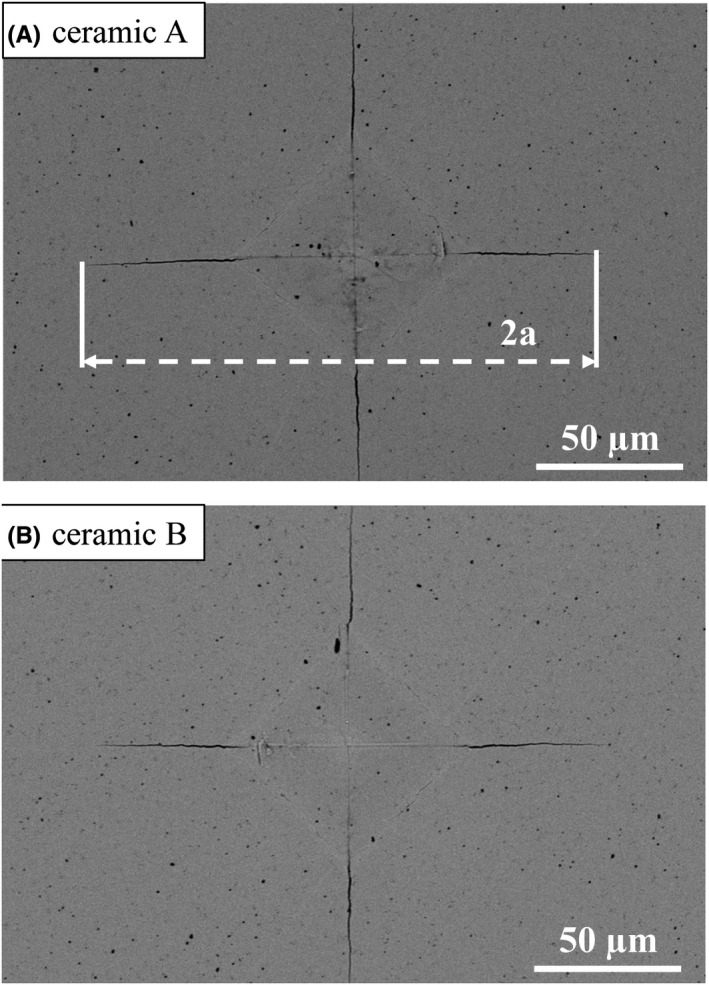
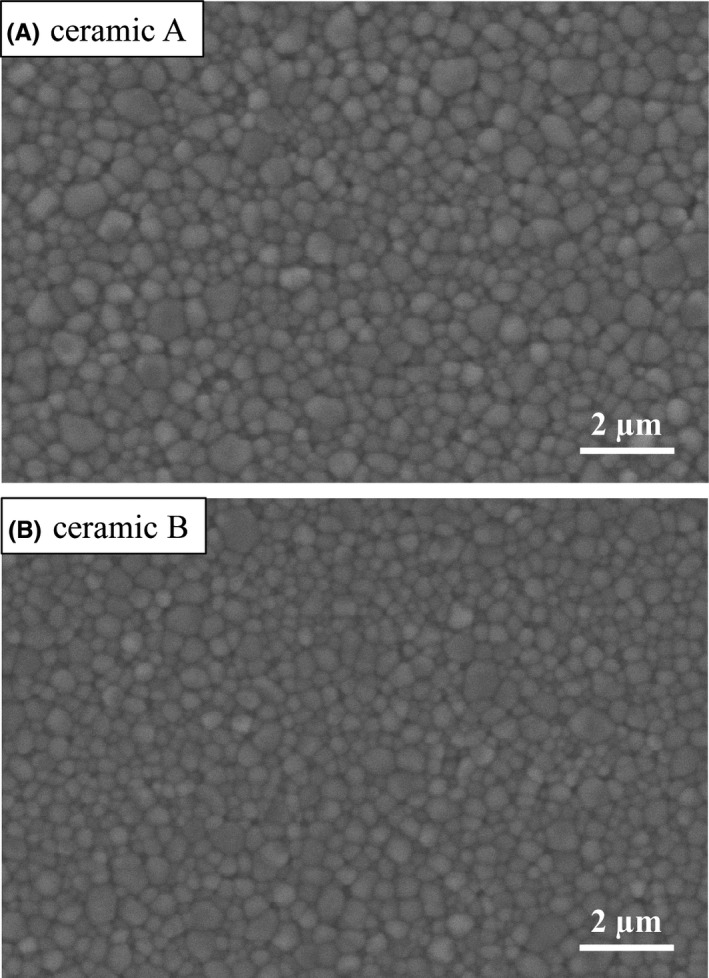
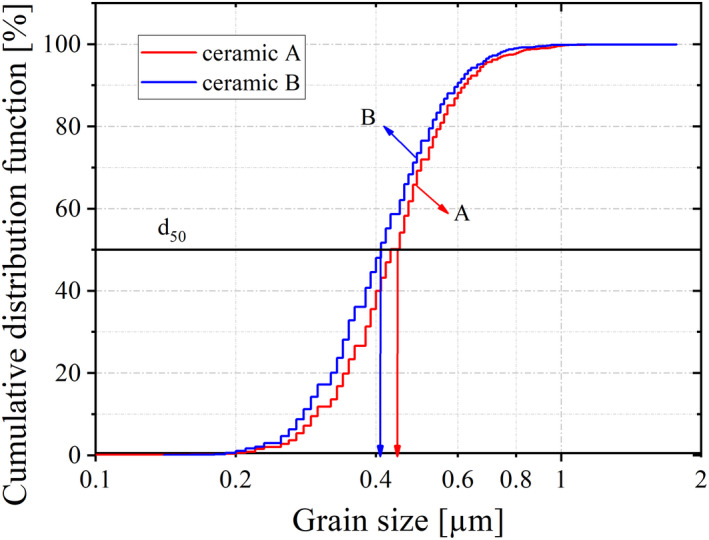
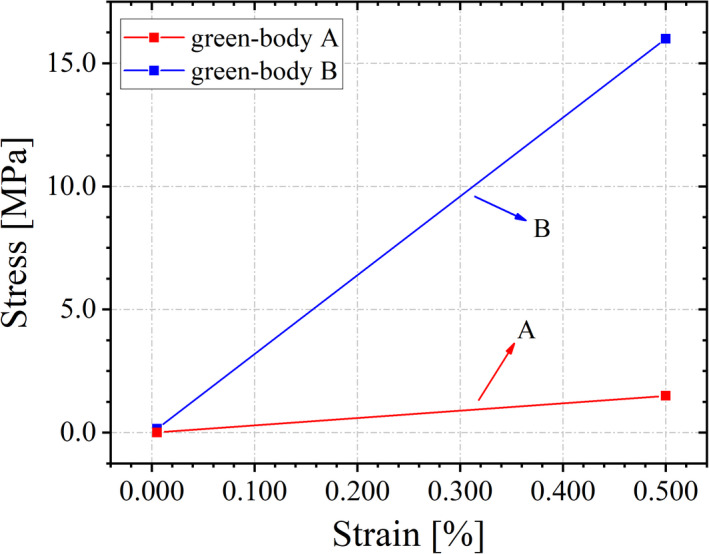
Fabrication of 3D-printed ceramic parts with high complexity and high spatial resolution often demands low wall thickness as well as high stiffness at the green state, whereas printing simpler geometries may tolerate thicker, more compliant walls with the advantage of a rapid binder-burn-out and sintering process. In this work, the influence of the binder system on the thermophysical properties of 3D-printed stabilized zirconia ceramics was investigated. Samples were fabricated with the lithography-based ceramic manufacturing (LCM) technology using two different photosensitive ceramic suspensions (LithaCon 3Y230 and LithaCon 3Y210), with the same ZrO powder. A significant difference in stiffness in the green state (~3 MPa vs. ~32 MPa for LithaCon 3Y230 and LithaCon 3Y210, respectively) was measured, associated with a rather loose or a linked network formed in the binder due to photopolymerization. Both materials reached high relative densities, that is, >99%, exhibiting a homogeneous fine-grained microstructure. No significant differences on the coefficient of thermal expansion (11.18 ppm/K vs. 11.17 ppm/K) or Young's modulus (207 GPa vs. 205 GPa) were measured, thus demonstrating the potential of tailoring binder systems to achieve the required accuracy in 3D-printed parts, without detrimental effects on material's microstructure and thermophysical properties at the sintered state.

摘要

制造具有高复杂度和高空间分辨率的3D打印陶瓷部件通常需要低壁厚以及在生坯状态下具有高刚度,而打印较简单的几何形状可能允许更厚、更柔顺的壁,其优点是粘结剂 burnout 和烧结过程快速。在这项工作中,研究了粘结剂体系对3D打印稳定氧化锆陶瓷热物理性能的影响。使用基于光刻的陶瓷制造(LCM)技术,用两种不同的光敏陶瓷悬浮液(LithaCon 3Y230和LithaCon 3Y210),以相同的ZrO粉末制备样品。测量了生坯状态下刚度的显著差异(LithaCon 3Y230和LithaCon 3Y210分别约为3MPa和32MPa),这与光聚合作用在粘结剂中形成的相当松散或相连的网络有关。两种材料都达到了高相对密度,即>99%,呈现出均匀的细晶微观结构。在热膨胀系数(11.18 ppm/K对11.17 ppm/K)或杨氏模量(207 GPa对205 GPa)方面未测量到显著差异,因此证明了定制粘结剂体系以在3D打印部件中实现所需精度的潜力,而不会对烧结状态下材料的微观结构和热物理性能产生不利影响。
https://cdn.ncbi.nlm.nih.gov/pmc/blobs/64fc/9292236/827d3f3df265/IJAC-19-174-g001.jpg
https://cdn.ncbi.nlm.nih.gov/pmc/blobs/64fc/9292236/6779aa5bb801/IJAC-19-174-g002.jpg
https://cdn.ncbi.nlm.nih.gov/pmc/blobs/64fc/9292236/74621ac82e94/IJAC-19-174-g006.jpg
https://cdn.ncbi.nlm.nih.gov/pmc/blobs/64fc/9292236/64d87e0f154d/IJAC-19-174-g004.jpg
https://cdn.ncbi.nlm.nih.gov/pmc/blobs/64fc/9292236/827d3f3df265/IJAC-19-174-g001.jpg
https://cdn.ncbi.nlm.nih.gov/pmc/blobs/64fc/9292236/6779aa5bb801/IJAC-19-174-g002.jpg
https://cdn.ncbi.nlm.nih.gov/pmc/blobs/64fc/9292236/74621ac82e94/IJAC-19-174-g006.jpg
https://cdn.ncbi.nlm.nih.gov/pmc/blobs/64fc/9292236/64d87e0f154d/IJAC-19-174-g004.jpg
https://cdn.ncbi.nlm.nih.gov/pmc/blobs/64fc/9292236/827d3f3df265/IJAC-19-174-g001.jpg

相似文献

1
Effect of binder system on the thermophysical properties of 3D-printed zirconia ceramics.粘结剂体系对3D打印氧化锆陶瓷热物理性能的影响。
Int J Appl Ceram Technol. 2022 Jan-Feb;19(1):174-180. doi: 10.1111/ijac.13806. Epub 2021 Jun 30.
2
Strength and reliability of zirconia fabricated by additive manufacturing technology.增材制造技术制备的氧化锆的强度和可靠性。
Dent Mater. 2022 Oct;38(10):1565-1574. doi: 10.1016/j.dental.2022.07.004. Epub 2022 Aug 4.
3
Ceramic Printing - Comparative Study of the Flexural Strength of 3D Printed and Milled Zirconia.陶瓷打印——3D打印与铣削氧化锆抗弯强度的对比研究
Int J Prosthodont. 2022 November/December;35(6):777–783. doi: 10.11607/ijp.6749. Epub 2021 Feb 19.
4
3D printed zirconia ceramic hip joint with precise structure and broad-spectrum antibacterial properties.3D 打印氧化锆陶瓷髋关节,具有精确的结构和广谱抗菌性能。
Int J Nanomedicine. 2019 Jul 30;14:5977-5987. doi: 10.2147/IJN.S202457. eCollection 2019.
5
Sintering Process Optimization for 3YSZ Ceramic 3D-Printed Objects Manufactured by Stereolithography.通过立体光刻制造的3YSZ陶瓷3D打印物体的烧结工艺优化
Nanomaterials (Basel). 2021 Jan 14;11(1):192. doi: 10.3390/nano11010192.
6
Fabrication of 3D Printed Ceramic Part Using Photo-Polymerization Process.使用光聚合工艺制造3D打印陶瓷部件。
Polymers (Basel). 2023 Mar 23;15(7):1601. doi: 10.3390/polym15071601.
7
Fabrication of Zirconia Ceramic Dental Crowns by Digital Light Processing: Effects of the Process on Physical Properties and Microstructure.数字光处理技术制备氧化锆陶瓷牙冠:该工艺对物理性能和微观结构的影响
3D Print Addit Manuf. 2024 Jun 18;11(3):e1257-e1270. doi: 10.1089/3dp.2022.0342. eCollection 2024 Jun.
8
Investigating the effect of solid loading on microstructure, mechanical properties, and translucency of highly translucent zirconia ceramics prepared via stereolithography-based additive manufacturing.研究固含量对通过基于立体光刻的增材制造制备的高透明氧化锆陶瓷的微观结构、力学性能和透明度的影响。
J Mech Behav Biomed Mater. 2023 Aug;144:105952. doi: 10.1016/j.jmbbm.2023.105952. Epub 2023 Jun 10.
9
A Systematic Study on Impact of Binder Formulation on Green Body Strength of Vat-Photopolymerisation 3D Printed Silica Ceramics Used in Investment Casting.粘结剂配方对熔模铸造中使用的光固化3D打印二氧化硅陶瓷生坯强度影响的系统研究
Polymers (Basel). 2023 Jul 24;15(14):3141. doi: 10.3390/polym15143141.
10
Biaxial flexural strength of 3D-printed 3Y-TZP zirconia using a novel ceramic printer.使用新型陶瓷打印机打印的 3Y-TZP 氧化锆的双轴弯曲强度。
Clin Oral Investig. 2024 Feb 13;28(2):145. doi: 10.1007/s00784-024-05533-5.

引用本文的文献

1
Surface Hardness of Polished Dental Zirconia: Influence of Polishing and Yttria Content on Morphology, Phase Composition, and Microhardness.抛光牙科氧化锆的表面硬度:抛光和氧化钇含量对形态、相组成及显微硬度的影响
Materials (Basel). 2025 Jul 18;18(14):3380. doi: 10.3390/ma18143380.
2
Physiomechanical and Surface Characteristics of 3D-Printed Zirconia: An In Vitro Study.3D打印氧化锆的物理力学和表面特性:一项体外研究。
Materials (Basel). 2022 Oct 8;15(19):6988. doi: 10.3390/ma15196988.
3
A study of bioactive glass-ceramic's mechanical properties, apatite formation, and medical applications.

本文引用的文献

1
Effects of the Layer Height and Exposure Energy on the Lateral Resolution of Zirconia Parts Printed by Lithography-Based Additive Manufacturing.层高和曝光能量对基于光刻的增材制造法打印氧化锆部件横向分辨率的影响
Materials (Basel). 2020 Mar 14;13(6):1317. doi: 10.3390/ma13061317.
2
Zirconia in biomedical applications.生物医学应用中的氧化锆
Expert Rev Med Devices. 2016 Oct;13(10):945-963. doi: 10.1080/17434440.2016.1230017. Epub 2016 Sep 16.
3
Zirconia as a ceramic biomaterial.氧化锆作为一种陶瓷生物材料。
生物活性玻璃陶瓷的力学性能、磷灰石形成及医学应用研究。
RSC Adv. 2022 Aug 16;12(36):23143-23152. doi: 10.1039/d2ra03235j.
4
Additive manufacturing of silica glass using laser stereolithography with a top-down approach and fast debinding.采用自上而下方法和快速脱脂的激光立体光刻技术对石英玻璃进行增材制造。
RSC Adv. 2018 May 3;8(29):16344-16348. doi: 10.1039/c8ra02428f. eCollection 2018 Apr 27.
5
Photochemistry with Cyanines in the Near Infrared: A Step to Chemistry 4.0 Technologies.近红外区域的菁染料光化学:迈向化学 4.0 技术的一步。
Chemistry. 2019 Oct 8;25(56):12855-12864. doi: 10.1002/chem.201901746. Epub 2019 Aug 21.
Biomaterials. 1999 Jan;20(1):1-25. doi: 10.1016/s0142-9612(98)00010-6.