Brannon Emma R, Guevara M Valentina, Pacifici Noah J, Lee Jonathan K, Lewis Jamal S, Eniola-Adefeso Omolola
Department of Chemical Engineering, University of Michigan, Ann Arbor, MI USA.
Department of Biomedical Engineering, University of California, Davis, CA USA.
Nat Rev Mater. 2022;7(10):796-813. doi: 10.1038/s41578-022-00458-5. Epub 2022 Jul 19.
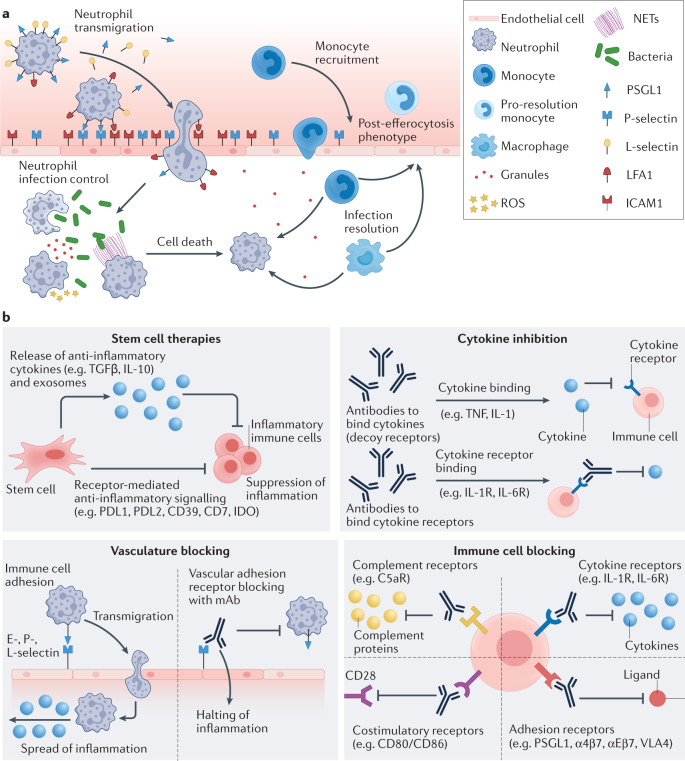
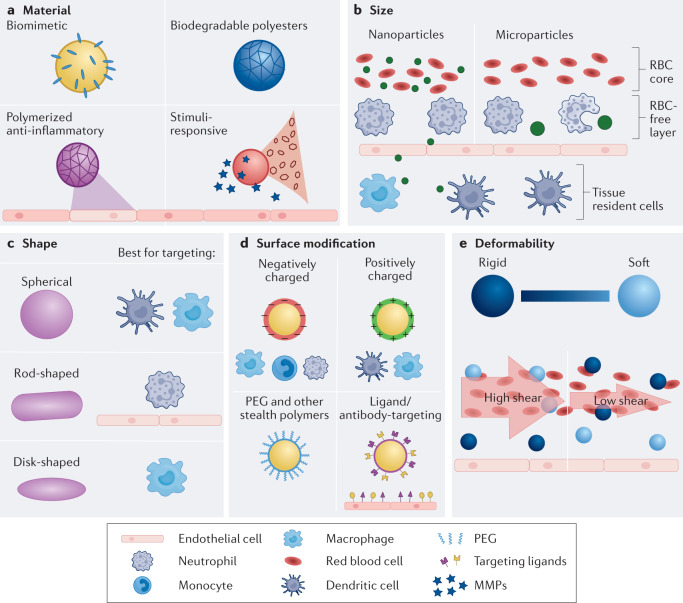
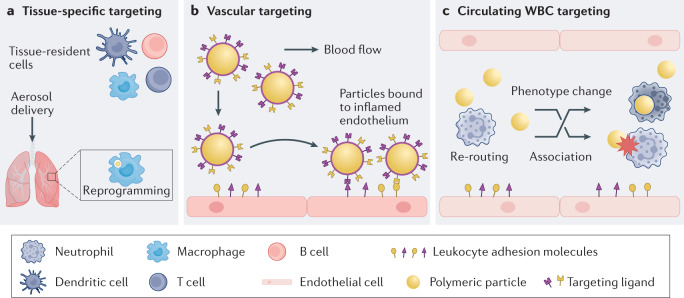
Acute inflammation is essential for initiating and coordinating the body's response to injuries and infections. However, in acute inflammatory diseases, inflammation is not resolved but propagates further, which can ultimately lead to tissue damage such as in sepsis, acute respiratory distress syndrome and deep vein thrombosis. Currently, clinical protocols are limited to systemic steroidal treatments, fluids and antibiotics that focus on eradicating inflammation rather than modulating it. Strategies based on stem cell therapeutics and selective blocking of inflammatory molecules, despite showing great promise, still lack the scalability and specificity required to treat acute inflammation. By contrast, polymeric particle systems benefit from uniform manufacturing at large scales while preserving biocompatibility and versatility, thus providing an ideal platform for immune modulation. Here, we outline design aspects of polymeric particles including material, size, shape, deformability and surface modifications, providing a strategy for optimizing the targeting of acute inflammation.
急性炎症对于启动和协调身体对损伤及感染的反应至关重要。然而,在急性炎症性疾病中,炎症并未得到缓解,反而进一步扩散,最终可能导致组织损伤,如脓毒症、急性呼吸窘迫综合征和深静脉血栓形成。目前,临床方案仅限于全身性甾体治疗、补液和抗生素,这些治疗主要侧重于消除炎症而非调节炎症。尽管基于干细胞疗法和选择性阻断炎症分子的策略显示出巨大潜力,但仍缺乏治疗急性炎症所需的可扩展性和特异性。相比之下,聚合物颗粒系统在大规模生产时具有均一性,同时保持生物相容性和多功能性,从而为免疫调节提供了理想平台。在此,我们概述了聚合物颗粒的设计方面,包括材料、尺寸、形状、可变形性和表面修饰,为优化急性炎症的靶向治疗提供了一种策略。