Pediatric Cardiology, Stanford University, California, USA.
Institute for Computational and Mathematical Engineering, Stanford University, California, USA.
Int J Numer Method Biomed Eng. 2022 Oct;38(10):e3639. doi: 10.1002/cnm.3639. Epub 2022 Aug 14.
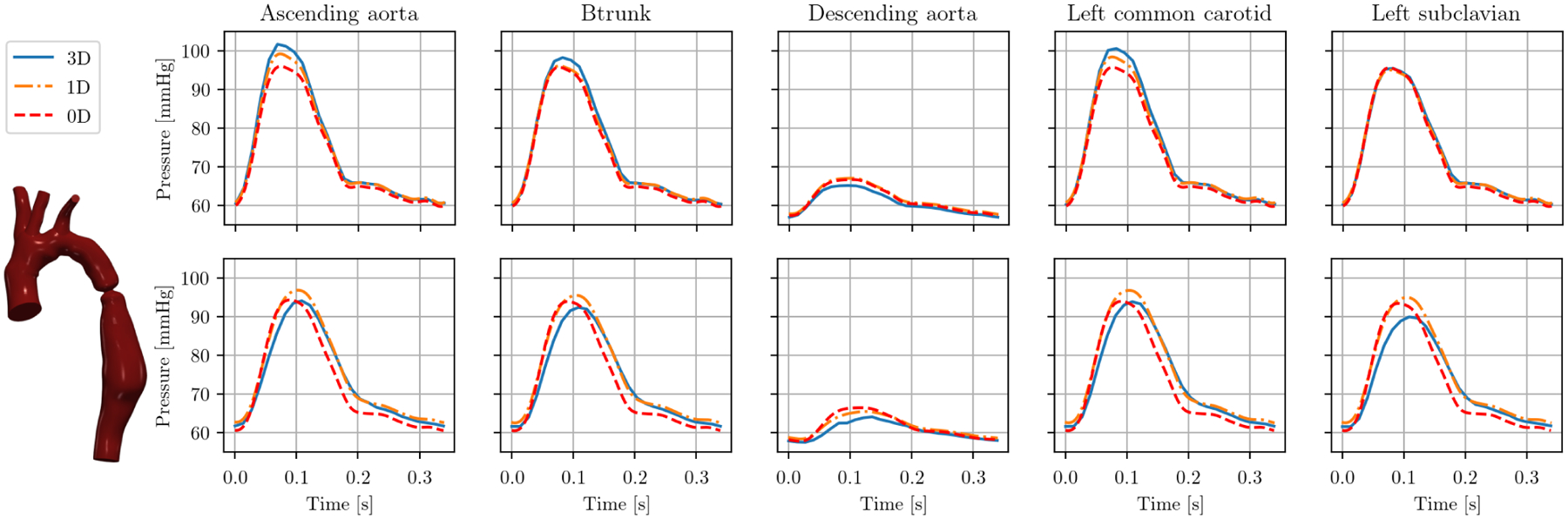
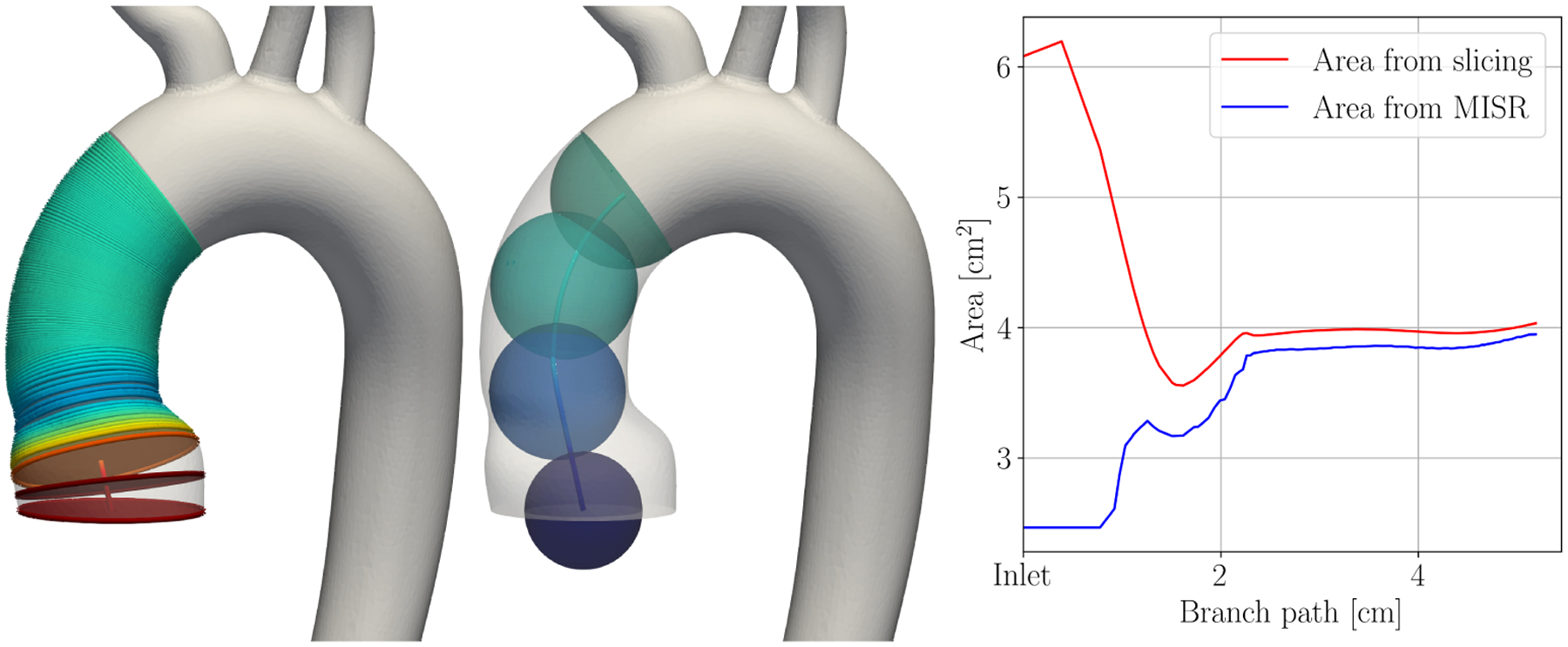
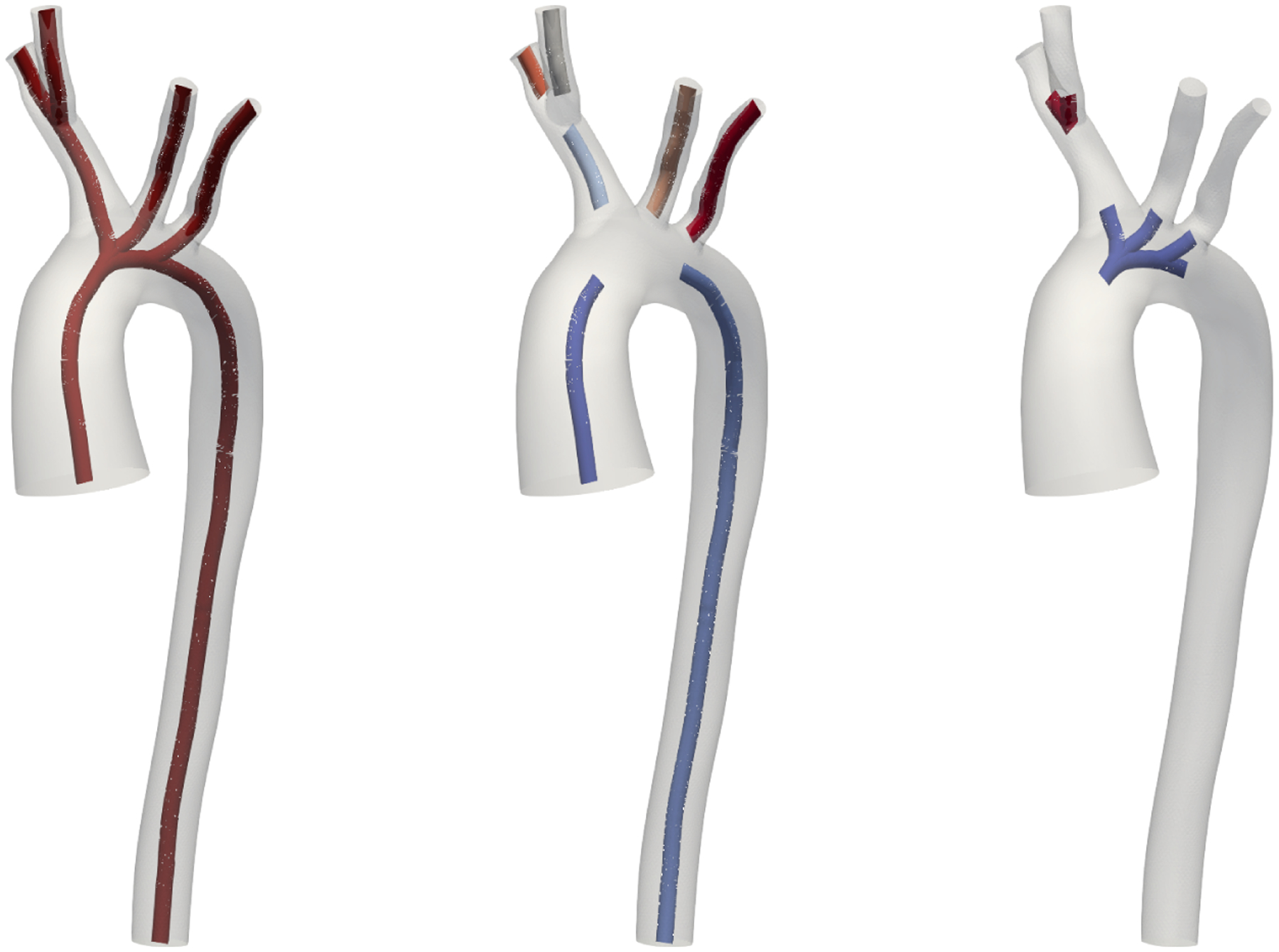
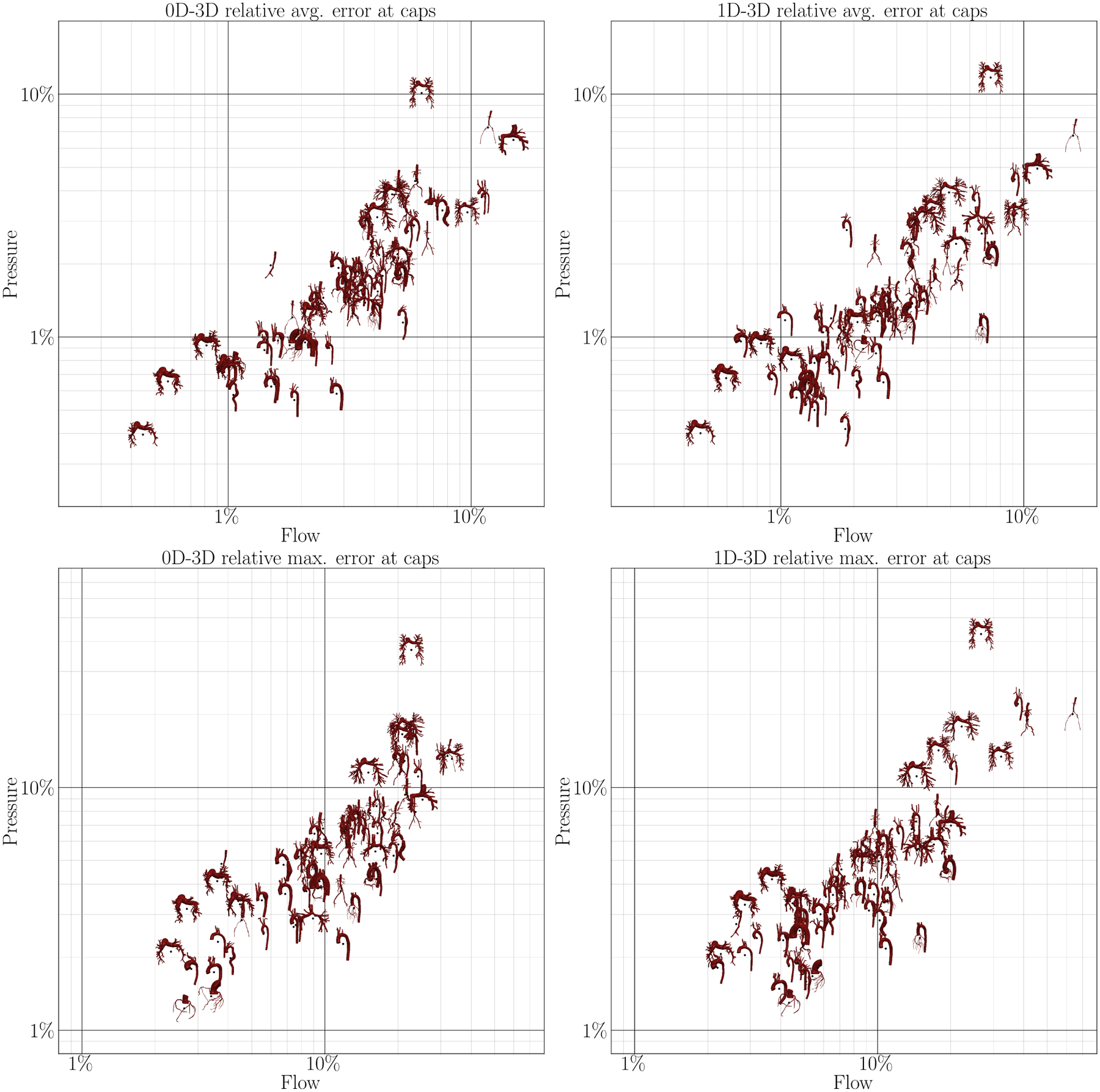
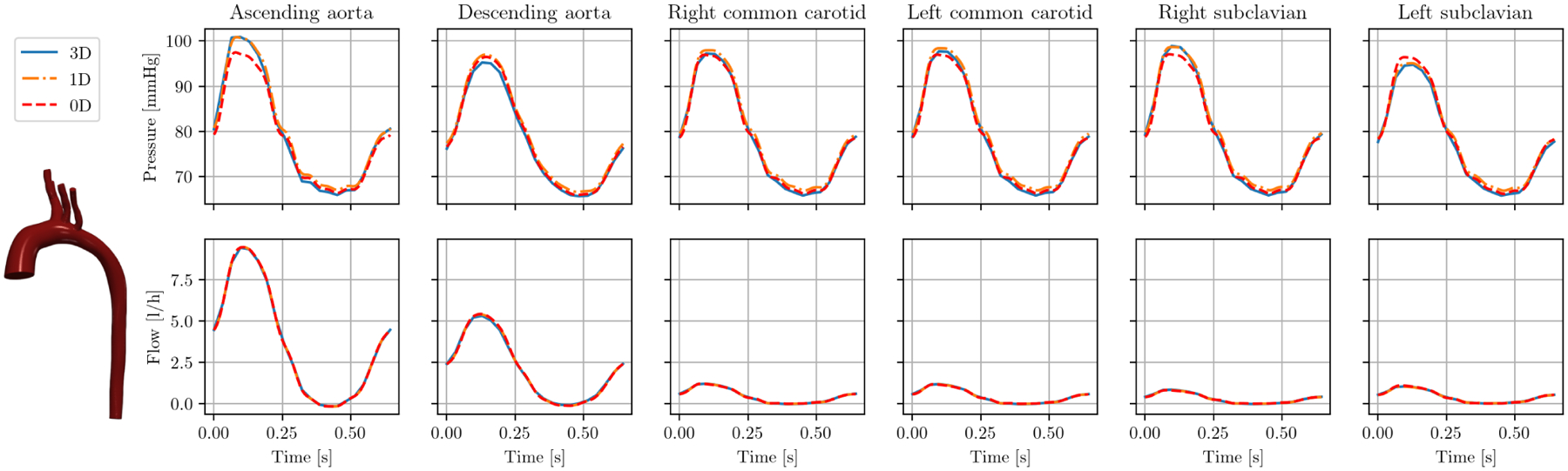
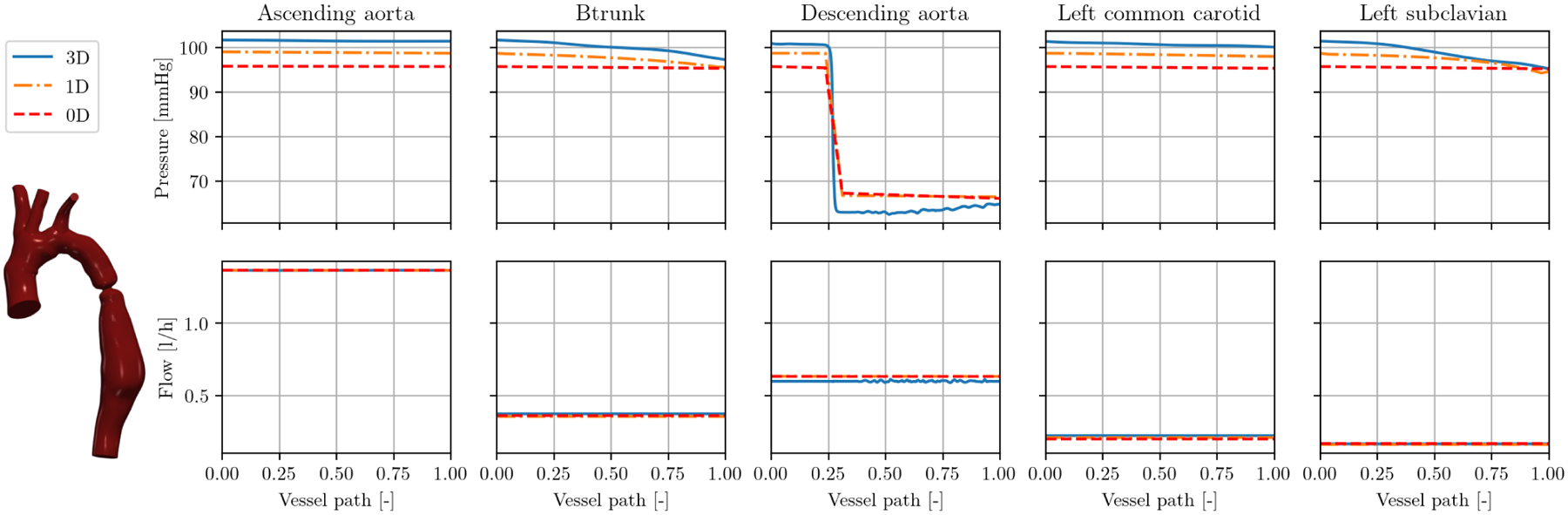
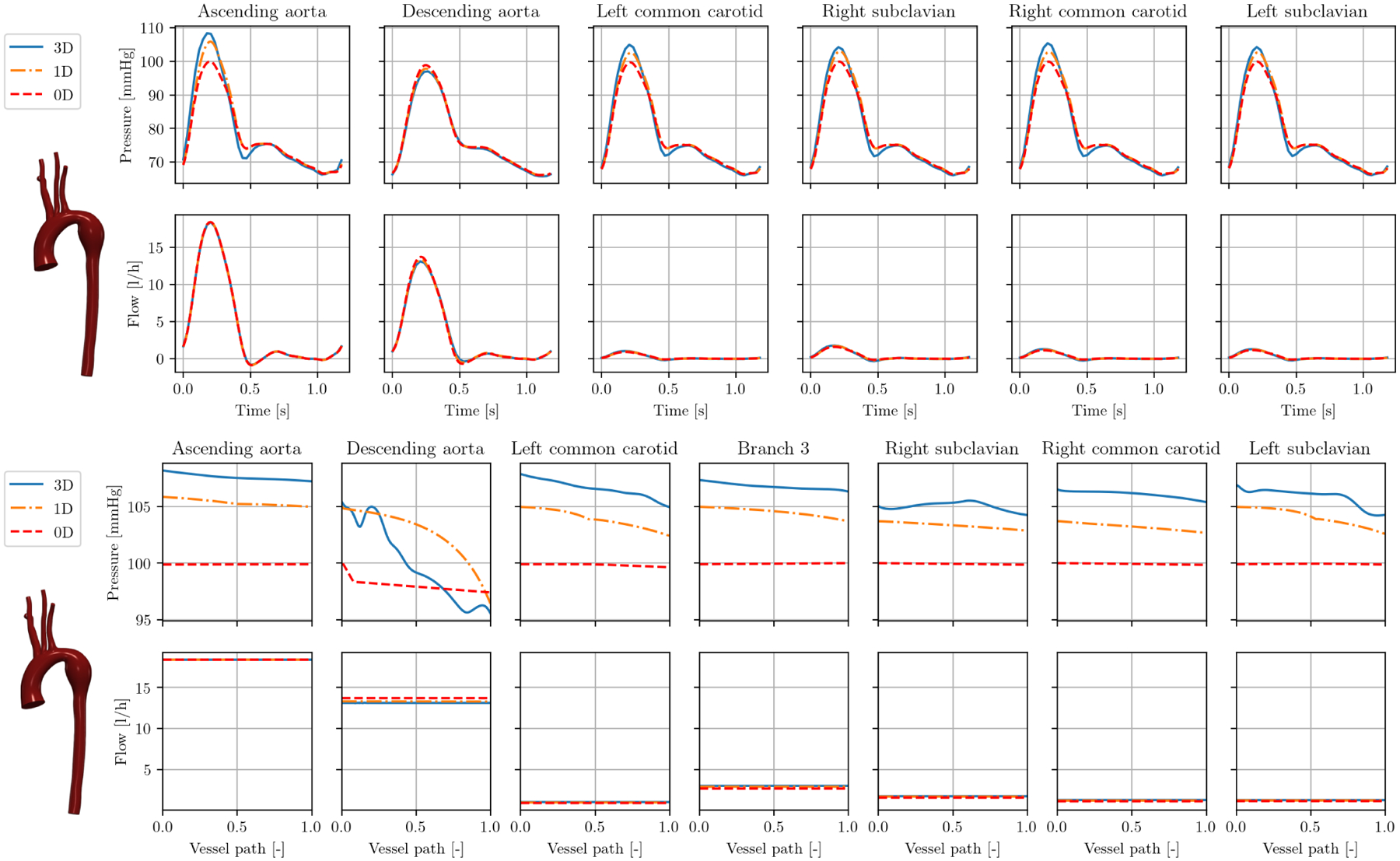
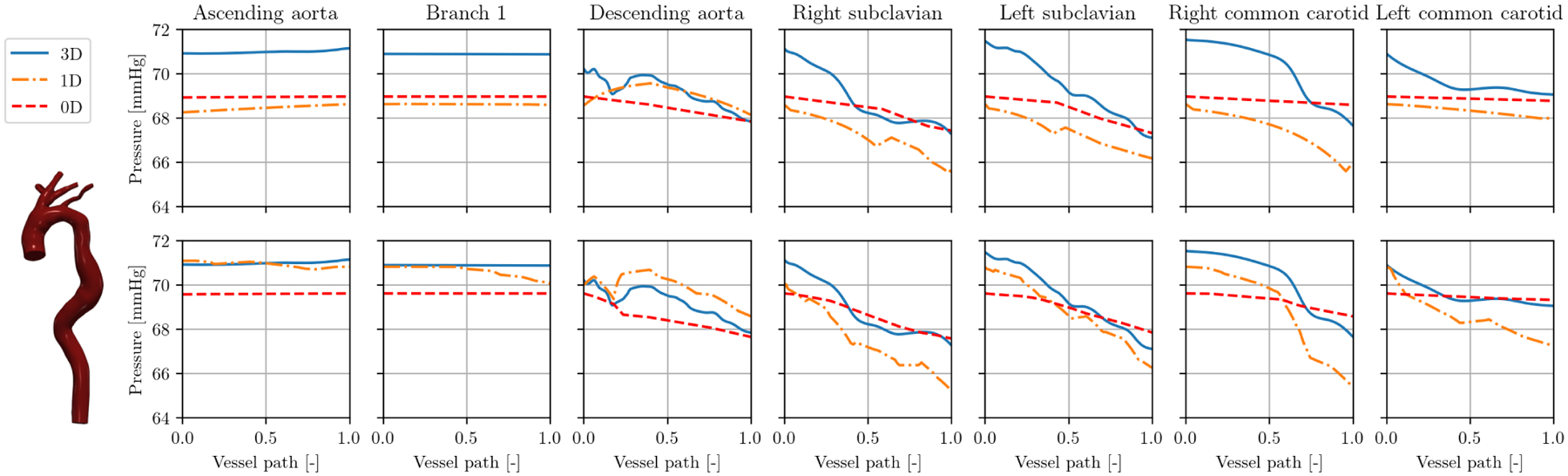
Three-dimensional (3D) cardiovascular fluid dynamics simulations typically require hours to days of computing time on a high-performance computing cluster. One-dimensional (1D) and lumped-parameter zero-dimensional (0D) models show great promise for accurately predicting blood bulk flow and pressure waveforms with only a fraction of the cost. They can also accelerate uncertainty quantification, optimization, and design parameterization studies. Despite several prior studies generating 1D and 0D models and comparing them to 3D solutions, these were typically limited to either 1D or 0D and a singular category of vascular anatomies. This work proposes a fully automated and openly available framework to generate and simulate 1D and 0D models from 3D patient-specific geometries, automatically detecting vessel junctions and stenosis segments. Our only input is the 3D geometry; we do not use any prior knowledge from 3D simulations. All computational tools presented in this work are implemented in the open-source software platform SimVascular. We demonstrate the reduced-order approximation quality against rigid-wall 3D solutions in a comprehensive comparison with N = 72 publicly available models from various anatomies, vessel types, and disease conditions. Relative average approximation errors of flows and pressures typically ranged from 1% to 10% for both 1D and 0D models, measured at the outlets of terminal vessel branches. In general, 0D model errors were only slightly higher than 1D model errors despite requiring only a third of the 1D runtime. Automatically generated ROMs can significantly speed up model development and shift the computational load from high-performance machines to personal computers.
三维(3D)心血管流体动力学模拟通常需要在高性能计算集群上花费数小时到数天的计算时间。一维(1D)和集中参数零维(0D)模型具有很大的优势,可以以较低的成本准确预测血液总流量和压力波形。它们还可以加速不确定性量化、优化和设计参数化研究。尽管之前有几项研究生成了 1D 和 0D 模型并将其与 3D 解决方案进行了比较,但这些研究通常仅限于 1D 或 0D 以及单一类型的血管解剖结构。这项工作提出了一种完全自动化且可公开获得的框架,可从 3D 患者特定几何形状生成和模拟 1D 和 0D 模型,自动检测血管结和狭窄段。我们的唯一输入是 3D 几何形状;我们不使用任何 3D 模拟的先验知识。本工作中提出的所有计算工具都在开源软件平台 SimVascular 中实现。我们在与来自各种解剖结构、血管类型和疾病状况的 72 个公开模型的全面比较中,针对刚性壁 3D 解决方案展示了降阶逼近的质量。在终端血管分支出口处测量的流量和压力的相对平均逼近误差通常在 1D 和 0D 模型中都在 1%到 10%之间。一般来说,尽管 0D 模型仅需要 1D 运行时间的三分之一,但 0D 模型的误差仅略高于 1D 模型的误差。自动生成的 ROM 可以显著加快模型开发速度,并将计算负载从高性能机器转移到个人计算机。