Department of Human Health and Nutritional Sciences, College of Biological Sciences, University of Guelph, 50 Stone Road East, Guelph, ON N1G 2W1, Canada.
Department of Biomedical Sciences, Neuromuscular Physiology Laboratory, University of Padua, Padua 35122, Italy.
Biol Open. 2022 Jul 15;11(7). doi: 10.1242/bio.059491. Epub 2022 Jul 25.
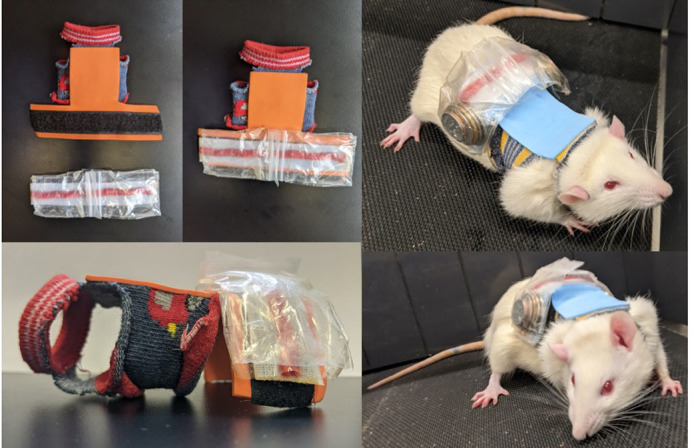
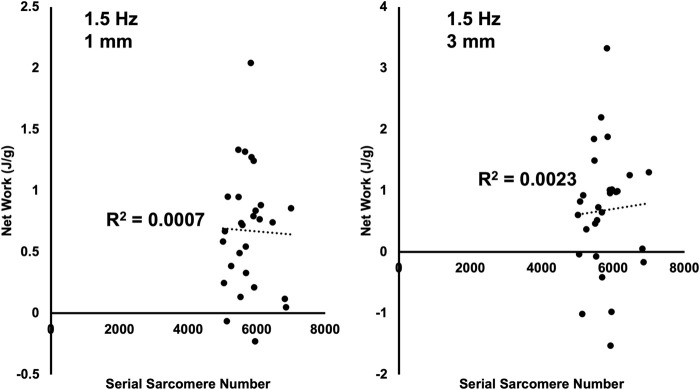
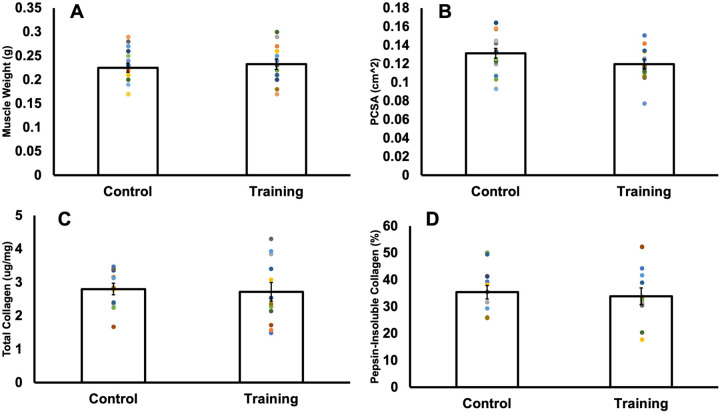
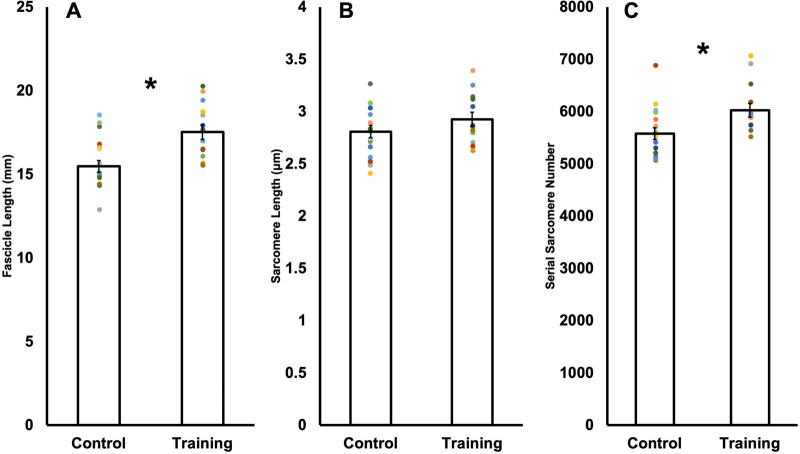
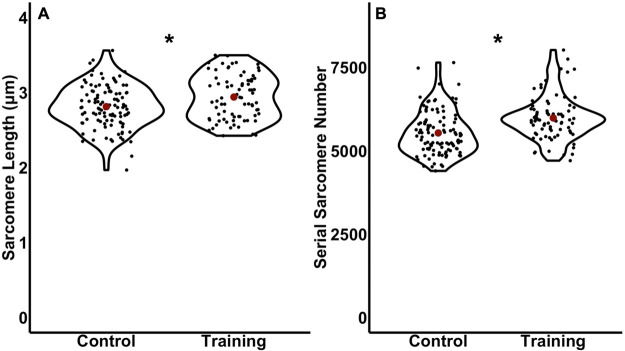
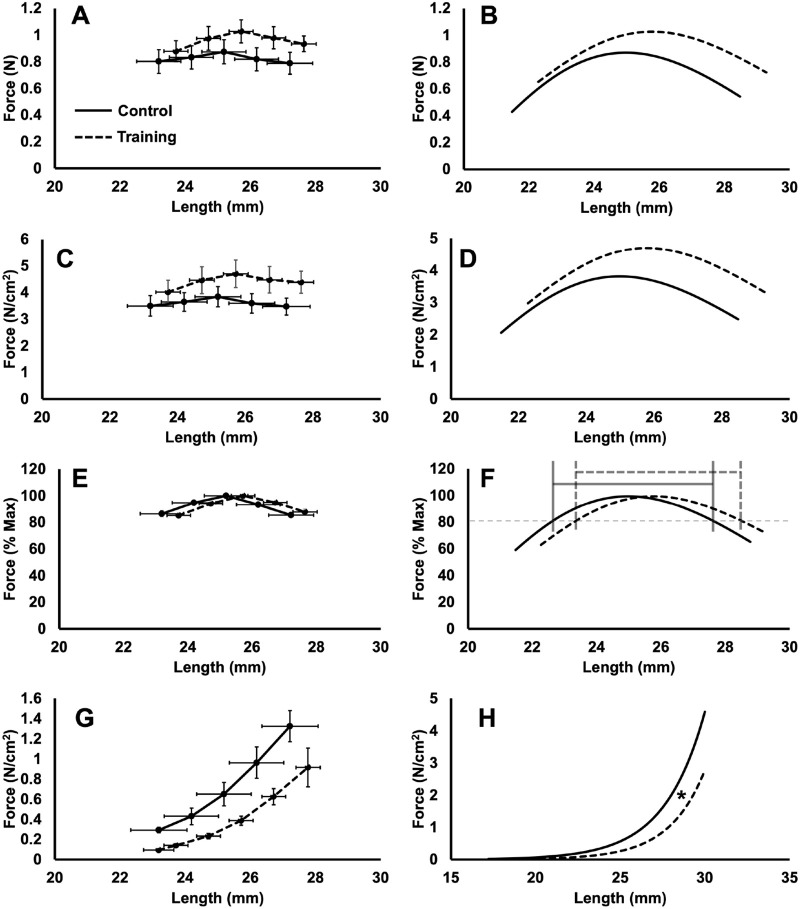
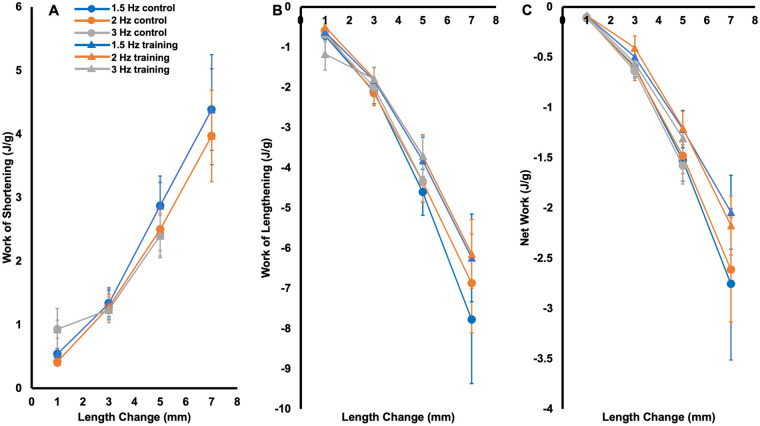
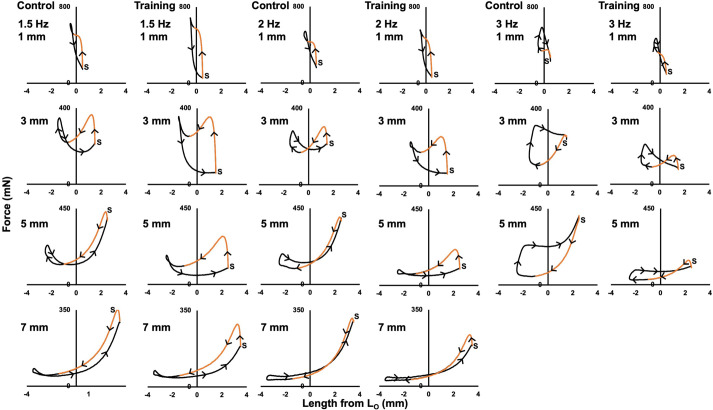
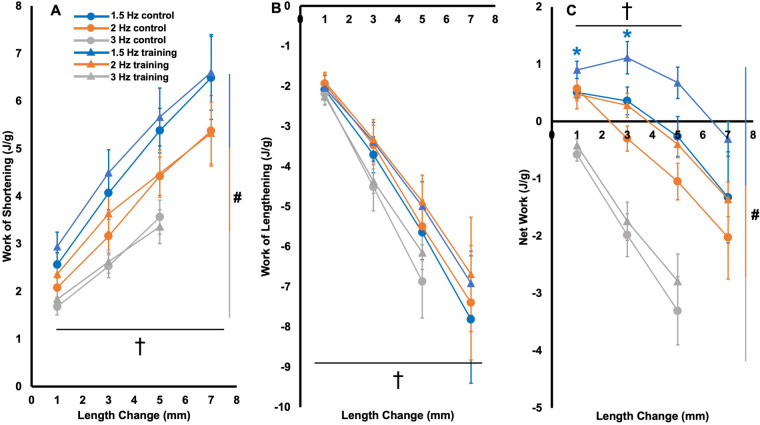
Increased serial sarcomere number (SSN) has been observed in rats following downhill running training due to the emphasis on active lengthening contractions; however, little is known about the influence on dynamic contractile function. Therefore, we employed 4 weeks of weighted downhill running training in rats, then assessed soleus SSN and work loop performance. We hypothesised trained rats would produce greater net work output during work loops due to a greater SSN. Thirty-one Sprague-Dawley rats were assigned to a training or sedentary control group. Weight was added during downhill running via a custom-made vest, progressing from 5-15% body mass. Following sacrifice, the soleus was dissected, and a force-length relationship was constructed. Work loops (cyclic muscle length changes) were then performed about optimal muscle length (LO) at 1.5-3-Hz cycle frequencies and 1-7-mm length changes. Muscles were then fixed in formalin at LO. Fascicle lengths and sarcomere lengths were measured to calculate SSN. Intramuscular collagen content and crosslinking were quantified via a hydroxyproline content and pepsin-solubility assay. Trained rats had longer fascicle lengths (+13%), greater SSN (+8%), and a less steep passive force-length curve than controls (P<0.05). There were no differences in collagen parameters (P>0.05). Net work output was greater (+78-209%) in trained than control rats for the 1.5-Hz work loops at 1 and 3-mm length changes (P<0.05), however, net work output was more related to maximum specific force (R2=0.17-0.48, P<0.05) than SSN (R2=0.03-0.07, P=0.17-0.86). Therefore, contrary to our hypothesis, training-induced sarcomerogenesis likely contributed little to the improvements in work loop performance. This article has an associated First Person interview with the first author of the paper.
在进行下坡跑步训练后,大鼠的肌节串联数量(SSN)增加,这是由于强调主动伸长收缩;然而,对于动态收缩功能的影响知之甚少。因此,我们在大鼠中进行了 4 周的负重下坡跑步训练,然后评估比目鱼肌的 SSN 和工作循环性能。我们假设,由于 SSN 增加,训练后的大鼠在工作循环中会产生更大的净功输出。31 只 Sprague-Dawley 大鼠被分配到训练组或久坐对照组。下坡跑步时通过定制背心增加重量,从 5%到 15%体重递增。处死大鼠后,分离比目鱼肌,构建力-长度关系。然后在最佳肌肉长度(LO)下进行工作循环(肌肉长度周期性变化),频率为 1.5-3Hz,长度变化为 1-7mm。肌肉在 LO 下用福尔马林固定。测量肌小节长度和肌节长度以计算 SSN。通过羟脯氨酸含量和胃蛋白酶溶解度测定来量化肌内胶原蛋白含量和交联。与对照组相比,训练组的肌小节长度更长(+13%),SSN 更高(+8%),被动力-长度曲线斜率更缓(P<0.05)。胶原蛋白参数无差异(P>0.05)。在 1 和 3mm 长度变化下,1.5Hz 工作循环中,训练组的净功输出高于对照组(+78%-209%)(P<0.05),但净功输出与最大比肌力的相关性更高(R2=0.17-0.48,P<0.05),而非 SSN(R2=0.03-0.07,P=0.17-0.86)。因此,与我们的假设相反,训练引起的肌节生成对工作循环性能的改善贡献很小。本文有一篇与论文第一作者的相关第一人称访谈。