Department of Comparative Biosciences, University of Wisconsin-Madison, Madison, WI 53706, USA.
School of Veterinary Medicine, University of Wisconsin-Madison, Madison, WI 53706, USA.
Cells. 2021 Sep 17;10(9):2459. doi: 10.3390/cells10092459.
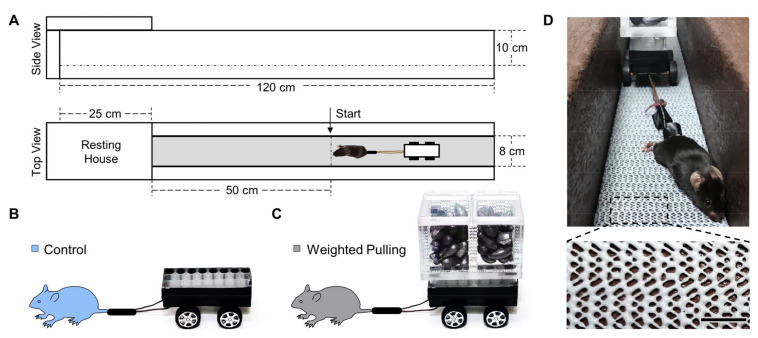
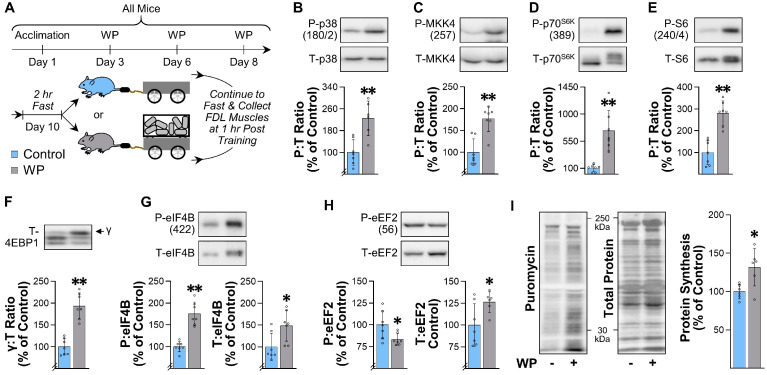
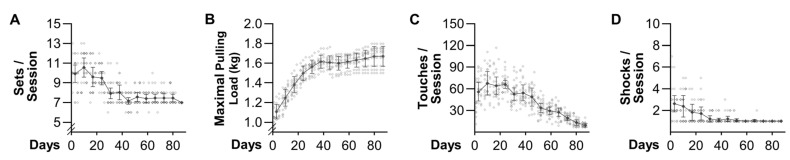
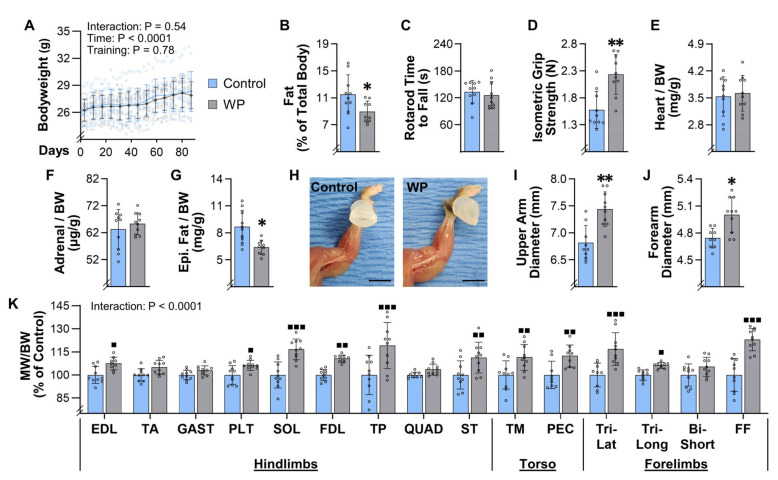
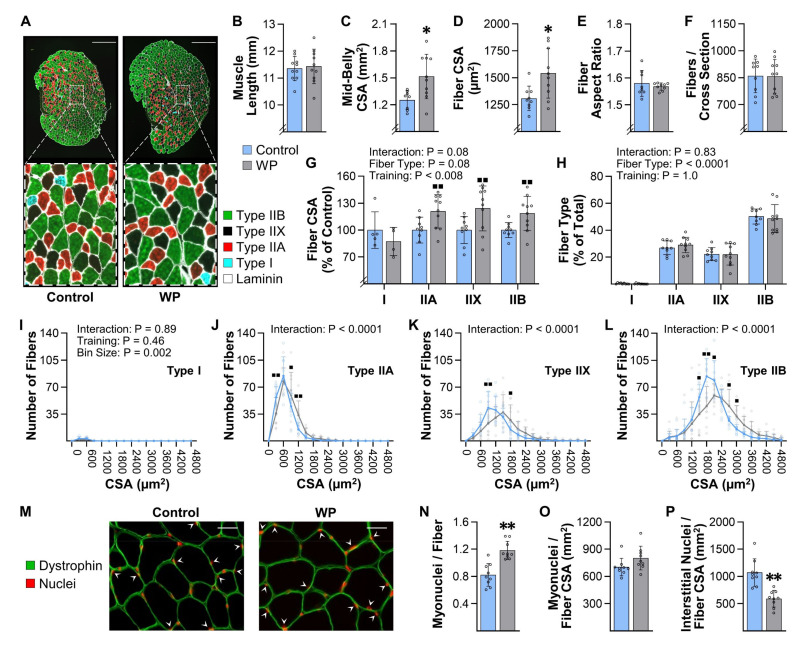
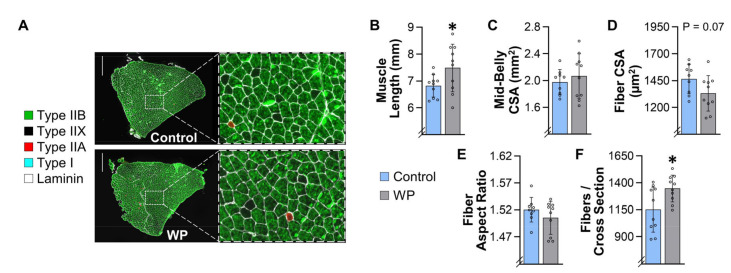
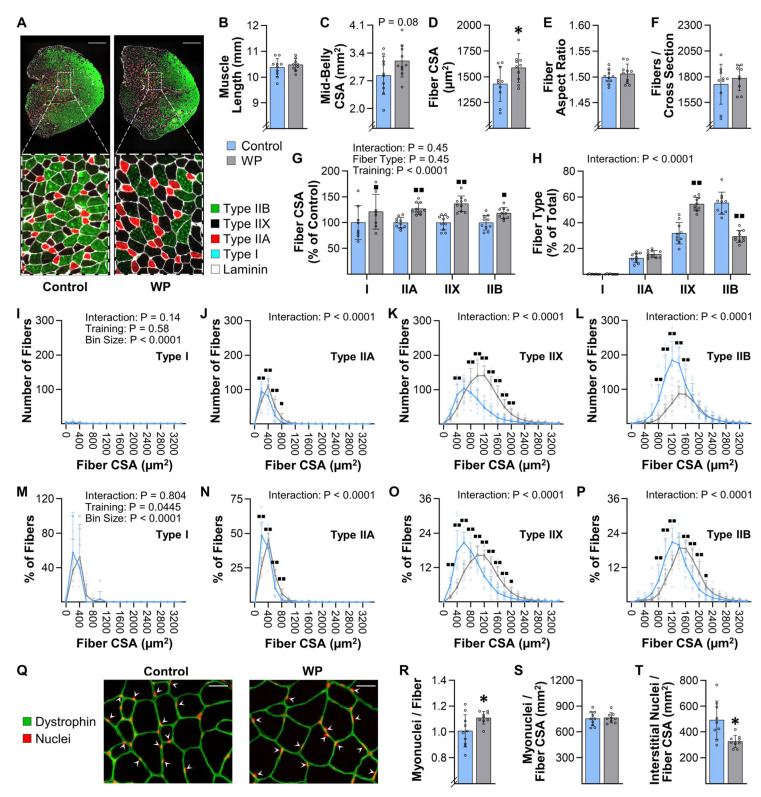
This study describes a mouse model of progressive resistance exercise that utilizes a full-body/multi-joint exercise (weight pulling) along with a training protocol that mimics a traditional human paradigm (three training sessions per week, ~8-12 repetitions per set, 2 min of rest between sets, approximately two maximal-intensity sets per session, last set taken to failure, and a progressive increase in loading that is based on the individual's performance). We demonstrate that weight pulling can induce an increase in the mass of numerous muscles throughout the body. The relative increase in muscle mass is similar to what has been observed in human studies, and is associated with the same type of long-term adaptations that occur in humans (e.g., fiber hypertrophy, myonuclear accretion, and, in some instances, a fast-to-slow transition in Type II fiber composition). Moreover, we demonstrate that weight pulling can induce the same type of acute responses that are thought to drive these long-term adaptations (e.g., the activation of signaling through mTORC1 and the induction of protein synthesis at 1 h post-exercise). Collectively, the results of this study indicate that weight pulling can serve as a highly translatable mouse model of progressive resistance exercise.
本研究描述了一种渐进式抗阻运动的小鼠模型,该模型采用全身/多关节运动(负重拖拽),并结合了一种模拟传统人类范式的训练方案(每周训练三次,每组 8-12 次重复,组间休息 2 分钟,每次训练大约进行两到三组最大强度,最后一组直至力竭,且加载量根据个体表现进行逐步增加)。我们证明了负重拖拽可以引起全身许多肌肉质量的增加。肌肉质量的相对增加与人类研究中观察到的相似,并且与人类中发生的相同类型的长期适应相关(例如,纤维肥大、核内移、以及在某些情况下,II 型纤维组成的快-慢转变)。此外,我们证明了负重拖拽可以引起被认为驱动这些长期适应的相同类型的急性反应(例如,mTORC1 信号的激活和运动后 1 小时蛋白质合成的诱导)。总的来说,这项研究的结果表明,负重拖拽可以作为一种高度可转化的渐进式抗阻运动的小鼠模型。