Laboratory of Extremophiles Biology, Department of Microbiology, Faculty of Biology, University of Gdansk, 80-308 Gdansk, Poland.
Collection of Plasmids and Microorganisms, Faculty of Biology, University of Gdansk, 80-308 Gdansk, Poland.
Int J Mol Sci. 2022 Jul 19;23(14):7945. doi: 10.3390/ijms23147945.
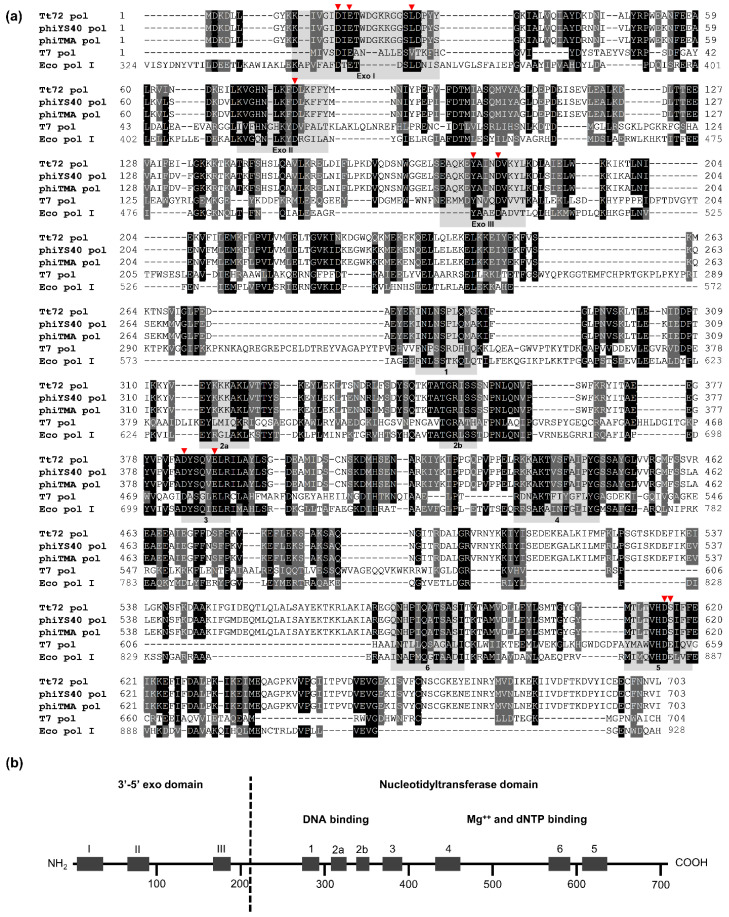
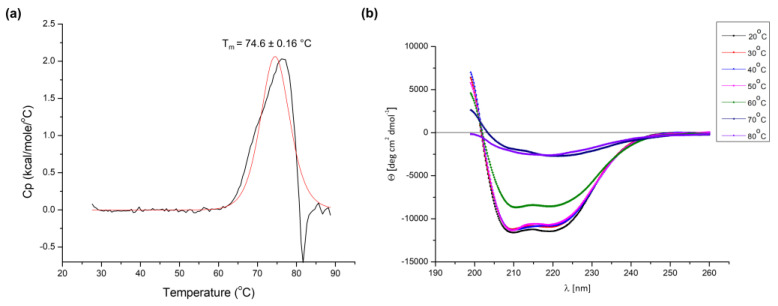
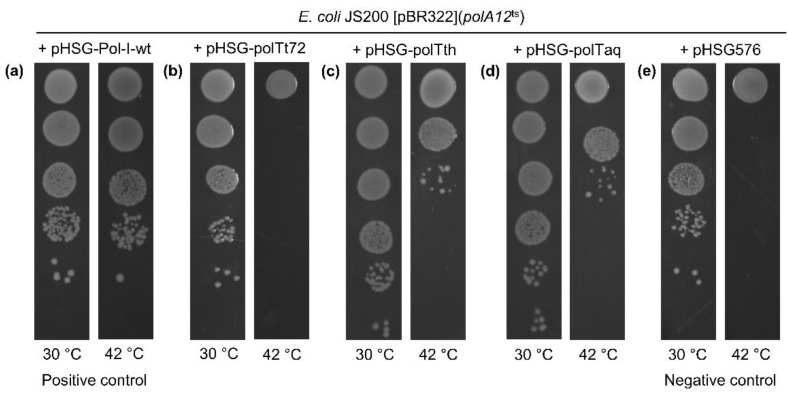
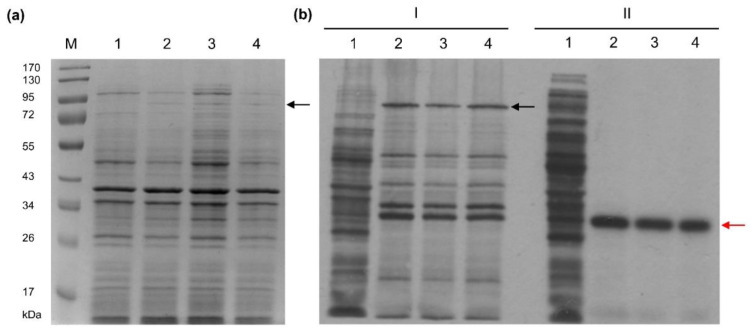
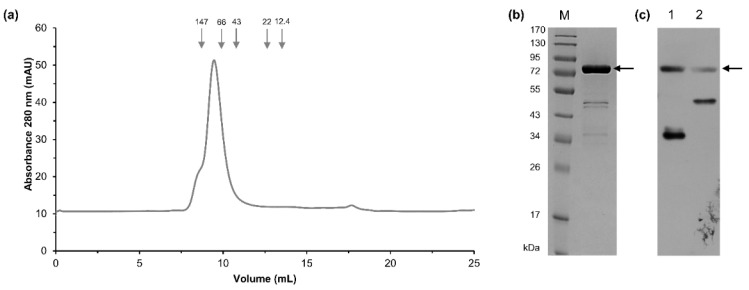
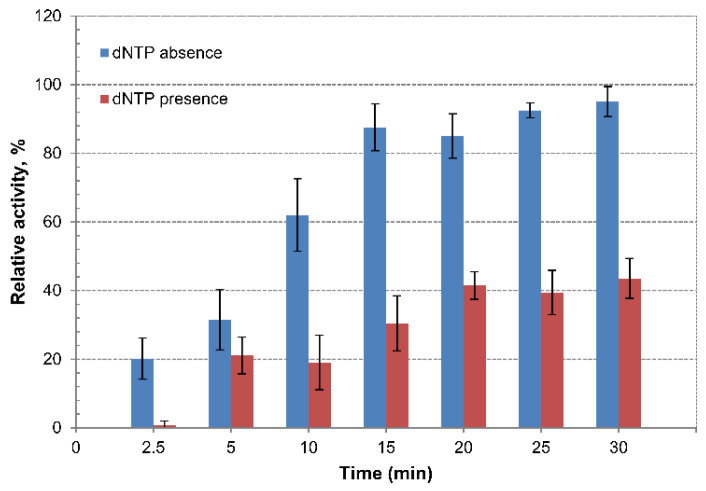
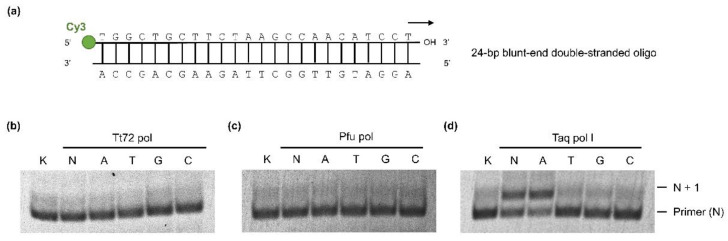
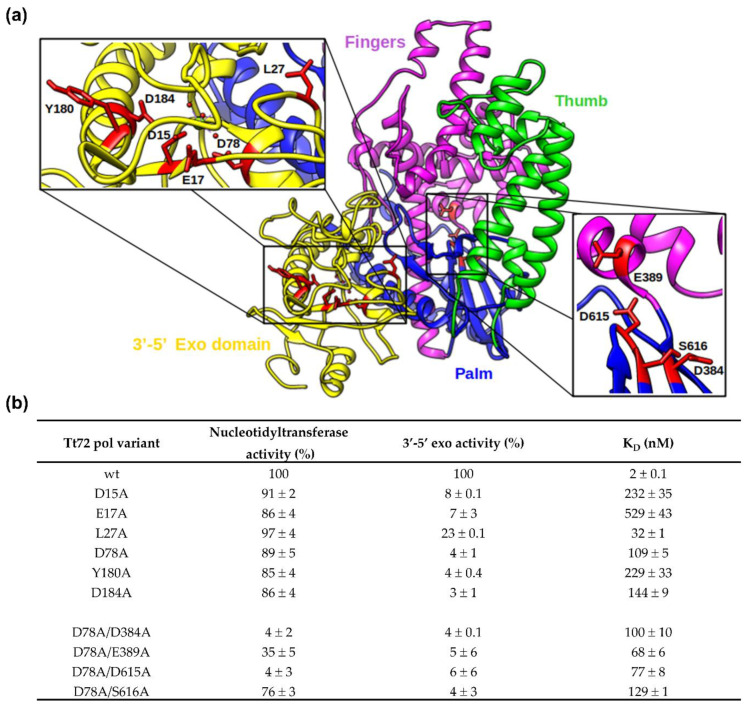
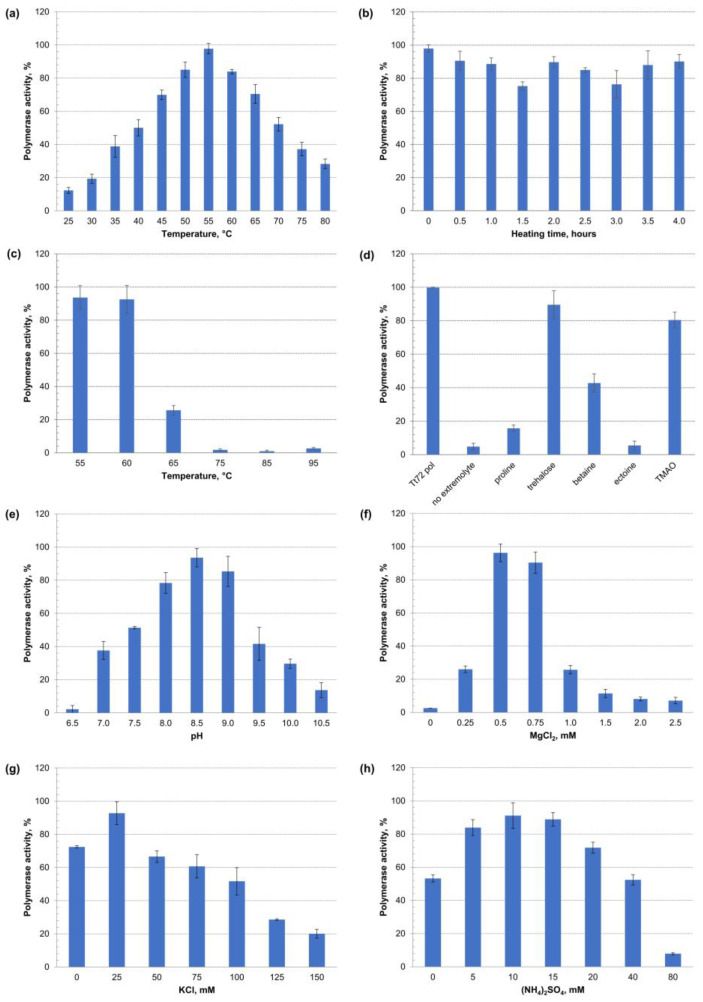
We present a structural and functional analysis of the DNA polymerase of thermophilic Thermus thermophilus MAT72 phage vB_Tt72. The enzyme shows low sequence identity (<30%) to the members of the type-A family of DNA polymerases, except for two yet uncharacterized DNA polymerases of T. thermophilus phages: φYS40 (91%) and φTMA (90%). The Tt72 polA gene does not complement the Escherichia colipolA− mutant in replicating polA-dependent plasmid replicons. It encodes a 703-aa protein with a predicted molecular weight of 80,490 and an isoelectric point of 5.49. The enzyme contains a nucleotidyltransferase domain and a 3′-5′ exonuclease domain that is engaged in proofreading. Recombinant enzyme with His-tag at the N-terminus was overproduced in E. coli, subsequently purified by immobilized metal affinity chromatography, and biochemically characterized. The enzyme exists in solution in monomeric form and shows optimum activity at pH 8.5, 25 mM KCl, and 0.5 mM Mg2+. Site-directed analysis proved that highly-conserved residues D15, E17, D78, D180, and D184 in 3′-5′ exonuclease and D384 and D615 in the nucleotidyltransferase domain are critical for the enzyme’s activity. Despite the source of origin, the Tt72 DNA polymerase has not proven to be highly thermoresistant, with a temperature optimum at 55 °C. Above 60 °C, the rapid loss of function follows with no activity > 75 °C. However, during heat treatment (10 min at 75 °C), trehalose, trimethylamine N-oxide, and betaine protected the enzyme against thermal inactivation. A midpoint of thermal denaturation at Tm = 74.6 °C (ΔHcal = 2.05 × 10⁴ cal mol−1) and circular dichroism spectra > 60 °C indicate the enzyme’s moderate thermal stability.
我们对嗜热栖热菌 MAT72 噬菌体 vB_Tt72 的 DNA 聚合酶进行了结构和功能分析。该酶与 A 型 DNA 聚合酶家族的成员的序列同一性较低(<30%),除了两种尚未表征的嗜热菌噬菌体的 DNA 聚合酶:φYS40(91%)和 φTMA(90%)。Tt72 polA 基因不能在复制 polA 依赖性质粒复制子中补充大肠杆菌 polA−突变体。它编码一个 703 个氨基酸的蛋白质,预测分子量为 80490,等电点为 5.49。该酶包含一个核苷酸转移酶结构域和一个参与校对的 3′-5′外切核酸酶结构域。在大肠杆菌中带有 N 端 His 标签的重组酶大量表达,然后通过固定化金属亲和层析纯化,并进行了生化特性分析。该酶以单体形式存在于溶液中,在 pH8.5、25mM KCl 和 0.5mM Mg2+下具有最佳活性。定点分析证明,3′-5′外切核酸酶中高度保守的残基 D15、E17、D78、D180 和 D184 以及核苷酸转移酶结构域中的 D384 和 D615 对酶的活性至关重要。尽管来源不同,但 Tt72 DNA 聚合酶并没有表现出高度的耐热性,最适温度为 55°C。超过 60°C 时,酶的功能迅速丧失,>75°C 时无活性。然而,在热处理(75°C 下 10 分钟)过程中,海藻糖、三甲胺 N-氧化物和甜菜碱可保护酶免受热失活。中点热变性 Tm=74.6°C(ΔHcal=2.05×10⁴ cal mol−1)和>60°C 的圆二色性谱表明该酶具有中等的热稳定性。