Hobi Stefan, Cafarchia Claudia, Romano Valentina, Barrs Vanessa R
Department of Veterinary Clinical Sciences, Jockey Club College of Veterinary Medicine and Life Sciences, City University, Tat Chee Avenue, Kowloon, Hong Kong, China.
Department of Veterinary Medicine, University of Bari, Str. prov. per Casamassima Km 3, Valenzano, (Bari), 70010, Italy.
J Fungi (Basel). 2022 Jul 4;8(7):708. doi: 10.3390/jof8070708.
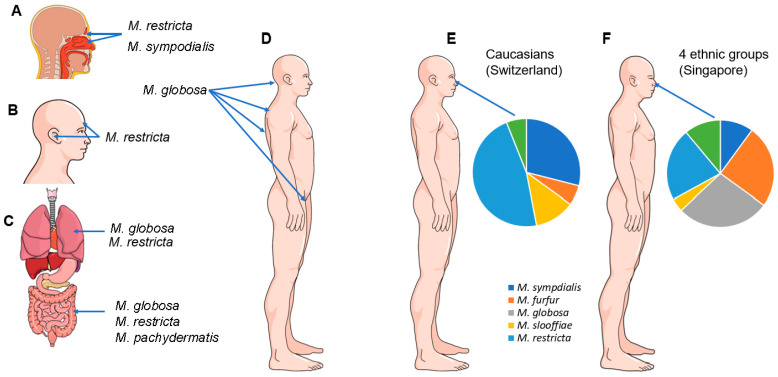
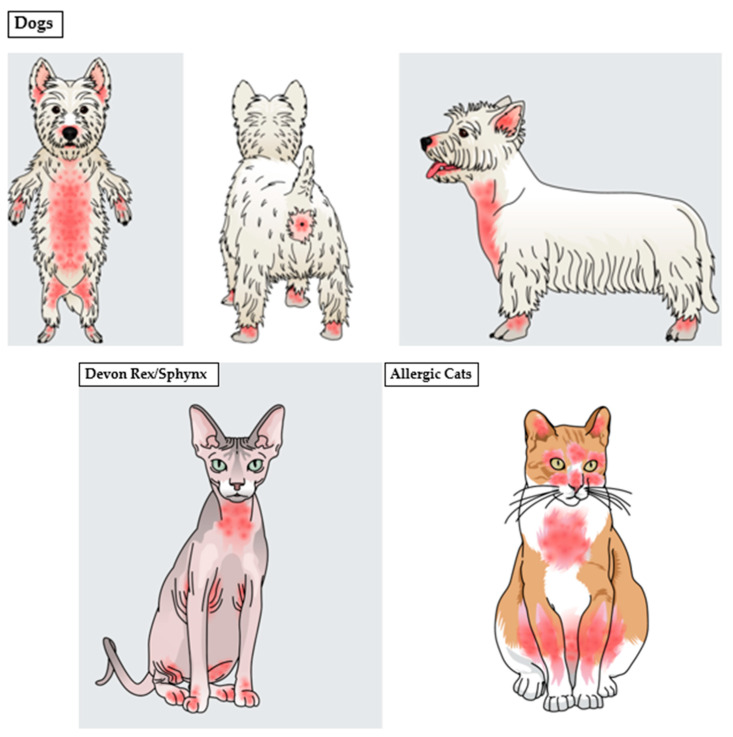
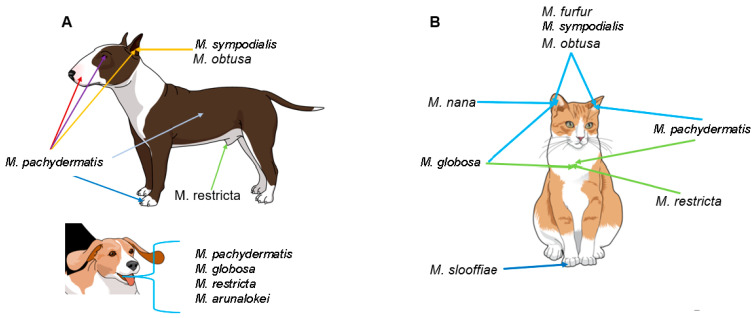
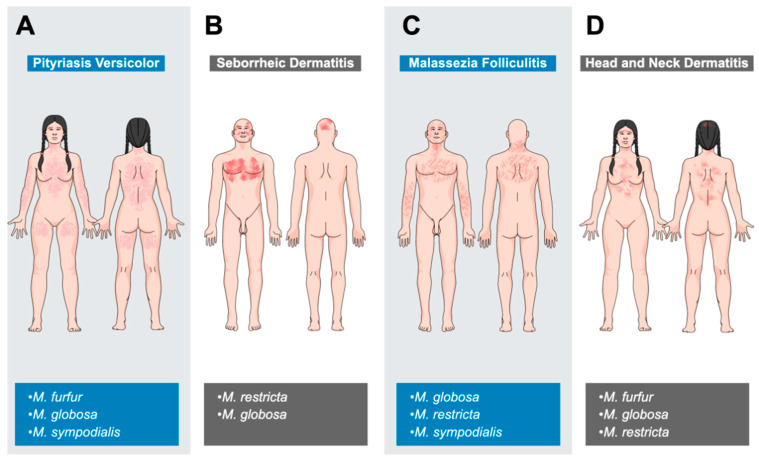
spp. are commensals of the skin, oral/sinonasal cavity, lower respiratory and gastrointestinal tract. Eighteen species have been recovered from humans, other mammals and birds. They can also be isolated from diverse environments, suggesting an evolutionary trajectory of adaption from an ecological niche in plants and soil to the mucocutaneous ecosystem of warm-blooded vertebrates. In humans, dogs and cats, -associated dermatological conditions share some commonalities. Otomycosis is common in companion animals but is rare in humans. Systemic infections, which are increasingly reported in humans, have yet to be recognized in animals. species have also been identified as pathogenetic contributors to some chronic human diseases. While species are host-adapted, some species are zoophilic and can cause fungemia, with outbreaks in neonatal intensive care wards associated with temporary colonization of healthcare worker's hands from contact with their pets. Although standardization is lacking, susceptibility testing is usually performed using a modified broth microdilution method. Antifungal susceptibility can vary depending on species, body location, infection type, disease duration, presence of co-morbidities and immunosuppression. Antifungal resistance mechanisms include biofilm formation, mutations or overexpression of , overexpression of efflux pumps and gene rearrangements or overexpression in chromosome 4.
某些物种是皮肤、口腔/鼻窦腔、下呼吸道和胃肠道的共生菌。已从人类、其他哺乳动物和鸟类中分离出18个物种。它们也可从各种环境中分离出来,这表明其从植物和土壤中的生态位向温血脊椎动物的粘膜皮肤生态系统适应的进化轨迹。在人类、狗和猫中,与某些物种相关的皮肤病有一些共同之处。耳霉菌病在伴侣动物中很常见,但在人类中很少见。人类中越来越多地报告的全身感染在动物中尚未得到确认。某些物种也被确定为一些慢性人类疾病的致病因素。虽然某些物种具有宿主适应性,但一些物种是嗜动物性的,可引起真菌血症,新生儿重症监护病房的疫情与医护人员因接触宠物而导致手部暂时定植有关。尽管缺乏标准化,但药敏试验通常使用改良的肉汤微量稀释法进行。抗真菌药敏性可能因物种、身体部位、感染类型、疾病持续时间、合并症和免疫抑制的存在而有所不同。抗真菌耐药机制包括生物膜形成、某些基因的突变或过表达、外排泵的过表达以及4号染色体中的基因重排或过表达。