Feng Yingming, Kreslavski Vladimir D, Shmarev Alexander N, Ivanov Anatoli A, Zharmukhamedov Sergey K, Kosobryukhov Anatoliy, Yu Min, Allakhverdiev Suleyman I, Shabala Sergey
International Research Centre for Environmental Membrane Biology, Department of Horticulture, Foshan University, Foshan 528000, China.
Institute of Basic Biological Problems, Russian Academy of Sciences, Institutskaya Street 2, Pushchino 142290, Russia.
Plants (Basel). 2022 Jul 21;11(14):1894. doi: 10.3390/plants11141894.
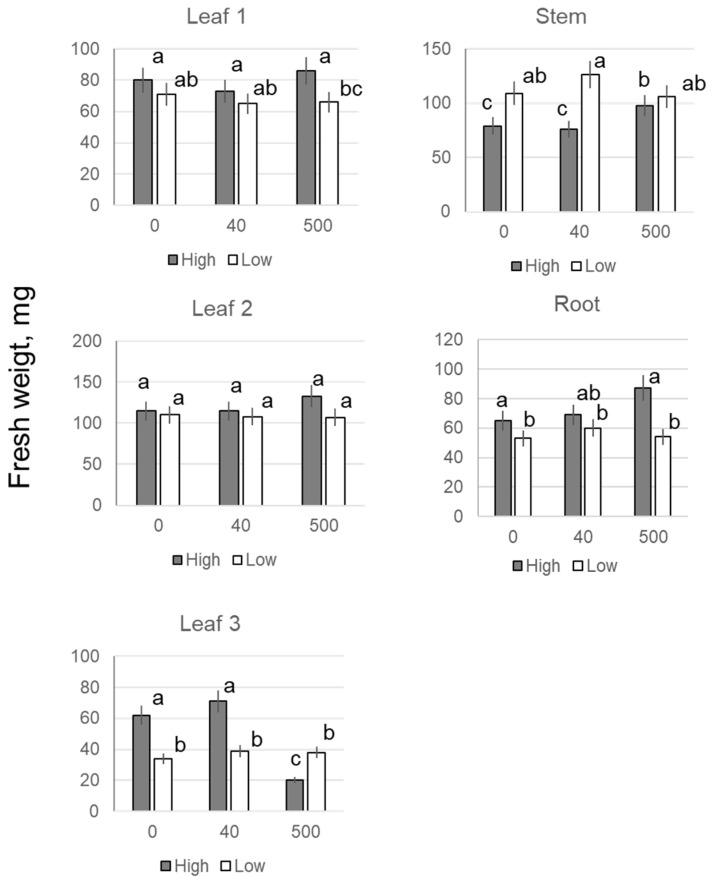
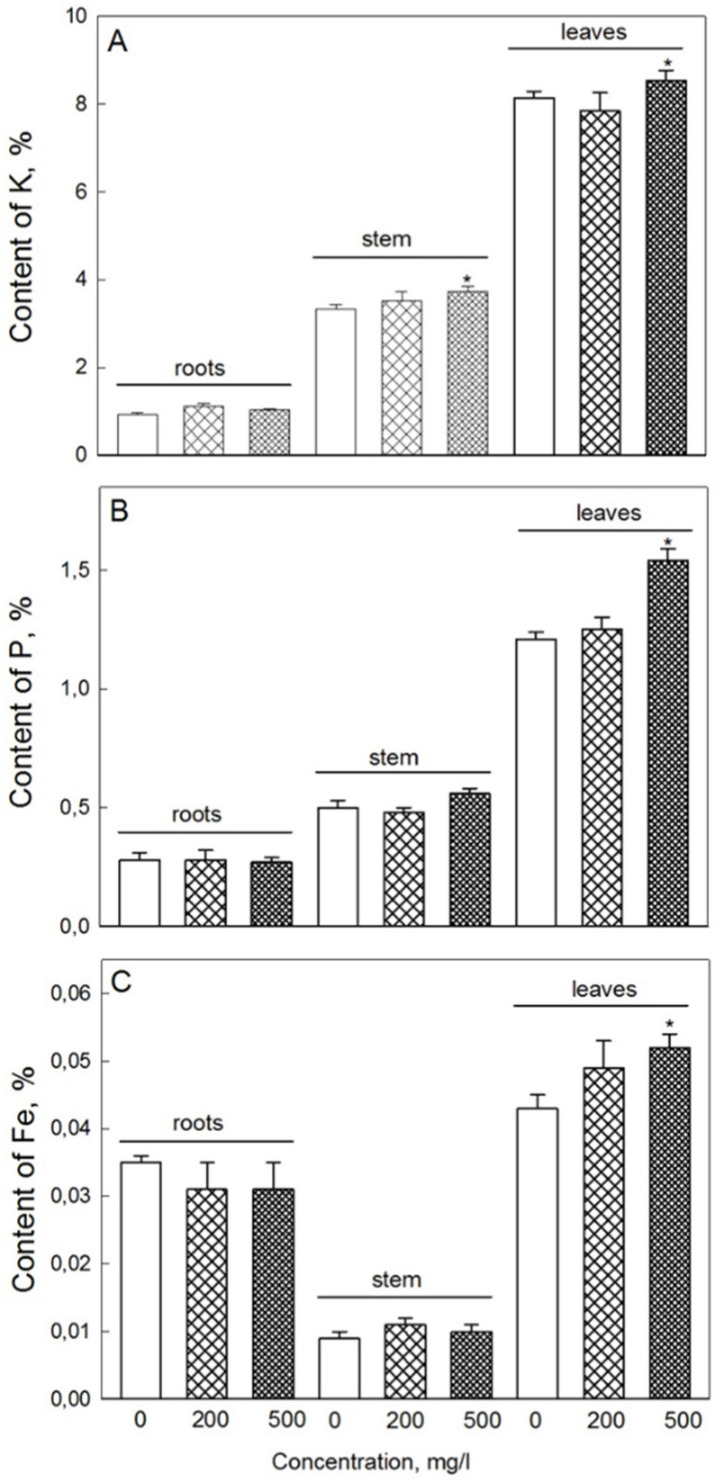
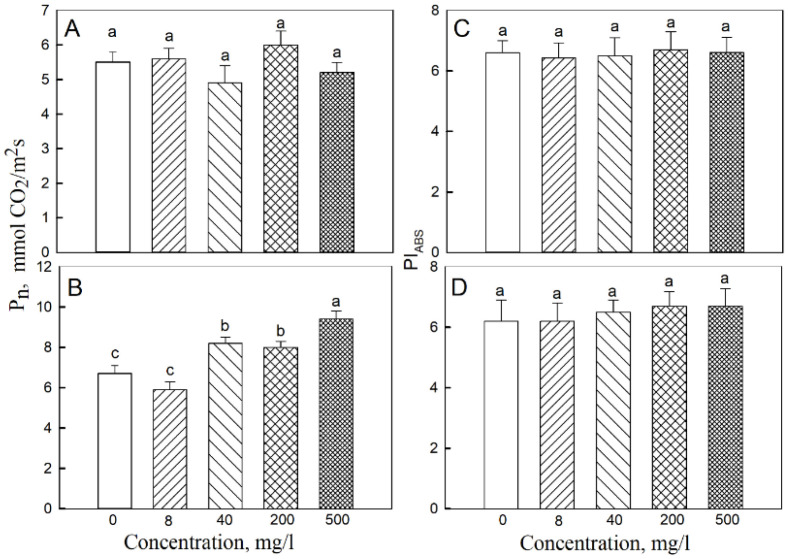
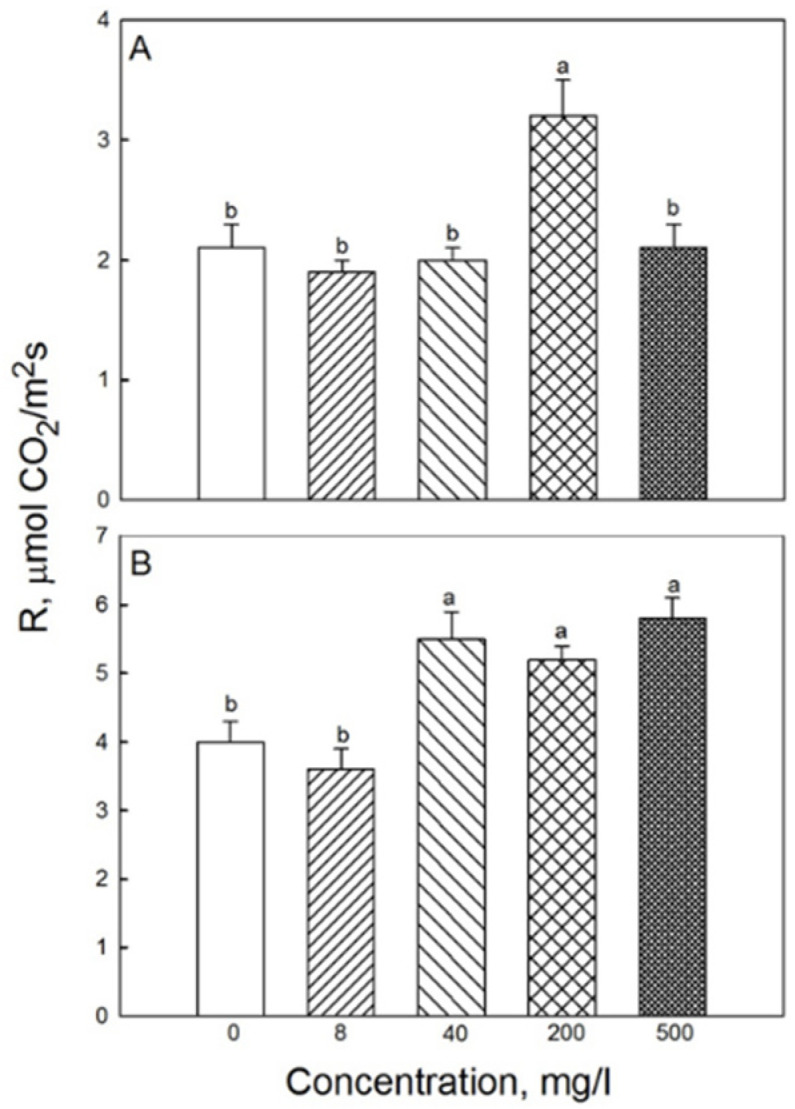
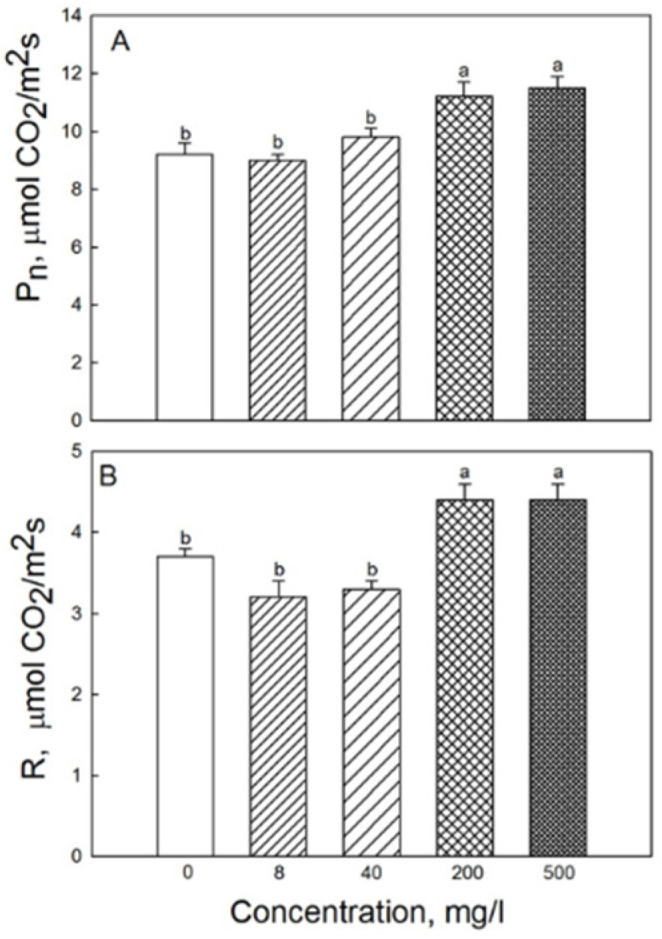
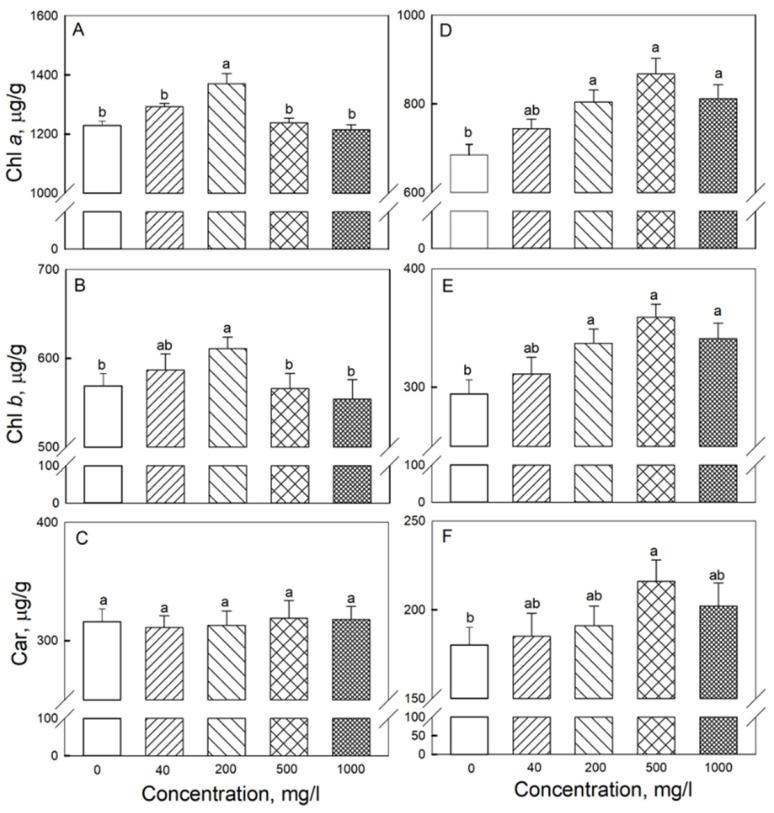
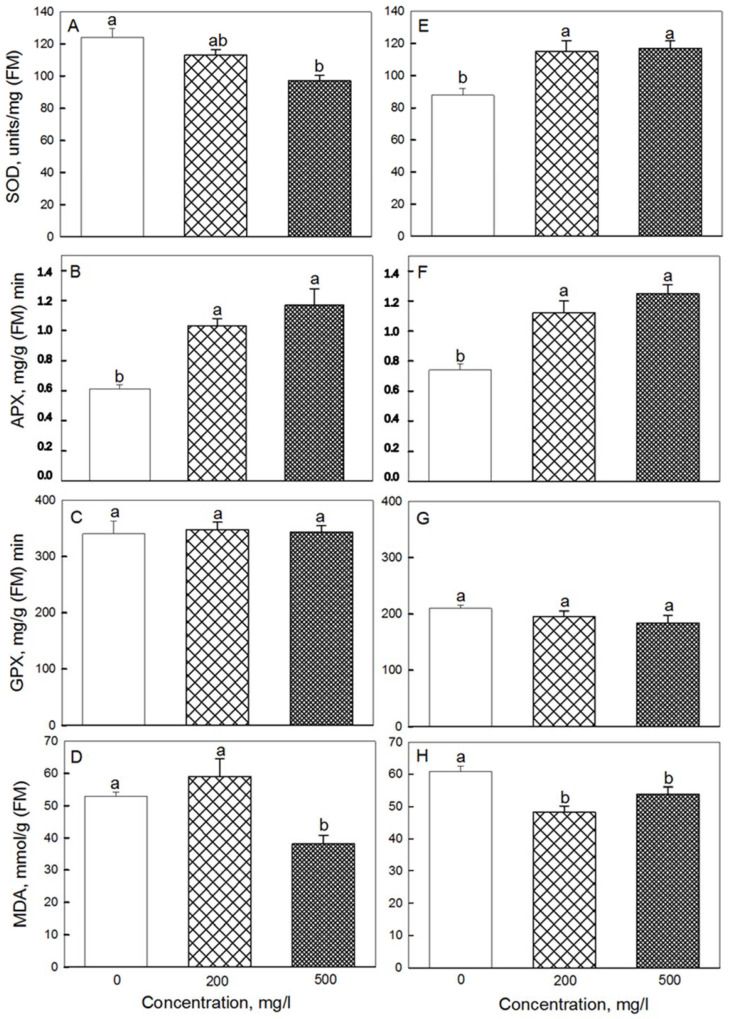
Engineered nanoparticles (NPs) are considered potential agents for agriculture as fertilizers and growth enhancers. However, their action spectrum differs strongly, depending on the type of NP, its concentrations, and plant species per se, ranging from growth stimulation to toxicity. This work aimed to investigate effects of iron oxide (FeO) NPs on growth, photosynthesis, respiration, antioxidant activity, and leaf mineral content of wheat plants. Wheat seeds were treated with NP for 3 h and plants were grown in the soil at two light intensities, 120 and 300 μmol (photons) m·s, followed by physiological assessment at several time points. High NP treatment (200 and 500 mg·L) enhanced plant growth, photosynthesis and respiration, as well as increasing the content of photosynthetic pigments in leaves. This effect depended on both the light intensity during plant growth and the age of the plants. Regardless of concentration and light intensity, an effect of NPs on the primary photochemical processes was not observed. Seed treatment with NP also led to increased activity of ascorbate peroxidase and reduced malondialdehyde (MDA) content in roots and leaves. Treatment with FeO also led to noticeable increases in the leaf Fe, P, and K content. It is concluded that iron oxide (FeO)-based NP could enhance plant growth by improving photosynthetic performance and the availability of Fe and P.
工程纳米颗粒(NPs)被认为是农业中作为肥料和生长促进剂的潜在物质。然而,其作用范围差异很大,这取决于纳米颗粒的类型、浓度以及植物种类本身,从生长刺激到毒性不等。这项工作旨在研究氧化铁(FeO)纳米颗粒对小麦植株生长、光合作用、呼吸作用、抗氧化活性和叶片矿物质含量的影响。小麦种子用纳米颗粒处理3小时,植株在两种光照强度(120和300 μmol(光子)m·s)下在土壤中生长,随后在几个时间点进行生理评估。高浓度纳米颗粒处理(200和500 mg·L)促进了植株生长、光合作用和呼吸作用,同时增加了叶片中光合色素的含量。这种效果取决于植株生长期间的光照强度和植株的年龄。无论浓度和光照强度如何,均未观察到纳米颗粒对初级光化学过程有影响。用纳米颗粒处理种子还导致根和叶中抗坏血酸过氧化物酶活性增加,丙二醛(MDA)含量降低。用FeO处理还导致叶片中铁、磷和钾含量显著增加。得出的结论是,基于氧化铁(FeO)的纳米颗粒可以通过改善光合性能以及铁和磷的有效性来促进植株生长。