Sultan Rabab Hussain, Elesawy Basem H, Ali Tarek M, Abdallah Maged, Assal Hebatallah Hany, Ahmed Amr E, Ahmed Osama M
Biotechnology and Life Sciences Department, Faculty of Postgraduate Studies for Advanced Sciences, Beni-Suef University, Beni-Suef 62511, Egypt.
Department of Pathology, College of Medicine, Taif University, P.O. Box 11099, Taif 21944, Saudi Arabia.
Vaccines (Basel). 2022 Jul 11;10(7):1106. doi: 10.3390/vaccines10071106.
COVID-19 impacts the cardiovascular system resulting in myocardial damage, and also affects the kidneys leading to renal dysfunction. This effect is mostly through the binding with angiotensin-converting enzyme 2 (ACE2) and Neuropilin-1 (NRP-l) receptors. Toll-Like Receptors (TLRs) typically combine with microbial pathogens and provoke an inflammatory response.
This work aims to compare the changes in kidney and heart function bioindicators and expressions of TLRs (TLR2 and TLR2) as well as ACE2 and NRP-l receptors in moderate and severe COVID-19 patients. The correlations between kidney and heart function bioindicators and expressions of these receptors are also studied.
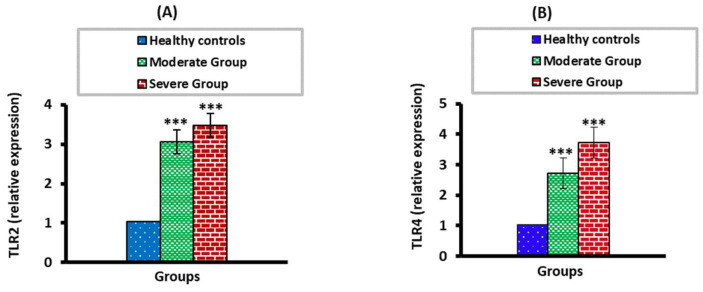
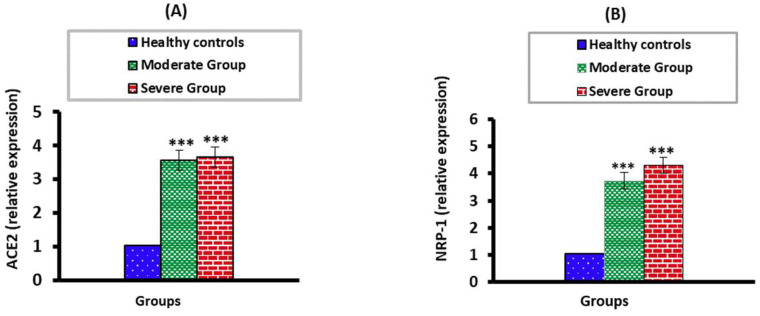
In this study, 50 healthy control and 100 COVID-19 patients (55 males and 45 females) were enrolled. According to WHO guidelines, these participants were divided into severe (50 cases) and moderate (50 cases). Serum creatinine, blood urea, CK-MB, LDH, and Troponin I were estimated. We measured the gene expression for Toll-Like Receptors (TLR2 and TLR4), ACE2, and NRP-1 in the blood samples using quantitative real-time PCR (qRT-PCR).
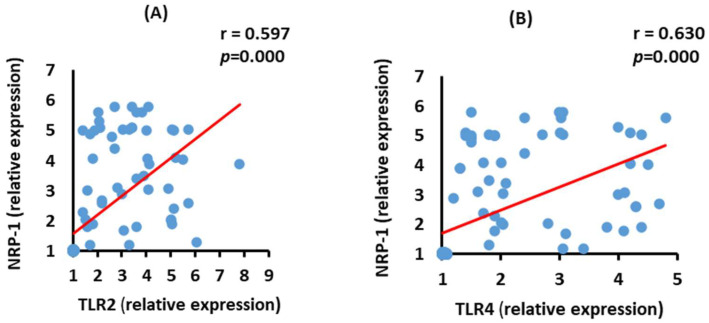
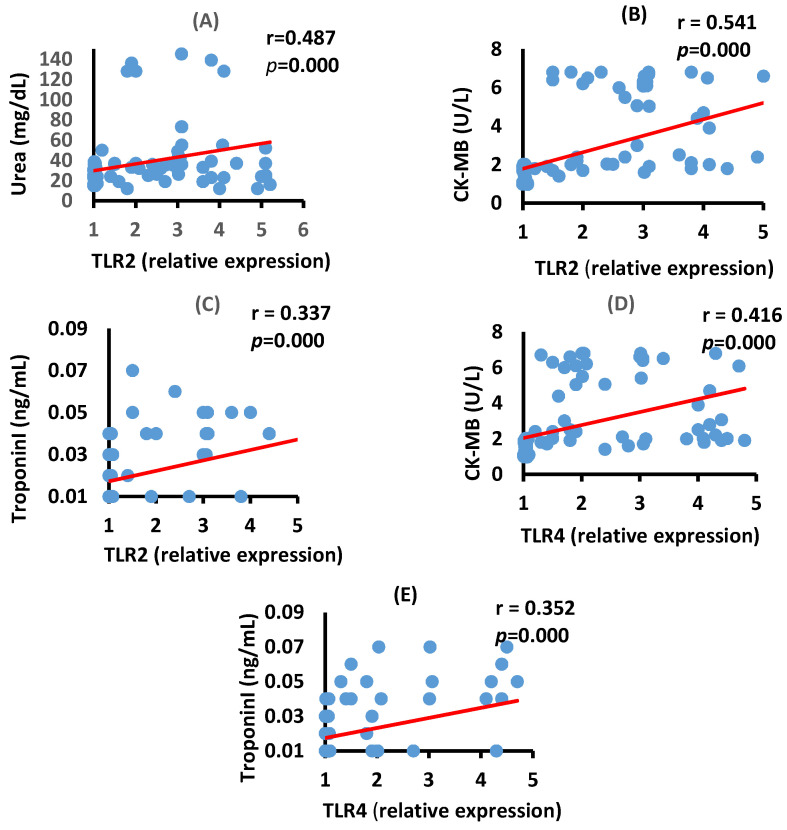
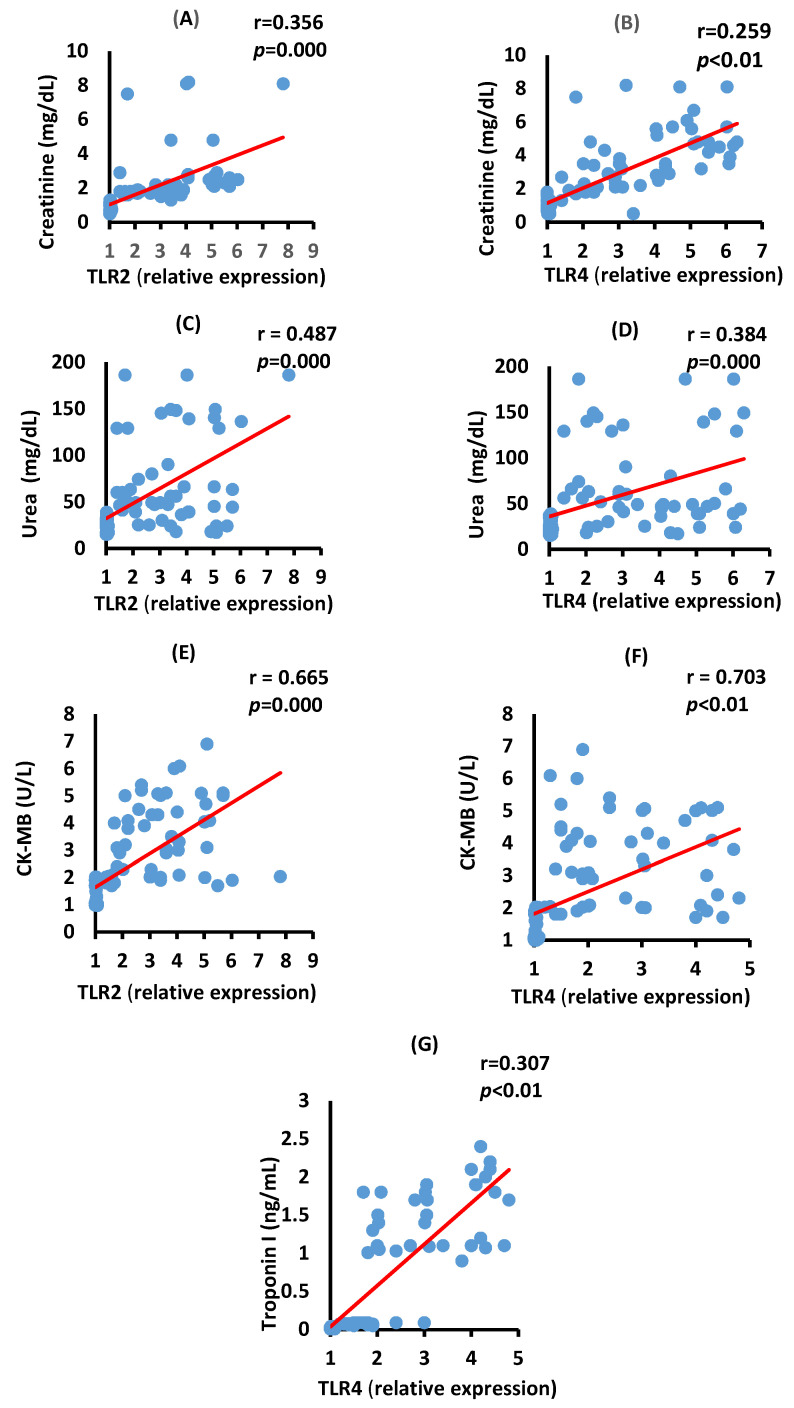
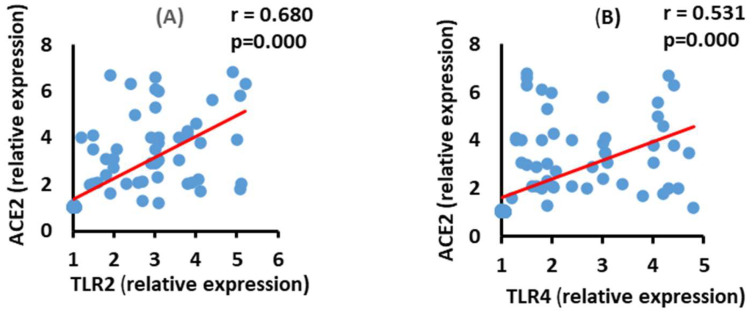
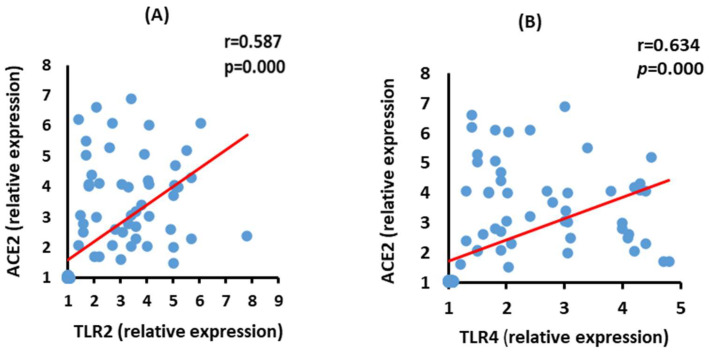
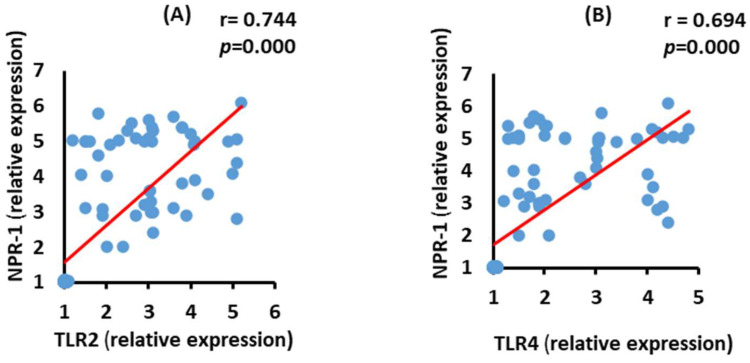
In comparison with the healthy group, all patients exhibited a significant elevation in serum creatinine, urea, cardiac enzymes (CK-MB and LDH), and CRP. Serum Troponin I level was significantly increased in severe COVID-19 patients. Furthermore, all studied patients revealed a significant elevation in the expression levels of TLR2, TLR4, ACE2, and NRP-1 mRNA. In all patients, CK-MB, ACE2, and NRP-1 mRNA expression levels were positively correlated with both TLR2 and TLR4 expression levels. Moreover, serum creatinine and urea levels were positively correlated with both TLR2 and TLR 4 expression levels in the severe group only. In the moderate group, serum CK-MB activity and Troponin I level had a significant positive correlation with both NRP-1 and ACE2 expression levels, while serum urea level and LDH activity had a significant positive correlation with NRP-1 only. In severe patients, the increases in serum creatinine, urea, CK-MB, and LDH were significantly associated with the elevations in both ACE2 and NRP-1 expression levels, whereas serum Troponin I level had a positive direct relationship with NRP-1 only.
Our study concluded that expression levels for TLR2, TLR4, ACE2, and NRP-1 mRNA in both severe and moderate patients were positively correlated with renal biomarkers and cardiac enzymes. Innate immune markers can be important because they correlate with the severity of illness in COVID-19.
新型冠状病毒肺炎(COVID-19)会影响心血管系统,导致心肌损伤,还会影响肾脏,导致肾功能障碍。这种影响主要是通过与血管紧张素转换酶2(ACE2)和神经纤毛蛋白-1(NRP-1)受体结合。 Toll样受体(TLRs)通常与微生物病原体结合并引发炎症反应。
本研究旨在比较中度和重度COVID-19患者肾脏和心脏功能生物标志物的变化以及TLRs(TLR2和TLR4)、ACE2和NRP-1受体的表达情况。同时研究肾脏和心脏功能生物标志物与这些受体表达之间的相关性。
本研究纳入了50名健康对照者和100名COVID-19患者(男性55名,女性45名)。根据世界卫生组织的指南,将这些参与者分为重度组(50例)和中度组(50例)。检测血清肌酐、血尿素、肌酸激酶同工酶(CK-MB)、乳酸脱氢酶(LDH)和肌钙蛋白I。我们使用定量实时聚合酶链反应(qRT-PCR)测量血样中Toll样受体(TLR2和TLR4)、ACE2和NRP-1的基因表达。
与健康组相比,所有患者的血清肌酐、尿素、心肌酶(CK-MB和LDH)和C反应蛋白(CRP)均显著升高。重度COVID-19患者的血清肌钙蛋白I水平显著升高。此外,所有研究患者的TLR2、TLR4、ACE2和NRP-1 mRNA表达水平均显著升高。在所有患者中,CK-MB、ACE2和NRP-1 mRNA表达水平与TLR2和TLR4表达水平均呈正相关。此外,仅在重度组中,血清肌酐和尿素水平与TLR2和TLR4表达水平呈正相关。在中度组中,血清CK-MB活性和肌钙蛋白I水平与NRP-1和ACE2表达水平均呈显著正相关,而血清尿素水平和LDH活性仅与NRP-1呈显著正相关。在重度患者中,血清肌酐、尿素、CK-MB和LDH的升高与ACE2和NRP-1表达水平的升高均显著相关,而血清肌钙蛋白I水平仅与NRP-1呈正相关。
我们的研究得出结论,重度和中度患者的TLR2、TLR4、ACE2和NRP-1 mRNA表达水平与肾脏生物标志物和心肌酶呈正相关。固有免疫标志物可能很重要,因为它们与COVID-19疾病的严重程度相关。