Department of Microbiology and Immunology, School of Medicine, University of Louisville, Louisville, KY 40202, USA.
Department of Biology, Indiana University-Bloomington, Bloomington, IN 47405, USA.
Viruses. 2022 Jun 28;14(7):1423. doi: 10.3390/v14071423.
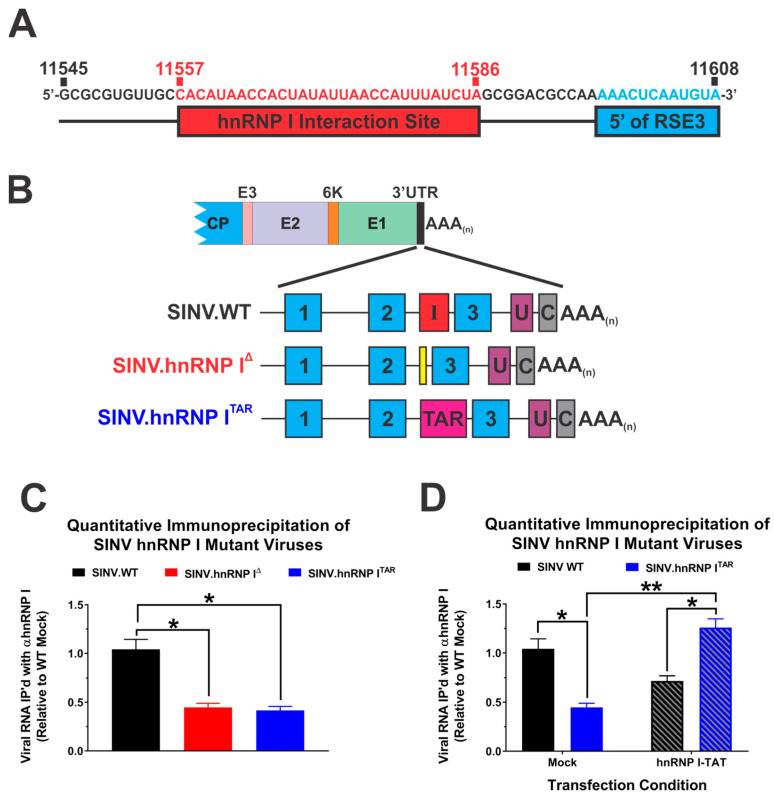
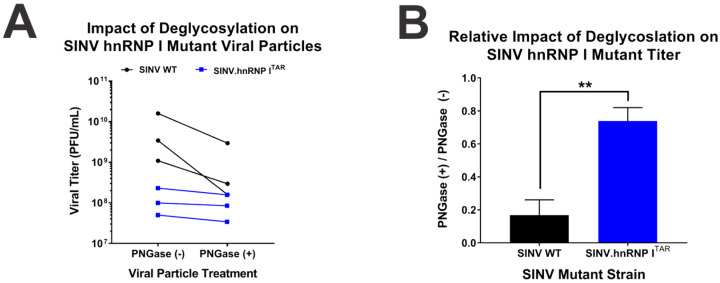
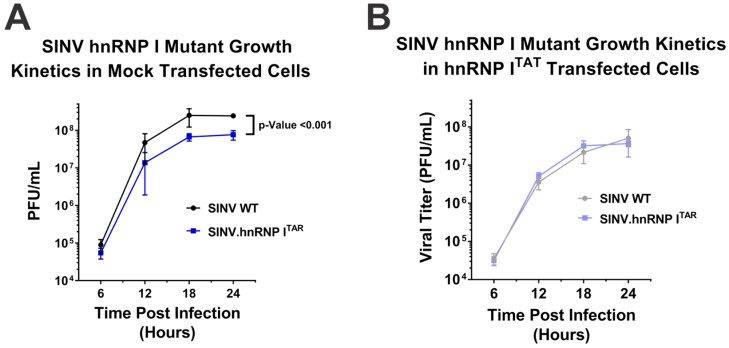
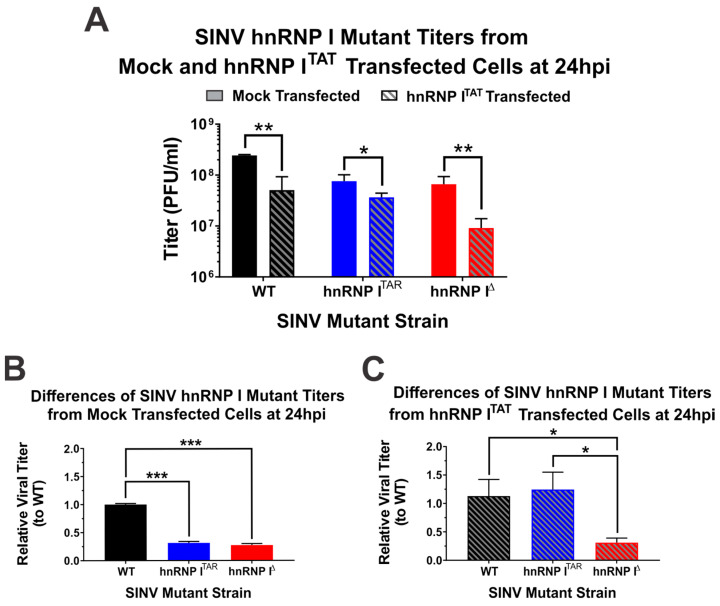
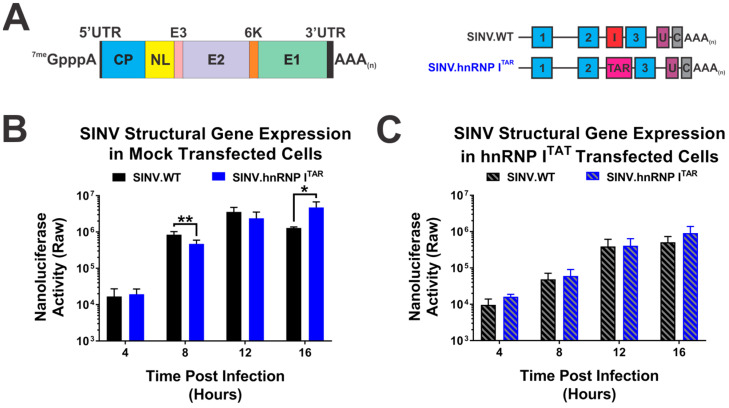
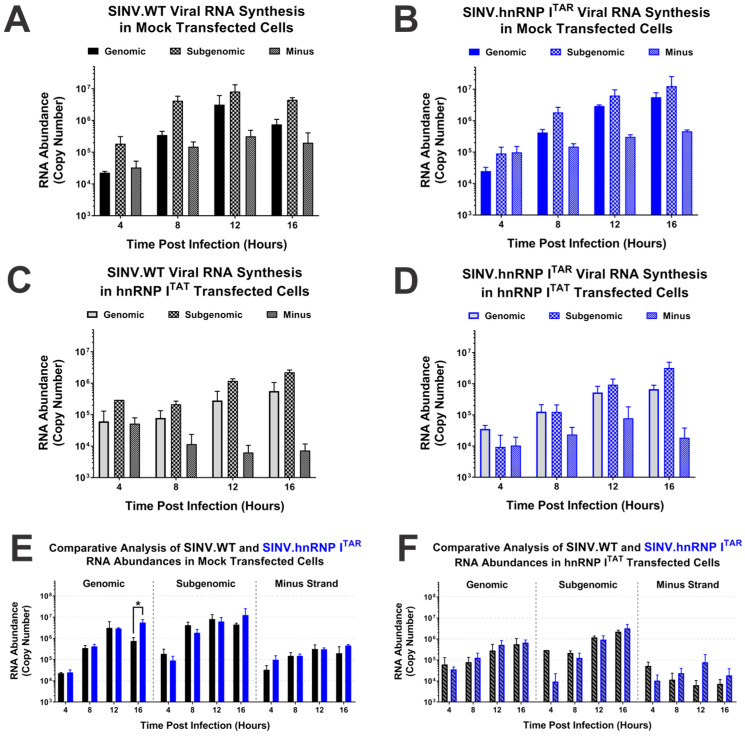
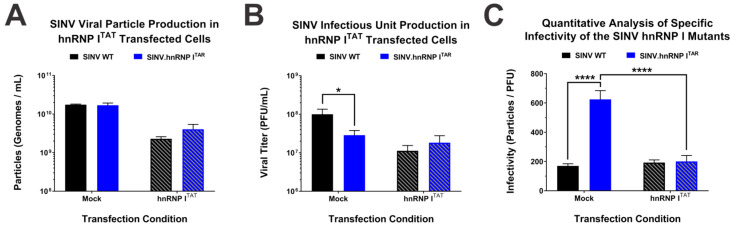
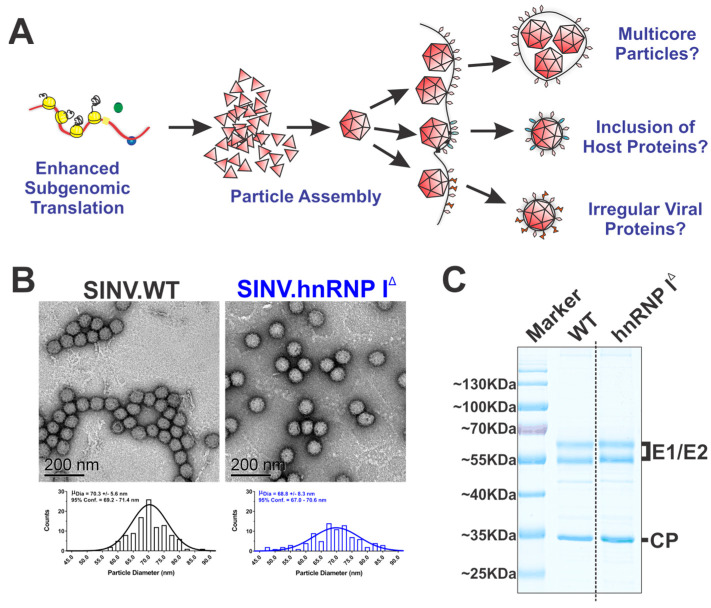
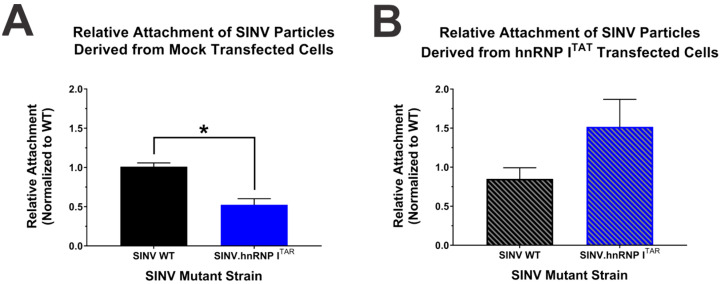
Alphaviruses cause significant outbreaks of febrile illness and debilitating multi-joint arthritis for prolonged periods after initial infection. We have previously reported that several host hnRNP proteins bind to the Sindbis virus (SINV) RNAs, and disrupting the sites of these RNA-protein interactions results in decreased viral titers in tissue culture models of infection. Intriguingly, the primary molecular defect associated with the disruption of the hnRNP interactions is enhanced viral structural protein expression; however, the precise underlying mechanisms spurring the enhanced gene expression remain unknown. Moreover, our previous efforts were unable to functionally dissect whether the observed phenotypes were due to the loss of hnRNP binding or the incorporation of polymorphisms into the primary nucleotide sequence of SINV. To determine if the loss of hnRNP binding was the primary cause of attenuation or if the disruption of the RNA sequence itself was responsible for the observed phenotypes, we utilized an innovative protein tethering approach to restore the binding of the hnRNP proteins in the absence of the native interaction site. Specifically, we reconstituted the hnRNP I interaction by incorporating the 20nt bovine immunodeficiency virus transactivation RNA response (BIV-TAR) at the site of the native hnRNP I interaction sequence, which will bind with high specificity to proteins tagged with a TAT peptide. The reestablishment of the hnRNP I-vRNA interaction via the BIV-TAR/TAT tethering approach restored the phenotype back to wild-type levels. This included an apparent decrease in structural protein expression in the absence of the native primary nucleotide sequences corresponding to the hnRNP I interaction site. Collectively, the characterization of the hnRNP I interaction site elucidated the role of hnRNPs during viral infection.
甲病毒会导致严重的发热疾病和长期的关节多发性关节炎,这些疾病在初次感染后会持续很长时间。我们之前曾报道过,几种宿主 hnRNP 蛋白与辛德比斯病毒(SINV)RNA 结合,破坏这些 RNA-蛋白相互作用的位点会导致组织培养感染模型中的病毒滴度降低。有趣的是,与 hnRNP 相互作用中断相关的主要分子缺陷是增强了病毒结构蛋白的表达;然而,促使增强基因表达的确切潜在机制尚不清楚。此外,我们之前的努力无法从功能上区分观察到的表型是由于 hnRNP 结合的丧失还是由于多态性掺入 SINV 的原始核苷酸序列。为了确定 hnRNP 结合的丧失是否是衰减的主要原因,或者 RNA 序列本身的破坏是否是观察到的表型的原因,我们利用一种创新的蛋白质 tethering 方法来恢复 hnRNP 蛋白在缺乏天然相互作用位点的情况下的结合。具体来说,我们通过在天然 hnRNP I 相互作用序列的位点上掺入 20nt 牛免疫缺陷病毒反式激活 RNA 反应(BIV-TAR)来重建 hnRNP I 相互作用,该反应将与标记有 TAT 肽的蛋白质具有高度特异性结合。通过 BIV-TAR/TAT tethering 方法重建 hnRNP I-vRNA 相互作用将表型恢复到野生型水平。这包括在缺乏与 hnRNP I 相互作用位点相对应的天然原始核苷酸序列的情况下,结构蛋白表达的明显减少。总的来说,hnRNP I 相互作用位点的特征阐明了 hnRNP 在病毒感染过程中的作用。