Dixon Sharon, Fanshawe Thomas R, Mwandigha Lazaro, Edwards George, Turner Philip J, Glogowska Margaret, Gillespie Marjorie M, Blair Duncan, Hayward Gail N
Nuffield Department of Primary Care Health Sciences, University of Oxford, Woodstock Road, Oxford OX2 6GG, UK.
Practice Plus Group, Hawker House, 5-6 Napier Court, Napier Road, Reading, Berkshire RG1 8BW, UK.
Antibiotics (Basel). 2022 Jul 26;11(8):1008. doi: 10.3390/antibiotics11081008.
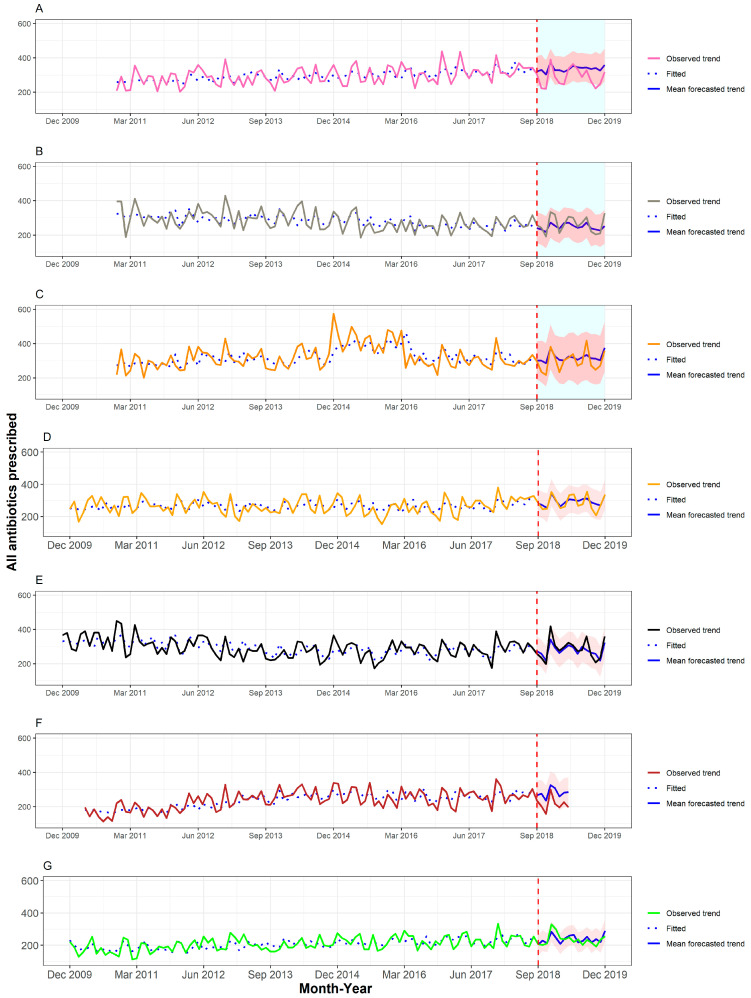
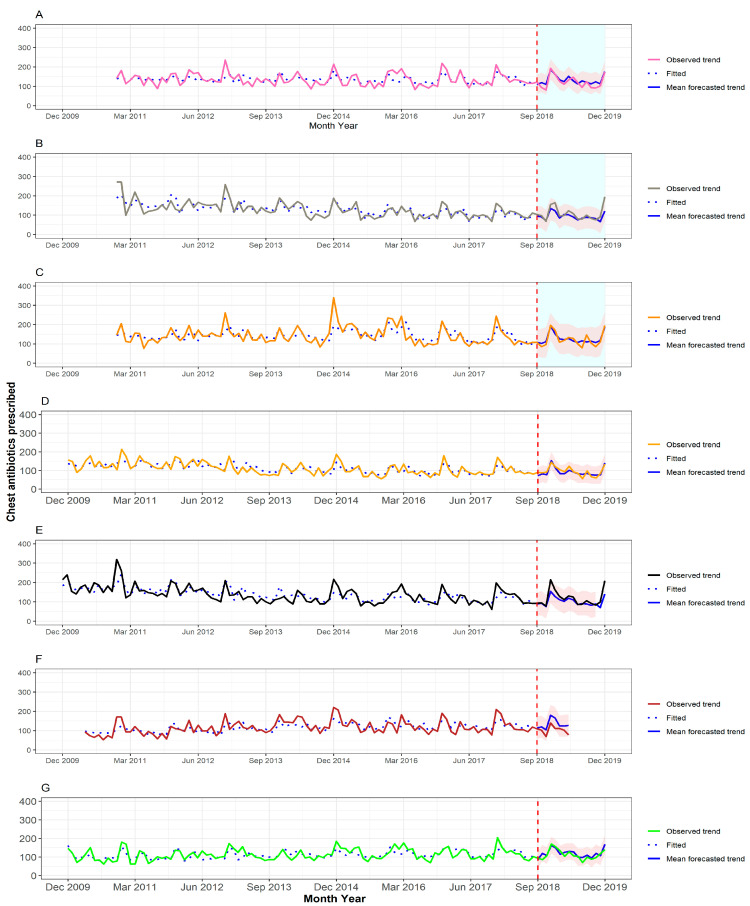
Improving prescribing antibiotics appropriately for respiratory infections in primary care is an antimicrobial stewardship priority. There is limited evidence to support interventions to reduce prescribing antibiotics in out-of-hours (OOH) primary care. Herein, we report a service innovation where point-of-care C-Reactive Protein (CRP) machines were introduced to three out-of-hours primary care clinical bases in England from August 2018-December 2019, which were compared with four control bases that did not have point-of-care CRP testing. We undertook a mixed-method evaluation, including a comparative interrupted time series analysis to compare monthly antibiotic prescription rates between bases with CRP machines and those without, an analysis of the number of and reasons for the tests performed, and qualitative interviews with clinicians. Antibiotic prescription rates declined during follow-up, but with no clear difference between the two groups of out-of-hours practices. A single base contributed 217 of the 248 CRP tests performed. Clinicians reported that the tests supported decision making and communication about not prescribing antibiotics, where having 'objective' numbers were helpful in navigating non-prescribing decisions and highlighted the challenges of training a fluctuant staff group and practical concerns about using the CRP machine. Service improvements to reduce prescribing antibiotics in out-of-hours primary care need to be developed with an understanding of the needs and context of this service.
在初级医疗保健中合理开具呼吸道感染抗生素是抗菌药物管理的重点。目前支持在非工作时间(OOH)初级医疗保健中减少抗生素处方的干预措施的证据有限。在此,我们报告一项服务创新,从2018年8月至2019年12月,在英国的三个非工作时间初级医疗保健临床基地引入了即时检测C反应蛋白(CRP)的仪器,并与四个没有即时CRP检测的对照基地进行比较。我们进行了一项混合方法评估,包括采用比较中断时间序列分析来比较配备CRP仪器的基地和未配备的基地之间的每月抗生素处方率,分析所进行检测的数量和原因,以及对临床医生进行定性访谈。在随访期间抗生素处方率下降,但两组非工作时间医疗服务之间没有明显差异。在总共进行的248次CRP检测中,有一个基地贡献了217次。临床医生报告说,这些检测有助于支持关于不开具抗生素的决策和沟通,拥有“客观”数字有助于做出不开具抗生素的决策,并突出了培训流动员工群体的挑战以及使用CRP仪器的实际问题。需要在了解这项服务的需求和背景的基础上,制定改善非工作时间初级医疗保健中抗生素处方的服务措施。