Tolhuisen Manon L, Hoving Jan W, Koopman Miou S, Kappelhof Manon, van Voorst Henk, Bruggeman Agnetha E, Demchuck Adam M, Dippel Diederik W J, Emmer Bart J, Bracard Serge, Guillemin Francis, van Oostenbrugge Robert J, Mitchell Peter J, van Zwam Wim H, Hill Michael D, Roos Yvo B W E M, Jovin Tudor G, Berkhemer Olvert A, Campbell Bruce C V, Saver Jeffrey, White Phil, Muir Keith W, Goyal Mayank, Marquering Henk A, Majoie Charles B, Caan Matthan W A
Department of Biomedical Engineering and Physics, Amsterdam UMC, Location AMC, 1105 AZ Amsterdam, The Netherlands.
Department of Radiology and Nuclear Medicine, Amsterdam UMC, Location AMC, 1105 AZ Amsterdam, The Netherlands.
Diagnostics (Basel). 2022 Jul 23;12(8):1786. doi: 10.3390/diagnostics12081786.
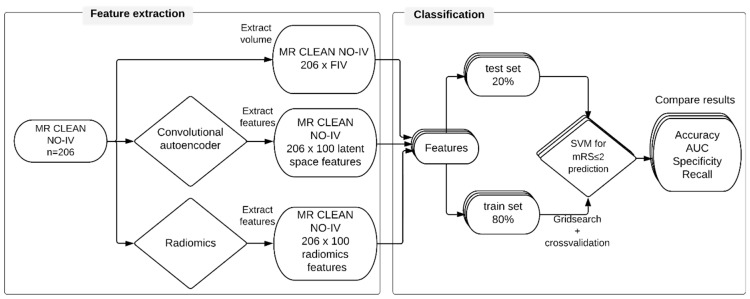
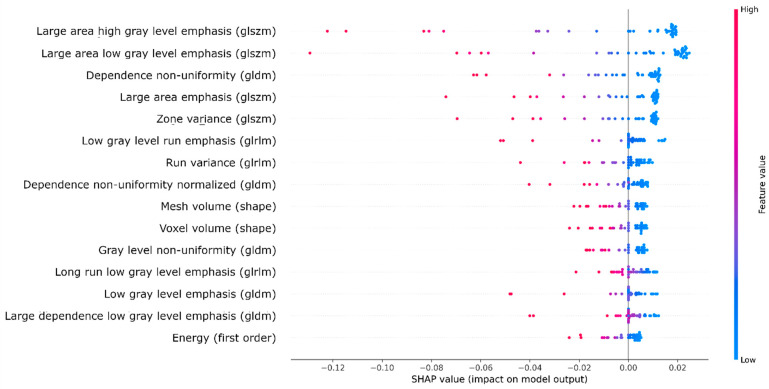
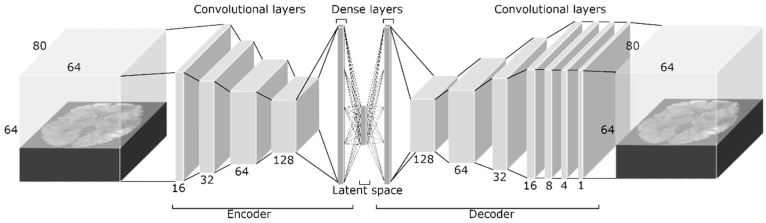
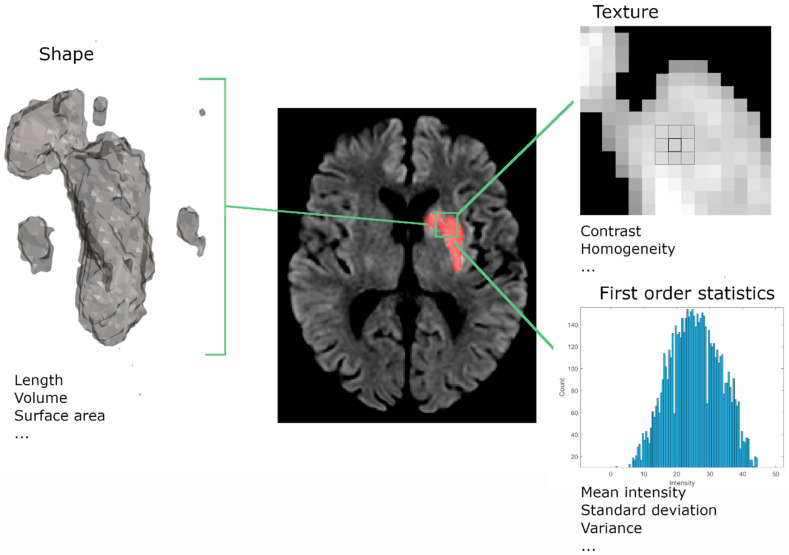
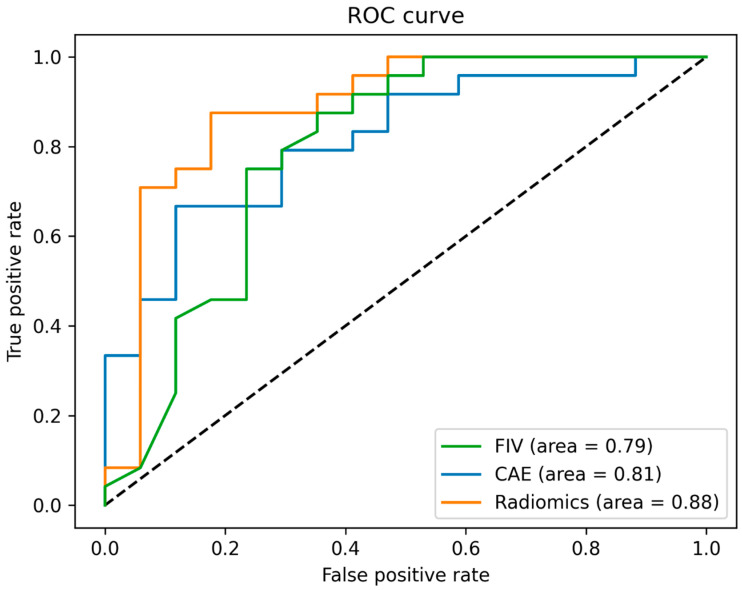
Infarct volume (FIV) on follow-up diffusion-weighted imaging (FU-DWI) is only moderately associated with functional outcome in acute ischemic stroke patients. However, FU-DWI may contain other imaging biomarkers that could aid in improving outcome prediction models for acute ischemic stroke. We included FU-DWI data from the HERMES, ISLES, and MR CLEAN-NO IV databases. Lesions were segmented using a deep learning model trained on the HERMES and ISLES datasets. We assessed the performance of three classifiers in predicting functional independence for the MR CLEAN-NO IV trial cohort based on: (1) FIV alone, (2) the most important features obtained from a trained convolutional autoencoder (CAE), and (3) radiomics. Furthermore, we investigated feature importance in the radiomic-feature-based model. For outcome prediction, we included 206 patients: 144 scans were included in the training set, 21 in the validation set, and 41 in the test set. The classifiers that included the CAE and the radiomic features showed AUC values of 0.88 and 0.81, respectively, while the model based on FIV had an AUC of 0.79. This difference was not found to be statistically significant. Feature importance results showed that lesion intensity heterogeneity received more weight than lesion volume in outcome prediction. This study suggests that predictions of functional outcome should not be based on FIV alone and that FU-DWI images capture additional prognostic information.
在急性缺血性中风患者中,随访扩散加权成像(FU-DWI)上的梗死体积(FIV)与功能结局仅呈中度相关。然而,FU-DWI可能包含其他影像学生物标志物,有助于改进急性缺血性中风的结局预测模型。我们纳入了HERMES、ISLES和MR CLEAN-NO IV数据库中的FU-DWI数据。使用在HERMES和ISLES数据集上训练的深度学习模型对病变进行分割。我们基于以下因素评估了三个分类器在预测MR CLEAN-NO IV试验队列功能独立性方面的性能:(1)仅FIV;(2)从训练好的卷积自动编码器(CAE)获得的最重要特征;(3)放射组学。此外,我们研究了基于放射组学特征的模型中的特征重要性。为了进行结局预测,我们纳入了206例患者:训练集包含144次扫描,验证集包含21次扫描,测试集包含41次扫描。包含CAE和放射组学特征的分类器的AUC值分别为0.88和0.81,而基于FIV的模型的AUC为0.79。未发现这种差异具有统计学意义。特征重要性结果表明,在结局预测中,病变强度异质性比病变体积更受重视。这项研究表明,功能结局的预测不应仅基于FIV,且FU-DWI图像可捕捉额外的预后信息。