Su Chuanyou, Qu Xueyin, Gao Yanan, Zhou Xuewei, Yang Xue, Zheng Nan
Milk and Dairy Product Inspection Center of the Ministry of Agriculture and Rural Affairs, Institute of Animal Sciences, Chinese Academy of Agricultural Sciences, Beijing 100193, China.
College of Animal Science, Henan Agriculture University, Zhengzhou 450000, China.
Animals (Basel). 2022 Jul 26;12(15):1900. doi: 10.3390/ani12151900.
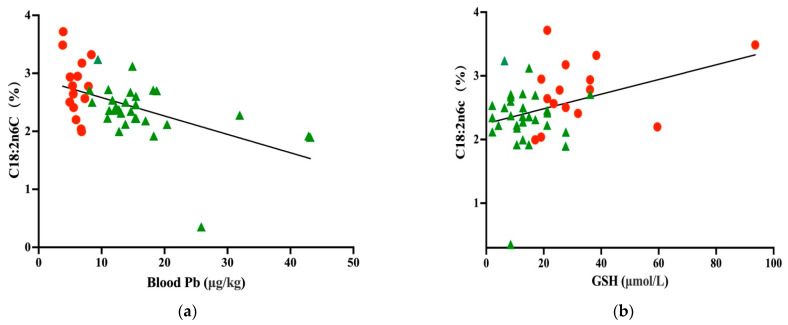
This study investigated whether unsaturated fatty acids in milk and the oxidative status of cows are affected by heavy metal exposure due to leather processing. The blood lead (Pb) concentrations in cows from two farms in the polluted area were 16.27 ± 8.63 μg/L, respectively, which were significantly (p < 0.05) higher than the blood Pb concentrations in cows from an unpolluted farm (6.25 ± 3.04 μg/L). There were significantly (p < 0.05) lower levels of glutathione S-transferase (GST), glutathione peroxidase (GPX), and glutathione (GSH) in the serum of cows from the polluted area compared to the levels in cows from an unpolluted area. The linoleic acid (C18:2n6c) content in milk from the polluted area was 15% lower than in the control area. There was a significant correlation between linoleic acid in milk with the blood Pb and serum GSH levels. Heavy metals can alter fatty acid synthesis through oxidative stress, which may be the mechanism by which heavy metals affect fatty acid synthesis in milk.
本研究调查了皮革加工造成的重金属暴露是否会影响牛奶中的不饱和脂肪酸以及奶牛的氧化状态。污染地区两个农场的奶牛血铅(Pb)浓度分别为16.27±8.63μg/L,显著高于(p<0.05)未污染农场奶牛的血铅浓度(6.25±3.04μg/L)。与未污染地区奶牛相比,污染地区奶牛血清中的谷胱甘肽S-转移酶(GST)、谷胱甘肽过氧化物酶(GPX)和谷胱甘肽(GSH)水平显著(p<0.05)降低。污染地区牛奶中的亚油酸(C18:2n6c)含量比对照地区低15%。牛奶中的亚油酸与血铅和血清GSH水平之间存在显著相关性。重金属可通过氧化应激改变脂肪酸合成,这可能是重金属影响牛奶中脂肪酸合成的机制。