Milton-Laskibar Iñaki, Cuevas-Sierra Amanda, Portillo María P, Martínez J Alfredo
Precision Nutrition and Cardiometabolic Health, IMDEA-Food Institute (Madrid Institute for Advanced Studies), Campus of International Excellence (CEI) UAM+CSIC, Spanish National Research Council, 28049 Madrid, Spain.
CIBER Fisiopatología de la Obesidad y Nutrición (CIBEROBN), Instituto de Salud Carlos III (ISCIII), 28222 Madrid, Spain.
Biomedicines. 2022 Jul 26;10(8):1797. doi: 10.3390/biomedicines10081797.
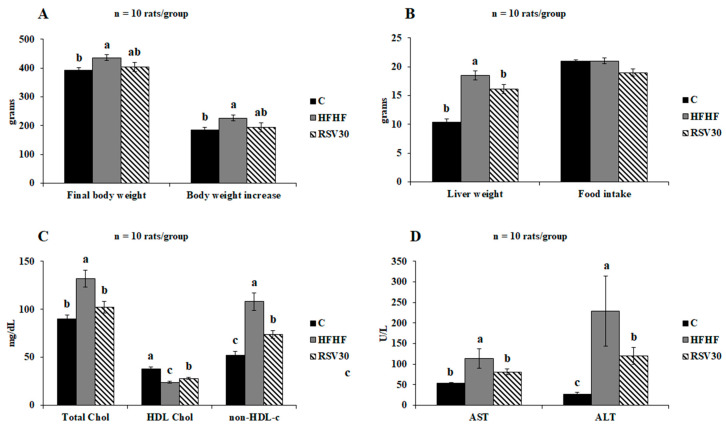
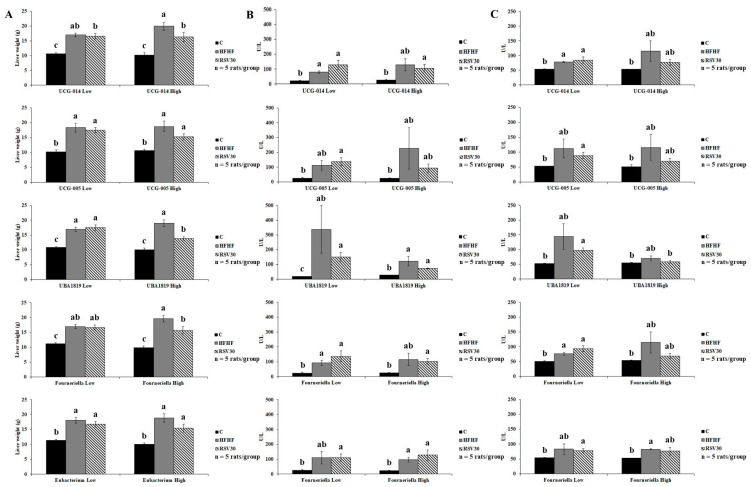
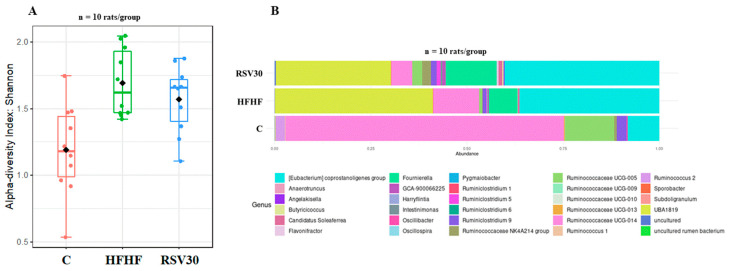
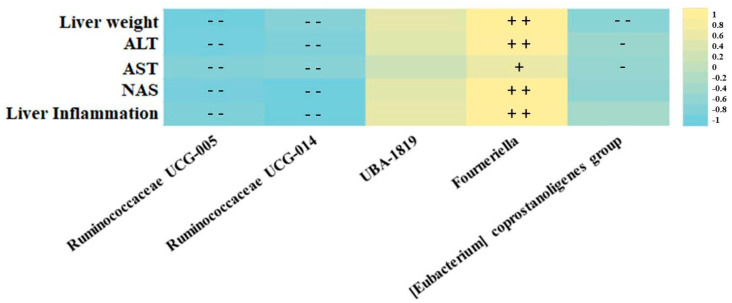
Gut microbiota dysbiosis has been described in several metabolic disruptions, such as non-alcoholic fatty liver disease (NAFLD). Administration of resveratrol has been claimed to elicit benefits against NAFLD along with modulating gut microbiota composition. This investigation aims to study the putative mediating role of gut microbiota in the potential hepato-protective effects of resveratrol in a diet-induced NAFLD rat model. The involvement of bacteria from the family in such effects was also addressed. Resveratrol administration resulted in lowered liver weight and serum total and non-HDL cholesterol concentrations, as well as in increased serum HDL cholesterol levels. The administration of this polyphenol also prevented obesogenic diet-induced serum transaminase increases. In addition, histopathological analysis revealed that resveratrol administration ameliorated the dietary-induced liver steatosis and hepatic inflammation. Gut microbiota sequencing showed an inverse relationship between some bacteria from the family and the screened hepatic markers, whereas in other cases the opposite relationship was also found. Interestingly, an interaction was found between abundance and resveratrol induced liver weight decrease, suggesting that for this marker resveratrol induced effects were greater when the abundance of this bacteria was high, while no actions were found when abundance was low.
肠道微生物群失调已在多种代谢紊乱中被描述,如非酒精性脂肪性肝病(NAFLD)。白藜芦醇的给药被认为对NAFLD有益,同时还能调节肠道微生物群组成。本研究旨在探讨肠道微生物群在白藜芦醇对饮食诱导的NAFLD大鼠模型潜在肝保护作用中的假定介导作用。还探讨了该菌科细菌在此类作用中的参与情况。给予白藜芦醇可降低肝脏重量、血清总胆固醇和非高密度脂蛋白胆固醇浓度,并提高血清高密度脂蛋白胆固醇水平。给予这种多酚还可防止致肥胖饮食诱导的血清转氨酶升高。此外,组织病理学分析显示,给予白藜芦醇可改善饮食诱导的肝脏脂肪变性和肝脏炎症。肠道微生物群测序显示,该菌科的一些细菌与筛选出的肝脏标志物之间存在负相关关系,而在其他情况下也发现了相反的关系。有趣的是,发现该菌丰度与白藜芦醇诱导的肝脏重量减轻之间存在相互作用,这表明对于该标志物,当这种细菌的丰度较高时,白藜芦醇诱导的作用更大,而当该菌丰度较低时则未发现作用。