Department of Biochemistry and Molecular Biology, Mayo Clinic, Rochester, MN 55905, USA.
Division of Cardiovascular Diseases, Department of Biochemistry and Molecular Biology, Mayo Clinic, Rochester, MN 55905, USA.
Genes (Basel). 2022 Jul 23;13(8):1317. doi: 10.3390/genes13081317.
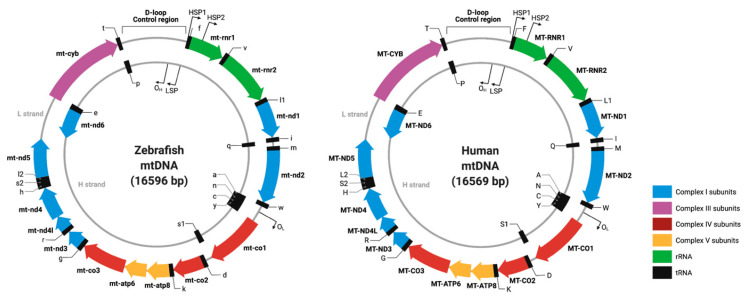
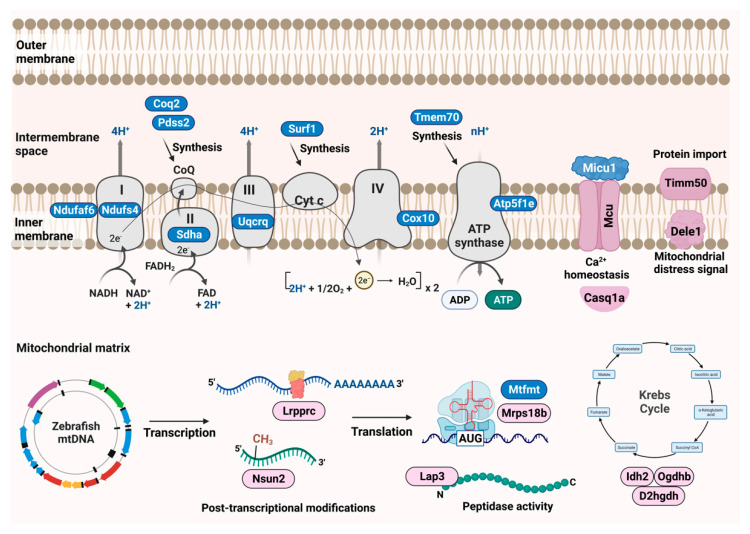
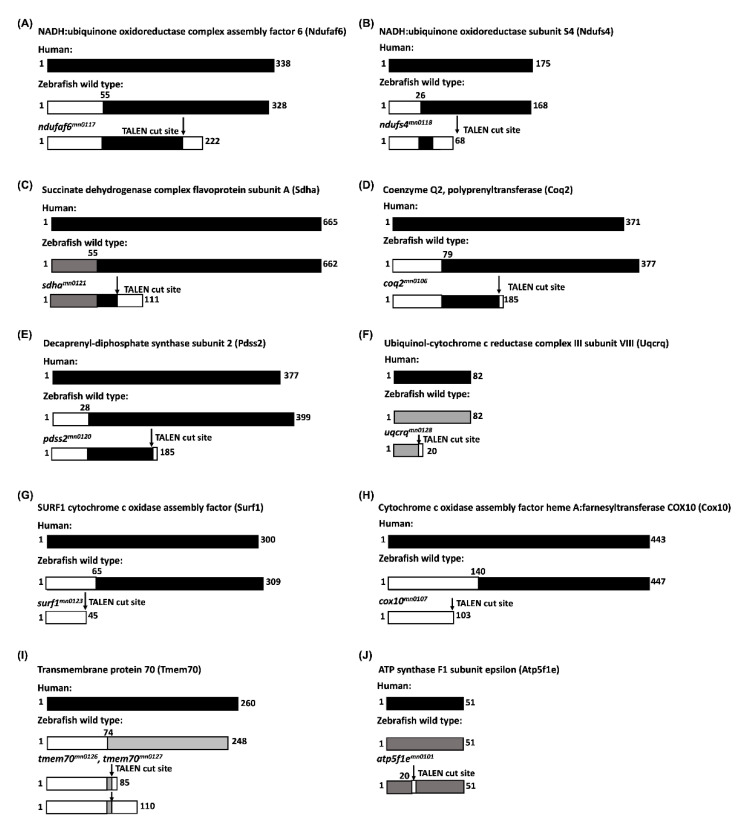
Mitochondria are a dynamic eukaryotic innovation that play diverse roles in biology and disease. The mitochondrial genome is remarkably conserved in all vertebrates, encoding the same 37-gene set and overall genomic structure, ranging from 16,596 base pairs (bp) in the teleost zebrafish () to 16,569 bp in humans. Mitochondrial disorders are amongst the most prevalent inherited diseases, affecting roughly 1 in every 5000 individuals. Currently, few effective treatments exist for those with mitochondrial ailments, representing a major unmet patient need. Mitochondrial dysfunction is also a common component of a wide variety of other human illnesses, ranging from neurodegenerative disorders such as Huntington's disease and Parkinson's disease to autoimmune illnesses such as multiple sclerosis and rheumatoid arthritis. The electron transport chain (ETC) component of mitochondria is critical for mitochondrial biology and defects can lead to many mitochondrial disease symptoms. Here, we present a publicly available collection of genetic mutants created in highly conserved, nuclear-encoded mitochondrial genes in . The zebrafish system represents a potentially powerful new opportunity for the study of mitochondrial biology and disease due to the large number of orthologous genes shared with humans and the many advanced features of this model system, from genetics to imaging. This collection includes 15 mutant lines in 13 different genes created through locus-specific gene editing to induce frameshift or splice acceptor mutations, leading to predicted protein truncation during translation. Additionally, included are 11 lines created by the random insertion of the gene-breaking transposon (GBT) protein trap cassette. All these targeted mutant alleles truncate conserved domains of genes critical to the proper function of the ETC or genes that have been implicated in human mitochondrial disease. This collection is designed to accelerate the use of zebrafish to study many different aspects of mitochondrial function to widen our understanding of their role in biology and human disease.
线粒体是一种动态的真核生物创新,在生物学和疾病中发挥着多样化的作用。线粒体基因组在所有脊椎动物中都非常保守,编码相同的 37 个基因集和整体基因组结构,从硬骨鱼斑马鱼的 16596 个碱基对 (bp) 到人类的 16569 bp。线粒体疾病是最常见的遗传性疾病之一,大约每 5000 个人中就有 1 人受到影响。目前,对于患有线粒体疾病的人,几乎没有有效的治疗方法,这是患者的一个主要未满足的需求。线粒体功能障碍也是多种其他人类疾病的常见组成部分,从神经退行性疾病,如亨廷顿氏病和帕金森氏病,到自身免疫性疾病,如多发性硬化症和类风湿性关节炎。线粒体的电子传递链 (ETC) 组件对于线粒体生物学至关重要,缺陷可导致许多线粒体疾病症状。在这里,我们展示了一个可公开获取的遗传突变体集合,这些突变体是在高度保守的核编码线粒体基因中创建的。斑马鱼系统代表了一个研究线粒体生物学和疾病的潜在强大新机会,因为它与人类共享大量的同源基因,并且这个模型系统具有许多先进的特征,从遗传学到成像。这个集合包括 13 个不同基因中的 15 个突变系,通过特定基因座的基因编辑来诱导移码或剪接受体突变,导致翻译过程中预测的蛋白质截断。此外,还包括通过随机插入基因破坏转座子 (GBT) 蛋白陷阱盒创建的 11 个系。所有这些靶向突变等位基因都截断了对 ETC 正常功能至关重要的基因或已被牵连到人类线粒体疾病中的基因的保守结构域。该集合旨在加速使用斑马鱼来研究线粒体功能的许多不同方面,以扩大我们对其在生物学和人类疾病中的作用的理解。