Trentini Alessandro, Manfrinato Maria Cristina, Castellazzi Massimiliano, Bellini Tiziana
Department of Environmental and Prevention Sciences, University of Ferrara, Via Luigi Borsari 46, 44121 Ferrara, Italy.
University Center for Studies on Gender Medicine, University of Ferrara, 44121 Ferrara, Italy.
J Pers Med. 2022 Jul 22;12(8):1196. doi: 10.3390/jpm12081196.
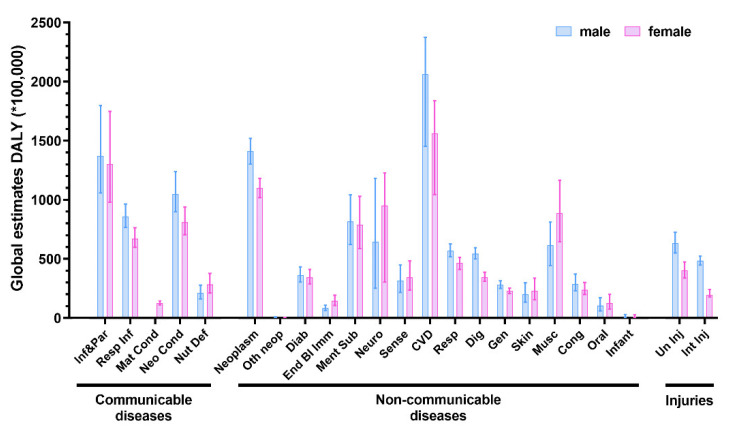
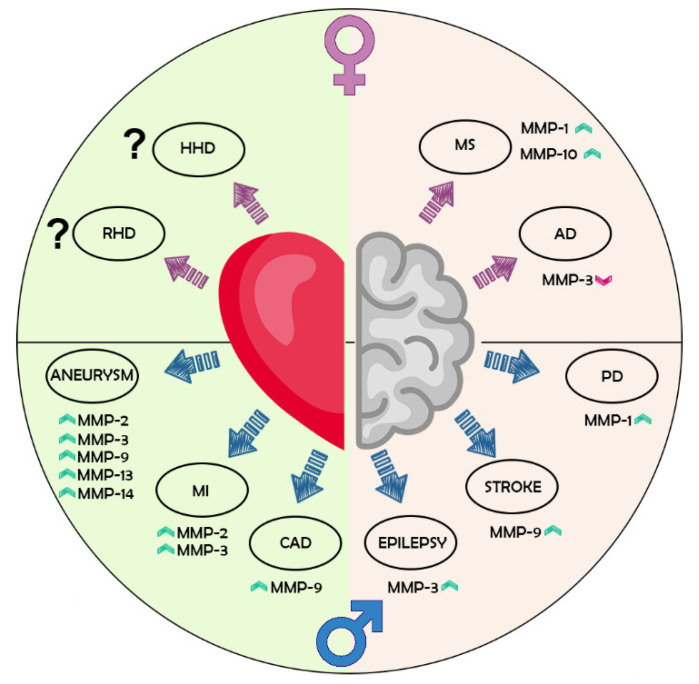
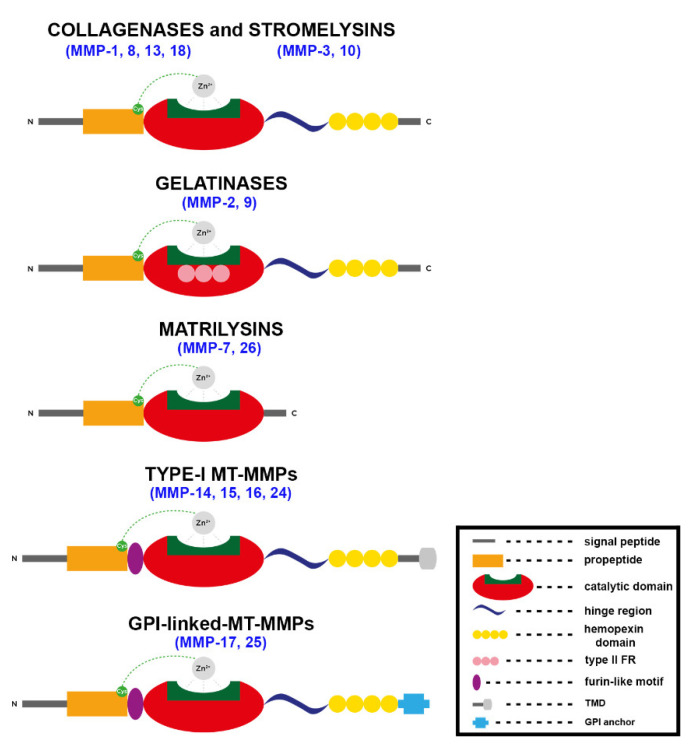
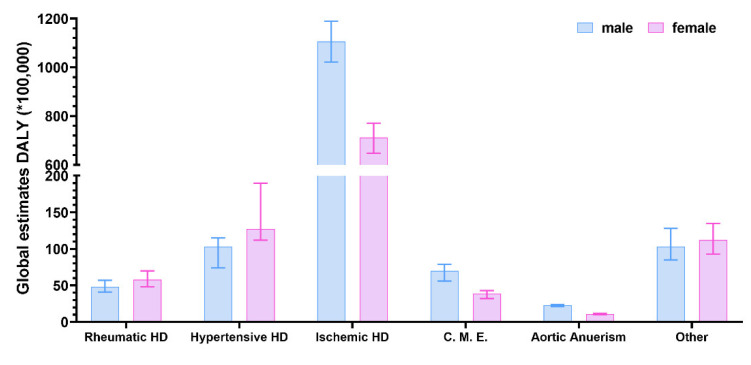
It is now established that sex differences occur in clinical manifestation, disease progression, and prognosis for both cardiovascular (CVDs) and central nervous system (CNS) disorders. As such, a great deal of effort is now being put into understanding these differences and turning them into "advantages": (a) for the discovery of new sex-specific biomarkers and (b) through a review of old biomarkers from the perspective of the "newly" discovered sex/gender medicine. This is also true for matrix metalloproteinases (MMPs), enzymes involved in extracellular matrix (ECM) remodelling, which play a role in both CVDs and CNS disorders. However, most of the studies conducted up to now relegated sex to a mere confounding variable used for statistical model correction rather than a determining factor that can influence MMP levels and, in turn, disease prognosis. Consistently, this approach causes a loss of information that might help clinicians in identifying novel patterns and improve the applicability of MMPs in clinical practice by providing sex-specific threshold values. In this scenario, the current review aims to gather the available knowledge on sex-related differences in MMPs levels in CVDs and CNS conditions, hoping to shed light on their use as sex-specific biomarkers of disease prognosis or progression.
现已证实,心血管疾病(CVD)和中枢神经系统(CNS)疾病在临床表现、疾病进展和预后方面存在性别差异。因此,目前人们正在付出巨大努力来理解这些差异,并将其转化为“优势”:(a)用于发现新的性别特异性生物标志物;(b)通过从“新”发现的性别医学角度审视旧的生物标志物。基质金属蛋白酶(MMP)也是如此,这些酶参与细胞外基质(ECM)重塑,在CVD和CNS疾病中均起作用。然而,迄今为止进行的大多数研究将性别仅仅视为用于统计模型校正的混杂变量,而不是能够影响MMP水平进而影响疾病预后的决定因素。一直以来,这种方法导致信息丢失,而这些信息可能有助于临床医生识别新的模式,并通过提供性别特异性阈值来提高MMP在临床实践中的适用性。在这种情况下,本综述旨在收集关于CVD和CNS疾病中MMP水平性别差异的现有知识,希望阐明其作为疾病预后或进展的性别特异性生物标志物的用途。